
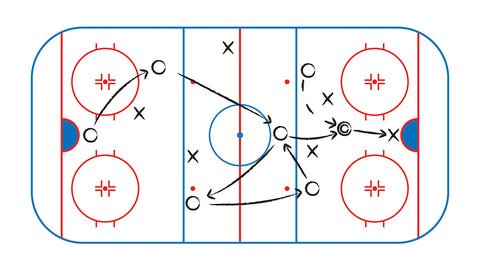
There are three periods in an ice hockey game.
Have you ever watched an ice hockey match and wondered how long it actually lasts? It’s a fast-paced, thrilling sport. Knowing the structure is important. Specifically, how many periods in an ice hockey game is something many new fans want to know.
Each period provides a chance for the teams to score and demonstrate their skills. The flow of the game is broken down into these sections. These breaks allow for team strategy adjustments and player rest.

How Many Periods in an Ice Hockey Game?
Alright, let’s get right to it! We’re talking about ice hockey today, and one of the most basic things you need to know is how long a game lasts. It’s not just one long stretch of skating and scoring, is it? No way! Ice hockey games are broken down into chunks called periods. So, how many periods are there in a regular hockey game? The answer is three! Yes, that’s right, most ice hockey games feature 3 periods of play.
The Standard Three-Period Structure
You will find three periods in most levels of professional hockey, college hockey, and even many of the games that kids play. Each of these periods has a standard length of 20 minutes. However, when you factor in breaks between the periods and other stoppages in play, you’ll see that a full hockey game actually runs for longer than an hour.
To be very clear, the standard game features:
- First Period: 20 minutes of play
- Second Period: 20 minutes of play
- Third Period: 20 minutes of play
That gives us a grand total of 60 minutes of playing time, often called the “regulation time” in ice hockey. This timing is crucial for the game’s flow and pacing. It allows players to give it their all in short bursts and also ensures a good flow to the game that keeps it exciting. It’s the backbone of how most hockey leagues around the globe operate.
Breaks Between Periods: Intermissions
Okay, so what happens between those 20-minute periods? Players don’t just keep going! We have intermissions. These are breaks that give players a chance to rest, get some water, and plan for the next period. The intermission allows coaches to make strategy changes and motivate their teams. These intermissions also allow for the maintenance of the ice and keep it smooth and playable. A longer intermission also has value to fans, as they give the stadium or arena a chance to clean and provide services to the spectators.
How Long Are Intermissions?
Intermissions in professional and many other levels of ice hockey usually last for 15 to 18 minutes. Here’s a more detailed look:
- First Intermission: Typically 15-18 minutes long after the first period.
- Second Intermission: Typically 15-18 minutes long after the second period.
These breaks give players a much needed breather and allow fans to get more food and drinks. The intermissions are a fundamental part of the hockey game experience.
What Happens if the Game is Tied After Three Periods?
Alright, what if those three periods end with the two teams tied? Does it mean the game is a draw? Not necessarily! It depends on the league or tournament you’re watching. Different leagues use slightly different rules.
Overtime in Ice Hockey
In many leagues, including the NHL, if the score is tied after three periods, they go into a period of extra time called overtime. Overtime is designed to find a winner.
The rules for overtime are not the same everywhere. Here’s how some major leagues handle it:
- NHL: In the regular season, the NHL uses a five-minute, three-on-three overtime period. If no one scores during this time, the game goes to a shootout. In the playoffs, they play a full 20-minute overtime period and continue this way, with new 20-minute periods, until one team scores. This is often called sudden-death overtime.
- Other Leagues: Other leagues may use variations like five-minute four-on-four, a ten-minute five-on-five overtime, or even just a shootout immediately after regulation time.
The format of overtime is always designed to get to a result as quickly as possible, while keeping the entertainment value high. It’s why you’ll see so many exciting moments in overtime – the pressure is really on!
Shootouts: Breaking the Tie
If the score is still tied after overtime in some leagues, then we move to a shootout.
Here’s a quick rundown of what to expect in a shootout:
- Each team picks three players to take a penalty shot against the opposing goalie.
- The team that scores the most goals wins the game.
- If there’s still a tie after the first three shooters, each team continues to send one shooter at a time until one team scores and the other does not.
Shootouts are exciting to watch, and can be considered a bit controversial amongst hockey fans as they are different from the normal course of play. However, they’re a quick and thrilling way to resolve a tie.
Variations in Game Length
While the standard ice hockey game has three 20-minute periods, there can be some variations in specific circumstances. Let’s take a look at a few of them:
Youth Hockey Game Lengths
When kids play hockey, games are usually shorter. They may have shorter periods, often 10-15 minutes long, and the game may be 2 or 3 periods in length. This is done to match the age and energy levels of the young players and also to accommodate the schedules of the many young leagues.
International Ice Hockey
International ice hockey tournaments, such as the IIHF World Championships or the Olympics, follow the same three-period structure that you see in the NHL. But, they may have slight variations when it comes to overtime rules.
Lower-Level Leagues
Lower-level professional and semi-professional leagues may also have variations. For instance, they may play shorter games for various reasons. This might have to do with facility time or other logistics, or simply because their players are not full time athletes. But most still follow the three-period standard.
Why Three Periods?
So, why three periods and not two, four, or one long period? There are a few good reasons for this.
The format with three 20-minute periods is a good balance for a high-intensity sport like ice hockey. Here’s what makes this format effective:
- Physical Demands: Ice hockey is a very physically demanding sport. Players are constantly skating, hitting, and battling for the puck. The three-period structure allows for breaks to help players rest and recover throughout the game.
- Pacing and Excitement: The periods break the game up into exciting chunks. It keeps the game from getting too long. It keeps the fans engaged and energized.
- Strategy and Coaching: The intermissions allow coaches to regroup their players and strategize. It allows for a chance to adjust and make any necessary changes.
- Television and Broadcasting: The three-period format is also suitable for television. It fits nicely into time slots and allows for breaks for commercials.
Clock Management
Clock management is also a very critical aspect of hockey, and how the time is counted. Here’s how the clock works during a game
- Running Clock: The clock runs continuously when the puck is in play. This means the timer doesn’t stop every time the puck goes into the corner or there is a stoppage in play.
- Stopped Clock: The game clock is stopped for certain stoppages, like penalties, icing, pucks leaving the playing area, or goals. This means that the clock does not always count down the whole 20 minutes, as stoppages of play eat up time.
This dynamic time system makes each period intense and exciting. It also allows teams to make strategic choices on how to use their time.
Understanding Game Clocks
Understanding the game clock, especially as a new hockey fan, can be tricky! Here’s a breakdown of how time works in ice hockey:
- Period Clocks: At the start of each period the period clock begins at 20:00 and counts down to 0:00.
- Game Clock: The main game clock shows how much total time has been played or is remaining in the game. It’s the primary clock that fans use to keep track of the game.
- Play Clock: The play clock is the clock that is used to determine how much time is left in a period. It is the most important clock during the game.
When the play clock stops, so does the game clock. And when it is restarted, the game clock also gets restarted. The whole clock and period system is designed to ensure that each team plays the same amount of time and under the same conditions.
Importance of Each Period
Each period has its own unique importance in the flow of the game. Here’s a closer look at each of them:
First Period: Setting the Tone
The first period is where teams try to establish a feel for the game and start to settle into the strategy. Teams are fresh and energized, and coaches are looking for their team to set a good tone and pace for the rest of the game. Often it is a feeling out period for many teams.
Second Period: Middle Game Action
The second period often sees more strategy being introduced by coaches. The game starts to get more physical in the second period, and scoring can increase as teams start to get into the full swing of the action.
Third Period: The Final Push
The third period is where the tension really builds. This is where teams look to come back from behind, maintain the lead, and give it their all to make sure they end up with a win. It’s the most critical period of the game, where the results are decided. This period requires endurance, skill, and the ability to perform under pressure.
Keeping Track of the Periods
When you’re at a game, you’ll see the periods clearly marked on the scoreboard. It’s one of the easiest things to follow. Here’s what you will see:
- Scoreboard Display: Scoreboards will show each team’s score alongside the current period. You will see something like, “1st Period” “2nd Period” or “3rd Period”
- Announcer: The arena announcer will also keep everyone updated on the period during game and between intermissions.
This makes it easy to keep track of the game and understand what is happening.
The Role of Timeouts
In addition to intermissions, teams also have the option to call a time out. Timeouts provide a brief pause in play, where teams can regroup and refocus. Here are the most important things about time outs:
- One Time Out: In most leagues, each team has one timeout per game.
- Duration: Timeouts are usually 30 seconds long.
- Strategic Use: Timeouts are typically used by teams to break momentum, make adjustments, or plan for the final minutes of the game.
Timeouts are an essential strategic tool in ice hockey. Coaches use them strategically to try to gain an advantage, disrupt the opposition, or rest their players.
Penalties and Clock Management
Penalties also affect the way the clock is handled in ice hockey. Here’s how:
- Time Spent in Penalty Box: When a player commits a penalty, he sits in the penalty box for a specified amount of time, and the team plays short-handed. The clock runs during penalties.
- Power Play: The penalized team has to play short handed while the other team has the power play.
Penalties create game changing moments, and the time spent in the penalty box is a crucial part of the game’s dynamic.
The Importance of Time and Periods in Ice Hockey
To summarize, the periods and timing are really crucial to the whole structure and strategy of hockey. The periods create a game that is exciting for fans, and manageable for players. They give us the structure and flow of a traditional ice hockey game. It is a critical aspect of understanding hockey, from its rules to its nuances.
So, there you have it! Ice hockey games are made up of three periods, each 20 minutes long, with intermissions in between. There might be overtime if there’s a tie, maybe even a shootout. The timing creates excitement, strategy, and the great action that we love about hockey. Now, you are well prepared to understand your next hockey game.
How Many Periods In Ice Hockey? (Explained)
Final Thoughts
An ice hockey game features three periods. Each period lasts 20 minutes of actual playing time. These periods are separated by intermissions, allowing players a break.
Therefore, the simple answer is that there are three periods. Understanding how many periods in an ice hockey game is fundamental to comprehending the sport.

