
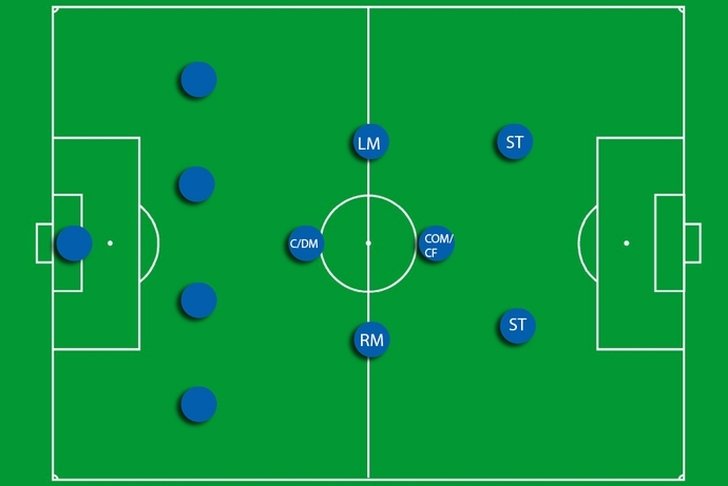
The standard number of players in a soccer game is 11 per team on the field.
Ever wondered about the beautiful game and exactly how many players are in a soccer game? It’s a common question, especially for those new to the sport.
Understanding the team structure is key to appreciating the strategy and flow. You have 11 players on each side battling it out on the pitch.
Each individual player brings a unique role to the game, making every match a fascinating display of skill and teamwork.

How Many Players Are in a Soccer Game?
Okay, let’s dive into the heart of soccer: the players! You’ve probably seen a soccer game before, maybe even played one, but have you ever stopped to think about exactly how many people are on each team? It’s not quite as simple as a basketball or volleyball game, where the number is very straightforward. Soccer has a specific setup, and understanding it is the first step to truly appreciating the beautiful game.
The Starting Lineup: 11 Players Per Team
The core of any soccer team is made up of 11 players on the field at the same time. That’s the number that you’ll almost always see in a regulation game, whether it’s a World Cup final or a local kids’ match. These 11 players are strategically positioned to perform different roles and work together to score goals and prevent the opposing team from doing the same. Let’s break it down a little further, examining how these 11 players are usually distributed across the pitch.
The Goalkeeper: The Last Line of Defense
Every team needs a goalkeeper. The goalkeeper is like the last guard of the team’s goal. They are the only players on the field who can use their hands to stop the ball within their penalty area. They wear a different uniform than the other players, typically a different color, so they stand out. The goalkeeper’s job is to prevent the ball from going into their net. They need to be quick, have good reflexes, and know how to dive and catch the ball. They are a crucial part of the team, protecting the goal.
The Defenders: Protecting the Goal
In front of the goalkeeper are the defenders. These players are responsible for stopping the other team from getting close to their goal and taking a shot. They’re like the guardians of the goal. Defenders often work together in a line, trying to push the other team’s attack away from the center of the field and towards the sidelines. They need to be strong, good at tackling (taking the ball away from another player), and great at heading the ball away.
There are different types of defenders, such as:
- Center Backs: These players are usually located in the middle of the defense. They are strong and good in the air, tasked with stopping opposing forwards. They are often the tallest players on the team.
- Fullbacks: Fullbacks play on the sides of the defense. They are often quicker than center backs and need to cover a lot of ground up and down the sidelines. They are important to stopping wide attacks and for starting their own attacks from the sides.
The Midfielders: The Engine Room
Midfielders are located in the middle of the field and they link the defenders and forwards. They are often called the ‘engine room’ of the team because they are constantly running and working. Midfielders need to be good at passing the ball, tackling, and also scoring goals. They help win the ball back from the opposing team and move it forward to create opportunities for the forwards. Midfielders require a combination of stamina, vision, and passing ability.
There are several types of midfielders, with roles such as:
- Central Midfielders: These players work in the center of the field, often controlling the flow of the game. They are at the heart of the team’s play, both attacking and defending.
- Wide Midfielders: These players operate on the sides of the field. Their main focus is to provide crosses into the box and provide a wider attacking option for the team.
- Attacking Midfielders: These players tend to play a little closer to the forwards, they focus on creative play and goal scoring chances.
The Forwards: The Goal Scorers
Up front are the forwards. Their main job is to score goals. Forwards are often the quickest and most skillful players on the team. They need to be good at dribbling (running with the ball), shooting, and finishing. They are often very close to the other team’s goal.
Forwards may be:
- Center Forwards (Strikers): Typically, these players are positioned in the center of the opponent’s penalty box and aim to score from close range. They are often the team’s primary goal-scoring threat.
- Wingers: These players play on the sides of the field. They use their pace to run past defenders and put in crosses for the center forwards.
Substitutes: Players on the Bench
Okay, so we know 11 players are on the field at once, but what about those players on the bench? These are the substitutes, and they’re just as important to the team as the starting 11. While not actively playing, substitutes are waiting for their opportunity to get into the game. They might get subbed in if a player gets tired, injured, or if the coach thinks that bringing them on will help the team.
How many substitutes are allowed? The rules have changed a little over the years, but in most professional and adult leagues, teams are allowed to use up to 5 substitutes in a game. It used to be just 3. In some junior or recreational leagues, the rules may allow for even more substitutes or even rolling substitutes, where a player can come back in to the game after being subbed off. The flexibility of substitutes allows coaches to change their strategy and keep players fresh throughout the match. Having a variety of substitutes allows teams to adapt to different game situations and keep intensity.
Total Players: Squad Size
So, if there are 11 players on the field and up to 5 substitutes, how many players are actually on a soccer team’s full squad for a single game? Well, it depends on the level of the match and the specific league or competition. However, usually teams will bring 18-23 players to a match. While only 11 players are on the pitch at once and 5 substitutes can play, you can often see teams travel with the entire team to a game. A typical squad will consist of:
- 11 Starting Players
- Up to 5 Substitutes
- Additional players in the squad can offer cover for injury or suspension for future matches.
It’s important to know that not all the players on a squad will play in every single game. Coaches rotate players through matches to keep them fit and to try to have the right mix of skills on the field to win a match.
The Referee and Other Officials
Of course, a soccer match wouldn’t be possible without the officials who make sure everything is fair and runs smoothly. Here’s a quick look at who they are:
The Referee: The Main Authority
The referee is like the main boss of the game. They run up and down the field with the players, making sure the game is played fairly. The referee has the final say on all decisions, and players, coaches, and spectators must respect their authority. They make decisions about fouls, free kicks, and when the game is stopped. Referees are essential to the game because they ensure that the game is safe, fair, and fun for everyone involved.
Assistant Referees: Helping Hands
Along the sides of the field are assistant referees. They help the referee by signaling when the ball goes out of bounds, and when players are offside. They can also signal fouls to the main referee that are out of their view.
Fourth Official: The Sideline Coordinator
The fourth official helps the referee with administrative tasks. They usually sit near the team benches. They manage substitutions and also signal additional time at the end of each half.
Variations in Player Numbers
While the standard is 11 players on each side, there are different variations. Sometimes, you might see soccer games with different amounts of players, but these are usually in specific situations. Here are a few examples:
Small-Sided Games
For younger kids or in recreational settings, you often see small-sided games. This means games that have fewer players on each team. The field is often smaller, too, which is easier for younger children. These games are often 5, 6, 7, or 9 players per side. Using smaller fields and player numbers makes the game more manageable and fun for beginners. It allows young players to touch the ball more, giving them more of an opportunity to learn and improve. It also tends to encourage higher scoring games.
Here is a small comparison:
| Players per Side | Common Age Group | Field Size |
|---|---|---|
| 5 v 5 | Under 7 and 8 | Smaller Field |
| 7 v 7 | Under 9 and 10 | Small Field |
| 9 v 9 | Under 11 and 12 | Medium Field |
| 11 v 11 | Under 13 and above | Full Field |
Indoor Soccer
Another variation is indoor soccer. In indoor soccer, there are often fewer players on the field, usually 5-7 players, because the playing area is smaller. Indoor soccer is often played on a hard surface, and often features rebound walls, giving a different playing style. Indoor soccer can be an exciting, fast-paced game.
Beach Soccer
Beach soccer is played on a sand pitch with 5 players per team. Beach soccer is faster than soccer played on grass, as the sand makes it more difficult to run quickly. Beach soccer also has a unique way of scoring goals, with lots of creative volleys and headers.
Soccer for People with Disabilities
There are variations of soccer that allow different people of varying abilities to play the game. For example, blind soccer is for players who are blind and use sound cues to track the ball. Wheelchair soccer is for players who use wheelchairs, using adapted rules to suit them. Futsal is a variant played with a smaller ball. These variations allow many different people to play and enjoy the game of soccer.
So, while 11 players per team is the standard for a normal game, soccer can have a lot of different forms depending on who’s playing and where. It’s a game that can adapt to different people and places.
In summary, the number of players in a soccer game can vary. The most common version is 11 players on each team, with 10 outfield players and a goalkeeper, and up to 5 substitutes. The 11 players on the field have different responsibilities, with the goalkeeper defending, defenders stopping attacks, midfielders controlling the middle of the field, and forwards scoring goals. Soccer also can adapt to different people and situations, with small-sided games for younger players and variations like indoor and beach soccer. Each of these variations adds something unique to the beautiful game we know as soccer.
How Many Players Are On A Soccer Team – sports blog
Final Thoughts
Ultimately, a soccer game involves two teams, each with 11 players on the field. This number creates the dynamic and strategic play.
Substitutes exist, allowing teams to change players during the match. The starting 11 play a critical role in each contest. Therefore, knowing how many players are in a soccer game is key to understanding the sport.

