
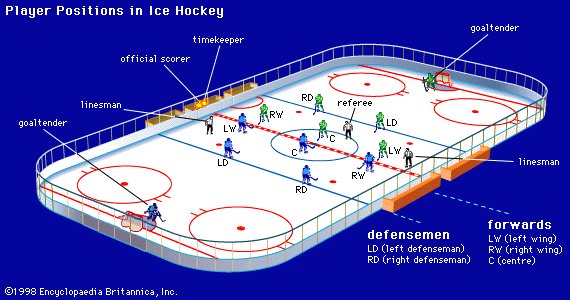
There are six players on the ice for each team during a typical hockey game.
Ever wondered about the fast-paced action and intricate strategies of hockey? A key element in understanding the game is knowing how many players are in a hockey game. It’s not just a free-for-all on the ice.
Each team carefully fields a set number, working in concert to try and score. This specific number of players creates the structure for the beautiful chaos we see during each match.

How Many Players Are in a Hockey Game?
Ever wondered just how many players are zooming around on the ice during a hockey game? It’s a great question, and the answer isn’t quite as simple as just a single number. It depends on a few things, like whether we’re talking about the players who are actually on the ice or the total number of players on a team. Let’s dive into the exciting world of hockey and break down how many players you’ll see in action.
The Basics: On-Ice Players
In a standard game of hockey, each team has six players on the ice at any given time. These players are divided into different roles, each with their own important job. It’s like a carefully choreographed dance where everyone works together to try and score goals!
The Six On-Ice Players:
- Goalie: This is the player who stands in front of the net, wearing lots of pads, and their main job is to stop the puck from going in. They’re the last line of defense.
- Defensemen: There are usually two defensemen on the ice for each team. Their job is to protect their own team’s net and help get the puck up to their teammates to start scoring opportunities. They’re like the guards in a castle.
- Forwards: These are the players who are primarily focused on scoring goals. There are three forwards on the ice for each team: a center and two wingers (left wing and right wing). They are like the attacking knights trying to capture the treasure.
Total Players on a Hockey Team
While only six players are on the ice at once, a full hockey team has a lot more players ready to go. A typical team usually has around 20-23 players. These extra players rotate onto the ice during the game, giving the players who are skating a break. Hockey is a very fast-paced game, and the players get tired quickly, so it’s important to have players on the bench ready to jump in. These players form what’s called the bench.
Types of Players on a Full Roster:
Here’s a breakdown of how those players are usually divided:
- Goalies: Most teams carry 2 goalies. This allows for one starting goalie, and one back up goalie incase the starter gets tired or injured.
- Defensemen: A team generally has about 6-8 defensemen. This allows for plenty of rotation during the game, so that the players are able to get rest and stay at peak performance.
- Forwards: The rest of the players on the team will be the forwards. The number usually falls around 12-14 players. These include the wingers (left and right) and the centers.
Having extra players is a key part of hockey strategy. Coaches can swap players out based on how the game is going, or if a player gets tired or needs a break. Having a strong group of players on the bench gives a team options and allows the team to play at their maximum potential.
Substitutions: The Changing Game
Unlike some other sports, hockey allows for “on-the-fly” substitutions. This means that players can change during the game without stopping the clock. This allows for hockey games to keep up a fast pace, and makes for lots of action.
How Substitutions Work:
- Line Changes: Coaches will often change out groups of players who play together. For example, a coach might replace three forwards and two defensemen with a new group of the same number. These are called line changes. This keeps the players fresh.
- Individual Changes: Sometimes a single player will get swapped out, based on fatigue, injury, or coaching strategy. This means any player can go off the ice and be replaced by another on the bench, as long as the team does not have more then 6 players on the ice at the same time.
Penalties and Reduced Players
Sometimes, a player will do something that breaks the rules, called a penalty. When this happens, that player goes to the penalty box, and their team has to play with fewer players on the ice. This is called a power play. A power play will occur when one team has 5 players on the ice, and the other has 4.
Common Penalty Scenarios:
- Minor Penalty: A minor penalty means the team will have one fewer player on the ice for two minutes.
- Major Penalty: A major penalty means the team will have one fewer player on the ice for five minutes.
- Multiple Penalties: A team can also receive multiple penalties. This means their team may have to play with three or even two players if they get too many penalites.
Playing with fewer players is a big challenge, which is why avoiding penalties is an important part of playing good hockey.
Variations in Player Numbers
While the rules above are common for the professional leagues like NHL, and other high-level leagues, there can be slight differences based on the type of hockey.
Different Hockey Formats:
- Youth Hockey: In youth hockey, the rules can be slightly modified, and the number of players can sometimes vary for younger age groups.
- 3-on-3 Hockey: This is a faster, more open style of hockey with only three players on each team, plus a goalie. This format is commonly used in over time periods in pro leagues like the NHL.
- 6-on-6 Hockey: This is the typical format of play that is used at the pro level, with 5 players skating, and 1 goalie, which equals 6 players per team on the ice.
Why The Number of Players Matters
The number of players on the ice, and on a team in total has a major impact on the game. The number of on ice players creates space, and speed on the ice, while the total roster provides a team with enough substitutions and different player skill sets to keep them strong for the whole game. Having the right balance of players is important for a team’s success.
The impact of Player Numbers:
- Strategy: The number of players is a key factor in deciding what tactics a coach uses. A team playing with more players on the ice ( a power play) is going to approach the game differently than when they are at an even strength or shorthanded.
- Player Skill: Different players have different skills. Having a variety of forwards, defensemen, and goalies on the roster means that there is someone on the team for every type of play.
- Endurance: Being able to rotate the players on the team is important so that they dont get too tired during the game.
The careful balance between on-ice players and total team numbers, creates the fast paced, thrilling game of hockey that we all know and love.
So, while six players from each team are on the ice at any one moment, keep in mind that a whole team of 20-23 players are working behind the scenes, ready to jump in and make a difference! Understanding these dynamics is a part of what makes hockey so exciting.
#realzone #4amanm #fact How many players in hockey? 🏑
Final Thoughts
A standard hockey game features six players from each team on the ice. These six comprise of a goalie, two defenders, and three forwards. This is the typical arrangement during play.
Penalties can temporarily reduce a team’s player count. This can create power play situations. In these cases, a team may have fewer players.
So, to reiterate, how many players are in hockey game? The answer is usually six players per team, but that can change.

