
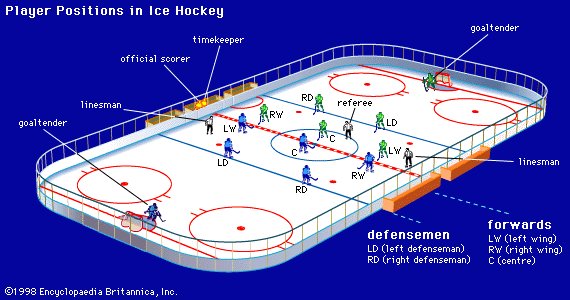
There are six players from each team on the ice during a hockey game.
Have you ever wondered about the fast-paced action on the ice? Many new fans ask, “exactly how many players in a hockey game?”. It’s a crucial question to understand the flow of the sport.
Each team has a specific number of skaters and a goalie on the playing surface. Knowing the number helps appreciate game strategy and the different positions.

How Many Players in a Hockey Game?
Okay, so you’re curious about how many players are on the ice during a hockey game? It’s a great question! Hockey might seem like a big jumble of players zooming around, but there’s actually a very specific number of skaters from each team allowed on the ice at one time. It’s not just a free-for-all! Knowing this number helps you understand the flow of the game and the strategies teams use.
The Basics: On-Ice Players
The standard number of players from each team allowed on the ice during regular play in hockey is six. This is a really important rule and stays the same for most of the game. These six players are made up of different positions, each with their own job. It’s like a well-oiled machine where everyone has a role to play!
The Six Players: What are their Roles?
Let’s break down those six players and what they usually do on the ice:
- Goalie: This is the most important defensive player. They stand in front of their net and try to block the puck from going in. Think of them as the last line of defense, keeping their team safe.
- Defensemen (2): These players help the goalie keep the puck away from their net and also try to pass the puck to the players who score. They are usually strong skaters and can make big plays in their own zone.
- Forwards (3): These players are the ones who mainly try to score goals. They skate around the other team’s zone and try to get the puck in the net. They include the center, left wing, and right wing.
- Center: They are kind of like the quarterback, playing in the middle of the ice and trying to control the flow of the game.
- Left Wing & Right Wing: These players are on either side of the center and help to both score goals and defend. They work with their center to create scoring chances.
So, that’s the standard setup: one goalie, two defensemen, and three forwards. This arrangement helps make sure the game is balanced and exciting to watch.
Total Players on a Hockey Team
Even though only six players from a team are on the ice at once, hockey teams have many more players than that. In the NHL (National Hockey League), which is the top professional league, teams usually have 20 or more players on their roster, plus a few more as back ups that usually don’t see the game. These extra players are needed because players need to take breaks, get injured, or if a coach wants to change the game strategy. So, while you only see 6 at a time from each team on the ice, there are actually way more players getting ready on the bench. That brings total of 12 skaters that are on the ice at a given time, 6 skaters from each side, and two goalies, each from different team, making a total of 14 players on the ice.
Penalties: When the Numbers Change
Sometimes, the number of players on the ice changes because of penalties. A penalty is when a player breaks a rule. When this happens, the player who broke the rule has to sit in the penalty box for a certain amount of time. If a team has a player in the penalty box, they have to play with one fewer player on the ice for the duration of that penalty.
Power Plays: One Team Gains an Advantage
When one team has a penalty, the other team gets what is called a “power play.” This means they get to play with one extra player on the ice. So, instead of 6 vs 6, it might be 6 vs 5. A power play is a great opportunity for the team with more players to score a goal. It’s a big advantage, and teams work hard to get those chances during the game.
Shorthanded: Playing with Fewer Players
The team that has a player in the penalty box is said to be “shorthanded.” Playing shorthanded is tough because there are fewer players to defend the puck. They have to work extra hard to keep the other team from scoring. They might be playing with 5 skaters while the other team has 6, that makes a big difference in a hockey game.
Extra Attacker: When the Goalie Comes Off the Ice
There’s also a special situation that can change the number of players on the ice. Sometimes, when a team is trying really hard to score a goal, especially in the last minutes of the game, they will take their goalie off the ice. This adds another skater, making it 6 vs 5 situation. This makes an open net, a lot more risk, but often worth it for teams that are trying to score.
Empty Net Strategy: A Risky But Rewarding Tactic
This is called “pulling the goalie” and creates an empty net. This means the team’s net is left unguarded, increasing the risk that the other team could score if they gain control of the puck and shoot it into the empty net from their own zone. However, having an extra player on the ice can help them score a goal and tie the game or take the lead. It is a gamble but can be a good move when you need to score a goal.
Substitutions: Switching Players During the Game
Even though only six players from each team are on the ice, teams are constantly making substitutions or “line changes”. These happen often because hockey is a very tiring game. Players only spend a minute or two on the ice at a time before going back to the bench for a rest. Coaches change the players often to keep them fresh and ready to go. This means that the players on the ice are constantly changing as the game goes on.
Line Changes: Why Players Rotate So Much
You might see players jumping over the boards and heading to the bench all the time. These are line changes. It’s how coaches manage their players and make sure everyone is fresh for the game. These changes are quick and happen on the fly and usually during play without stopping the game, which can be exciting. Each coach tries to make changes that give them an advantage on the ice. This means that the players you see on the ice at any given moment are just a small part of the team.
Team Strategies: Maximizing Player Time
Coaches have to be very strategic about which players they put on the ice. They consider things like player’s strengths, whether they are good at scoring, defense, or passing the puck. They will also use different players depending on if the team is on a power play or shorthanded. They carefully rotate players to keep everyone fresh and also to create the best possible match ups when playing against the other team. These strategies and player changes keep the game unpredictable and exciting for the fans.
Different Levels of Hockey
While the standard rule is six players on the ice at a time, the number of players can sometimes vary at different levels of the game. For instance, in some youth hockey leagues, teams might play with fewer players on the ice at a time to allow for more space and help younger players develop their skills. Here is a quick break down of different levels of the game:
Youth Hockey
In most youth hockey leagues, the number of players on the ice is still six. This may be different in some very young age groups where the players might only play with 4 or 5 skaters at a time. But as players progress up in age groups and skill, they usually move up to playing with 6 players at a time.
College Hockey
In college hockey, the rules are the same as professional hockey, meaning that there are 6 skaters from each side on the ice at any given time, unless there are penalties or special situations. It is a very competitive league and usually the style of hockey and the rules are the same as the NHL or professional leagues.
Professional Leagues
In professional hockey leagues like the NHL, the standard is definitely 6 players from each team on the ice at one time. Again, the rules stay the same, and any changes from that are only caused by penalties or special game time situations.
Importance of Knowing the Number of Players
Understanding that there are six players from each team on the ice at a time is more important than just a rule of the game. It is a crucial part of understanding the game and all of the strategies that take place. Coaches can use the amount of players in any given situation to plan different strategies to score goals or keep the puck away from their own net. It also plays an important role in how the game flows and why it is so exciting for fans to watch.
Quick Review
Let’s quickly go over the important points we discussed:
- There are usually 6 players from each team on the ice during standard play.
- These players are made up of one goalie, two defensemen and three forwards.
- Penalties can change the number of players on the ice which leads to power play and short handed situations.
- Teams sometimes pull their goalie to add an extra skater during special situations.
- The amount of players can change at different levels of the game.
Knowing the number of players on the ice is a fundamental part of enjoying hockey. It helps you understand the pace, the strategies, and all the exciting moments in the game. The next time you watch a hockey game, you’ll have a clearer picture of the players’ roles and why the game is played the way it is. Have fun watching!
#realzone #4amanm #fact How many players in hockey? 🏑
Final Thoughts
A standard hockey team puts six players on the ice at a time. This includes five skaters and one goalie. Penalties can alter this temporarily, changing the number of skaters for a specific team.
Understanding how many players in a hockey game is key to appreciating its flow. Teams strategize around these numbers, adapting to power plays and penalty kills. The core of the game revolves around these six players.

