
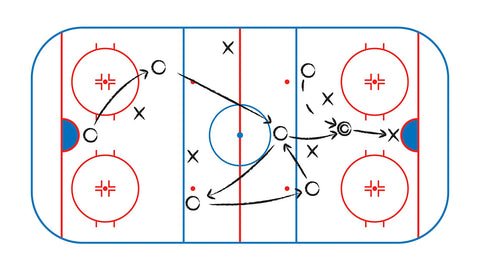
There are no quarters in a hockey game; it is played in three periods.
Ever wondered about the structure of a hockey game? You might be asking, “how many quarters are there in a hockey game?” Well, it’s a common question for those new to the sport. Many sports use quarters, but hockey follows a different structure.
Instead of four sections, hockey games are divided into three equal parts. These sections are called periods. Each period brings excitement and changes to the game’s flow. Understanding this format is key to appreciating the game.

How Many Quarters Are There in a Hockey Game?
Alright, let’s get one thing straight – if you’re thinking about quarters like in basketball or football, you’re in for a little surprise when it comes to hockey! Unlike those sports, hockey doesn’t use quarters. Instead, hockey games are divided into something called periods. Yes, that’s right, periods not quarters! So, if you’ve ever wondered how many segments a hockey game has, the answer isn’t in how many quarters, but rather, how many periods. Let’s dive deeper into the world of hockey periods and find out how they work.
The Core of a Hockey Game: Periods
So, instead of four quarters, a standard hockey game has three periods. Each of these periods is 20 minutes long. This means that the total playing time in a regular hockey game adds up to a full 60 minutes (three periods times 20 minutes each). However, it’s not as simple as that. There’s quite a bit more to understand about these periods than just the clock ticking down. Let’s explore all the ins and outs of a hockey game’s structure.
Delving into the 20-Minute Period
Each of the three periods in a hockey game is designed to be a solid 20 minutes of actual playing time. When the puck is in play, the clock keeps running. However, things slow down when the whistle blows. This is why a typical hockey game takes a lot longer than just 60 minutes to finish. Let’s talk about some reasons the clock stops:
- Puck Out of Play: When the puck leaves the rink’s playing surface, the clock stops. This can happen if the puck is shot out of bounds, or if it hits the netting above the glass.
- Penalties: If a player commits a penalty, such as tripping, hooking, or interference, the clock will stop. A penalty gives one team a power play, which is an advantage where the penalized team has to play shorthanded.
- Goals: When a team scores a goal, the clock will stop momentarily. This provides a short break for the players, a bit of time for celebration and for the referee to record the goal.
- Injuries: If a player gets injured during the game, the clock stops to allow the player to receive treatment.
- Icing: If a player shoots the puck from behind their own goal line all the way down the rink to behind the other team’s goal line without it being touched by another player, this is called icing, and play is stopped.
All these stoppages help to give players some much needed break time and reset the game. So, while the periods are each 20 minutes long, the total time from the first drop of the puck to the final buzzer can often be closer to two and a half hours.
Between the Periods: Intermissions
Just like in school, between periods there are intermissions! These breaks aren’t just to give the players a chance to catch their breath; they serve some important purposes in the overall flow of the game. Let’s see what the intermissions are all about:
Standard Intermission Length
The intermissions between periods in hockey are generally 15 to 17 minutes long. This allows the teams to head back to their locker rooms, discuss strategy with their coaches, and get a much needed rest before heading back onto the ice. There’s also time for the arena staff to resurface the ice. The time for this can vary slightly depending on the league or event, but the standard range will be in those minutes.
What Happens During an Intermission
These breaks serve a number of functions for the players and the teams:
- Rest and Recovery: Hockey is a very fast-paced and physically demanding sport. The players use these intermissions to rest and recover from the intense action on the ice.
- Coaching Strategy: Coaches use this break to talk with their players, discuss adjustments to their play, and get them mentally prepared for the next period.
- Equipment Adjustments: Players check their skates, sticks, and other equipment, making repairs or changes as needed.
- Ice Resurfacing: One of the most important parts of the intermission is resurfacing the ice. The Zamboni machine goes out on the ice to smooth it out and remove all the chunks of ice that the players make during the periods. This helps ensure an even playing surface for the next period.
Understanding Overtime in Hockey
What happens if a hockey game is tied at the end of the three periods? This is where the excitement of overtime comes into play. Overtime is a period played after the regulation periods if the scores are equal. There are a few different rules about how it works though. Let’s explore the different types of overtime situations:
Regular Season Overtime
In regular-season NHL games, the overtime period is a 5-minute sudden-death period. The teams play 3-on-3 (rather than the normal 5-on-5) to open up the ice for more action. If a team scores during overtime, the game is immediately over, and that team wins. If no goals are scored in overtime, the game goes to a shootout to determine the winner.
Playoff Overtime
The overtime rules for playoff hockey are much different than the regular season. In the playoffs, overtime is played with 5-on-5 hockey, and periods are 20 minutes long. It’s a sudden death format which means that the game continues until one team scores a goal and when a goal is scored the game ends. This can lead to very long, suspenseful games as teams battle it out to win. Sometimes it goes into multiple overtime periods before a goal is finally scored!
The Role of the Clock in a Hockey Game
The clock plays a really important part in how a hockey game is played. It’s not just about knowing how much time is left in each period. It also affects how teams strategize and play. Let’s see how it all works:
The Importance of Clock Management
Teams have to constantly be aware of the game clock. If a team is winning, they may play more defensively to protect their lead as the time ticks away. If a team is losing, they often become more aggressive, trying to score goals with the limited time they have. Clock management is a crucial skill for hockey players and coaches, and it can have a big impact on the outcome of a game.
Shot Clock
While the main game clock counts down the time in each period, there’s also another clock to pay attention to: the shot clock. The shot clock is typically used in other hockey leagues. The shot clock means that after a team gains possession in the offensive zone, they must take a shot on goal within a set amount of time. This rule is designed to encourage more attacking play and keep games exciting.
Differences Across Leagues
While the standard three-period, 20-minute per period format is pretty much the rule for most professional hockey leagues like the NHL, and for youth hockey across the world, there can be some differences at other levels or in other countries. Let’s explore some of these variances:
- Youth Hockey: In youth leagues, game periods can be shorter. This helps young players with their stamina and helps them develop their skills before they start playing at higher levels.
- International Play: International hockey games, such as those at the Olympics, generally follow similar rules as the NHL with three periods of 20 minutes each.
- Other Professional Leagues: There are other professional leagues around the world which may have slightly different rules in terms of period length. However, the standard is almost always three periods as you will see in almost all games.
Hockey Timing in Summary
In conclusion, while other sports use quarters, hockey games have three periods. Each of these periods is 20 minutes long, although stoppages in play mean a typical hockey game can last much longer. Between periods there are intermissions, giving players time to rest, regroup and adjust their strategy. In the event of a tie, there are several different types of overtime rules. Understanding how time is managed in a hockey game is essential to understanding all the strategies and excitement that hockey offers.
How Many Quarters In Hockey – Hockey Rules
Final Thoughts
A standard hockey game does not use quarters. Instead, it is divided into three periods. Each period is typically 20 minutes long, with intermissions between them. These intermissions allow players to rest.
Therefore, when thinking about the structure, you should focus on the three periods. How many quarters are there in a hockey game? The answer is zero; there are no quarters in hockey.

