
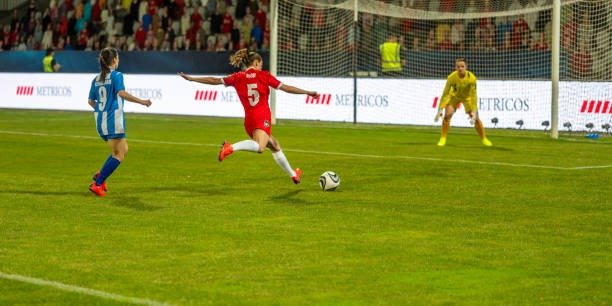
There are no quarters in a soccer game; instead, a soccer match is divided into two halves.
Ever wondered about the structure of a soccer game? It’s a common question, especially for those new to the sport. People often ask, “how many quarters in soccer game?” but the answer might surprise you.
Unlike some sports, soccer doesn’t use a quarter system for its game structure. Instead, the game unfolds over two distinct halves.

How Many Quarters in a Soccer Game: Exploring the Structure of Play
While many sports, like American football and basketball, are well-known for their use of quarters, soccer, also called football in many parts of the world, operates differently. It doesn’t use quarters at all! Instead, soccer games are divided into halves. This might seem like a simple difference, but it has a big impact on how the game is played and how much strategy goes into it. Let’s take a closer look at how a soccer match is structured and why it doesn’t use the quarter system.
Understanding the Basic Structure: Halves, Not Quarters
The foundation of a standard soccer game is its division into two halves. A typical full match consists of two 45-minute periods. So, instead of four shorter time chunks like you might see in basketball, soccer has two longer periods of play. There’s a break in between, typically called halftime.
Think of it like this: imagine a movie with two parts, instead of a tv series that’s split up into four parts of equal length in each episode. That’s how soccer divides its playing time.
The Halftime Break
Halftime isn’t just a break for the players to catch their breath and drink some water; it’s a crucial moment for teams to regroup and strategize. Usually lasting around 15 minutes, halftime gives coaches the chance to make adjustments to their team’s game plan based on what happened in the first half. Players can talk to their coaches, get any medical attention they need, and get mentally ready to play the second half. These are some important aspects of halftime.
Coaching Adjustments: Coaches discuss tactics and make changes to formations or player positions.
Player Recovery: Players rehydrate, get medical treatment, and rest.
Strategic Planning: Teams assess their performance and plan for the second half.
The halftime break can often influence the outcome of the game, as teams come back with different approaches.
Why Not Quarters? The Historical Context
You might be asking, “Why not quarters like some other games?” That’s a great question! The answer lies in the history and development of soccer. Soccer’s rules and structure evolved over a long period of time. The two-halves structure became established early on and remained. It seems it just stuck, like a good habit. Unlike American football, which was created with many breaks and pauses in mind to allow for plays to be called and set up, soccer is a flowing game where the action keeps moving. The halves system fits this more continuous nature. The consistent playing time of 45 minutes in each half adds a unique pace and rhythm to the game, different from a stop-start game like American football.
Variations in Game Length: Not All Games are 90 Minutes
While a typical soccer game consists of two 45-minute halves, not all matches are created equal. Game length can vary based on age groups, tournaments, and even some friendly matches. Here are some common variations:
Youth Soccer
Younger players usually play shorter matches. This helps them develop their skills without getting too tired. Here are a few examples:
U6 to U8: Games can be 20-25 minutes long, often with shorter halftime breaks.
U9 to U12: Game lengths often increase to 30 minutes per half.
U13 to U16: Many leagues in this age group play 40-minute halves.
The focus in youth soccer is on learning and development, so shorter games ensure that young athletes can play well and safely without burnout.
Tournament Play
In some tournaments, particularly knock-out rounds, things might not end at the end of 90 minutes, or regulation time.
Extra Time: If the score is tied at the end of regulation time, two 15-minute periods of extra time may be played.
Penalty Shootouts: If the game remains tied after extra time, penalty kicks decide the winner.
These additional stages build drama and excitement into tournament play.
Friendly Matches
Friendly matches, or exhibition games, can sometimes have agreed-upon shorter playing times. This might happen because they’re used for training purposes, or because of travel arrangements. Usually though they follow the same two half structure with a halftime in between.
The Flow of the Game: Why Halves Work Well
Soccer is known for its continuous flow of action. There aren’t frequent breaks in the game like in other sports. This constant movement emphasizes stamina and pacing. The two-half structure works well with this flow because it provides a long-enough period of play to develop strategy and momentum without breaking it up too much.
Continuous Play: The game rarely stops unless there’s a foul, the ball goes out of bounds, or a goal is scored.
Emphasis on Fitness: Players must be very fit to last 90 minutes, running up and down the field constantly.
Strategic Pacing: Teams try to control the pace of the game over long periods, knowing they have two halves to do this.
The two-half setup supports the game’s core features of continuous action and strategic depth.
Referee’s Role: Keeping Time and Adding Stoppage Time
The referee is not just watching for fouls but also a very important role is to keep track of the playing time. Soccer games have a specific time limit, and only one official keeps track of time, the main referee. Unlike American football or basketball, there isn’t a clock that counts down on the field. Instead, the referee has the official time.
Stoppage Time: Because the clock keeps running even when the game is stopped for fouls or injuries, the referee adds “stoppage time” or “added time” at the end of each half to make up for these interruptions. This is also called “injury time.”
Unpredictability: This extra time adds to the unpredictable nature of the game because there is no way for viewers to really know exactly how long the game is going to last.
Referee’s Authority: The referee is the only one who knows the official time and decides how much stoppage time to add.
Stoppage time makes soccer unique. It means that a game can last longer than the standard time if there have been many stoppages.
Implications for Team Strategy
The two-half system impacts team strategy significantly. Coaches must plan how they will pace their team’s energy over the entire 90-minute match.
Pacing Strategies: Teams need to be able to play strongly for 45 minutes, then adjust and do it again for another 45 minutes. They can’t just go all out from the start because they’ll be tired later on.
Tactical Adaptations: Teams must adapt to the way the other team is playing and plan for any changes needed at halftime.
Substitution Timing: Coaches need to decide when to substitute tired players with fresh ones without disrupting their team’s momentum too much. They will save their substitutions for specific moment in the game.
The lack of constant breaks in a soccer game means team strategies are much different than in sports with quarters.
Key Differences Compared to Other Sports
It’s helpful to contrast soccer with other popular sports that do use quarters, such as American football and basketball:
| Feature | Soccer | American Football | Basketball |
| ————- | ————————————- | ——————————- | ——————————- |
| Time Units | Two 45-minute halves (plus stoppage) | Four 15-minute quarters | Four 10-12 minute quarters |
| Game Flow | Continuous, less frequent stops | Frequent stops, play calling | Frequent stops, transitions |
| Clock | Referee’s time, no visible clock | Visible clock on field | Visible clock on field |
| Strategy | Emphasis on pacing, longer periods | Emphasis on play execution, timeouts | Emphasis on fast-paced transitions, breaks |
|Halftime | One 15-minute break | One long halftime break in between 2 quarters | One short break in between 2 quarters|
These differences highlight how the time structure impacts how each game is played. The constant movement in soccer, made possible by the two halves and lack of frequent breaks, sets it apart from the more stop-and-go nature of American football and basketball.
Why This is Important for Soccer Fans
Understanding the two-half structure is important for any soccer fan. Knowing that games are played in two 45-minute periods helps fans to better appreciate the rhythm of the game and the strategies used by the teams.
Game Appreciation: Knowing the difference between halves helps fans follow the game more easily.
Strategic Understanding: It helps people to recognize how teams are pacing themselves through the match.
Predicting Outcomes: Understanding how the two halves affect teams’ decisions makes games more exciting.
By understanding the game’s format, you can follow along with every match with much better comprehension.
In summary, while many sports use quarters to organize their playing time, soccer sticks to two halves of 45 minutes each. This method plays a key role in shaping the game, by emphasizing stamina, tactical awareness, and the continuous flow of play. It makes soccer different from sports that use the quarters structure, it’s all part of what makes soccer special.
How Many Quarters Are in an NFL Game? – The Football Xpert
Final Thoughts
A soccer game does not use quarters. Instead, soccer matches are divided into two halves. These halves are typically 45 minutes each, with a halftime break. This structure differs from many other sports.
Therefore, when asking how many quarters in soccer game, the answer is zero. Soccer games use halves, not quarters for their play periods. The game’s format remains unique compared to other sports.

