
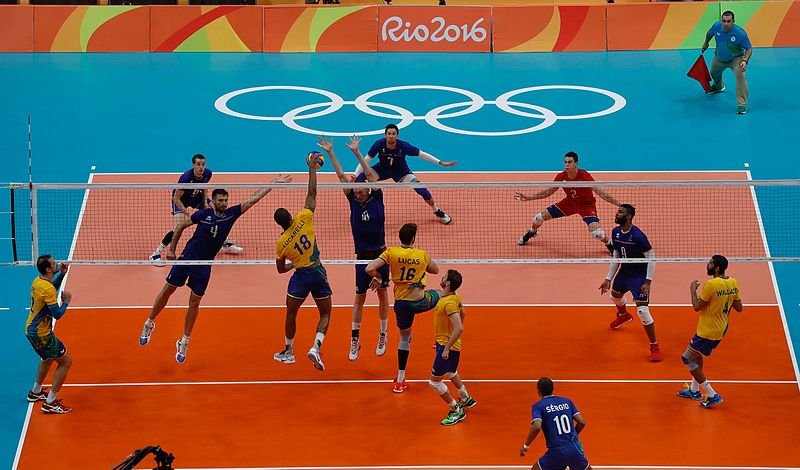
A volleyball match consists of either three or five games, depending on the specific rules being used for the match.
Ever wondered how many volleyball games are in a match? The answer isn’t always straightforward. It actually depends on the level of competition and the specific rules that are in place for the day. Knowing the format is key to understanding the game.
Typically, in a standard match, teams play either a best-of-three or a best-of-five series. This means either they play until one team wins two games, or one team wins three games. This difference affects the overall match strategy.

How Many Volleyball Games in a Match?
So, you’re curious about how many volleyball games make up a match? That’s a great question! It’s not as simple as just one game, like in some other sports. Volleyball matches are actually made up of multiple games, which we call sets. Let’s dive into the details of how these sets work together to determine a volleyball match winner. Think of it like a mini-tournament within a larger competition, where teams battle it out set by set. Understanding the number of sets and how they are won is key to enjoying and following volleyball.
The Standard: Best of Five Sets
The most common format for a volleyball match, especially in professional and college leagues, is the best-of-five sets. This means the first team to win three sets wins the entire match. It’s like a race to three, and each set is a smaller race to a certain number of points. It’s the usual format you’ll see in big tournaments like the Olympics or the NCAA championships.
How to Win a Set
Each set, except for the deciding set, is generally played to 25 points. However, there is a rule: a team has to win by at least 2 points. What does that mean? Well, imagine if the score is 24-24. One team needs to score two more points in a row to win that set, for example, 26-24. The set keeps going until one team gets that two-point lead.
The Deciding Set (Set 5)
If the score is tied at two sets apiece, the final, deciding set, also called the tiebreaker, is played. This set has a shorter format. Instead of playing to 25 points, the tie-breaker set is typically played to 15 points, again with the requirement of winning by a two point margin. This makes the final set fast-paced and super exciting to watch! Think of it as a quick sprint to the finish line.
Variations in Number of Sets
While the best-of-five format is most common, you will find other formats, especially when you watch younger age groups or in casual leagues. Here are a few variations you might encounter:
Best of Three Sets
In some less formal or lower level competitions, matches may be played as a best-of-three sets. In this case, the first team to win two sets wins the match. You might see this format in school volleyball matches for younger kids or in recreational leagues. This is a quicker option than the best of five.
The Rules for a Best-of-Three Match
Like a best-of-five format, the first two sets of a best-of-three match are usually played to 25 points with the two-point win requirement. If a third set is needed, it will be played to 15 points, also needing the two point difference to win.
The Point System Explained
Now that we know how many sets there are in a match, let’s quickly explain how points are scored in each set. In volleyball, a team scores a point every time the ball hits the ground in the opposite side of the court, the other team hits the ball out of bounds, or if they commit a fault or penalty. This is known as the rally point system and is used in all levels of play.
Understanding Rally Scoring
The rally scoring system means a point is awarded on every rally, regardless of which team served the ball. This rule change, put in place to make the game faster paced and more exciting, replaced an older scoring system where only the serving team could score points. Rally scoring ensures that every volley matters and contributes to the overall score.
Why the Change in Set Lengths?
You might be wondering, “Why is the tiebreaker set shorter?” The main reason is to add intensity to the game and keep it more exciting for both the viewers and players. It shortens the match but still requires top-notch performance to secure the win.
Keeping Matches Engaging
The change in length for the fifth set helps prevent the game from going on for too long, which might lead to a loss of interest or the players getting too tired. With the tiebreaker set being shorter, it places more emphasis on each point and forces teams to play as aggressively and efficiently as possible. It also means the outcome can be decided more rapidly, increasing the thrill.
Volleyball Set Structure
Understanding a volleyball set’s structure can be helpful to get an idea of the flow of a match. Here is what you would see in each set.
The Start of a Set
Each set begins with a coin toss or other means to determine which team serves first. The team that wins the coin toss chooses either to serve first or which side of the net to start on. The other team then gets to decide on the other. After each set, teams switch sides on the court to ensure a fair playing field.
The flow of the Set
The flow of the set consists of rallies back and forth with each team trying to score a point. Players rotate positions on the court when their team gains the serve, and they work together as a team to win the set. The rallies continue until a team scores enough points, with the two-point lead requirement, to win the set.
Set Time Duration
It’s hard to say precisely how long each set will take. Sometimes, a set may go by very quickly if one team dominates, while other times a set can be a long affair when the competition is more evenly matched. Typically, a set may last anywhere from 20-40 minutes, but this can fluctuate depending on the number of close plays.
Key Takeaways: How Many Volleyball Games in a Match?
- Most professional and college volleyball matches use a best-of-five sets format.
- The first four sets are usually played to 25 points with a two-point winning margin requirement.
- The deciding set is typically played to 15 points with a two-point winning margin requirement.
- Some matches, especially in less formal leagues, use a best-of-three sets format.
- Rally scoring is used in all level of play, meaning a point is awarded on every rally.
Strategic Implications of Set Length
The number of sets in a volleyball match influences team strategy. Teams need to pace themselves and make adjustments depending on how many sets they will need to play. For example, in a best-of-five match, they can afford to lose a set or two, but in a best-of-three match, losing a set might put them in a much more pressured situation. Coaches make different decisions about player substitutions and game plans depending on the match format.
Pacing and Stamina
In a best-of-five format, stamina is super important. Players need to maintain their energy and skill levels throughout potentially 5 sets. Teams often work on conditioning and pacing during training to ensure they can handle the demands of a longer match. Knowing a team may have less energy by the time set 5 comes around can influence their opponent’s strategies.
Adjusting Strategies
Coaches often watch closely how the teams are playing during the early sets. If it’s a best of five, they have time to adjust their strategy and substitute players to respond to what is happening on the court. However, in a best of three they may need to make decisions more quickly because there are less opportunities to adjust. Every set matters, and changes might need to be made mid-game to take advantage of the different conditions.
The Importance of Each Point
Given that a set can be won by just two points and that there can be many ties and close calls in any given set, each point in volleyball is extremely crucial. This means teams must be disciplined, consistent, and able to handle pressure. These skills are what can make the difference between winning and losing, so training focuses on these essential elements of volleyball.
Mental Toughness
The need to perform consistently over multiple sets, especially when the score is close, requires mental toughness. Players need to have the focus and resilience to stay in the game, even when things are not going their way. The ability to bounce back from a bad play or a point lost is one of the qualities of great volleyball players.
Team Cohesion
Since volleyball is a team sport, cohesion and communication are very important. Players need to be able to work together smoothly and effectively, no matter what the score. Whether the game is a best of five or best of three, having good team chemistry increases each team’s chances of taking home a win.
Examples in Action
To really get a feel for how the number of sets influences the flow of a match, think about some famous volleyball games. For example, watch some Olympic matches and see how teams build up their strategies and momentum during the best-of-five format. The strategies and excitement in the deciding set of a close game really highlights how important every point is. In contrast, watch some shorter matches and notice how the intensity is ramped up right from the beginning of the match.
Watching Professional Matches
When you watch professional volleyball matches, you’ll see top-tier players executing strategies and demonstrating great sportsmanship. Whether it is a best of three or best of five, you will see great talent. Watching these matches will help you further understand how matches progress.
School and Recreational Play
Attending local or school matches will help you see different levels of play. In less formal settings you might see either a best of three or best of five format. Watching your local teams play will give you first hand experience of the set structures.
In summary, the number of volleyball games in a match is generally decided by a best of three or best of five rule set, where each game or set is a smaller race to a set number of points. Understanding the differences in the format is crucial for appreciating the strategies and excitement that each volleyball match brings.
This volleyball save is INSANE! 😲 #Shorts
Final Thoughts
A volleyball match typically involves playing a series of sets, not games, to determine the winner. Teams must win a specific number of sets to win the match.
For most competitive volleyball, including international play, the winning team is the first to secure three sets. This means a match could last a minimum of three sets and a maximum of five.
So, clarifying ‘how many volleyball games in a match’ is really about sets. A match ends when one team has won three sets.

