
To ace the McKinsey Solve game, focus on practicing logical reasoning, data interpretation, and quick decision-making under pressure.
Are you preparing for the McKinsey Solve game and wondering how to ace mckinsey sove game? Many candidates find it challenging, but with the right approach, you can significantly improve your performance. This interactive assessment evaluates key skills crucial for consulting. The game tests your ability to think analytically and efficiently.

How to Ace the McKinsey Solve Game
Getting ready for the McKinsey Solve game can feel like preparing for a big adventure. It’s not about memorizing facts; it’s about showing how you think and solve problems. Think of it as a puzzle where McKinsey wants to see how you put the pieces together. This guide will break down the different parts of the game, offering clear explanations and tips to help you do your absolute best. We’ll cover the types of questions you might see, the skills you need, and how to practice effectively. Let’s jump in and get started!
Understanding the McKinsey Solve Game
The McKinsey Solve game is a digital assessment used by McKinsey & Company to evaluate potential candidates. It’s designed to look at how you approach problems, how well you analyze information, and how you make decisions. Unlike traditional tests with right or wrong answers, the Solve game is more about seeing your thought process. This part of the recruitment process often comes after your initial application and aims to understand your critical thinking skills. It’s important to remember the game isn’t designed to trip you up; it’s meant to give you a chance to show how you tackle complex situations.
Why Does McKinsey Use the Solve Game?
McKinsey uses the Solve game because it helps them see skills that might not be obvious from your resume alone. It lets them understand how you:
- Analyze data
- Identify important information
- Make decisions based on that data
- Think critically
- Solve problems creatively
These are crucial skills for consulting, where you need to quickly understand a client’s situation and find the best solution.
What Skills Does the Solve Game Assess?
The Solve game looks at different aspects of your abilities. Here are some of the key skills it aims to evaluate:
- Analytical Skills: Can you break down complex information into smaller, understandable parts?
- Problem-Solving: How well do you identify a problem, explore different solutions, and pick the best one?
- Decision-Making: Can you make smart decisions based on the data and information you have?
- Logical Reasoning: Can you follow a logical path to find an answer?
- Attention to Detail: Can you notice small but significant pieces of information?
- Time Management: Can you work effectively and efficiently within a set time limit?
Types of Questions You’ll Encounter
The McKinsey Solve game often includes a variety of question types, designed to assess different skills. While the specific format might change, here are some common categories you should be prepared for:
Ecosystem Building Scenarios
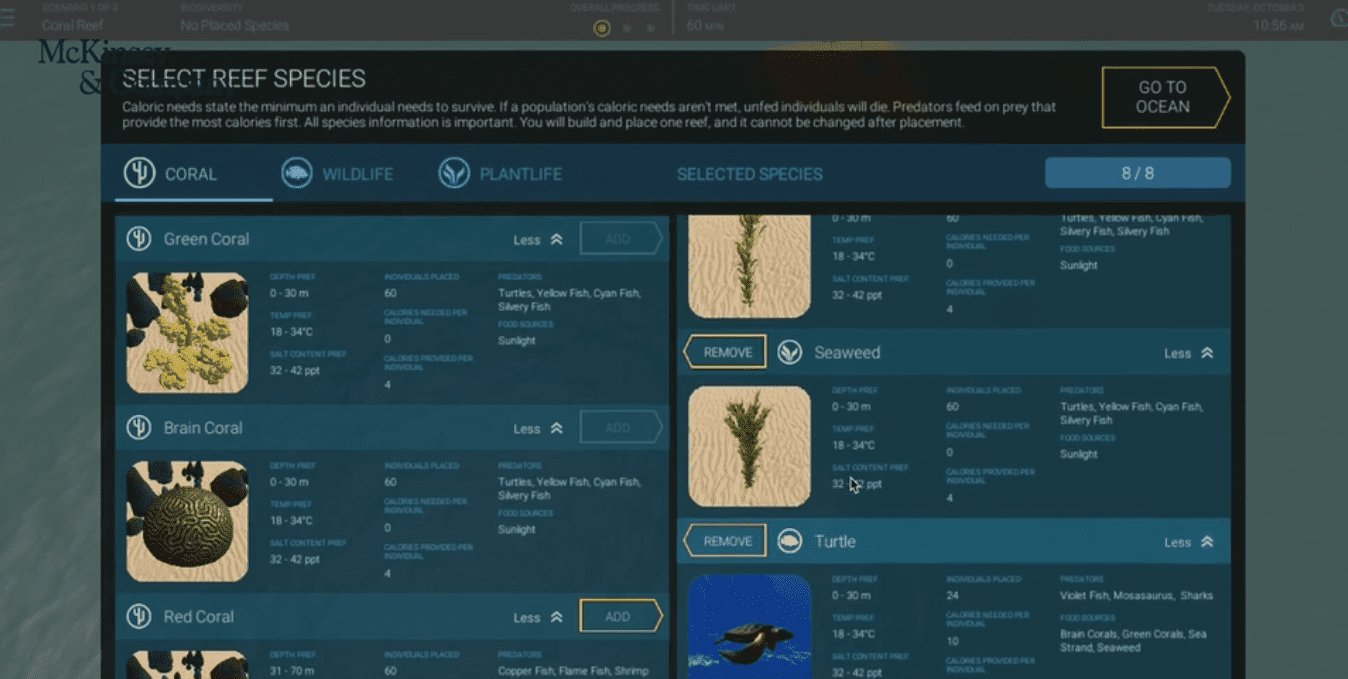
In these types of questions, you are often presented with a scenario where you need to help create or grow an ecosystem. Think of it like building a garden. You have to figure out which plants will work well together, how much water they need, and how to make sure they grow big and strong. These scenarios test your ability to see how different pieces fit together and how they impact each other. You might need to figure out what resources are needed and how to best use them for growth, this requires strong understanding of interconnectedness and strategic thinking.
Chart Interpretation and Data Analysis
These questions present you with charts, graphs, and other visual data. Your job is to analyze this data, identify any trends or patterns, and then draw conclusions. It’s like being a detective, looking for clues in the data. You need to be good at reading charts and understanding what the numbers are telling you. Here’s how you should approach this:
- Look at the Title: What does the chart represent? What are the variables?
- Study the Axes: What do the x and y axes represent? What are the units of measurement?
- Identify Trends: Are there any patterns? Are there any increases or decreases? Are there any outliers or unusual data points?
- Draw Conclusions: Based on the data, what can you infer or conclude? Make sure to be logical in your conclusions.
Be careful not to assume things, use only the data given to you.
Situational Judgment Questions
Situational judgment questions give you a realistic workplace scenario and several possible actions. You must choose the best action, or sometimes, rank them. These questions want to understand how you would behave in real-world situations. The goal is to see how your values and decision-making align with McKinsey’s. Think of it like a “choose your own adventure,” where you pick how you would react. Focus on selecting the option that is logical, ethical, and best for the team and overall goal. Always take the long term view as short term solutions might be detrimental.
Logic-Based Puzzles
These sections test your ability to think logically. They will involve puzzles or problems which require you to use deductive reasoning. You’ll need to examine the information provided, find patterns, and deduce the correct answer. These types of questions can be tricky. Here is how to approach them:
- Understand the rules: Ensure you completely understand what you’re being asked to do. Pay attention to all the rules and constraints.
- Break it into small parts: Tackle smaller pieces of the puzzle to find the solution. Don’t get overwhelmed by the bigger picture.
- Look for patterns: Try to find a logical pattern, this will help you solve the puzzle.
- Test your answer: Make sure your answer fits the rules of the problem.
Games with Rules and Strategy
Sometimes, the Solve game may feature questions that seem more like actual games. These often have specific rules you must learn and follow. Here, the focus is on strategy and planning. You need to understand the rules and make the best decisions to succeed in the game. This may involve using logic, planning ahead, and thinking about how to get better outcomes.
Tips and Strategies for Success
Now that you know what to expect, let’s talk about how to get ready. Here’s a breakdown of some key strategies to help you do your very best:
Practice Regularly
Like anything, the more you practice, the better you’ll get. Try to dedicate some time each day to practice different kinds of logic puzzles, chart reading, and situation based questions. There are plenty of resources online that can be helpful. This is not a test where you can cram information; it’s about improving your way of thinking. Regular practice will help you get more comfortable and confident with the test format.
Understand the Instructions
Before you start any question, carefully read all instructions and details. This sounds like basic advice, but it’s so important. Make sure you understand the rules, what’s being asked, and any restrictions involved. It’s very easy to start working before understanding what you need to do. Take a moment to pause and make sure you understand what’s being asked. This can save time and mistakes.
Time Management Is Key
The Solve game is timed, which means you need to move efficiently. Don’t get stuck on one question for too long. If you find yourself struggling, make an educated guess and move on. Try to solve questions with speed and accuracy. Regular practice can help you improve your time management skills. During your practice, try to simulate the test conditions and practice with a timer.
Focus on Your Thinking Process
Remember, the Solve game is not necessarily about having the right answers every time; it’s about the way you think. McKinsey wants to see your process. Be clear and logical in your thinking and be able to justify your decisions. Explain your logic process in your mind. It will help you see if you’re missing something and also help you to clearly explain your rationale.
Don’t Be Afraid to Guess
If you don’t know the answer, don’t just leave it blank. Make an informed guess based on the information you have. It’s always better to attempt and use your reasoning. Sometimes, even guessing can show your thought process. You need to use all the information you have available and make the best decision given those constraints.
Analyze Your Mistakes
After each practice session, spend time reviewing the questions you got wrong. Try to figure out why you made the mistake and what you can do better next time. It’s very important to learn from your mistakes. Reviewing and learning will help you avoid repeating them in the actual assessment. Learning is the biggest part of the preparation.
Use Online Resources Wisely
There are lots of online resources that you can use to prepare for the Solve game. Some of them include practice questions, study guides, and advice from people who have already taken the test. Here are some suggestions on using these resources effectively:
- Look for reputable sources: Make sure the resources you’re using are reliable.
- Focus on areas you need improvement: Don’t waste time on things you already know. Focus on the sections that you struggle in.
- Don’t rely on one single source: Explore different resources and strategies to get a comprehensive understanding.
- Don’t expect to find exact replicas of the test: The actual test questions will be different. Focus on the core concepts instead of memorizing.
Relax and Take Breaks
Preparing for any important assessment can be stressful. It’s essential to take breaks, relax, and get enough sleep. Taking care of yourself will help you perform better when you take the assessment. A well-rested mind is more efficient and clear. Schedule regular breaks and try to include exercise and relaxing activities.
Final Preparations Before the Game
In the days leading up to the game, finalize your preparations with these key actions:
- Review all the concepts: Go over all the key topics you have worked on. Make sure that you understand them well.
- Complete some practice test runs: Do timed practice sessions, with similar testing conditions.
- Get a good night’s sleep: Make sure you are well rested before the game.
- Make sure you have a good and stable internet connection: You will want to avoid problems on the day of the assessment due to internet.
Additional Tips for Specific Question Types
For Ecosystem Building Scenarios:
- Understand the interconnections: Try to understand how all the elements connect. What impact one element has on another is very important.
- Prioritize: You have limited resources, what should you focus on and why?
- Think long-term: How will your decisions impact the ecosystem in the long run?
For Chart Interpretation:
- Look for the main takeaway: Don’t get lost in the details, try to see the main message of the chart.
- Be objective: Use only the information given to you, don’t make any assumptions.
- Double-check your conclusions: Make sure your conclusions are backed by the data in the chart.
For Situational Judgment Questions:
- Consider all perspectives: Think of how each action could impact all parties involved.
- Think from a professional perspective: What action would a McKinsey consultant take?
- Focus on ethics and logic: Always choose the option that is both ethical and logical.
For Logic Based Puzzles:
- Don’t get frustrated: Take deep breaths and don’t be afraid to try different solutions.
- Start with the basics: Break the problem into smaller solvable steps.
- Keep practicing: Logic and reasoning skills improve with practice.
For Strategy Games:
- Learn the rules: Before you play, be very clear on what the rules are.
- Plan: Think ahead and create a strategy for the game.
- Adapt to changes: Be ready to adapt if the game changes or your strategy isn’t working.
With enough preparation and the correct mindset, you can approach the McKinsey Solve game with confidence. Just remember to stay calm, stay focused, and show them your problem-solving skills. It’s all about your method, not just getting the right answers. Remember to show your thinking!
Preparing for the McKinsey Solve game might seem tough, but with a good plan, practice, and the right approach, you can greatly increase your chances of doing well. The key is not just knowing the answers, but showing how you think and make decisions. By using the tips discussed here, practicing regularly, and understanding the test format, you can present your best self. Remember, this game is designed to assess your skills and abilities to tackle complex situations, so embrace the challenge and think of it as an opportunity to show your potential. So, go ahead, prepare, and do your best!
McKinsey Solve Game (How To Pass in 2024!)
Final Thoughts
To ace McKinsey Solve game, practice consistently with similar pattern games. Understand the logic and rules of each game type presented. Focus on speed and accuracy. Time management is absolutely key; balance your attempts.
Develop a system to approach each question methodically. Review your mistakes after every practice attempt. This will help you to improve your performance. So, consistent practice is essential for how to ace mckinsey sove game.

