
Creating an escape game involves designing puzzles, hiding clues, and crafting a compelling narrative that players must solve to “escape” within a set time.
Ever dreamt of crafting your own mind-bending puzzles and watching friends scramble to solve them? Well, learning how to create an escape game is easier than you might think! This guide will walk you through the essential steps for designing a fun and engaging experience. You’ll quickly understand how to turn your creative ideas into an exciting adventure for others.

How to Create an Escape Game
So, you’re thinking about making your very own escape game? That’s fantastic! Escape games are super fun, and creating one can be a really rewarding experience. It’s like building a puzzle that others get to play. But where do you even begin? Don’t worry, it might seem tricky at first, but we’re going to break it all down into easy-to-follow steps. We’ll go from picking a theme to designing puzzles that will challenge and delight your players. Let’s get started!
Choosing Your Theme and Story
The first big step is figuring out what your escape game will be about. This is your theme! Think of a good story. Will your players be secret agents? Maybe they’re exploring an ancient tomb, or trying to stop a robot from going haywire? The theme sets the tone for everything else, so choose something that excites you, and try to pick a theme that people will enjoy playing. A good theme will make all the puzzles more engaging. You want your players to feel like they’ve really entered a different world.
Brainstorming Theme Ideas
Here are some theme ideas to get your creative gears turning:
- Mystery: A detective solving a crime, maybe a classic whodunit scenario.
- Fantasy: Wizards, dragons, enchanted forests and magical creatures.
- Sci-Fi: Spaceships, robots, alien planets, and futuristic tech.
- Adventure: Indiana Jones-style treasure hunts, jungle expeditions, or exploring pyramids.
- Historical: Escaping a prison cell from the 1920s, or deciphering ancient runes from the Mayan civilization.
When choosing a theme, consider who you’re making the game for. Kids, adults, families, or groups of friends? Make sure the theme is appropriate for their age and interest level. A fun theme will make your game unique and memorable.
Crafting a Compelling Story
Now that you have your theme, give it a story! Think about why the players are in this situation. What are they trying to accomplish? Write a brief backstory, which provides the context for the players and helps them get invested in the game. For example, in a detective theme, maybe a priceless artifact has been stolen, and the players are the investigators trying to find it. Or, in a space theme, maybe the players are trapped in an escape pod that is about to explode.
Your story doesn’t need to be super complex, but it should be enough to create an exciting experience. Keep it simple and easy to follow. Think about what kind of challenges the story presents and how they connect to the puzzles. Make the story a part of the escape experience.
Once you have the story, think about the goal of your escape game. What must the players achieve to escape or win? This could be to find a hidden key, disable a bomb, or solve a mystery. The goal provides players with clear purpose.
Designing Engaging Puzzles
Puzzles are the heart of any escape game. They need to be challenging but not so difficult that players get stuck and frustrated. The key is to have a variety of puzzle types that fit your theme and engage players in different ways.
Types of Puzzles
Here are some popular types of puzzles you can use:
- Logic Puzzles: These involve using reasoning and deduction to solve problems. Think Sudoku, sequences, or pattern recognition.
- Word Puzzles: These include anagrams, riddles, and cryptograms. These can be great for injecting clues into the story or environment.
- Math Puzzles: These involve numbers and equations. It doesn’t have to be complicated, simple math will do! You can also use math for code-breaking.
- Observation Puzzles: These involve carefully looking at objects or the surroundings to find clues or hidden messages. These make use of the environment.
- Spatial Puzzles: These involve manipulating physical objects to complete a challenge. This could involve jigsaws, tangrams, or building with blocks.
- Combination Puzzles: These involve needing multiple puzzles or clues to solve a final problem, like using a code to open a lock.
Remember to mix different kinds of puzzles to keep the game exciting and engaging for everyone. No one puzzle should be super similar to another.
Creating a Puzzle Flow
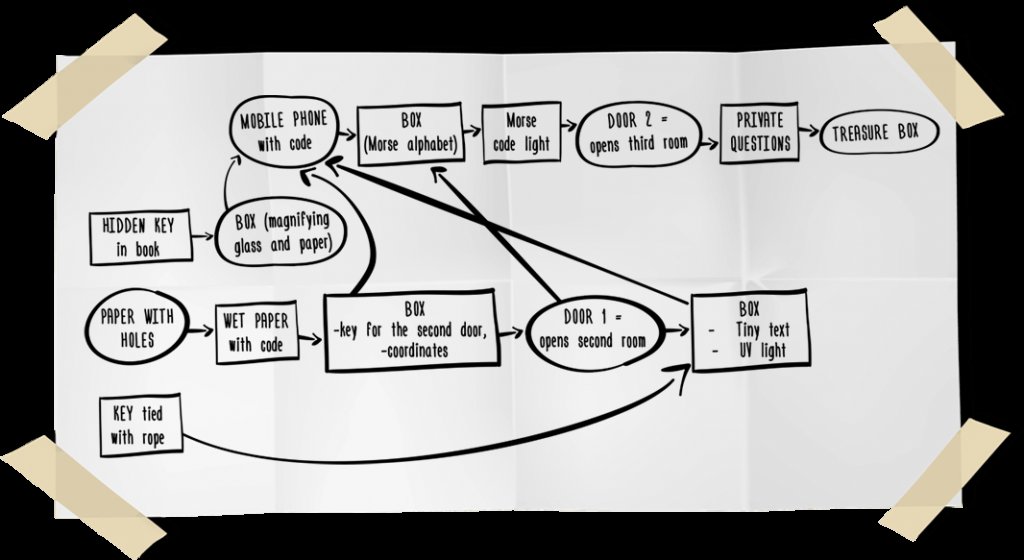
The puzzles in your game should flow naturally from one to the next. Think of it like a chain. Solving one puzzle gives you the clue or item you need to solve the next one. The sequence should make sense within the context of your story. For example, you might have players find a key inside a book, that unlocks a box which contains a code. This code is then used to open a safe.
Here’s a general idea for creating a good puzzle flow:
- Start with an introductory puzzle: Something fairly easy to get players into the swing of things.
- Introduce layered challenges: Mix harder and easier puzzles. You can even make some puzzles that require teamwork and communication.
- Create a final puzzle: One that requires you to put all the pieces together, leading to the escape.
Avoid creating too many linear puzzles, where players have to complete one before they can move to the next. Adding multiple puzzle lines lets players work on various challenges simultaneously, preventing bottlenecks. This keeps everyone involved. Consider how each puzzle is connected and how each provides pieces to solve the next.
It’s very important to plan your puzzle flow on paper first. Make sure each step is logical. Make sure your game has a clear progression. This planning helps create a smoother and enjoyable experience.
Making Your Puzzles Challenging but Fair
Finding the right level of difficulty is important. You don’t want puzzles that are too simple, as it would not be fun. You also don’t want them to be too difficult, which would get players frustrated and they won’t know how to move forward. Test them yourself, and if needed, get a friend to test them, before you put them in your final game.
Here are a few tips for creating well-balanced puzzles:
- Clear Instructions: Make sure the rules of the puzzle are easy to understand. Use simple wording.
- Logical Connections: The answers should be connected to the clues. Players should be able to solve a puzzle by making logical connections.
- Vary the Difficulty: Include a range of puzzle types. This keeps the game engaging.
- Test and Iterate: Before your final game, test your puzzles, and adjust them if necessary.
Don’t underestimate the power of a good hint system. If players get truly stuck, a gentle nudge in the right direction can keep them in the game. Have hints ready, but don’t offer them too soon! Allow players to struggle a little. Make the hints progressive. Starting with a small clue and then bigger hints if the players don’t get it.
Setting up the Game Environment
The space where your escape game takes place plays a huge part in the experience. The environment should add to the theme and help immerse the players into the story.
Choosing the Right Space
You can use a single room, multiple rooms, or even an entire outdoor area, depending on your theme and the complexity of your game. Consider the size and layout of the space and make sure that it is safe for the players. If using an outdoor space, always consider the weather conditions.
Make sure the space is flexible enough to accommodate all your puzzles and props. Try to choose an area that is easily accessible and can be set up and taken down without much effort. Choose an area that fits the theme and adds to the overall experience.
Decorating and Theming Your Space
Use decorations, props and lighting to make the space immersive. The decorations should relate to the theme and the story. If it is an ancient tomb, use fake bricks, old maps, and torches. If it is a spaceship, use buttons, dials, and flashing lights.
Use what you already have! You can find great props and decorations around your home or in local stores. You can also create some DIY decorations using craft supplies and recycled materials. Sometimes simple elements like background music can enhance the atmosphere. A well-themed space will make players feel like they’ve really been transported.
Hiding Clues and Puzzles
Carefully hide your clues and puzzles around the space. You want to make sure they’re not too easy to find, but not so well hidden that they become frustrating. Use furniture, books, containers, and other items to your advantage. Some clues might be in plain sight, while others will be tucked away for players to find.
Make sure all your hidden clues and puzzles are safe to interact with. Avoid dangerous places like sharp edges or exposed wires. Be mindful to hide the puzzles appropriately in a way that is not physically demanding for players. If you have any delicate items, make sure to secure them so that they don’t break.
Playtesting and Refining Your Game
Once you have designed your escape game, it’s time to test it out. This is an extremely important part of the process! Playtesting lets you see how your game actually works and where improvements can be made. Don’t be afraid to change the puzzles. Playtesting will help you identify problems and make changes.
Gathering Testers
Ask your friends or family to test your game. Choose people of different ages and backgrounds if you can, because this gives you different perspectives. Explain your goals to them and watch them play. Pay attention to how they solve each puzzle. Where did they get stuck? Did they seem bored or engaged? Use all of this information to adjust the game.
Watching for Issues
Observe how players interact with your puzzles and environment. Pay attention to where they get confused or frustrated. You may discover that some puzzles are too hard or too easy. You might notice areas where the flow of the game needs to be improved. You should also consider the time. How long did the players take to complete the game? Is it too long or too short?
Making Adjustments
Based on the playtesting feedback, adjust your puzzles, hints, and the overall game flow. You may need to make some changes to your original plan. Be flexible! Testing and refining are a normal part of creating a good escape game. You may need to make adjustments to the complexity of the puzzles, the hints, or the setup of your environment. Don’t worry, this process makes your game even better!
Playtest multiple times and make adjustments every time. The more you test, the more polished your game will become.
Running Your Escape Game
Finally, it’s time to run your escape game. Remember, your role as game master is just as important as the puzzles themselves. You guide the players through the experience. As the game master, be prepared to help the players if they get stuck. Do this by providing hints, without giving away the solution.
Setting the Stage
Before the players begin, give them a brief overview of the story and the rules of the game. Set the tone for the adventure. Explain the overall goal and what they need to do to win or escape. Make the players excited to start.
Make sure all the elements of your escape room are in place. The puzzles are ready, the props are set, and the environment is prepared. Check everything before the players begin.
Providing Hints
Have your hints ready, just in case. Make them progressive, starting with subtle clues. Only offer hints when necessary. It’s usually more fun when players figure things out on their own.
You can provide hints verbally, in writing, or through the game environment. Be careful not to give too much help. The goal is to nudge them in the right direction, not to give them the answers. If players are extremely stuck, consider giving a very obvious hint.
Celebrating Success
When the players finish the game, make sure to congratulate them. Share a fun story about the creation of the game or some interesting facts about the puzzles. Make it a memorable experience.
After the game, ask players for feedback. Use their feedback to improve your game for future groups. Every escape game you run is a chance for your players to enjoy the puzzles and the experience that you made!
It was a great journey, wasn’t it? With a little bit of planning and a lot of creativity, you can make an amazing escape game that will excite and challenge your friends and family. Now you can start creating your very own escape game!
7 things that make an Escape Room fun
Final Thoughts
Planning your theme and designing logical puzzles are key aspects of how to create an escape game. Consider the narrative you want to tell and weave it into the challenges. Clearly defining your game space is a must.
You should develop solvable clues that engage players. Test the flow and difficulty of your game thoroughly before any real play session.
Pay attention to the story and the props. This attention to detail enhances overall player experience. Now you have a simple idea about how to create an escape game.

