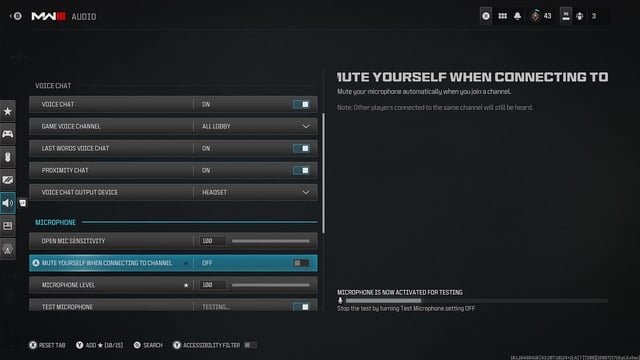
To fix party chat and voice communication issues in Battlefield 6, try these common solutions: check your microphone input/output settings, ensure Battlefield 6 has permission to access your microphone, restart your game or platform, and verify the game’s audio settings are correctly configured within the options menu.
Frustration mounts quickly when your squad can’t hear you calling out enemy positions in Battlefield 6. Don’t let communication breakdowns ruin your matches!
We understand the need to be able to strategize and coordinate with your team. That’s why we’re here to address the problem of ‘how to fix party chat and voice communication issues in Battlefield 6’.
This guide provides simple troubleshooting steps to get you back in the game, talking tactics with your squad. Let’s make sure you’re heard loud and clear on the battlefield!

How to Fix Party Chat and Voice Communication Issues in Battlefield 6
Voice communication is crucial in Battlefield 6. Clear comms allow you to coordinate strategies. This leads to better teamwork and increased chances of victory.
Experiencing party chat or voice communication problems can be frustrating. These problems can significantly impact your gameplay experience. Let’s explore some common issues and how to resolve them.
General Troubleshooting Steps
Start with the basics before diving into more complex fixes. These general steps can often resolve common audio problems. This is a great starting point for troubleshooting.
Restart Battlefield 6: Close the game completely and relaunch it. This can resolve temporary glitches affecting voice chat.
Reboot Your System: Restart your PC or console. This refreshes the system and can clear background processes interfering with audio.
Check Your Internet Connection: Ensure you have a stable internet connection. Packet loss or high ping can disrupt voice communication. Use a speed test website to verify your connection.
Update Audio Drivers: Outdated audio drivers can cause compatibility issues. Update your drivers to the latest version. You can typically find these on your device manufacturer’s website (e.g., Realtek, NVIDIA).
Verify Game Files: Corrupted game files can lead to various problems. Verify the integrity of the game files through your game launcher (e.g., Steam, Origin, Epic Games Launcher).
Check Server Status: Sometimes, voice communication issues stem from server-side problems. Check the Battlefield 6 server status page or community forums for announcements.
In-Game Audio Settings
Battlefield 6 has various audio settings that directly impact voice chat. Ensure these settings are configured correctly. Proper settings are vital for clear communication.
Voice Chat Enabled: Verify that voice chat is enabled in the game’s audio settings. Make sure it isn’t accidentally disabled.
Voice Chat Input/Output Device: Select the correct microphone and speaker/headset as your input and output devices. Ensure the game is using the intended devices.
Voice Chat Volume Levels: Adjust the voice chat volume to a comfortable level. This ensures you can hear your teammates without distractions. Also, adjust your microphone input volume to ensure others can hear you clearly.
Voice Chat Mode: Choose the appropriate voice chat mode (e.g., open mic, push-to-talk). If using push-to-talk, ensure the correct keybind is assigned and functioning.
Voice Chat Threshold: Adjust the microphone threshold to avoid background noise activation if using open mic. A higher threshold reduces accidental activations.
Platform-Specific Solutions (PC)
PC gaming offers a wide range of hardware and software configurations. This makes troubleshooting more complex. Here are some PC-specific solutions.
Windows Sound Settings
Windows sound settings directly affect in-game audio. Configure these settings carefully.
Default Input/Output Devices: Set your desired microphone and speakers/headset as the default communication devices in Windows sound settings. Right-click the speaker icon in the system tray and select “Sounds,” then navigate to the “Recording” and “Playback” tabs.
Microphone Privacy Settings: Ensure that Battlefield 6 has permission to access your microphone in Windows privacy settings. Go to “Settings” > “Privacy” > “Microphone” and ensure “Allow apps to access your microphone” is enabled, and Battlefield 6 is listed and enabled.
Sound Enhancements: Disable any sound enhancements or effects in the Windows sound settings. These effects can sometimes interfere with voice communication. Go to the “Playback” tab, select your device, click “Properties,” and then go to the “Enhancements” tab. Check the box labeled “Disable all enhancements.”
Exclusive Mode: Disable “Allow applications to take exclusive control of this device” for both your microphone and speakers/headset. This can prevent conflicts with other applications. Go to the “Advanced” tab in your device’s properties.
Firewall and Antivirus Software
Firewall and antivirus software can sometimes block voice communication. These programs are security essentials but can cause issues.
Allow Battlefield 6 Through Firewall: Ensure that Battlefield 6 is allowed through your Windows Firewall or any third-party firewall software. Add the game executable as an exception to prevent it from being blocked.
Temporarily Disable Antivirus: Temporarily disable your antivirus software to see if it is interfering with voice chat. If disabling the antivirus resolves the issue, add Battlefield 6 as an exception in your antivirus settings. Ensure you re-enable your antivirus software after testing.
Overlays and Background Applications
Overlays and background applications can interfere with in-game audio. These applications often compete for system resources.
Disable Overlays: Disable any in-game overlays from applications like Discord, Steam, or NVIDIA GeForce Experience. These overlays can sometimes cause conflicts with Battlefield 6’s audio system.
Close Unnecessary Background Applications: Close any unnecessary background applications to free up system resources. This can improve overall game performance and reduce the likelihood of audio issues.
Platform-Specific Solutions (PlayStation/Xbox)
Consoles have a more controlled environment. But audio problems can still occur. Here are some console-specific solutions.
PlayStation Network (PSN) Settings
PSN settings affect voice communication on PlayStation consoles. Verify these settings carefully.
Party Chat Settings: Ensure you are in the correct party chat channel and that your microphone is not muted. Check the party chat settings to verify that you are audible.
Microphone Privacy Settings: Adjust your microphone privacy settings to allow voice chat in games. Go to “Settings” > “Sound” > “Microphone” and adjust the “Adjust Microphone Level” and “Input Level” settings.
PSN Online Status: Make sure your PSN online status is set to “Online” or “Appear Online.” If you are set to “Appear Offline,” it may affect your ability to join party chats.
Xbox Network Settings
Xbox Network settings play a role in voice communication. These settings are important for online gaming.
Party Chat Settings: Ensure you are in the correct party chat channel and that your microphone is not muted. Press the Xbox button to open the guide and navigate to the “Parties & chats” tab.
Xbox Live Privacy Settings: Adjust your Xbox Live privacy settings to allow voice chat in games. Go to “Settings” > “Account” > “Privacy & online safety” > “Xbox Live privacy” > “View details & customize” > “Voice, text & invites” and ensure that “Others can communicate with voice, text, or invites” is set to “Everybody” or “Friends.”
Network Address Translation (NAT) Type: Check your NAT type in the Xbox network settings. A strict NAT type can cause connectivity issues, including voice chat problems. Ideally, you want an Open or Moderate NAT type. You may need to forward ports on your router to improve your NAT type.
Headset and Controller Issues
Headset and controller problems are common causes of audio issues. Inspect these components carefully.
Headset Connection: Ensure your headset is properly connected to your console or controller. Try disconnecting and reconnecting the headset.
Controller Firmware: Update your controller firmware to the latest version. Outdated firmware can cause compatibility issues with headsets. You can update your controller firmware through the console settings.
Try a Different Headset: Test a different headset to see if the issue is with your current headset. This helps determine if the problem is hardware-related.
Check Headset Volume Controls: Ensure that the volume controls on your headset are not set too low. Also, check the mute switch on your headset to make sure it is not activated.
Router and Network Configuration
Your router and network configuration can affect voice communication quality. Optimize your network settings for gaming.
Port Forwarding: Forward the necessary ports for Battlefield 6 on your router. This can improve connectivity and reduce latency. Refer to the Battlefield 6 documentation or community forums for the specific ports to forward.
Quality of Service (QoS): Enable Quality of Service (QoS) on your router and prioritize gaming traffic. This ensures that Battlefield 6 receives sufficient bandwidth for voice communication.
Router Firmware: Update your router firmware to the latest version. Outdated firmware can cause compatibility issues and performance problems.
UPnP (Universal Plug and Play): Enable UPnP on your router. This allows devices on your network to automatically configure port forwarding rules. However, be aware of the security implications of enabling UPnP.
Advanced Troubleshooting Techniques
If the basic and intermediate steps don’t solve the problem, try these advanced techniques. These methods are more technical.
Analyzing Network Traffic
Capturing and analyzing network traffic can reveal underlying issues. Tools like Wireshark can help with this.
Wireshark: Use Wireshark to capture and analyze network traffic during gameplay. This can help identify packet loss or other network-related issues that may be affecting voice communication.
Identify Voice Chat Packets: Filter the captured traffic to identify packets related to voice chat. Look for patterns that indicate problems, such as dropped packets or high latency.
Command Prompt Commands (PC)
Command prompt commands can diagnose and resolve network issues. These commands require some technical knowledge.
Ping Test: Use the `ping` command to test the latency to Battlefield 6 servers. Open Command Prompt and type `ping [server IP address]` (replace with the actual IP address). High ping values indicate a network issue.
Tracert Command: Use the `tracert` command to trace the route packets take to the Battlefield 6 servers. This can help identify network bottlenecks or problematic hops. Open Command Prompt and type `tracert [server IP address]` (replace with the actual IP address).
IPConfig Command: Use the `ipconfig /flushdns` command to clear the DNS cache. This can resolve DNS-related issues that may be affecting voice communication.
DirectX and Visual C++ Redistributables (PC)
Outdated or corrupted DirectX and Visual C++ Redistributables can cause audio problems. These components are essential for game functionality.
Update DirectX: Ensure you have the latest version of DirectX installed. You can download the DirectX End-User Runtime Web Installer from the Microsoft website.
Reinstall Visual C++ Redistributables: Reinstall the Visual C++ Redistributable packages. These packages are often required for games to run properly. You can download the latest versions from the Microsoft website.
Contacting Support
If all else fails, contact Battlefield 6 support or your platform’s support. They can provide specific assistance.
EA Help: Contact EA Help for Battlefield 6-specific support. They may have additional troubleshooting steps or be able to identify server-side issues.
PlayStation Support: Contact PlayStation Support for PlayStation-related voice chat issues. They can help with PSN settings and hardware troubleshooting.
Xbox Support: Contact Xbox Support for Xbox-related voice chat issues. They can help with Xbox Live settings and hardware troubleshooting.
Troubleshooting voice communication issues in Battlefield 6 can be challenging. However, by following these steps, you can often resolve the problem and get back to enjoying the game with clear communication. Remember to systematically work through the solutions and don’t hesitate to seek help from official support channels. Clear communication is vital for teamwork and success.
How To Fix Xbox Game Chat And Party Chat (EASY) (OLD)
Final Thoughts
Therefore, to fix party chat and voice communication issues in Battlefield 6, verify your audio input/output settings in both the game and your platform’s settings. Ensure your microphone is properly connected and enabled.
Checking your network connection is also a must to get the clear voice audio communication. Sometimes a simple restart of your game or console can resolve temporary glitches.
Finally, ensure that your game is up to date with the latest patches. Following these steps should help to fix party chat and voice communication issues in Battlefield 6.