
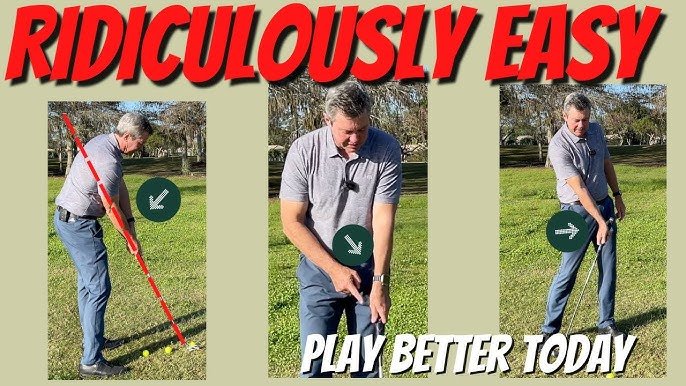
Improving your golf game involves consistent practice focused on key areas like your swing, short game, and course management, along with lessons from a qualified professional.
Frustration mounts as your ball slices into the trees or your putts consistently lip out. The desire to hit longer drives and sink those crucial putts consumes you. The question constantly echoes in your mind: how to improve my golf game? It’s a challenge many golfers face, but with focused effort and the right approach, progress is entirely achievable.
This article will guide you towards practical steps you can take. You’ll learn how to work on those swing mechanics. We will cover the importance of short game proficiency, and also we will look at smart course strategy.

How to Improve My Golf Game
Okay, so you’re looking to get better at golf. That’s awesome! Whether you’re just starting out or you’ve been playing for years, there’s always room to improve. Golf can be tricky, but with the right approach, you can definitely lower your score and have more fun on the course. This guide breaks down the most important parts of the game, giving you practical tips and easy-to-follow advice. Let’s dive in and figure out how to make those golf balls go exactly where you want them to!
The Importance of a Solid Golf Swing
Your swing is like the engine of your golf game. A good swing means you hit the ball straighter, farther, and more consistently. It’s not about swinging as hard as you can; it’s about using your body correctly and building a motion that’s repeatable. Let’s explore the core components:
Grip: Your Connection to the Club
The way you hold the club greatly affects your swing and shot. A correct grip allows you to control the club face. There are three common types of grips, but most golfers start with the neutral grip. Let’s take a look:
- Neutral Grip: When you look down at your hands, you can see about two knuckles on your left hand. Your hands work together and create a “V” shape. It’s a grip that’s not too strong or too weak.
- Strong Grip: You see more than two knuckles on your left hand. This can help close the club face and prevent slices, but it can also lead to hooks if not used correctly.
- Weak Grip: You see less than two knuckles on your left hand. This might help you fade the ball and prevent hooks, but often it leads to slices.
Experiment with each one and find what feels the most comfortable for you. The most important factor is consistency. Always grip the club the same way each time. Don’t squeeze the club too tightly. It should feel firm but not tense, like shaking hands.
Stance: Your Foundation
Your stance provides the base for your swing. A good stance is balanced and ready for action. Here’s how to achieve it:
- Feet: They should be about shoulder-width apart. Some golfers like a little wider stance with their driver.
- Posture: Bend your knees slightly and hinge at your hips, keeping your back straight. This creates an athletic posture.
- Ball Position: It changes slightly based on the club. Generally, for longer clubs, the ball is towards your lead foot (the left foot for right-handed golfers). For shorter clubs, the ball is more toward the center of your stance.
Keep your weight balanced between the balls of your feet. This will help your swing to be consistent.
Backswing: The Coil
The backswing is where you create the power for your shot. It’s not just about lifting the club, it’s about rotating your body correctly:
- One-Piece Takeaway: Your arms, hands, and shoulders move back together. Keep your wrists firm and avoid flipping them early in your swing.
- Shoulder Turn: Turn your shoulders back towards the target. Your back should face in the direction of the ball.
- Hip Rotation: Let your hips naturally rotate with your shoulders. They don’t need to turn as much as your shoulders.
- Top of the Backswing: You should feel coiled and loaded, like a spring ready to uncoil. Your hands should be high but in control.
Avoid swaying back, keep your head still and focus on turning, not lifting, the club. Remember, the backswing is a motion, not an action.
Downswing: Releasing the Power
The downswing is where you transfer the energy to the golf ball. It’s crucial for both power and accuracy.
- Initiate the Downswing: Start with your lower body. Shift your weight forward, towards your lead foot.
- Lag: Your hands should feel like they’re following your lower body, creating a slight delay, or “lag.” This helps to build clubhead speed.
- Impact: Your hands will be slightly ahead of the club at impact. This creates a solid hit and compresses the ball.
Follow-Through: Finishing the Motion
The follow-through isn’t just a finishing motion; it’s a result of a well-executed swing. A complete follow-through also prevents injury:
- Full Finish: Allow your swing to complete naturally. Your weight should be on your lead foot, and your belt buckle facing the target.
- Balance: You should be balanced and comfortable at the end of your swing.
A good follow-through lets you know if you had a good swing. If you have a jerky or uncomfortable finish, chances are you did not have a balanced and smooth swing.
Improving Your Short Game
The short game, which involves shots around the green, is where many strokes are won or lost. It includes putting, chipping, and pitching. Getting good at these can dramatically lower your score.
Putting: The Art of Rolling the Ball
Putting may seem simple, but it requires precision and feel. It’s also often the most overlooked part of a beginner’s game.
- Grip: Use a light, comfortable grip. You don’t need to squeeze the putter.
- Stance: Stand with your feet slightly less than shoulder width. Your eyes should be over the ball.
- Stroke: Use a smooth, pendulum-like motion. The length of the backswing should match the distance of the putt.
- Reading the Green: Look for breaks and slopes on the green. The ball will follow these contours.
Practice your putting stroke on a carpet or putting green. Focus on feel and consistent contact with the ball.
Chipping: Getting Close to the Hole
Chipping is a short, low shot played around the green, usually to get the ball onto the green so you can putt. It’s a controlled swing to get close to the pin.
- Club Selection: Use a higher lofted club like a pitching wedge or sand wedge. The type of chip you’re trying to hit will determine the loft of the club you choose.
- Stance: Stand with your feet a little closer than you do for a regular full swing, and your weight slightly forward.
- Swing: Use a short, compact swing, focusing on a clean strike. Don’t use your wrists, instead use a rocking shoulder motion.
- Landing Spot: Visualize where the ball should land, and how it will roll to the hole.
Practicing different chip shots will help you develop a feel for distance and control. It’s not always about getting it close to the hole, but about getting it on the green where you can make an easy putt.
Pitching: Longer Shots Around the Green
Pitching involves a longer swing than chipping. It’s used for lofted shots that travel further than a chip, but still less than a full swing.
- Stance: Keep your stance a bit wider, and your weight balanced.
- Swing: Use a controlled swing, but allow your wrists to hinge a little.
- Distance: Learn to adjust your swing length to control how far the ball travels.
Practice your pitching from different distances to get used to varying amounts of swing to get the proper distance. The key to good pitching is developing a consistent feel.
Course Management and Strategy
Golf isn’t just about hitting the ball hard; it’s about thinking your way around the course. Smart course management can make a big difference in your score.
Planning Your Shot
Before each shot, take a moment to analyze your lie, the position of hazards, the wind, and your desired result. Don’t just grab a club and swing; make a plan.
- Assess the Situation: Look at the distance, any obstacles, and the location of the pin.
- Club Selection: Choose the correct club for your shot. Don’t always go for the longest club. Sometimes accuracy is better than distance.
- Target: Visualize where you want the ball to land. Choose a specific target, not just “somewhere on the green.”
Playing Smart
Don’t be a hero. Sometimes, the safest shot is the best shot. Knowing when to lay up can save you from big numbers.
- Avoid Hazards: If there’s water or a bunker, plan your shot to avoid it.
- Play to Your Strengths: If you’re better with your 7 iron than your 5 iron, play that shot.
- Patience: Don’t try to make up for bad shots in one swing. Take the safer, more calculated shot.
Sometimes the best approach is a little less aggressive. Playing smart instead of just hitting away, can help you in the long run.
Mental Game
Golf is as much a mental game as it is a physical one. How you approach each shot, your mindset, and your attitude on the course can greatly influence your performance.
Stay Positive
Golf is a game of ups and downs. Don’t let a bad shot ruin your entire round. Stay positive and focus on the next shot.
- Process-Oriented: Focus on your swing and your plan for the next shot, not just your overall score.
- Don’t Dwell: If you hit a bad shot, acknowledge it, learn from it, and move on.
Keeping a positive attitude will help you stay relaxed and focused and that leads to better shots and lower scores.
Focus on the Present
Don’t think about past shots or future holes. Focus on the shot you’re about to hit. Clear your mind and go through your pre-shot routine.
- Pre-Shot Routine: Develop a consistent pre-shot routine that helps you focus.
- Visualization: See the shot in your mind before you hit it.
Focusing on the present makes you more aware of what you’re doing. And the best focus, is not thinking.
Practice Makes Perfect: How to Practice Effectively
Consistent practice is the key to improvement. However, just hitting balls is not enough. You need to practice with a purpose.
Range Time: Make it Count
When you go to the driving range, don’t just hit a bucket of balls mindlessly. Focus on specific areas to improve:
- Set Goals: Decide what you want to work on before you start. This could be your swing, ball flight, or distance control.
- Vary Clubs: Don’t just hit drivers. Practice with different clubs to get a feel for each one.
- Aim: Don’t just hit the ball straight ahead. Pick targets to the left, the right, and change distances.
Practice Drills
Using drills can help you fix problems in your swing and develop consistency. Here are a few basic, and useful drills:
- Towel Drill: Place a towel under your armpit to maintain connection in your swing.
- Alignment Sticks: Use alignment sticks to ensure your stance and swing plane are correct.
- One-Leg Drill: Practice swinging on one leg to improve your balance.
Short Game Practice
Don’t forget to practice your short game. Spend time on the putting green, chipping area, and pitching areas. A good short game can save you multiple strokes per round.
- Putting Practice: Work on both straight putts and putts with a break.
- Chipping Variety: Practice chipping from various lies and distances.
- Pitching Control: Focus on controlling the distance and trajectory of your pitch shots.
When you are practicing, you’re training your muscle memory. So the more you practice the right things, the more consistent you’ll become.
Fitness for Golf: Staying in Good Shape
Being in good physical shape can improve your golf game and prevent injuries. You don’t need to be an athlete to play good golf, but it does help. Here’s why physical fitness is important for golf:
Strength and Flexibility
Golf requires both strength and flexibility. Being able to generate power in your swing while maintaining balance is crucial.
- Core Strength: A strong core helps you control your swing and transfer power to the ball.
- Flexibility: Good flexibility in your hips, shoulders, and back will improve your range of motion.
Cardio and Stamina
Walking the course can be tiring. Good cardio fitness helps you maintain your energy levels throughout the round.
- Cardio: Incorporate some cardio into your workout routine. This will help with endurance.
- Walking: Walk more often, on or off the golf course, to build stamina.
Warm-Up and Cool-Down
Always warm up before you start playing and cool down afterward. This helps prevent injuries and improve performance.
- Dynamic Warm-Up: Use arm circles, leg swings, and torso twists to prepare your body for golfing.
- Stretching: Stretch after playing to cool down and help prevent stiffness.
Making small adjustments to your physical health, can have big results on the golf course.
Getting the Right Equipment
Using the right equipment can make a difference. While it won’t magically turn you into a pro, the right clubs can help you play your best golf.
Club Fitting
Getting your clubs fitted is essential for improving your game. Fitted clubs are customized to your swing, height, and strength.
- Shaft Flex: The flexibility of your club shaft should match your swing speed.
- Lie Angle: The lie angle should ensure the club head is flush with the ground at impact.
- Grip Size: Your grip size should fit comfortably in your hands.
Choosing Clubs
As you improve, you’ll understand your needs and you’ll be able to choose the best clubs for your style of play.
- Driver: Use the driver off the tee on long holes, where you need distance.
- Irons: Use irons for long, mid, and short shots on the course. Choose based on the distance you need to travel.
- Wedges: Use wedges for short shots around the green and in bunkers.
- Putter: A good putter is essential for sinking putts on the green.
Having the right equipment that is fit for your swing, can be a great help to improving your golf game.
Learning From Others
It’s great to study other golfers and how they are playing. Watching pros and studying their form can make your game better. You can also get lessons from a local golf pro.
Watching Golf Pros
Watching golf on TV and in person, can help you. You can pick up new habits and get a better idea of how to improve your own game.
- Study Their Swing: Look for specific things in their swing, like the set up, the back swing, and the finish.
- Look at Course Management: Notice how they navigate the course and decide which club to use.
Taking Lessons
Lessons from a golf pro can be helpful. They can see what you’re doing right and wrong. Then they can help you get better at specific areas of your game.
- Personalized Instruction: They can create lessons to help with your specific needs.
- Swing Feedback: A pro can identify flaws in your swing that you might not notice on your own.
Learning from others is a great way to improve your golf game. The more you study other players and take advice, the better you will get.
Improving at golf is a journey, not a destination. By focusing on the fundamentals of your swing, practicing your short game, making smart choices on the course, and having the right mindset, you’ll see your game get better. Keep practicing, stay patient, and most importantly, have fun!
7 ways to improve at Golf WITHOUT practice!
Final Thoughts
Consistent practice, focusing on your swing fundamentals, will bring gradual improvement. Working on your short game is also key for scoring well. Remember to analyze your rounds, identifying areas that must improve.
Consider taking a lesson from a qualified professional; they can give tailored advice. Improving your mental game and course management skills also affects your final score. To ultimately improve your golf game, apply these tips regularly.

