
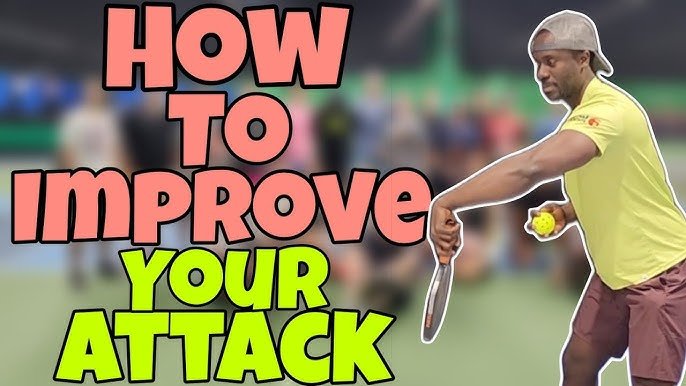
Improving your pickleball game involves focusing on consistent practice, strategic shot selection, and mastering dinking and the third shot drop.
Are you ready to take your pickleball skills to the next level? Many players often ask, “how to improve pickleball game”. It’s a common question among beginners and veterans of the sport alike.
The good news is, enhancing your game isn’t some mysterious art. It comes down to understanding core fundamentals and committing to consistent practice.
Let’s explore some simple things you can do to see noticeable improvements quickly.

How to Improve Your Pickleball Game
Alright, let’s talk pickleball! You’re already playing, which is fantastic, but maybe you’re feeling like you could be a little bit better. Maybe you’re hitting the net more than you’d like, or maybe your opponents are returning your shots with ease. No worries! Improving your pickleball game is all about understanding the key parts of the game and working on them little by little. Think of it like building a really cool LEGO castle – it takes time and focusing on each piece. This isn’t about becoming a pro overnight. It’s about making steady progress, having more fun, and winning more points. Let’s dive into the areas where you can level up your pickleball skills.
Grip It and Rip It (Well, Sort Of!): Understanding Your Grip
It might sound silly, but how you hold your paddle makes a big difference. It’s not just about grabbing and whacking. There are two main grips pickleball players use: the Continental Grip and the Eastern Forehand Grip.
The Continental Grip
Think of this grip as a handshake with your paddle. The ‘V’ formed by your thumb and forefinger should be right on top of the paddle handle. This grip lets you hit the ball with good control on both forehand and backhand shots. It’s like the “all-purpose” tool in your pickleball bag.
Why it’s good: It’s great for volleys, dinks, and serves.
How to check: Make the “V” with your index finger and thumb, then put it on top of your paddle handle.
The Eastern Forehand Grip
Imagine you’re shaking hands with the paddle, but the side of the paddle is up to the sky like a high five. That’s the Eastern Forehand Grip. It gives you more power on forehand groundstrokes.
Why it’s good: Great for strong forehand drives and shots that need a little extra zip.
How to check: Hold the paddle so it’s vertical, like you’re about to knock on a door. Then, shake hands with the paddle.
It’s best to start with the Continental Grip, since it’s the most versatile for pickleball. Try both grips to find out what feels most comfortable. Pay attention to how your shots feel and adjust accordingly. Don’t be afraid to experiment! Also, avoid squeezing the handle too hard; a relaxed grip helps with control.
The Serve: Setting Up for Success
A good serve can set the tone for the whole point. Don’t just try to get the ball over the net. Aim for a serve that’s hard to return!
The Basics of the Serve
You must serve underhand. This means your paddle needs to be below your waist when you hit the ball.
Hit the ball in the air, not bouncing it first, like in tennis.
Serve diagonally, across the court, to your opponent’s box.
Your serve needs to land within the service box to be a legal serve.
Stand behind the baseline before you serve. Both feet must be behind the line until after contact.
How to Improve Your Serve
Consistency is Key: Focus on hitting the ball in the same spot every time. Practice makes perfect!
Vary Your Serve: Try different depths and speeds. Don’t be predictable.
Add Spin: Try adding a little topspin or slice to your serve to make it harder for your opponent to return.
Topspin: Brush the paddle upwards through the back of the ball
Slice: Brush the paddle down through the back of the ball
Practice different serves to find what works best for you. Experiment with height and direction.
The Return: Neutralizing Your Opponent’s Serve
Getting the ball back into play is just as important as the serve. A weak return gives your opponent an easy shot.
The Basics of the Return
The return must bounce once before you hit it.
Return the ball deep into your opponent’s court to make it hard for them to attack.
Try to avoid hitting your return directly into your opponent’s sweet spot.
How to Improve Your Return
Step into the Return: Move towards the ball. Don’t wait for it to come to you.
Keep it Low: A low return is harder for your opponent to attack.
Don’t Go For Too Much: Aim for consistency, and get the ball back in play. You can win more points by being solid and steady.
The Dink: The Art of the Soft Game
Dinking is a soft shot near the kitchen line (non-volley zone). It’s not about power; it’s about placement and control. It might seem boring but it is one of the most important parts of the game. The dink can be a game-changer.
The Basics of the Dink
Hit the ball softly, right after it bounces.
Aim for the kitchen area (the non-volley zone) of your opponent’s side.
Use your Continental grip for control.
Try to keep the ball low over the net to be harder for your opponent to attack.
How to Improve Your Dink
Practice, Practice, Practice! This is something you improve with repetitions.
Get Close to the Kitchen: This gives you better control.
Vary Your Dinks: Mix it up with different speeds and angles.
Be Patient: Wait for the right opportunity to attack.
Stay Calm: Don’t get pulled into trying to win every point from your dink. It is often a setup shot to get into a better position for the next shot.
The Volley: Taking the Ball Out of the Air
A volley is hitting the ball before it bounces. It’s a great way to get the advantage at the net.
The Basics of the Volley
You need to be in front of the kitchen line to volley. If you hit the ball before it bounces while inside the kitchen, it’s a fault.
Use a firm wrist and your Continental grip.
Focus on a short, punchy movement.
Aim for deep corners or open spaces.
How to Improve Your Volley
Get to the Net: Get closer to the kitchen to set yourself up to take volleys.
Watch the Ball: Don’t turn away. Keep your eye on the ball all the way until you hit it.
Practice at the Wall: This will help you feel how a quick volley should feel.
Be Ready: Be prepared to volley when someone hits the ball at you.
The Third Shot: The Key to Winning Points
The third shot is the first shot hit by the team that served. It is a vital part of the game because it often dictates the flow of the rally. After you serve, your opponent returns, and now you get to make the third shot. This is where you can set yourself up for success in the point.
Why the Third Shot Matters
Control the Flow: A good third shot allows you and your partner to move toward the kitchen line.
Offensive or Defensive: This shot can be a dink to go on the attack, or a deep lob to gain time.
Take the Net: The team who controls the net position has an advantage to win the point.
How to Improve Your Third Shot
Dink it Deep: A slow dink is a very popular strategy.
Drop It Short: Drop the ball low just over the net.
Practice Your Third Shot: Practice it against a wall or with a friend.
Court Positioning: Where to Stand
Where you stand on the court is very important. Don’t just stand anywhere. Be strategic!
Basic Positioning
The Ready Position: Stand with your paddle up and ready, legs slightly bent, on the balls of your feet.
Moving with Your Partner: Communicate with your partner and move together, not independently.
At the Net: Get to the net whenever you can. This gives you an advantage.
Advanced Positioning
Stacking: If you have a strong forehand, stand on the same side as your partner so they can play the backhand.
Poaching: If your partner is weak on a certain shot, move over to try and intercept. (But make sure you communicate with your partner!)
Movement and Footwork: The Dance of Pickleball
Pickleball involves a lot of quick movements. Having good footwork will help you get to the ball quicker and more efficiently.
Basic Movement
Shuffle Steps: Use small steps to move sideways. Avoid crossing your feet.
Be Light on Your Feet: Don’t be flat footed. Be on the balls of your feet to be quick.
Get Low: Bending your knees will help you get to lower shots.
Advanced Movement
Moving Forward: Move toward the net, not backward.
Quick Starts and Stops: You’ll need to start and stop quickly to change direction.
Anticipate: Start moving before your opponent hits the ball to make sure you arrive on time.
Strategy and Game Sense: Playing Smart
Pickleball is not just about hitting the ball hard. It’s also about making smart choices.
Basic Strategy
Keep the Ball in Play: Avoid hitting the ball out of bounds.
Attack Weak Shots: Look for opportunities to attack your opponent’s weaker shots.
Use Variety: Don’t just hit one type of shot. Mix up the shots.
Avoid Unforced Errors: The team who makes less mistakes usually wins the point.
Be patient: Don’t try and force your shot if you are not in the best position.
Communicate with Your Partner: Talk about what shots to try next.
Advanced Strategy
Target Opponent’s Weakness: Every player has a weakness. Play to it!
Play the Angles: Don’t always hit the ball straight. Use angles to your advantage.
Play With Purpose: Every shot should be to win the point or to make it easier for you to win the next one.
Practice Drills: Honing Your Skills
Practicing regularly will help you improve your skills a lot. There are a lot of simple drills you can do alone, or with a friend.
Practice Alone
Wall Practice: Hit the ball against a wall. Practice different shots.
Target Practice: Set up targets on the court and practice hitting them.
Practice with a Partner
Dink Drills: Dink back and forth with your partner.
Volley Drills: Stand close to the net and practice volleying.
Third Shot Drop Drills: Practice hitting the third shot deep into the kitchen.
Serve and Return Drills: Practice serving and returning with each other.
Here’s a simple table to help you remember what to focus on in each area:
| Skill | Focus |
|---|---|
| Grip | Use the Continental grip for versatility |
| Serve | Consistency, variety, and a little bit of spin |
| Return | Keep it low, step into the shot, avoid easy attacks. |
| Dink | Soft, low, and placed in the kitchen |
| Volley | Get close to the net, make quick movements, and stay light on your feet. |
| Third Shot | Get to the non volley zone, move strategically, and be patient. |
| Court Position | Be aware of where you are standing on the court. |
| Movement | Shuffle steps, light on your feet, and ready to move. |
| Strategy | Be smart, consistent, and have a plan. |
| Practice | Regular practice, specific drills for each skill. |
Here are some specific drills you can do
- Dink Ladder: Stand near the kitchen line and dink back and forth with your partner. Move one step back every 5 dinks.
- Volley Punch: Partner feeds you volleys from close to the net. Focus on short punchy motions.
- Third Shot Drop: Have a partner serve, return, and you practice dropping your third shot into the kitchen.
- Around The World: Have your partner serve. You are on the baseline and have to hit the return, approach the kitchen to make a dink and then finish with a volley.
Remember, improving your pickleball game is a marathon, not a sprint. Be patient, practice regularly, and most importantly, have fun! Don’t compare yourself to others, just focus on how you can improve. Even just a small amount of progress each week will accumulate over time.
So get out there and play! And remember, every shot you take is a step towards getting better. With time, patience and practice, you will notice improvements in your game. See you on the court!
Automatically WIN MORE and Beat "Better" Players With These 4 Pickleball Tips – Enhance Pickleball
Final Thoughts
To improve pickleball game, focus on consistent practice of dinking and volleying. Precise shot placement is key; aim for corners and weak spots. Work on footwork drills for better court coverage.
Consistent practice, along with strategic shot selection will enhance your game. Consider lessons from experienced players to refine your techniques. Remember, learning how to improve pickleball game involves dedication.

