
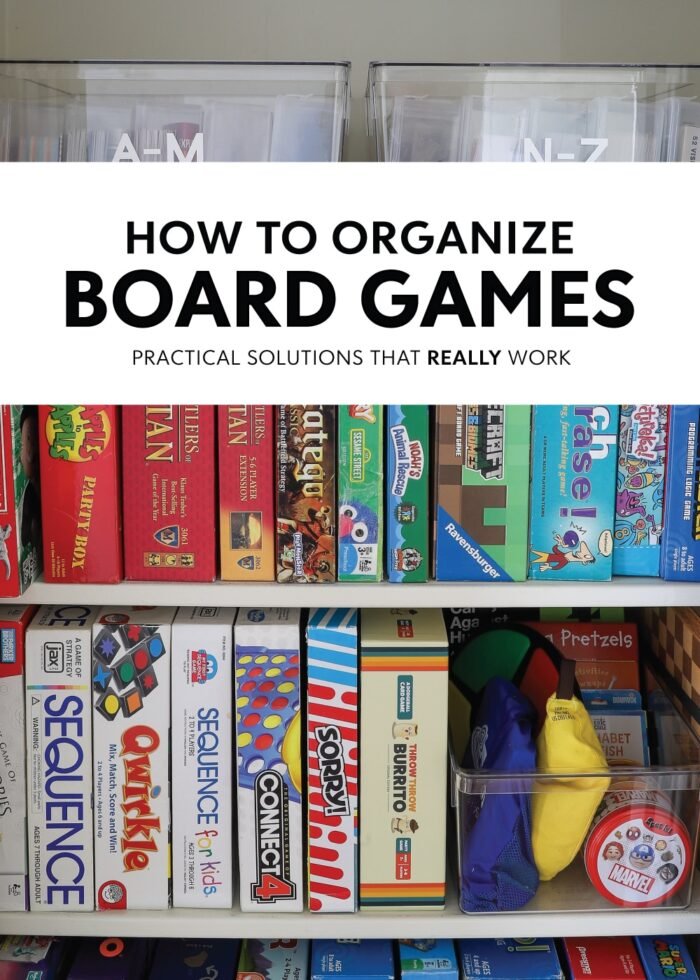
Organize board games by sorting them by size and frequency of play, storing them vertically on shelves or in dedicated containers, and using labels for easy identification.
Board game nights are amazing, aren’t they? But the aftermath often leaves a chaotic pile of boxes. Figuring out how to organize board games can feel like a game itself, with no clear winner. It’s a common struggle for many who love tabletop entertainment.
Finding the right storage solution that keeps your games accessible and protected is key. You don’t want a game night ruined by lost pieces or a damaged board. We’ve all been there, so here are some quick tips for you.

How to Organize Board Games
Okay, so you love board games! Maybe your collection is small, or maybe it’s bursting out of the closet. Either way, finding the right game when you want to play can be a challenge. It’s time to talk about how to organize your board games, making playtime fun instead of a frantic search. Think of it like giving your games a cozy home where they can all be found easily. A well-organized collection not only looks better but also protects your precious games from damage and makes choosing a game less stressful. Let’s dive into some easy and helpful ways to get those games in order!
Assessing Your Board Game Collection
Before we jump into organizing, let’s take a good look at what we’re working with. This is like taking inventory before you go grocery shopping. Knowing what you have will help you plan the best way to arrange everything.
Taking Stock
First, take all your board games out. Yes, all of them! Pile them up on a table or the floor. Now, let’s sort. Do you have more family games, strategy games, party games, or maybe a mix of everything? This will give you an idea of what types of games you own. Notice any games that are starting to show wear and tear? It might be time for a little repair, or maybe even a replacement if needed. This also gives you a chance to make sure all the pieces are there. Missing pieces can be a big bummer for game night!
The Purge
Now, let’s be honest, are there any games that you never play? Maybe you haven’t played it in years or just don’t enjoy it anymore. It’s okay to let some go. You could donate them to a local charity, a library, or even a school. You could also try selling them online or giving them to friends who would appreciate them. This is about making room for games you really love and will actually play. Be honest with yourself, it will help you in long run. Letting go of games makes room and makes it easier to see and find the games you keep.
Different Methods of Board Game Storage
Okay, now we know what we’re working with, let’s talk about where to put everything. There’s no one-size-fits-all answer here, and the perfect solution depends on the space you have and the kind of games you own. Let’s explore different storage methods.
Shelving Solutions
Shelves are classic for a reason. They are easy to use, can hold a lot of games, and make it easy to see what you have. You can use bookshelves you already have or buy some new ones that fit your space.
Upright Shelving
This is the most common way to store games and it works great for most types of games. Stack your games so that they fit nicely on the shelves. Consider putting heavier games at the bottom to make the shelves more stable. You can group the games by type or by size, whatever works best for you.
Horizontal Shelving
If your shelves are deep, try stacking some games horizontally. This can help you see the games that are in the back. Be careful with stacking too high to make sure the games on the bottom don’t get crushed, you can also use boxes to hold the games vertically.
Using Bookends
If you have games that don’t fill a shelf, use bookends to keep them from falling over. This will keep your shelves looking organized and prevent games from tipping.
Using Boxes and Bins
Sometimes, shelves aren’t the best solution for every game or every space. Maybe you have a closet or a corner where you can use boxes and bins.
Clear Storage Bins
Clear bins are great because you can see what’s inside. This is super helpful when you’re looking for a specific game. You can sort your games into bins based on size or type. Make sure the bins are the right size for your games, too small or too large bins can be inefficient.
Labeled Boxes
If you don’t have clear bins, use labeled boxes. This could be cardboard boxes, plastic totes, or anything that fits your space and your style. Label each box with the kind of games inside. This way, even if you can’t see inside, you know where to look.
Creative Storage Ideas
Sometimes you need to get a little creative to make the most of your space. Think outside the box!
Rolling Carts
Rolling carts are perfect for storing games in small spaces. They are easy to move around and can fit in a closet or a corner. The best thing about these carts are that you can also move it from place to place without any problem, like from closet to living room for playing games.
Under Bed Storage
If you’re short on space, consider under-bed storage containers. This is a great spot for games that you don’t play often. Just make sure the containers are sturdy and the games are protected from dust.
Wall-Mounted Shelves
Wall-mounted shelves can add storage space without taking up floor space. These shelves are great for games you want to display or games you play most often. They can also add a fun, decorative touch to a room.
Organizing Your Games Within Storage
Now that you have some storage ideas, let’s talk about how to organize the games within the storage. Having a system that makes sense to you is key.
Sorting by Game Type
One way to organize is by the kind of game it is. You can group all your party games together, your strategy games together, and family-friendly games together. This makes it easier to find the type of game you’re in the mood for.
Family Games
Games that are easy to learn and fun for all ages are typically considered family games. These could include classic card games, simple dice games, and cooperative board games. Keep these together in a spot where everyone can reach them easily.
Strategy Games
Strategy games usually require a bit more thinking and planning. These might be games like chess, Settlers of Catan, or Pandemic. If you have a lot of them, consider sorting them by complexity or player count.
Party Games
Party games are perfect for larger groups and are often quick and funny. Games like Apples to Apples, Cards Against Humanity, or Telestrations would fall in this category. These games should be stored where you can easily pull them out for get-togethers.
Solo Games
If you enjoy playing games on your own, keep these in a separate area. This could be a shelf, a drawer, or a special box. This also helps to quickly find these games when you want to play alone.
Sorting by Size and Shape
Sometimes, the best way to store games is by their size. This makes your shelves look neater and helps you maximize space.
Tall Games
Stacking tall games together makes them easier to handle. Putting taller games on higher shelves can also look visually appealing.
Wide Games
Wide games can take up a lot of shelf space, so try to store them near the edges or on deeper shelves. Try to group them to maximize space.
Small Games
Small games can get lost on a shelf so, it’s good to store them together in a small bin or a designated area.
Using Dividers and Inserts
Dividers and inserts help keep the game components organized within each game box. This keeps pieces from getting lost and makes setup easier.
Plastic Bag Storage
Use small plastic bags to keep game pieces together. Label each bag so you know which pieces belong where. This can be especially helpful for games with many small parts.
Foam Core Inserts
If you want to get serious about organization, consider making foam core inserts for your game boxes. This helps keep components in place and prevents things from sliding around. These can be custom-made for each game and are excellent in protecting game pieces.
3D Printed Inserts
You can also find 3D-printed inserts for many popular board games. These are often designed to fit perfectly in the box and keep all the pieces organized. These are also an excellent solution to protect the components of the games.
Maintaining Your Organized Collection
Organizing your board games is a good start, but it’s important to maintain it. Regular upkeep will keep your collection looking good and make it easier to find your games for years to come.
Regularly Reassess
Once every few months, take a quick look at your collection. Are there any new games you need to fit in? Any games that aren’t being played? This is also a good time to do any repairs and check for missing pieces. This will help to keep your collection neat and easy to use.
Put Games Away Immediately
After a game night, put the games back where they belong right away. This will prevent things from getting messy and ensure that you can find games easily for the next time. Make it a habit to put the game back as soon as you are done.
Delegate Tasks
If you live with others, encourage everyone to put games back in their correct spots. You can also designate the responsibility to put the game away to whoever played the game. If everyone helps, keeping the collection organized becomes much easier.
Keep It Fun
Organizing your board games shouldn’t feel like a chore. Try listening to music while organizing or make it a family activity. This will help you stay motivated and make the process more enjoyable for everyone.
By using these tips and methods, you can transform your messy board game collection into an organized haven. No more frantic searches for that one missing piece! Instead, you’ll find that playtime is much smoother and more enjoyable. This way, you can spend more time playing your beloved board games and less time worrying about where everything is.
Organizing your board games is a worthwhile project that brings long-term benefits. You’ll save time, protect your collection, and make game nights more fun for everyone. Remember, the best system is the one that works for you and your games. Take the time to find a solution that makes sense for your needs, and you’ll be well on your way to a perfectly organized collection.
Board Game Organization | Organization Hack | How to organize board games
Final Thoughts
To effectively organize board games, consider using shelving units or designated cabinets. Separate games by size and type, making them easier to find. Store smaller components in bags or containers within the game box.
Labeling shelves and boxes will enhance the organizing process. This helps you quickly locate the game you want to play. Regularly evaluate and declutter your collection.
Ultimately, choosing the right methods ensures that your games are always ready for fun. Remember, proper how to organize board games significantly improves your gaming experience.

