
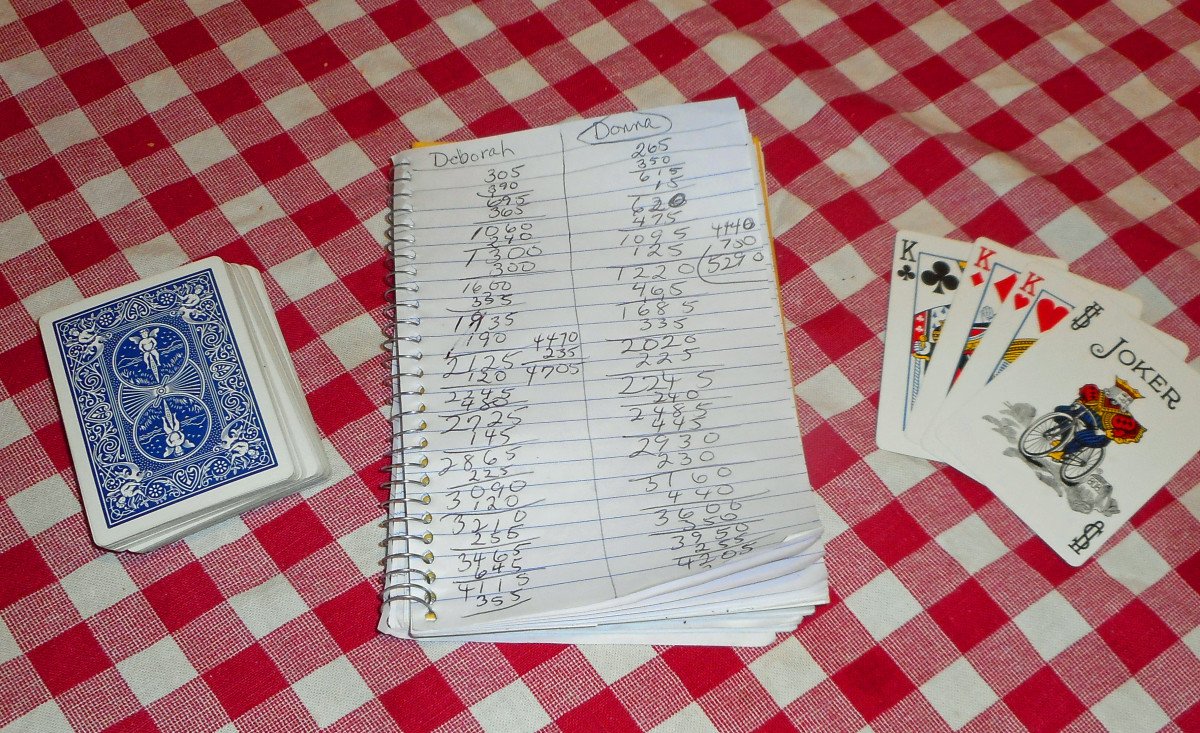
Playing 5000 card game involves a series of rounds where players score points by forming combinations and laying down cards, aiming to reach 5000 points first.
Ever wondered how to play 5000 card game? It’s a classic for a reason, and picking it up is easier than you think. We’ll guide you through the rules step by step, so you’ll be dealing and scoring like a pro in no time.
This fast-paced card game is perfect for a group of friends or family. Get ready for some exciting gameplay and friendly competition as you try to be the first to reach 5000 points.

How to Play 5000 Card Game
Ready to dive into the fun and exciting world of 5000? This popular card game, also known as “Five Thousand,” is a blast for families and friends. It mixes luck with strategy, making each game unique and engaging. If you’re new to the game, don’t worry! We will guide you through each step, explaining the rules and providing tips to get you playing like a pro in no time. Let’s get started!
Understanding the Basics
Before we jump into gameplay, let’s cover the foundation of 5000. This includes what you need to play and the basic idea of how to score points. This game uses a standard deck of 52 cards, and the goal is to be the first player to reach 5000 points or more.
What You’ll Need
- A standard deck of 52 playing cards.
- At least two players, but it’s more fun with three to five players.
- Paper and a pen or a digital scoring system to keep track of everyone’s points.
The Goal of the Game
The main idea behind 5000 is simple: score points by making combinations of cards, called “melds.” The player who reaches 5000 points or more first wins the game. But, there’s a little twist! You can’t just grab all the good cards and keep them. There are ‘stealing’ rules involved that you need to understand to play efficiently. We’ll cover that in more detail soon.
Card Values and Combinations
In 5000, not all cards are created equal! Certain cards and combinations score different amounts of points, so knowing them well is key. Let’s look at how to value the cards and which combinations earn you points.
Card Values
Here’s the breakdown of the numerical value of each card:
- Aces: Are worth 15 points.
- Tens, Jacks, Queens, and Kings: These face cards are worth 10 points each.
- Number Cards (2-9): Are worth their face value. For instance, a 5 is worth 5 points.
- Jokers: If you are using Jokers (not in all versions), they are worth 20 points.
Point-Scoring Combinations (Melds)
The real point scoring comes from making melds. These are special combinations of cards that get you points. The most common melds include:
- Three-of-a-Kind: Three cards of the same rank are called a three-of-a-kind. For instance, three 7’s. Score the total value of the card. For example, three 7’s = 7+7+7 = 21 points.
- Four-of-a-Kind: Four cards of the same rank are called a four-of-a-kind. For instance, four Kings. Score the total value of the card multiplied by 2, e.g., four kings is (10+10+10+10) 2= 80 points.
- Sequential Run (in same suit): Three or more cards in sequence in the same suit. Score the face value of all the cards in sequence. For example, 5,6,7 of hearts = 5+6+7 = 18 points.
- Five Cards of Same Suit: Five cards of the same suit that are not in sequential run, but are of different rank are called a ‘flush’. Score the total value of the five cards. For example, 2,4,8,9 and queen all of hearts would equal 2+4+8+9+10 = 33 points
- Ten Cards of same Suit (all of same suit): Ten cards of the same suit which are not in sequence and can be of mixed ranks, are called “Long Flush”. Score 100 points.
Important note: Always check the specific rules of the 5000 version you’re playing because the scoring values for the Melds may have slight variations from what is mentioned above.
Setting Up the Game
Now that we have a basic understanding of point values, lets set up the game properly, and get ready for some gameplay.
Dealing the Cards
To start, pick a dealer, who will shuffle the entire deck and then deal the cards. The number of cards dealt to each player is not fixed and depends on the number of players:
- Two Players: Deal 10 cards to each player.
- Three Players: Deal 9 cards to each player.
- Four Players: Deal 7 cards to each player.
- Five Players: Deal 7 cards to each player.
The remaining cards become the “stockpile” which you will draw from during the game, and we will also create a discard pile which will later be used.
Establishing the Play Area
Once the cards are dealt, put the rest of the deck in the middle of the table face down to create a stockpile for the players to draw cards from. Next to the stockpile, we’ll start a discard pile where we put the cards that we won’t need.
Players should arrange their cards in their hands where they can easily identify all the melds they might have.
Now, lets get into the real fun part: How to actually play the game!
Playing the Game – A Detailed Walkthrough
Playing 5000 involves several steps each turn. It’s a cycle of drawing, melding, stealing, and discarding, all with a goal to achieve 5000 points. Let’s explore this process in detail.
Starting a Player’s Turn
The player to the left of the dealer starts the game. On your turn, the first thing you do is pick a card. You can choose a card from one of the following two places:
- The top of the stockpile: Taking the top card from the deck.
- The top of the discard pile: If you find a card that can complete any of your melds, you can choose to take this card.
Making Melds & Laying Down Cards
After picking up your card, it’s time to look at your hand and see if you have any melds. Remember, melds are three or more cards in same kind, four of a kind, sequence of the same suit, five cards of the same suit or ten cards of same suit. If you have a meld, you can put them face-up in front of you. You can make as many melds as you want, but it’s also important to save some cards in hand for ‘stealing’.
The Stealing (or “Laying Off”) Rule
This is where 5000 gets very interesting! After you make your melds, you can ‘steal’ cards from other players. This means, you can add a card to a meld that another player already laid down. This makes it so that a player cannot have a monopoly of cards. Here’s how it works:
- Adding to Existing Melds: If a player has laid down a sequence of 7, 8, 9 of hearts, and you have a 6 or 10 of hearts, you can add them to this meld. Similarly, if you have one more card for a player’s three-of-a-kind meld, you can steal it by adding your card making it four-of-a-kind.
- Stealing Restrictions: You can only lay off cards that fit perfectly into the meld on the table. For example, if a player has a three-of-a-kind, you can only add another card of that same rank to complete the four-of-a-kind. You can’t add a card of a different rank. Same rules go for the sequence. You can’t steal a card on to a sequence if it doesn’t fit the sequence, for example, a 5 of hearts cannot be stolen onto the sequence of 7, 8, and 9 of hearts.
- No Stealing From Your Own Melds: You can’t steal off your own melds. Once a meld is placed down, cards that can only form a meld will remain with that particular meld and can not be moved or stolen.
Discarding Cards and Ending Your Turn
After melding and stealing, you must discard one card from your hand, this will be the last card you take out of your hand, and place it face-up on top of the discard pile, this concludes your turn.
End of Round
When all the cards from the stockpile are depleted, a round ends. If any cards are left with the players, these players will deduct the total face value of the card from their running total.
The game then starts again with a new dealer, who shuffles the deck and starts by dealing cards to all players, and play continues.
Scoring Points
Keeping track of scores is important to determine who will win the game. After each round, everyone counts the points from the melds they made. Here’s how the scoring works:
Calculating Round Scores
At the end of each round, players add up the points from all the melds they laid down. Remember the values for the cards and combinations we previously discussed. Write all your points on paper or digital medium that you are using. For example, if one player makes three of a kind of 7’s, a sequence of 2,3 and 4 of spades, and a sequence of king, queen and jack of clubs, the points will be 21+9+30=60 points. If this player has not laid down any cards or has cards at the end of the round, the total face value of the cards in his hand will be deducted from 60 points.
Keeping a Running Total
To track overall progress, write down each player’s score after each round. Keep a running total by adding these scores to the previous totals, these totals will determine when a player reaches 5000. The player who reaches 5000 or more points, becomes the ultimate winner!
Strategies and Tips for Winning
Now that you know the rules, here are some strategy tips to improve your play:
Strategic Card Holding
Don’t always lay down all your melds right away. Sometimes, it’s smart to keep some cards back and steal from your opponents. This strategy gives you a chance to steal your opponents’ cards and also leaves you with fewer cards in hand to be deducted from your final score.
Careful Discarding
Pay attention to what you are discarding. Avoid throwing away cards that can help opponents. Discard cards that are least useful to you, as well as least useful to other players.
Watch Your Opponents
Observe what other players pick up, what they discard and what cards they have laid down on the table, these are valuable clues to anticipate the cards they may need, and it can also influence your decisions.
Early Melding
If you get an initial start by making melds early in the game, that will help you gain momentum and get you closer to your goal.
Know When to Take Risks
Sometimes, you need to take a calculated risk by taking a card from the discard pile. Don’t be afraid to risk it, if it can get you closer to forming a sequence or meld and scoring high points.
Variations of 5000
Like many popular card games, 5000 has variations in rules and scoring. These variations add new layers of complexity to the game and it’s useful to be familiar with them.
- Different Point Values: Some versions may use different point values for certain cards or melds. For instance, some may value Jokers higher or add bonus points for specific combinations. Before starting, establish with your group on the version you are all going to use.
- Minimum Melds: Some variations have a minimum points requirement or a mandatory meld before you can start stealing from opponents. For example, you may have to make a total of 100 points on the board before being able to steal from other players.
- Number of Cards: Some variants may use a higher number of cards dealt at the beginning, which can affect the pace of the game. For example, some may decide to give 13 cards to each player, regardless of the number of players.
Always agree on house rules before you start playing with new groups, it makes the game enjoyable for everyone!
Now you have the basic understanding of how to play the game. You’re ready to play with your friends and family. Have fun and remember, that with practice, you can win!
Jesse and I playing 5000 Rummy Preview
Final Thoughts
In summary, the 5000 card game involves scoring points with combinations and tricks, aiming for 5000. Players use cards and bid to determine the trump suit. Teams work together, strategically playing cards to win tricks. Understanding the basic rules is key.
Each hand changes how to play 5000 card game due to bidding and trumps. Keep track of points and plan your hand carefully. The goal is always to reach 5000 first. This is a classic and fun card game.

