
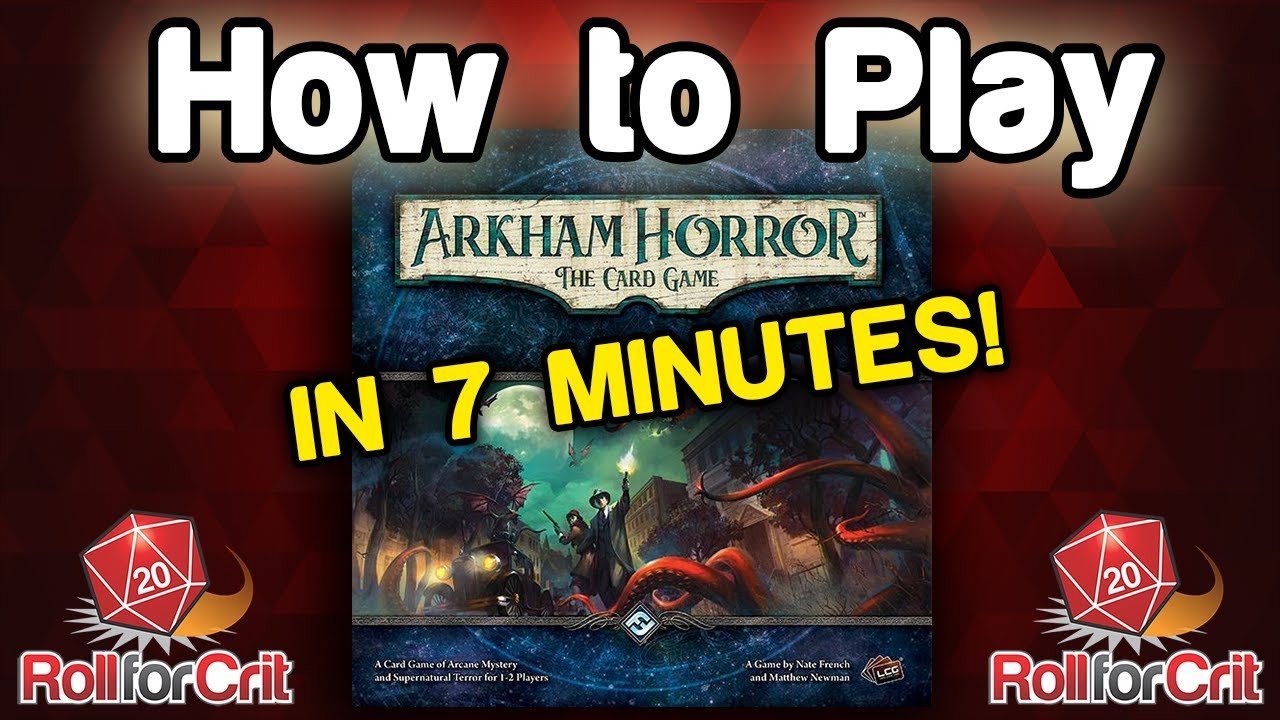
Playing Arkham Horror the card game involves building a deck, investigating locations, battling monsters, and managing resources to complete a scenario, working together with other players if any.
Step into a world of cosmic dread where you become an investigator battling against ancient horrors. The intricate mechanics of how to play Arkham Horror card game might seem daunting at first. Don’t worry, it’s more engaging than you might expect, we will guide you through the steps.
You begin by choosing an investigator with unique abilities and build a deck of cards. Each scenario will lead your investigator through a series of locations to encounter the mythos. Prepare to face many challenging situations.

How to Play Arkham Horror Card Game: A Beginner’s Guide
Welcome, brave investigator! Are you ready to face the ancient evils lurking in the shadows of Arkham? The Arkham Horror Card Game is a cooperative adventure where you and your friends work together to stop terrifying monsters and unravel chilling mysteries. It can seem a little complicated at first, but don’t worry! We’ll break down everything you need to know to get started, from choosing your investigator to battling otherworldly creatures.
Understanding the Basics: What You Need to Know
Before we dive into the nitty-gritty, let’s cover the core elements of the game. This game uses cards to represent everything from your character to the spooky places you’ll visit. Think of it like a choose-your-own-adventure story, but with cards! The main things you need to know are:
- The Scenario: Each game is a scenario, like a chapter in a story. The scenario tells you what you’re trying to accomplish and sets the scene. You’ll find this in the scenario booklet.
- Investigators: These are the characters you play. Each has unique abilities and stats that will help you survive the horrors. You will have a character sheet to keep track of your resources, health, and more!
- The Encounter Deck: These cards are filled with monsters, strange events, and other nasty surprises you’ll have to deal with. This is where most of the tension in the game comes from.
- The Agenda Deck: This deck represents the progress of the big bad evil plan. If it fills up too fast, it means bad things for everyone.
- The Location Cards: The game is played across different places in the town of Arkham, and these cards represent them. They have clues to find and monsters to fight.
- The Chaos Bag: This bag contains tokens that are drawn to determine the results of skill tests. It adds an element of uncertainty to the game.
Setting Up Your First Game: A Step-by-Step Guide
Okay, now that we have the basics covered, let’s get your game set up! The setup might seem long but you only have to do this once at the start, and its well worth it. It’s much simpler once you’ve done it once or twice!
1. Choose Your Investigator
Each player chooses an investigator and takes their associated cards, including their character card, starting deck, and any unique cards. Think about the way you want to play! Do you want to focus on fighting monsters or finding clues? Each investigator does things differently so read their descriptions to figure out which one fits your style. Here’s what you’ll get with an Investigator:
- Investigator Card: It will display your investigator’s name, skills, health, sanity, and starting resources.
- Signature Card: A special card unique to that Investigator
- Investigator Starter Deck: This includes cards you use during the game like weapons, spells, or items
Don’t stress about making the perfect choice on your first game. Part of the fun is trying out different people!
2. Prepare the Scenario
Open the scenario booklet for the adventure you are playing. The first scenario is named, “The Gathering.” Carefully follow the scenario’s instructions and gather the appropriate location cards, agenda cards, encounter cards, and other necessary game pieces. The scenario booklet has clear and easy to follow instructions on how to arrange the components. This step will tell you where to place the location cards, the amount of encounter cards to put in the encounter deck, and the amount of tokens you need for the chaos bag.
3. Make the Chaos Bag
The Chaos Bag introduces an element of randomness when the investigators take actions. Based on the scenario setup, place the correct amount of tokens inside the Chaos Bag. You’ll draw tokens from this bag to test your skills, adding an element of chance and suspense to the game!
4. Starting Location
Place your investigator on the location mentioned in the scenario. Generally, this will be your starting location in the game.
5. Ready to Play!
That’s it! With everything set up, you are ready to begin your first turn. The game is played in a series of rounds, where each player will take their turn to try to find clues, defeat monsters, and prevent the evil agenda from advancing. Let’s look at what a turn looks like.
Playing a Round: What Happens on Your Turn
The game proceeds in rounds, and every investigator will take their turn during each round. Here’s what you’ll do during your turn:
1. Upkeep Phase
At the beginning of each round, you will complete an upkeep phase. In this phase, there are 3 things to take care of
- Ready Cards: Ready all of your cards that are exhausted. Readying them means they are able to be used again.
- Draw a Card: Draw a single card from your investigator deck. The card goes into your hand.
- Gain Resources: Gain one resource token from the bank.
2. Action Phase
This is the heart of your turn, where you take up to three actions. You can use your actions to do all kinds of things like:
- Investigate: You can use an action to investigate at your location. This involves taking a skill test by drawing from the chaos bag and comparing the results to your investigator’s intellect score. If you succeed, you might find a clue.
- Draw a Card: Draw another card from your investigator deck. Cards are incredibly important, but you can only take this action once per turn.
- Engage: If you’re at the same location as a monster, you can engage them. This moves the monster to your investigator which means you’ll have to deal with it before moving.
- Evade: If you’re engaged with a monster, you can try to evade it. This means the monster is not engaged with you anymore, and you are free to do things like investigate.
- Fight: You can attack a monster that’s engaged with you, but it is not always recommended, so check your resources and strength!
- Move: You can move to a connecting location card, if you have the space to move. Each location card will have a set of routes to other locations on the board.
- Play a Card: You can play a card from your hand by paying its cost in resources. Cards help you fight monsters, investigate better, and more!
- Use an Action on a Card: Some cards in the game will have action icons written on them that you can use.
3. Enemy Phase
If there is a monster on the location where you are standing, this monster might make an attack against you, or may just stay engaged. Also, during this phase, any monsters not already engaged will move to the location with the investigator who has the lowest value of the investigator’s shroud rating, meaning that if you have a lower shroud value, monsters will prefer to go after you!.
4. Mythos Phase
This is where the game throws you a curveball! During this phase:
- Add Doom: You will add doom to the agenda based on the scenario’s instruction. When the agenda fills up, it can trigger a bad event.
- Draw Encounter Card: Draw an encounter card. The cards can bring nasty surprises and new problems. You will have to immediately resolve them.
After the Mythos phase ends, the round ends, and the next player takes their turn. The game continues in this manner until you win or lose the scenario!
Understanding Skill Tests
Skill tests are how you perform most of the actions in the game. When you try to investigate, evade, or fight, you’ll often need to take a skill test. Here’s how it works:
1. Choose Your Skill
Choose the skill you want to use for your test (e.g., Intellect to investigate or Strength to fight).
2. Determine the Difficulty
The difficulty of the skill test is shown on the card or effect you are triggering. It will usually be a value that you must meet or exceed.
3. Add Your Skill Value
You will start with your skill value, as it is printed on your investigator card.
4. Optional: Commit Skill Cards
You can commit cards from your hand with matching skills icons to increase your skill level. For example, if you need to pass an Intellect skill test, you can commit a card with an intellect symbol from your hand to the test.
5. Draw Chaos Token
Draw a token from the chaos bag and resolve its effect. Some tokens might increase or decrease your success chance. Some symbols will have special effects. Consult the scenario booklet to find out what the different tokens mean!
6. Compare the Results
Add your skill value, committed card bonuses, and the modifier on the token you drew. If this number is equal to or greater than the skill test difficulty, you succeed! If it’s lower, you fail. This is the tense part of the game, because even if you are very strong, you can still fail!
7. Resolving The Test
If you pass the skill test, carry out the success instructions written on the card. If you fail, carry out the failure instructions. Sometimes, nothing special happens if you fail, and sometimes bad things happen!
Managing Your Resources, Health, and Sanity
Keeping an eye on your resources, health, and sanity is important for surviving Arkham Horror. These numbers represent your condition in the game. You need resources to play powerful cards, and when you run out of health or sanity, you’re in trouble. Let’s dive into each aspect.
Resources
Resources are the currency you use to play cards from your hand. You’ll gain one resource at the start of each round, but some cards can give you more resources. Some cards are more expensive than others, so you have to balance your resource gain with spending resources on cards. You should try to play cards often since that’s how your investigators become more powerful. If your cards are in play, they will help you survive the horrors of Arkham.
Health
Health represents your physical well-being. When a monster attacks you or you suffer damage from a card effect, you lose health. If your health drops to zero, you suffer a physical trauma, and the game is over for you. When your character is defeated, you need to choose another one, and start again. There are a lot of cards in the game that can heal your character, so take advantage of them if you can.
Sanity
Sanity represents your mental state. Encounters with monsters and disturbing events can cause you to lose sanity. If your sanity drops to zero, you suffer a mental trauma. This means your investigator is defeated, and you have to start again with a new one. There are a lot of cards in the game that can heal your sanity, so take advantage of them if you can.
Winning and Losing the Game
So how do you actually win or lose the Arkham Horror Card Game? There are some things to look out for! Here is a quick rundown of what that looks like:
Winning the Game
You win a scenario when you complete its goals as described in the scenario rules. This can involve finding specific clues, defeating a boss monster, or achieving other objectives. Each scenario is different, and they are all winnable!
Losing the Game
You can lose the game in several ways:
- The Agenda Advances Too Far: If too much doom is added to the agenda and it advances to its final stage, you may lose.
- All Investigators are Defeated: If all investigators reach zero health or sanity, the game is lost.
- The Scenario Says You Lose: Some scenarios will have specific loss conditions if you do not finish them in time.
Tips for New Investigators
Starting a new card game can be difficult, but here are a few tips to help you get started:
- Read the Scenario Carefully: The scenario booklet is your guide. It will tell you everything you need to know to get started.
- Don’t Be Afraid to Fail: The game is difficult, and you’ll likely lose some scenarios. But, losing is part of the learning experience!
- Work as a Team: Arkham Horror is a cooperative game, so plan your actions and share information. The more you work as a team, the more likely you are to win.
- Experiment with Different Investigators: Each investigator has their own unique cards and abilities. Try out different characters to see which ones you enjoy.
- Start Simple: Stick with the core set of cards and scenarios. This will help you get the basics down, and make it easier to learn new aspects later.
- Ask Questions: If you’re unsure about a rule, don’t hesitate to look it up online or ask for help from experienced players.
The Arkham Horror Card Game can seem intimidating at first, but with a little practice, you’ll be exploring the mysteries of Arkham and fighting off otherworldly horrors in no time. Remember to have fun, work with your teammates, and don’t be afraid to face the unknown!
Arkham Horror: The Card Game – How To Play
Final Thoughts
To play Arkham Horror card game, investigators must draw cards, test skills, and fight monsters. Managing your hand and resources is crucial for survival. Players must work together. Understanding the different card types is a must for new players. Learning how to play Arkham Horror card game takes some practice, but is very rewarding.

