
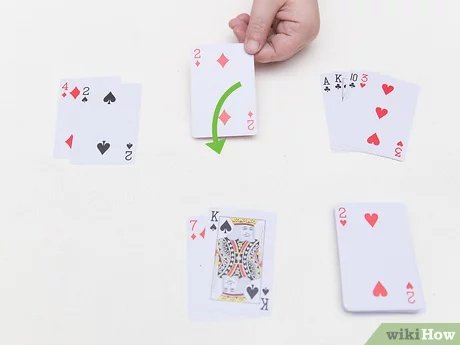
Playing Big 2 involves being the first to discard all your cards by playing combinations stronger than the previous play, following standard poker hand rankings with suit considerations.
Ever wondered how to play big 2 card game? It’s a fast-paced, trick-taking game that can get quite intense. The game relies heavily on hand management and strategic plays. You’ll be aiming to get rid of all your cards before anyone else does.
It is played by comparing combinations of cards, similar to poker but with some differences. Understanding hand rankings is crucial. You will need to know what beats what to succeed in this game.

How to Play Big 2 Card Game: A Complete Guide
Big 2, also known as Deuces or Pusoy Dos, is a popular card game that’s all about strategy and getting rid of all your cards first. It’s a game enjoyed by people of all ages around the world. If you’re eager to learn how to play and impress your friends, you’ve come to the right place! This guide will break down the rules, strategies, and everything else you need to know to start playing like a pro. Get ready to dive into the exciting world of Big 2!
Understanding the Basics of Big 2
Before we get into the nitty-gritty, let’s cover the basic elements of the game. Big 2 uses a standard 52-card deck. The goal is simple: be the first player to get rid of all your cards by playing them in legal combinations. Here’s what you need to know before you start:
The Ranking of Cards
The card ranking in Big 2 is a bit different from many other card games. Here’s how the cards are ordered, from lowest to highest:
- 3 (Lowest)
- 4
- 5
- 6
- 7
- 8
- 9
- 10
- J (Jack)
- Q (Queen)
- K (King)
- 2 (Highest)
Suit also matters when comparing cards of the same rank. Suits are ranked as follows, from lowest to highest:
- Diamonds
- Clubs
- Hearts
- Spades
For example, the 3 of Diamonds is the lowest single card, and the 2 of Spades is the highest single card.
This is a bit tricky, but you’ll quickly get used to it. Remember, the 2 is the most powerful single card!
Card Combinations in Big 2
You can’t just throw down any cards you like; Big 2 has specific card combinations that are allowed. These combinations are similar to those found in poker, but they have their own rules within the context of Big 2.
Single Cards
A single card can be played, and its value is determined by the rank and suit as discussed earlier.
Pairs
Two cards of the same rank. The higher-ranking pair wins over the lower-ranking pair. If two pairs have the same rank, the one with the highest suit wins. For example, pair of two 5s is beaten by two 7s. And pair of 7 of heart and 7 of diamond is beaten by pair of 7 of spades and 7 of club.
Three-of-a-Kind
Three cards of the same rank. A higher three-of-a-kind will always beat lower-ranked one. For example, three 8s will beat three 5s.
Five-Card Combinations
These are the most complex and powerful combinations in Big 2. They include:
- Straight: Five cards in a sequence but from different suits. (Example: 5 of Hearts, 6 of Clubs, 7 of Diamonds, 8 of Spades, 9 of Hearts). Suit doesn’t matter for straights in determining its value, only the highest card rank. Straight with 9 is higher than the straight with 8.
- Flush: Five cards of the same suit. (Example: 4, 7, 9, J, K all of Hearts). If two flush happens the one with higher rank of the highest card will be the winner.
- Full House: A combination of three cards of the same rank and a pair of another rank. (Example: Three 4s and two 7s). Full house with three 8’s is higher than full house with three 7’s. If both have three cards of same rank then full house with higher pair rank wins. If both have same three and pair ranking then suit of highest card wins.
- Four-of-a-Kind with one Card: Four cards of the same rank, plus any other card. (Example: Four 8s and a 2). A four of kind with 8s beats four of kind with 7s.
- Straight Flush: Five cards in a sequence and all of the same suit. (Example: 5, 6, 7, 8, 9 all of Spades). Higher straight flush wins.
Straight flushes are the highest-ranking combinations. Four-of-a-kind combinations are extremely strong as well, and they can overpower most other combinations. Remember that five-card combinations beat lower value five card combinations, no matter the type of combination. For instance, a straight flush of a lower rank is beaten by a higher straight, if two straight are present then higher straights wins. All five-card combination is superior to pairs and three-of-a-kinds.
Setting Up a Big 2 Game
Now that we’ve covered the card values and combinations, let’s see how to set up a game of Big 2:
Number of Players
Big 2 is typically played with four players, but it can also work with two or three. The rules are generally the same regardless of the number of players. In a two-player game, the rules can be slightly adjusted, but we’ll focus on the standard four-player game.
Dealing the Cards
One player shuffles the deck, and then deals all the cards, one at a time and face down, to all players. It’s important that everyone receives the same number of cards, 13 cards in total. There will be no cards left when playing with four players. It might be possible to have leftover cards if you play with two or three players, this doesn’t matter in this game.
Starting the Game
The player holding the 3 of Diamonds starts the game. They can play the single card, or any legal combination that contains this card. After the first play, the game proceeds in a clockwise direction.
Gameplay: How to Play Each Turn
Once the game starts, it’s all about strategic plays. Here’s how each turn works:
Making Plays
Each player, on their turn, must play a card or combination that beats the last card or combination played. For example, if the previous player played a single 5, you must play a single card higher than the 5. If someone plays a pair of 8’s, next person must play pair of 9 or higher. It’s important to remember the card rankings and the specific combinations.
Passing
If a player cannot or does not want to play a higher combination they must pass. By passing, player will skip the turn. However, player must remember that they have to clear all of the cards before other players in order to win. Therefore passing too much, will not help in winning.
Clearing the Pot
If everyone passes after a play, the “pot” is cleared, and the player who made the last play gets to start the next round with any card or combination they wish to play. This is a great opportunity to make a strategic play and possibly get rid of a few cards.
Special Scenarios
There are a couple of things that are very important that you might run into while playing:
Initial Play and the Three of Diamonds
The player holding the 3 of Diamonds must initiate the game. It will help the player to get rid of his cards quickly in early phase of game.
Ending a Game
The player who gets rid of all of their cards first wins the round. In a friendly game, the game often continues until all players have gotten rid of their cards and a specific ranking is determined based on this.
Penalty for Not Discarding
It’s a common house rule that if a player has to pass for three consecutive rounds, they must show their cards to other players. This rule can add some extra tension to the game, and will stop the players from passing for too many times.
Strategy: Playing to Win
Big 2 isn’t just about luck; it’s also about strategy. Here are some tips to give you an edge:
Card Management
Keep track of the cards that have been played. This is very crucial in the game. Knowing which cards are still in play can help you plan your moves and avoid playing into a winning combination for your opponent.
Leading Strategically
When you get to lead with a new combination, don’t always play your highest cards right away. Sometimes, leading with a lower combination can force your opponents to use up their good cards, thus making it easier to win later. For example, a pair of 3s will not force anyone to play high value cards, but it will help you get rid of your low value cards and make your hand better. Also, if you have a strong set of cards, leading with a single high card might force players to waste their pairs and other combinations early on.
Playing to Opponent’s Weakness
Sometimes, you can make a play with very high single card to force your opponents to waste their high combination cards. If they don’t have any combination to surpass your single card, you will be able to play and get rid of your cards very quickly.
Holding Strong Cards
Avoid using your high-value cards (like 2s and Aces) too early. Save them for when you really need them to win crucial rounds. Using those high cards at the wrong time may come back to haunt you. You should try to have good single cards or combinations by the end of the game, so you can clear them when other player is about to clear his cards.
Managing Five-Card Combinations
Five-card combinations are strong but can be risky if used too soon. Use them when you have the chance to get rid of multiple cards at once, or when you need to clear a large number of opponents. Sometimes, saving them for the end of the game might be a great idea if others are getting close to win the game.
Adapting to Play Style
Observe how other players are playing. If they tend to hold on to high cards, try to use your combinations to force them to make a play. If they are passing quickly, don’t be too risky and use your combinations to clear your cards.
Big 2 Variations and House Rules
Like any good card game, Big 2 has a few variations and house rules that players sometimes incorporate. Here are a few popular ones:
The Number of Cards
While 13 cards per player is standard in a four player game, when you play with a smaller number of people, you need to adjust the number of cards to be able to play the game properly. If there are leftovers when dealing, it doesn’t matter. You don’t need to include those left over cards in game play.
Forcing a Player to Play
Some variations might require the next player to have a higher-value card of the same combination, while others only need to be higher in number. For example, if you play single 9 of hearts, you will have to play single 10 of any suit or higher single card, depending on the variation you choose. Check and confirm with other players what kind of variation everyone wants to use, before the game starts.
Penalties for Misplays
Some house rules might include specific penalties for making illegal plays (like playing a lower card than the one before). These penalties will usually consist of forcing the player to draw more cards, or miss the next turn. These rules can be flexible and should be agreed upon before you play the game.
The Use of Jokers
Some players add jokers to the game as wild cards. This greatly changes the way the game is played, since the value of the joker can be decided by the player at the time of playing. Some variation may limit the use of joker in combinations. Make sure to check with all players if they want to include jokers or not.
Playing Big 2 can be a fantastic way to have fun with family and friends. The rules may appear a bit difficult initially, but with a little bit of practice, you’ll become comfortable with the gameplay. Remember, it is a strategy and you must adjust to the playstyle of other players to clear all your cards quickly. Now go ahead, deal the cards and enjoy the exciting world of Big 2!
how to play Big Two
Final Thoughts
To summarize, the game involves being the first to discard all your cards. Players must play cards of higher rank or same rank and higher suit. Singles, pairs, triples, and five-card poker hands are legal plays.
Remember, you must follow the suit of the leading play unless it’s a five-card combination. The goal when you play is to eliminate all your cards quickly. Understanding these rules is crucial for successful play.
Following the basic ‘how to play big 2 card game’ approach enables you to enjoy this fun, strategic card game. Practice playing and improve your strategy over time.

