
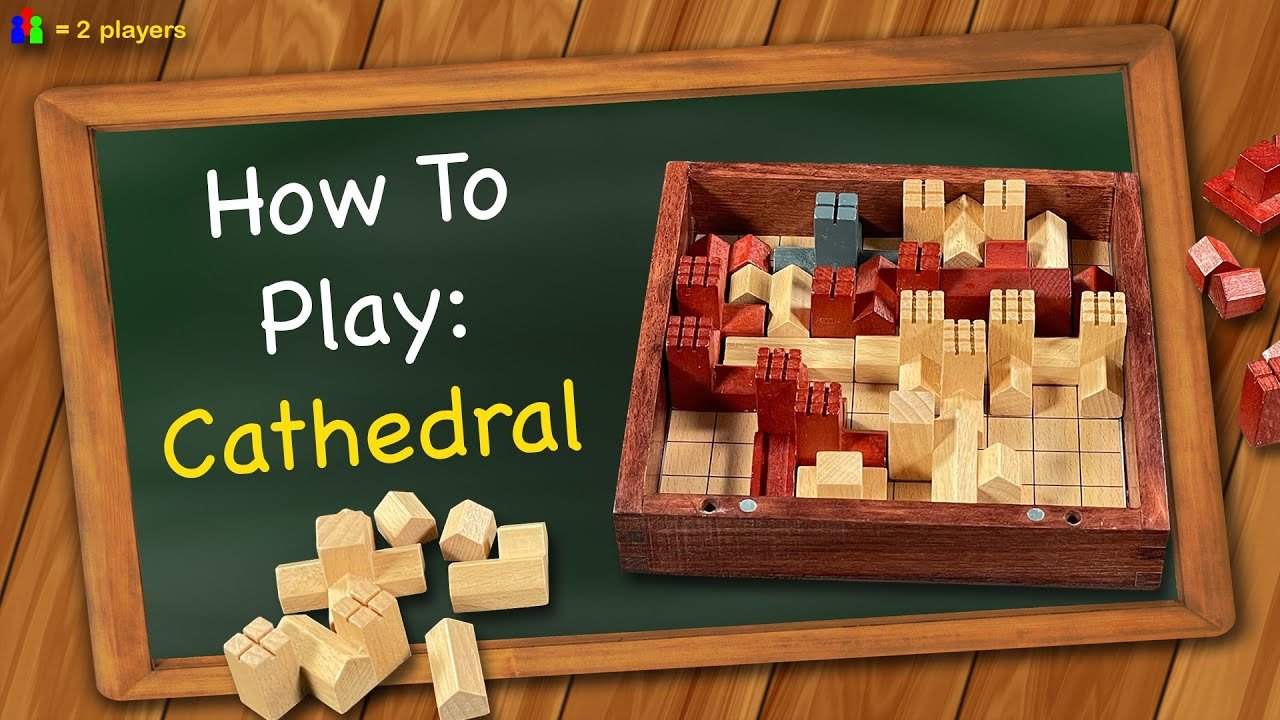
To play Cathedral, players take turns placing building pieces onto the board, aiming to be the last player able to place a piece. You must block your opponent from placing any more pieces. The game ends when no player can add another piece to the board.
Cathedral, a captivating spatial strategy game, challenges you to think strategically. Many people wonder how to play Cathedral board game. The objective is to place your building pieces onto the board in a way that prevents your opponent from doing the same.
You and your opponent alternate turns placing the uniquely shaped pieces. Carefully consider each placement as blocked sections of the board can restrict further moves. The game requires careful planning and a bit of foresight.

How to Play Cathedral Board Game
Alright, let’s dive into the exciting world of the Cathedral board game! It might look a bit complicated at first, with all those uniquely shaped wooden pieces, but trust me, it’s easier than you think. This game is all about fitting your buildings within the city walls, and it’s a real brain teaser that’s fun for everyone. We’ll go through everything step-by-step, so you’ll be building your own little city in no time!
Understanding the Game Components
Before we start playing, let’s get to know the pieces. The game comes with a few important things:
- The Game Board: This is your city, marked with the cathedral in the center. It has a grid pattern that helps you place your buildings.
- The Buildings: These are all the cool wooden blocks, each with its own shape. Each player gets a set of differently shaped buildings.
- The Cathedral: This is a special piece that belongs to no one, but sits in the middle of the game board.
It’s important to become familiar with the shapes and sizes of your buildings. Some are long and thin, others are chunky and square. This will help you think about how you’ll place them on the board.
Setting Up the Game
Now that we know what’s in the box, let’s set up the game:
- Place the Board: Put the game board on a flat surface where everyone can reach it.
- Put the Cathedral in Place: Place the cathedral building in the center of the game board.
- Choose Your Color: Each player picks a set of buildings of one color.
Now, you’re all set to start building!
The Basic Rules
The game is pretty simple. The goal is to be the first player who places all of their building pieces inside the city walls. Here are the key things you need to know:
- Taking Turns: Players take turns placing one of their building pieces on the game board.
- Placing Buildings: You can only place a building if it fits completely within the city walls. It cannot overlap the cathedral in the center, or any of the buildings that are already placed by you or another player.
- No Overlapping: Your building cannot overlap any other building. You must place the building so that it sits within the available empty grid spaces.
- Start anywhere: Your first building, can start anywhere on the game board( not on cathedral, of course)
- No rotating pieces : The game has a simple rule that no player can rotate their pieces. They must use them with their original orientation.
Let’s break down each of these in a little more detail.
Taking Turns
Taking turns makes the game fair for everyone. The players play in a clockwise direction. Each player plays only one piece, then next player takes their turn.
Placing Your Buildings
This is the heart of the game! When you choose a building to place, think carefully. Look for a space where the building will fit completely inside the city walls, without touching other buildings. Look for a space that is free, not covered by any other building. You can’t move or pick up building once placed on the grid spaces.
No Overlapping
This is a very important rule. It means that no part of your building can sit on top of, or share space with, another building. Your building must fit into a free empty area.
Imagine it like putting together puzzle pieces. Each piece fits neatly into its own space, without overlapping others. The goal is to fit all your pieces into the grid spaces.
Strategic Thinking
While the basic rules are easy, there is a lot of strategy involved in Cathedral board game. Here are some important things to keep in mind:
- Planning Ahead: Don’t just place your first piece anywhere. Think about where you want to place your other pieces. Try to leave gaps that might work for other pieces.
- Blocking Others: Think about blocking your opponent. Placing a building in a way that makes it harder for your opponents to place their pieces is a good tactic. But, do it carefully as this might come at your own cost.
- Use Your Smaller Pieces: Sometimes, the smaller buildings are more helpful than the big ones. They can fill up small gaps that the big ones can’t. You need to think when and where you need to place your big and small pieces
- Visualizing: Try to visualize the area and the buildings in your hand. So that you don’t waste your chance by placing a wrong building on the grid. Try to imagine in advance, if you will be able to place the building or not, so that you don’t end up picking the building again and again.
Let’s look at each of these points more closely.
Planning Ahead
It’s like thinking a few steps ahead in a chess game. When you place a piece, don’t only think about placing that piece, instead also think about the next couple pieces. Where can your next piece fit? Leaving some free spaces around a piece, will help you to place your next building. If you place all of your big pieces in first few moves, you will be left with smaller pieces, and it may be difficult to place them.
Blocking Other Players
Cathedral is a competitive game. It is not just you, you have other players as well. So, you need to think in terms of blocking your opponents. Look at the board and observe, where will your opponent be likely to put their next piece. And if you can place your building in a manner that doesn’t give space to the other player, you can increase your chances of winning. But you have to be careful that, you don’t end up blocking yourself by placing your pieces in a wrong manner.
Use Your Smaller Pieces
Don’t be so focused on placing your big pieces. The smaller pieces are equally important. They can fill in small gaps and make a big difference in the game. Don’t waste those small pieces. Save them for the end, they are important to close the game.
Visualizing
Before you pick up a piece, try to see where it will fit on the board. Look at your piece. Look at the board, and the free spaces. Try to imagine if that piece will fit into those spaces. Do this before you pick up the piece, and you will waste less of your precious turns.
Winning the Game
The first player to place all of their buildings on the board wins the game. When it’s your turn and you have no more buildings left in your hand, you’ve won. Congratulations!
Dealing with a Deadlock
Sometimes, despite your best efforts, no one can place any more buildings on the game board. All the free space is used, and no building will fit into the remaining space. This is called a deadlock. If this happens, the game ends and the winner will be the player with the least number of building pieces remaining in their hand. If all the players have the same number of remaining buildings, it is declared a tie between them. Another tiebreaker could be, to count the number of squares that their remaining building will cover, the player with the least squares remaining, would be declared the winner.
Tips for Beginners
If you’re new to the game, here are some simple tips to help you get better:
- Start Simple: Don’t try to be too strategic in your first game. Just focus on learning the rules and placing your pieces.
- Practice: The more you play, the better you will become. You will get better at visualising pieces. And, after sometime, you will also get better at blocking your opponents
- Watch Others: Watch how other players play. You can learn new tricks and strategies from their moves.
- Have Fun: Don’t be so stressed out to win. This game is all about thinking and enjoying the process. Just have fun!
Variations and Advanced Play
Once you get comfortable with the basic rules, you can try some variations to make the game more interesting.
Team Play
You can play cathedral in teams. You can have two teams playing against each other. The team with all the building pieces placed on the game board first, wins. In case of a deadlock, the team with least remaining pieces will be declared the winner.
Handicaps
If you are playing with someone who is a lot more experienced than you, you can try a handicaps, where the more experienced player may be given fewer building pieces to play with.
Advanced Strategy
Advanced players can try to visualize how their moves will affect the entire board. They will try to anticipate the opponents moves and try to predict where their opponents will be able to place their buildings and which buildings they will likely be placing. Then, they will try to block their opponents by making their moves strategically. This requires a lot of practice, but can be a very good strategy if used well.
Why Cathedral is a Great Game
Cathedral isn’t just a fun game, it’s also a great way to improve your thinking skills. It helps you:
- Think Spatially: You have to look at the board and plan where to place your buildings.
- Plan Strategically: You need to think a few moves ahead.
- Solve Problems: You will encounter problems and try to find ways to solve them
- Be Patient: Cathedral requires patience, as you need to carefully plan your moves and sometimes you need to wait for the right time.
And, most importantly, it’s a fun way to spend time with family and friends!
How to play Cathedral
Final Thoughts
Place building pieces carefully around the central cathedral. Players take turns placing their buildings, aiming to enclose the opponent’s structures. The key to success is strategic placement, preventing your opponent from fitting their pieces.
You win by placing all your buildings first or by blocking the other player completely. This outlines how to play cathedral board game effectively. Remember, spatial thinking is a must for this game.

