
Playing croquet game involves using a mallet to hit balls through a series of hoops in a specific order, racing against opponents to complete the course.
Ever wondered about the gentle clack of mallet on ball, the satisfying thwack as it sails through a hoop? That’s the charm of croquet, a game that’s both strategic and surprisingly engaging. If you’re curious about how to play croquet game, you’re in the right place.
It might seem simple at first glance, but this outdoor pastime has layers of strategy and finesse. We’ll break down the basics, so you can soon enjoy this fun and social game.

How to Play Croquet Game
Croquet is a fun lawn game that people of all ages can enjoy! It might look a bit complicated at first, with all the wickets and mallets, but it’s actually quite easy to learn. Think of it as a bit like a mix of golf and billiards, but played on your lawn. This guide will break down the rules and steps, so you’ll be hitting those balls through the wickets like a pro in no time!
Getting Started: The Croquet Equipment
Before you can play, you need the right equipment. Here’s what you’ll typically find in a croquet set:
- Mallets: These are the wooden hammers you use to hit the balls. Each player gets their own.
- Balls: Usually, there are six balls, each with a different color. Each player has a designated ball color.
- Wickets: These are the wire hoops you hit the balls through. There are typically nine of them.
- Stakes: There are two stakes. One marks the starting and finishing point.
Make sure you have all of these items before you start setting up your croquet course!
Setting Up Your Croquet Course
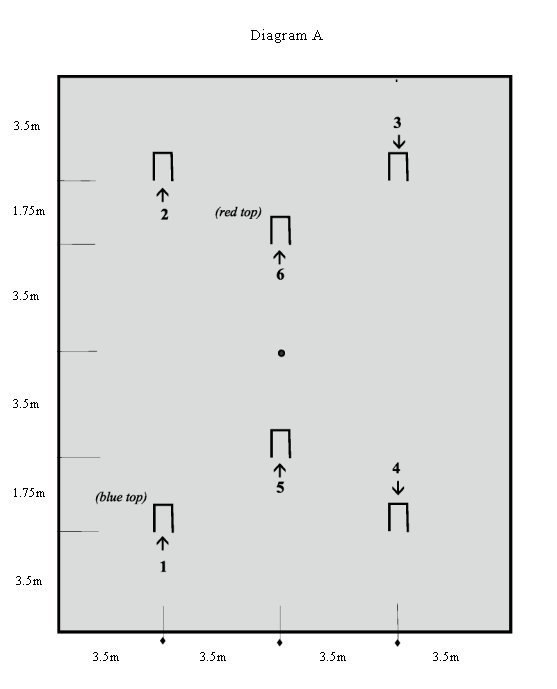
Now that you have your equipment, let’s set up the croquet course. Don’t worry, it’s easier than it sounds! Here’s a common way to arrange the wickets:
- The First Stake: Place one stake at the starting point.
- Wickets in a Pattern: Arrange the nine wickets in a diamond shape or a double diamond, or in a simple rectangle or square, starting with the first wicket a small distance from the stake. The basic pattern starts with two wickets leading away from the start, then a wicket across, followed by two wickets coming back, and a wicket going to the side, followed by two more leading to the finishing stake.
- The Second Stake: Place the second stake at the opposite end from the starting stake, it’s typically near the last wicket.
The exact pattern can be adapted to fit your lawn, but the general idea is that the player hits their ball through all the wickets and finishing at the end stake. The idea is for the path to be relatively simple to follow.
Tips for Setting Up
- Make sure your wickets are firmly pushed into the ground.
- Leave enough space between the wickets for the ball to pass through.
- If you’re playing on uneven ground, try to place the wickets on the most level spots.
The Basic Rules of Croquet
Okay, now for the rules! The main goal in croquet is to be the first player to get their ball through all the wickets in the correct order and then hit the finishing stake.
The Starting Point
All players start at the starting stake. Each player takes a turn hitting their ball through the wickets. After the ball passes the first wicket in order, the player’s turn ends. Then it’s the next player’s turn. There are some special terms that are useful to know.
- A Turn: A player’s turn begins with them hitting the ball with a mallet, and ends after a hit has been completed (even when hitting another ball or the stake).
- Deadness: A ball becomes ‘dead’ to other balls after it hits another player’s ball.
- Roquet: When a ball strikes another player’s ball, this is called a roquet.
- Croquet Shot: After a roquet, a player is granted a ‘croquet shot’. They place their ball touching the ball they hit, then when hitting their ball the other player’s ball moves.
- Ball-in-Hand: After a ball goes out of bounds, a player may place the ball one mallet length away from the boundary.
Hitting the Ball
You use the mallet to hit the ball, but there are a few things to keep in mind:
- Swinging: Swing the mallet in a smooth motion, making contact with the ball. Don’t try to lift the ball with the mallet.
- Foot Placement: Be careful of your foot position so you don’t hit your foot instead of the ball!
- Controlled Power: Start with gentle hits. You don’t need a huge swing every time. Accuracy is more important than power.
The Wicket Order
The standard order for passing through the wickets is typically numbered, usually going from the starting stake to the end, then back to the starting stake before hitting the end stake. For example, if there are 9 wickets, the ball goes through wickets 1, 2, 3, 4, 5, 6, 7, 8, and 9 then back through 9, 8, 7, 6, 5, 4, 3, 2 and 1 before hitting the ending stake.
You have to go through the wickets in the proper order, so pay attention to the course!
Special Shots
Croquet has a few special shots that make things more interesting:
The “Roquet” and “Croquet” Shot
If your ball hits another player’s ball, it’s called a “roquet.” When this happens, you get another turn. But this time, you have a “croquet shot” as well as an extra shot after the croquet shot. Here’s how it works:
- Placement: Place your ball right next to the ball you hit.
- Croquet Shot: Hit your ball with your mallet. Your ball will stay in place and the ball you’re touching will be hit forward.
- Extra Shot: After the croquet shot, you get to take another normal shot (unless the croquet shot resulted in the ball going through a wicket).
The “Deadness” Rule
A ball becomes ‘dead’ after it hits another ball, and that ball will not be able to hit that other ball again until the player scores a wicket. For a multi-player game, this can help prevent a single ball from becoming targeted by all of the other players.
Out of Bounds
If your ball goes out of bounds (off the playing area), you have to bring it back. Place your ball one mallet length inside the boundary from where it went out of bounds. Your next shot will be a normal shot.
Playing the Game
Now you know all the rules, let’s play! Here’s what a typical game might look like:
Beginning the Game
All players place their ball at the starting stake. A first player is usually determined by the rules each player has agreed on. (Examples: Coin Flip, youngest player goes first, etc.)
First Round
The first player begins by hitting their ball through the first wicket. Then the next player has their turn. Players alternate in order, following the rules. Keep going until someone gets through the entire course!
Dealing with Obstacles
Sometimes, other balls might get in your way. That’s part of the fun of croquet. You have to think about how to navigate around them or even use a roquet to your advantage.
Winning the Game
The first person to get their ball through all the wickets in the correct order and hit the ending stake wins the game! After this player has won, the other players can continue to play to determine 2nd and 3rd places, etc.
Croquet Strategies and Tips
While croquet is easy to learn, a few simple strategies can help you play well. Here are some tips to take your game to the next level:
Plan your Shots
Think ahead! Don’t just aim for the next wicket. Consider the best position to set yourself for the next few shots. Thinking ahead will help you win the game!
Use the Roquet Shot
When you have a chance to roquet another ball, it can be very useful. Use the opportunity to send the other ball to a location where it will make their progress more difficult. Sometimes, this might mean sending their ball away from the wicket. It can also be useful to move an opponent’s ball away from the path of your next shot.
Take Gentle Swings
Accuracy is important in croquet. So don’t try to hit the ball as hard as you can. Control is key for a good croquet player.
Practice Makes Better
The more you play croquet, the better you’ll get. Don’t worry if you don’t get everything right at first. The most important thing is to have fun and keep practicing!
Variations of Croquet
Croquet has several variations, meaning that there are different versions of the rules that you can try. Once you have learned the basic rules of the game, you can try some different versions. Here are some of the more common versions:
Golf Croquet
In this version, players attempt to hit the ball through the hoop in the correct sequence, but the first player to do so wins the hoop. This version of the game puts a lot of emphasis on being able to be both accurate and quick.
Association Croquet
This is the version of croquet that is most popular in official tournaments. It is a more complex version, with a specific set of rules and tactics. It is considered the ‘professional’ version of the game.
Backyard Croquet
This variation of croquet is the most common, and can be altered to fit the conditions of your lawn. Each player can make their own rules for the game!
Why Croquet is Great
Croquet is a wonderful game for many reasons:
- Easy to Learn: The basics are simple to grasp, making it perfect for all ages.
- Fun for Everyone: It’s a great game to play with family and friends.
- Outdoor Activity: It gets you outside and enjoying the fresh air.
- Strategic Thinking: It challenges you to think about angles, power, and strategy.
- Relaxing and Social: It’s a fun way to socialize and spend some quality time.
So, gather your equipment, set up your course, and get ready to have some fun! You’ll be a croquet champion in no time! Enjoy the game, and remember, practice makes perfect. Have fun with your friends and family playing this terrific game!
How To Play Croquet
Final Thoughts
To summarize, begin by setting up the course. Players then strike their ball with a mallet through hoops in sequence. The first player to navigate the course wins. How to play croquet game requires understanding hoop order.
Strategic shots and interfering with opponents make it exciting. You must carefully plan your approach. A good understanding of rules is crucial for success in croquet.

