
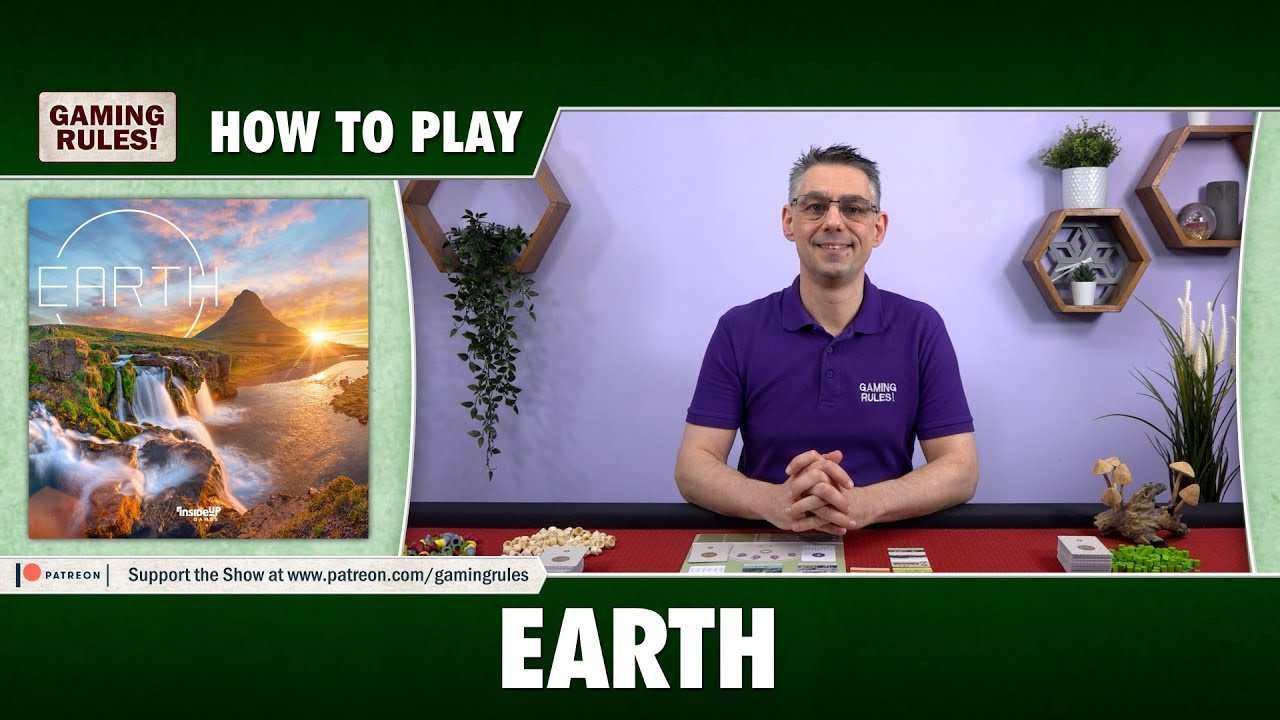
To play Earth board game, players cultivate ecosystems by drafting cards and placing them to build a thriving tableau, scoring points for diverse habitats and completed objectives.
Ever wondered about creating your own thriving world? The Earth board game allows you to do just that, placing you in the role of a world builder, crafting ecosystems through card drafting and strategic placement. You’ll be learning how to play Earth board game in no time, exploring the beauty of nature.
Each player carefully chooses cards representing flora and fauna, arranging them to maximize growth and scoring opportunities. The game balances a simple core mechanic with engaging depth that makes each play session different and exciting.

How to Play Earth Board Game
Ready to grow your own little world? Earth the board game is all about building a thriving ecosystem, right on your tabletop! This game has players becoming caretakers, carefully planting cards to create a beautiful and balanced environment. It might seem a little complicated at first, but don’t worry! This guide will walk you through everything you need to know, step-by-step, so you can start building your world in no time.
Setting Up Your World
Before we can start planting, we need to get the game ready. This is like preparing the soil before you put in any seeds. Here’s how to set up the game:
The Main Board
First, put the main game board in the middle of the table where everyone can reach it. This board has spaces for your played cards and shows different spots for resources.
Player Boards
Each person playing gets their own player board. This is where you’ll keep all the cards you play during the game. It’s your personal patch of earth!
The Card Decks
There are different stacks of cards you’ll need to sort. These are the building blocks of your world:
- Ecosystem Cards: These are the most common cards that you will use to build your world by adding them to your player board. There are many types of ecosystem cards, each with a specific benefit.
- Island Cards: These cards can give you an immediate benefit when you draw them and provide a bonus at the end of the game.
- Event Cards: These cards give everyone a target to hit and a way to earn more points. A new Event card is revealed at the beginning of each round.
- Goal Cards: These cards provide each player with individual objectives and ways to gain points. Each player should be dealt 2 Goal cards and pick 1.
- Terraforming Cards: These cards provide unique powers for different players to choose from. Each player will select 1 terraforming card before play begins.
Shuffle each of the card stacks separately and place them face down where everyone can easily reach them on the table. For the Ecosystem Cards, flip over the top 3 face up.
The Resource Tokens
Sort out the resource tokens, which look like little squares, into piles. These tokens are used to activate plant cards in the game. There are 3 types of tokens:
- Growth: Green tokens used to activate some cards.
- Soil: Brown tokens used to activate some cards.
- Compost: Black tokens which can substitute for any other token.
Put these tokens where everyone can reach them near the game board.
Starting Resources
Each player starts with 3 growth tokens. Players also draw 4 Ecosystem cards and can keep 1 of those cards to begin the game. The others should be discarded back to the bottom of the deck.
First Player
Decide who goes first, and then you are all set to start growing your worlds!
Playing the Game: A Round-by-Round Guide
Each round in Earth is like a mini-year for your world. You’ll take turns doing different things to help your world grow.
The Four Phases of a Round
Each round is split into four different phases.
- Plant: Each player will have the opportunity to play one ecosystem card to their player board and activate any that require an immediate payout. If you do not wish to play a card, you may instead choose to take 2 growth tokens.
- Grow: Players take turns activating the “grow” action on cards that they have in their play area. If there are none available, the player should take 1 growth and 1 soil token instead.
- Compost: Players take turns activating the “compost” action on cards that they have in their play area. If there are none available, the player should take 2 compost tokens.
- Draw: All players can draw 4 ecosystem cards and either keep 1 or discard all 4 and then draw 2 more.
Plant Phase: Adding to Your World
During your turn, you’ll have a few choices. You can either:
- Play an Ecosystem Card: Take one card from the 3 face-up ecosystem cards or the top of the stack and put it on your player board. This costs nothing to play.
- You can only play a card if there is an empty space on your board.
- Place the card on your board and activate any immediate powers of the card.
- Take Resources: If you do not want to play a card to your board, you can instead choose to take 2 growth tokens from the pool.
Grow Phase: Making Things Happen
In the grow phase, starting with the first player, each player can activate the grow action on their cards. These actions can do a variety of things, such as granting you resource tokens, drawing cards, or gaining points.
- Each player must activate as many grow actions on their cards as they can.
- If a player does not have any cards with a grow action to activate, they should take 1 growth and 1 soil token from the pool.
Compost Phase: Recycling Your Resources
Like the grow phase, players will now activate the compost action on their cards.
- Each player must activate as many compost actions on their cards as they can.
- If a player does not have any cards with a compost action to activate, they should take 2 compost tokens from the pool.
Draw Phase: Getting New Options
Now everyone draws new ecosystem cards, which give you new possibilities to add to your growing ecosystem!
- Each player should draw 4 new cards from the top of the deck.
- Keep 1 of the 4 cards you drew and discard the rest or discard all 4 cards and draw 2 more.
Understanding the Cards
The different cards in the game are what makes each world unique. Let’s dive into what the different types of cards do:
Ecosystem Cards
These are the cards you’ll be using the most. They have a lot of information to pay attention to:
- Plant Type: Each Ecosystem card has a specific plant type, which is useful when completing the event and goal cards.
- Resource Symbols: Some of the cards will show a resource symbol, which tells you how much of that resource you get when you activate the card.
- Grow Action: An action you can activate during the Grow phase to collect tokens, draw cards, or other actions.
- Compost Action: An action you can activate during the Compost phase to collect tokens, draw cards, or other actions.
Island Cards
These cards usually have special powers that trigger when you draw them and they also give you bonus points at the end of the game.
Event Cards
Each round, an event card is revealed at the beginning of the round and provides an objective for everyone to try and accomplish during the game. If a player meets this objective, they can claim the reward printed on the card.
Goal Cards
These cards provide each player with individual ways to score points and can help direct your strategy. There are a variety of things that these cards might require, such as having certain plant types or certain amounts of a token.
Terraforming Cards
Before the game begins, players will select a terraforming card. This will provide that player with a unique ability that can be used throughout the game. Some provide better actions during grow or compost, while others provide other unique abilities.
Scoring Points and Winning the Game
The game continues until the card deck runs out. Then, players will tally their points to find out who wins! Here’s how to score:
Points from Ecosystem Cards
Each ecosystem card will show a number of points it is worth. Add all these numbers up to calculate your point total from these cards.
Points from Island Cards
The points from island cards are included on the island card and add to your total score.
Points from Event and Goal Cards
You get points for the event cards and personal goal cards that you completed during the game.
Final Tally
The player with the most points at the end wins! If there is a tie, the player with the most compost tokens wins. If they are still tied, the tied players share the victory.
Tips and Strategies for Growing Your World
Here are a few tips that will help you make the most out of each game.
- Pay Attention to Your Resources: Collecting and using your resources wisely is key to activating all of the cards you play.
- Plan Ahead: Try to plan where you place your cards, as many cards will give bonus points when played next to certain plant types.
- Watch Your Opponents: Keep an eye on what cards your opponents are playing, so you know what to expect.
- Use Your Terraforming Ability: Make sure you remember to use the extra ability your terraforming card gives you! These can often mean the difference between a good game and a great game.
That’s it! You now know how to play Earth the board game. Remember, every game is a new chance to grow a beautiful and unique world. Have fun planting and creating!
How to Play Earth – Official Tutorial video
Final Thoughts
In Earth, players cultivate ecosystems by planting cards. They gain points through diverse habitats and completed objectives. Card combos and engine-building are main aspects of scoring well.
Players take turns drafting cards and placing them in their personal tableau. Careful planning and understanding card synergies are key to success. How to play Earth board game involves managing resources effectively.
Ultimately, winning comes from achieving the most points. Players should focus on card interactions to maximize their ecosystem’s potential.

