
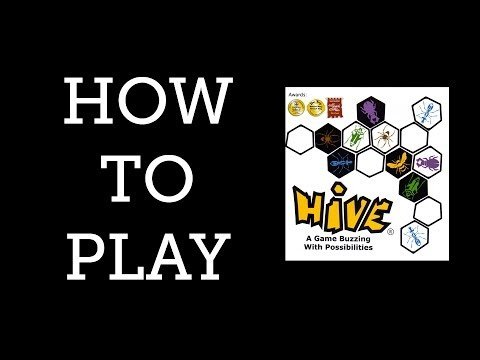
Playing Hive involves placing hexagonal tiles representing insects, each with unique movement abilities, to surround your opponent’s queen bee and trap it.
Have you ever seen those sleek, black and white tiles and wondered about how to play Hive game? It’s a fantastic abstract strategy game with no board, just pieces! The beauty is in its simplicity, and the challenge comes from the clever movement of each bug.
You begin with a set of insect tiles, ready to deploy on the table. Each insect—ant, beetle, grasshopper, spider, and of course, the queen bee—moves differently. Figuring out how they work together is key to winning. The game revolves around encircling your opponent’s queen, which will bring you victory.

How to Play Hive Game: A Beginner’s Guide
Ready to dive into the fascinating world of Hive? This isn’t about buzzing bees and honeycombs; it’s a clever, strategic board game using tiles instead of pieces. You don’t need a board, which makes it perfect to play anywhere. If you are new to the game or simply want a better understanding of the game rules, you have come to the right place. Let’s get started and learn how to play Hive game!
Understanding the Hive Pieces
Hive has 11 unique pieces, each representing a different bug with a special way of moving. The goal is to surround your opponent’s Queen Bee completely. Before we get to the rules, let’s look at each bug individually.
The Queen Bee
The Queen Bee is the most important piece. You must place your Queen Bee within your first four turns of the game. If your queen is completely surrounded on all six sides, you lose! Here’s what you need to know about the Queen Bee:
- Movement: The Queen Bee can only move one space at a time. She can slide to an open adjacent space but cannot jump over other pieces.
- Importance: Protect your Queen Bee at all costs! She’s the key to the game.
- First Placement: Always plan where to place her during your initial turns.
The Grasshopper
The Grasshopper is a jumping master. It moves differently than other pieces, and understanding how it moves is key for strategy. Here are the things to know about the grasshopper:
- Movement: The Grasshopper jumps over one or more pieces in a straight line to the next open space, which is very useful for long moves
- Limitations: It must jump over at least one piece. It cannot move onto a space where no other pieces are present.
- Strategic Use: Use it to hop over the ‘hive’ to get into good positions or to trap enemy pieces.
The Spider
The Spider moves in a specific pattern and should be used carefully as it can move only 3 spaces each time. Here is the movement pattern of the spider:
- Movement: The Spider moves exactly three spaces, always moving around the ‘hive’. It can’t move two, four or any other number of spaces.
- Limitations: It cannot move backward.
- Strategic Use: Use it to get into tight spots or make unexpected moves.
The Ant
The Ant is a tireless worker in the game, and it is a very useful piece in the game. Here is the movement pattern of the ant:
- Movement: The Ant can move to any free adjacent space, as many as you want. You can move it far on your turn.
- Limitations: It cannot jump over other pieces.
- Strategic Use: Use it to cover a lot of ground, reinforce your defenses, or even block your opponent’s movement.
The Beetle
The Beetle is a unique piece because it can also climb on top of other pieces. Here is how the Beetle functions:
- Movement: The Beetle can move one space in any direction and also can climb on top of other tiles, including opponent’s tiles.
- Limitations: It can move only one space on top of the hive too.
- Strategic Use: Use it to block your opponent’s pieces. When the Beetle is on top of other pieces, the piece below cannot move or leave the position and if an enemy beetle sits on top of your queen bee, your queen bee cannot move, so use it carefully!
Setting Up the Game
Unlike many board games, Hive doesn’t have a board! You just need the 22 tiles (11 for each player) and a flat surface.
Starting the Game
- Initial Setup: Put the game pieces on the table, ready to be placed. No pieces start on the table when the game starts.
- Turns: Players take turns, placing one piece each turn until all pieces are on the table.
- Queen Bee: The rule says you MUST place your queen bee before your fourth turn. If you don’t, you lose the game!
Game Rules: Placement and Movement
Once you know the pieces, understanding the placement and movement rules are important for winning the game.
Placement Rules
- First Piece: Place your first piece on the table as you like.
- Adjacency: All new pieces you add must touch at least one of your own pieces.
- No Separation: No new piece can touch one of your opponent’s pieces in the initial placement.
- The Hive: All pieces in the game should stay connected. No part of the hive can be disconnected. This is the most important rule in the hive game.
Movement Rules
- One Space: Generally, most pieces move one space, except the Grasshopper, Spider, and the Ant.
- Sliding: Pieces slide to an open adjacent space. The move is not a jump.
- The Hive: The pieces must remain in contact with each other after a move. It cannot break the hive into two separate groups.
- Freedom of Movement: Pieces are allowed to move in a direction that would touch the opponent’s piece.
- Limited movement with another beetle: When beetle sits on top of another bug, that bug cannot move.
Winning the Game
The ultimate goal is to trap the opponent’s Queen Bee. The game ends when the Queen Bee is totally surrounded by the opponent’s pieces (or your own and opponent’s pieces). Here’s how a player can win.
Surrounding the Queen
- Complete Surround: The first player to completely surround their opponent’s Queen Bee wins the game.
- No Escape: All six sides of the Queen Bee must be occupied for a victory.
Basic Strategies for Beginners
Now that you understand the rules, let’s explore basic strategies to help you start winning.
Queen Bee Safety
- Early Protection: Make sure your Queen Bee is protected early in the game.
- Secure Spots: Don’t put your Queen Bee where it will be easily surrounded by your opponent’s pieces.
- Move Wisely: Don’t put it in an easily captured place. Try to position your pieces so the opponent can’t move theirs easily.
Using the Grasshopper
- Jump Over: Use the Grasshopper to jump over the hive to unexpected places.
- Defensive Leap: Jump over your own pieces to protect a spot or even to surprise your opponent.
- Offensive Jump: Attack the opponent’s pieces by moving to a position that will cause a problem for your opponent.
Spider’s Moves
- Strategic Moves: Use the spider to reach any important positions that need attention.
- Watch your move: Careful of not creating a position where you get stuck.
- Quick Movement: Spider allows quick movement across the board.
Ant’s Versatility
- Extensive Reach: Use the Ant to quickly move around the board to extend your defense.
- Strategic Placement: Place it near the vulnerable areas.
- Multiple Position: The Ant’s ability to move long distance is best to control and place pressure on your opponent.
Using the Beetle
- Block Opponent: Use the beetle to block the opponent’s pieces so they can’t move.
- Climb Above: Climb on top of other pieces, including the opponent’s, to limit their movement.
- The Queen Trap: Use it to trap your opponent’s Queen Bee if you get the chance.
Advanced Strategies
Once you are comfortable with the basic strategies, try some advanced ones to enhance your game further.
Planning Ahead
- Think Multiple Moves: Try to think 2 or 3 turns ahead. What moves might your opponent make, and how can you prepare for it?
- Anticipate Attacks: Look for potential threats to your Queen Bee and plan accordingly.
- Set Up Traps: Try to use the grasshopper to trick the other player.
Controlling the Hive
- Limit Movement: Control the open spaces so that your opponent can’t move around freely.
- Strategic Block: Place pieces strategically to block movement around the board.
- Create Your Space: Try to make as much space as you can.
Using the Beetle Offensively
- Block and Conquer: Use the Beetle to block key pieces of your opponent and gain control of those areas.
- Strategic Climbing: Climb on top of your opponent’s pieces to block their movement and then to attack.
- Control Key Points: Control important strategic spots on the table by using the beetle.
Defensive Strategies
- Strengthen Defenses: Use your Ant to defend key spots and keep your Queen Bee safe.
- Be Ready: Always be ready to defend your Queen Bee with strategic placement.
- Counter Attack: Be ready to attack when the opponent is weak or makes an error.
Tips and Tricks for Better Play
Here are some helpful tips and tricks to level up your Hive gameplay.
- Practice: The more you play, the better you will become.
- Watch Others: See how experienced players move, learn from their moves and apply in your games.
- Study Games: Watch professional games or read analysis online to see different game strategies.
- Learn from Mistakes: It is normal to make mistakes when learning new things. Learn from your errors and try to improve for next game.
- Start Simple: Begin with basic strategies and slowly try more complex tactics.
- Be Patient: Hive is a game of patience, take your time and don’t rush.
Hive is a game of strategy that is easy to learn but difficult to master. Keep playing, keep practicing, and you’ll get better each game. Playing this game is really enjoyable and can improve your strategic thinking. Remember the bug’s movements, and create your own game plan. Good luck!
How to Play Hive | Roll For Crit
Final Thoughts
To play Hive, players place insect tiles, one per turn. The goal is to surround the opponent’s queen bee. Each insect has a unique movement pattern, making strategy vital.
Moving pieces happen after the first piece placement, following the ‘one hive’ rule. You cannot move pieces that break the hive. Players must avoid trapping their own pieces.
Knowing each bug’s movement is crucial. ‘How to play hive game’ involves understanding this. Careful planning is a must for success.

