
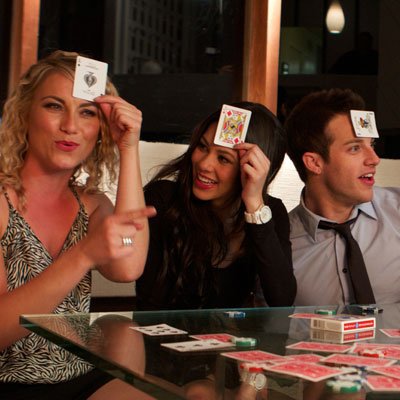
To play Indian Poker card game, each player receives one card face down on their forehead. Players can see everyone else’s card, but not their own. Betting occurs based on perceived hand strength, followed by a showdown.
Ever wondered about a poker variant where you can’t see your own hand? That’s the intriguing charm of Indian Poker! It’s a simple yet engaging game that relies on deduction, bluffing and reading your opponents, instead of just your cards. This quick guide will explain how to play Indian poker card game.
It’s a game of pure psychological warfare, where the information you have is completely based on what you know of the others, creating a great atmosphere. This game involves strategy and social skills.

How to Play Indian Poker Card Game
Indian Poker, sometimes called “Blind Man’s Bluff” or “Forehead Poker,” is a super fun and easy card game that you can play with just a standard deck of cards. It’s a game where you have to be a good observer and a clever bluffer, since you’ll know everyone else’s card but your own! This makes it different and exciting from other poker games. Let’s break down how to play, step by step.
Setting Up the Game
Before you can start playing, you need to get everything ready. This part is quick and simple, perfect for getting right into the fun!
Gather Your Supplies
First things first, you’ll need:
- A standard deck of 52 playing cards.
- At least two players – the more, the merrier!
- A flat surface to play on, like a table or the floor.
The Objective
In Indian Poker, the main goal is to have the highest card compared to the other players. However, here’s the twist – you won’t know what card you have yourself! You’ll only see everyone else’s cards, and you’ll have to use that information to decide if you should stay in the game or fold.
Dealing the Cards
Alright, let’s get those cards in play! Dealing is important because it sets up the whole game. Make sure you pay attention to how it’s done.
One Card Each
The dealer gives each player one card face down. The dealer can be anyone in the group; you don’t need to have a special person to be the dealer, just alternate each round if desired. Remember, don’t look at your card!
The Important Reveal
This is where things get interesting. After everyone has their card, each player carefully picks up their card and, without looking at it, holds it up to their forehead so that everyone else can see it but them. Imagine each card is a little badge on your head, and the only person who can’t see the badge is you!
Understanding Card Values
Knowing which cards are higher than others is a must, just like in other card games. This helps you to decide what to do next.
Rank from Lowest to Highest
Here’s how the cards rank from lowest to highest:
- 2 (lowest)
- 3
- 4
- 5
- 6
- 7
- 8
- 9
- 10
- Jack
- Queen
- King
- Ace (highest)
Suit Doesn’t Matter
Unlike some poker games, in Indian Poker, the suit of the card (hearts, diamonds, clubs, or spades) doesn’t matter at all. Only the number or face value of the card is used to determine who has the highest card.
Gameplay: Betting and Folding
Now that everyone has their cards showing, it’s time to get into the main action – the betting! This is where the strategic thinking and bluffing come into play.
Initial Betting Round
Before each game starts decide the initial bet amount. The first betting round starts with the player on the left of the dealer and continues clockwise. This is when the real choices begin. Players can either:
- Bet: They place their bet, adding money (or chips or whatever you’re playing for) to the pot. This is the move you’d make if you think you might have a high card.
- Fold: If they think they have a low card, they fold, which means they exit the round and lose any money they’ve bet so far. They are no longer participating in the current round.
Subsequent Betting Rounds
If more than one player stays in after the initial bet, then it comes another round of betting, where players bet, call, raise or fold again. Betting can proceed as long as there are two players remaining.
Calling and Raising
When it’s your turn, you’ll have the following options:
- Call: If someone before you has bet, you can “call” by putting the same amount of money into the pot. This keeps you in the game.
- Raise: If someone before you has bet, you can “raise” by adding money to the pot and thereby forcing all the other players to “call” this bet to continue playing the round. This is a gutsy move, especially if you still have no clue of your card.
The Showdown
If all but one of the players fold in a round, then that player wins the pot. If two or more players remain after the betting rounds are complete, then it’s time for the showdown. All the remaining players reveal their cards at the same time. The player with the highest card wins the pot and the round.
Example Gameplay
Let’s say there are four players: Player A, Player B, Player C, and Player D. Here’s a scenario:
- Player A has a 7, but doesn’t know it. Player B, Player C, and Player D all see that card.
- Player B has a Queen, but doesn’t know it. Player A, Player C, and Player D see that card.
- Player C has a 3, but doesn’t know it. Player A, Player B, and Player D see that card.
- Player D has a 9, but doesn’t know it. Player A, Player B, and Player C see that card.
The betting begins. Player A, seeing Player B’s Queen, Player C’s 3 and Player D’s 9, feels he probably has a low card as most of the cards are above 7, and he folds. Player B, seeing a 7, a 3 and a 9, thinks that he could be having a good card compared to others and hence calls. Player C, seeing a 7, Queen and 9, is certain that he has a bad card as all the cards are higher than his, hence he folds and Player D feels he may have the highest card, and bets. Now, only Player B and D remain. Both players reveal their cards. Player B with a Queen wins the game, and gets the pot.
Strategies for Winning
While Indian Poker is a lot of luck, there are some strategies that can help you increase your chances of winning. Remember, observing is key!
Observing Others’ Reactions
Pay very close attention to how the other players react when they see your card. Do they look surprised? Do they smirk? Do they look nervous? These clues might tell you if you have a good card. If most of your friends are not good at poker, you can easily win by observing their reactions.
The Power of Bluffing
Sometimes, acting confident even when you don’t know your own hand can make others think you have a high card, encouraging them to fold. Try raising the bet when you sense others may be nervous, even if you are just guessing. Bluffing is a key part of Indian Poker, but don’t overdo it.
Understanding Betting Patterns
Try to recognize how other people bet. If someone always bets big when they have a good card, you can use this information to make better decisions when it’s your turn. For example, if your friend never folds when he has a good hand, you know you should be cautious when he bets aggressively.
Variations of Indian Poker
Like many card games, there are a few variations of Indian Poker that you might want to try out. These variations can add extra excitement to the game.
Limit Betting
In this variation, you set a limit for how much each player can bet in each round. This can make the game more strategic, as it stops players from making huge bets and pressuring others out of the game.
No-Limit Betting
In this version, players can bet any amount they want. This can lead to big pots and can be quite exciting, but it can also cause players to lose more money quickly.
Two Cards Indian Poker
In this exciting version, players are dealt two cards instead of one. They display these two cards on their foreheads, which makes things more interesting. It also makes it a little difficult for the players to remember all of the other players’ cards. The person with the highest card of the two cards wins. If two players have the same top card, then the player with the highest second card wins.
Tips for a Great Game
Here are some simple tips that can help you enjoy your time while playing Indian Poker:
- Be Patient: Sometimes you will have a great card, sometimes you will have a terrible one. It’s a lot of luck, so be patient and have fun.
- Keep it Light: Remember it’s a game, so keep it friendly and fun for everyone. No hard feelings if you lose.
- Don’t Take it too Seriously: Indian poker is a game of chance, so sometimes you will win and sometimes you will lose, so don’t be too upset about the results.
- Play with friends: Play with people that you know and like to ensure everyone has fun.
Indian Poker is a simple card game with a unique twist that makes it engaging. With a little observation and bluffing, you can have lots of fun playing this game with your family or friends. Remember the rules, watch other players, and have a good time!
Indian Poker Card Game Rules
Final Thoughts
Indian poker is a simple card game. Each player gets one card, placed on their forehead facing out. Players see others’ cards, but not their own. They then bet based on what they can see.
The betting continues around the table. Players try to guess their card’s value from opponents’ reactions. The highest card wins.
In conclusion, understanding the key is how to play indian poker card game, with bluffing, observation and knowing opponent’s mind games. This makes it an exciting and quick game.

