
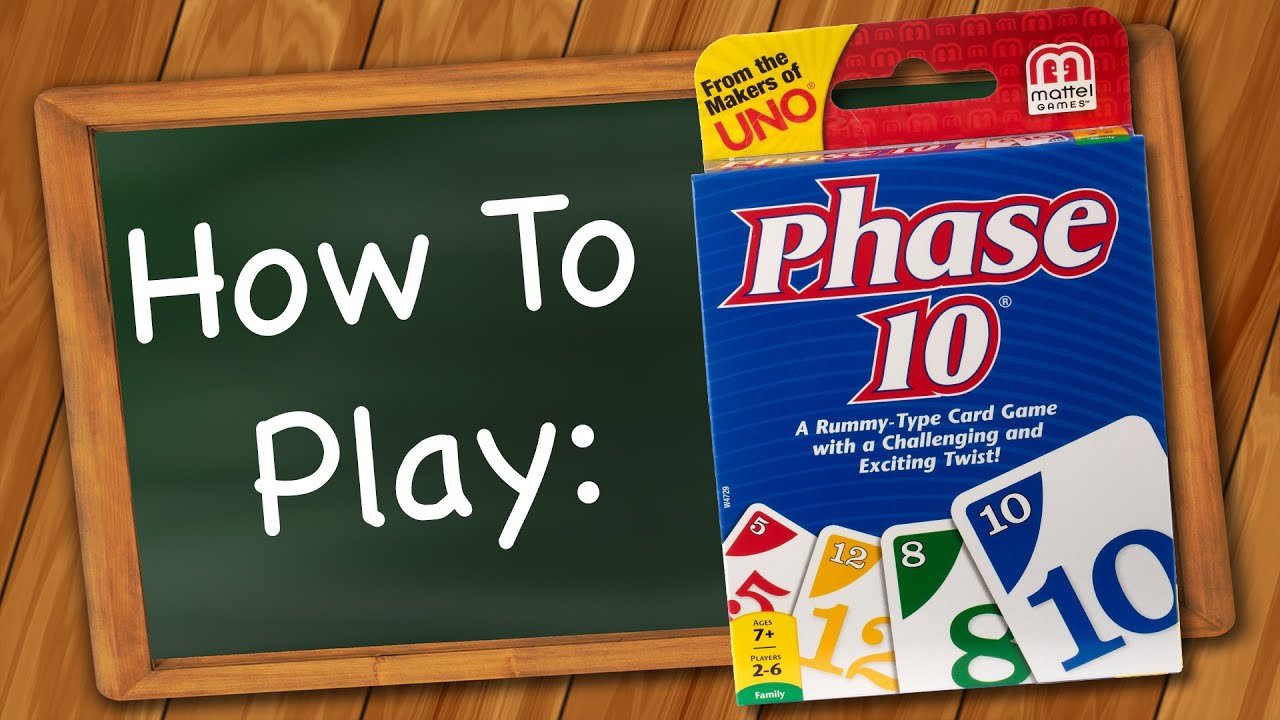
How to play Phase 10 card game involves completing ten different phases, which are specific combinations of sets and runs, before your opponents do.
Want a fun card game that blends strategy with a bit of luck? You may be curious about how to play phase 10 card game. It’s a rummy-type game with a twist; you need to finish ten different ‘phases’ to win.
These phases include specific things like two sets of three, or a run of seven. Each phase needs to be completed before you can move on to the next one. The game continues until someone completes all ten phases.

How to Play Phase 10 Card Game
Ready for a fun card game that’s a little bit like Rummy, but with a twist? Then get ready to learn how to play Phase 10! It’s a game where you don’t just try to get rid of your cards, but you complete a specific “phase” each round. Let’s dive in and see how it works!
Understanding the Phase 10 Deck
Before we start, let’s understand what makes the Phase 10 deck unique. Unlike a standard deck of 52 cards, Phase 10 uses a deck of 108 cards, including:
- Numbered Cards: There are cards numbered 1 through 12, with multiple of each number. These cards are your bread and butter for completing phases.
- Skip Cards: These fun cards let you skip another player’s turn.
- Wild Cards: The wild cards are your friends! They can represent any number or color, making it easier to finish your phase.
The different cards play a crucial role in your Phase 10 strategy. Understanding them fully will help you become a better player of the game.
Setting Up the Game
First things first, let’s get the game ready to play. Here’s how you set up a game of Phase 10:
- Shuffle the Deck: Thoroughly mix all 108 cards.
- Deal the Cards: Each player receives 10 cards. Keep your cards hidden from the other players.
- Place the Draw Pile: Put the remaining cards face down in the center of the table to form the draw pile.
- Start the Discard Pile: Flip the top card of the draw pile face up next to it. This is the start of the discard pile.
Now that we’re set up, it’s time to start playing.
The Core Goal: Completing the Phases
The heart of Phase 10 is completing the ten unique phases. Each phase requires a specific combination of cards. Think of these phases as goals you must achieve before moving on. Here they are:
- Phase 1: Two sets of three.
- Phase 2: One set of three and one run of four.
- Phase 3: One set of four and one run of four.
- Phase 4: One run of seven.
- Phase 5: One run of eight.
- Phase 6: One run of nine.
- Phase 7: Two sets of four.
- Phase 8: Seven cards of one color.
- Phase 9: One set of five and one set of two.
- Phase 10: One set of five and one set of three.
A “set” means cards of the same number. For example, three 7s make a set of three. A “run” means cards in sequential order, like 3, 4, 5, and 6. The color of the cards doesn’t matter when making sets or runs, except in Phase 8 where they all must be of same color.
What Exactly is a Set?
A set is a group of cards that all have the same value (number). It does not matter what color or suit the cards are, all that matters is that the numbers match. Examples include:
- A set of three 5s.
- A set of four 10s.
- A set of two 2s.
What Exactly is a Run?
A run is a group of cards that are in sequential order. Again, color and suit does not matter, just that the numbers follow each other in increasing order. Examples include:
- A run of four: 4, 5, 6, and 7.
- A run of six: 1, 2, 3, 4, 5, and 6.
- A run of seven: 6, 7, 8, 9, 10, 11 and 12.
How to Play a Turn
Each turn in Phase 10 follows a simple process:
- Draw a Card: Begin your turn by taking one card from either the top of the draw pile or the top of the discard pile.
- Try to Complete Your Phase: Look at your hand and see if you have the cards you need to complete the phase you are currently working on.
- Lay Down Your Phase: If you can complete your current phase, lay it down, face up on the table. Then you can try to get rid of other cards by placing them on already completed phases on the table.
- Discard a Card: To end your turn, you must discard one card from your hand, face up on the discard pile.
You only move on to the next phase after you have successfully laid down the cards that match the previous phase on the table. That’s why the phase order is so important.
The Special Card’s Role
Skip and Wild cards make the game more exciting and you should understand how to use them properly.
- Skip Cards: When you use a skip card, the next player loses their turn. This can be very strategic, if you have your phase ready, you can use it on the player before you, to lay down the phase before they can.
- Wild Cards: Wild cards act like any number or any color you want. This means they can be used to complete a set, or run, or even to complete phase 8, where you need 7 cards of same color.
Remember, these cards can change the course of the game quickly so think before you use them.
Going Out and Winning the Round
After completing a phase, you continue with your turn by trying to get rid of other cards in your hand. If you successfully lay all cards from your hand, on the table, then that’s when you “go out” for the round and win.
Here is the step by step procedure to going out:
- First you complete the current phase you’re working on.
- After completing your phase, you should try to get rid of other cards in your hand, by placing them on already completed phases on the table. This is called “hitting”.
- If you manage to place all the cards from your hand on the table, you have “gone out” and you win the round.
When one player “goes out,” everyone else counts the cards left in their hand and write down the points on the scoresheet.
Understanding Points and Scoring
In Phase 10, you score points based on the cards you’re left holding at the end of the round.
- Number Cards: Each number card is worth its face value (a 7 is worth 7 points, a 10 is worth 10 points).
- Skip Cards: Each skip card is worth 15 points.
- Wild Cards: Each wild card is worth 25 points.
The player with the fewest points after all rounds of Phase 10 is the overall winner. Remember, the goal isn’t just about going out first, it’s about minimizing your points over the course of the game.
Moving to the Next Phase
Once a player has “gone out”, or when all the players have placed all cards from their hands on the table, the round is over and you can start the next round. Every player who managed to complete their phase in previous round, moves on to the next phase in the next round. Other players who did not complete the phase in previous round, must try to complete the same phase in the current round.
For example: If in round 1, player 1 completes Phase 1 and player 2 does not, in round 2, player 1 will try to complete Phase 2 and player 2 will still be trying to complete Phase 1.
Tips for Playing Phase 10
Here are a few tips to improve your Phase 10 game:
- Plan Ahead: Always try to anticipate what phase you will need to complete. This will help you make better choices with card selection.
- Watch Opponents: Pay attention to which cards other players are picking up from the discard pile and what they are laying down. This can help you figure out their phase.
- Use Wild Cards Wisely: Don’t waste your wild cards early if you don’t need them. They are often most helpful when you are just one or two cards short of completing a phase.
- Don’t Be Afraid to Pick from Discard Pile: If the card you need has been discarded by your opponents, don’t be afraid to pick it up from the discard pile.
- Be Strategic with Skips: Use skips to stop players who are close to going out, especially if you need an extra turn to complete your phase or have a card that will benefit from being in your hand.
By applying these tips, you can go from being a beginner to a pro player very quickly!
Adjusting the Rules: Variations in Gameplay
Sometimes families or groups may play with slight rule variations. Some common changes to the game include:
- Re-Dealing Hands: If a player has no card that can be used to complete the phase, or complete any “run or set” at the beginning of the round, some families/groups might allow to re-deal hands to players with really bad hands.
- Penalty for Not Completing Phase: Some families play with penalty points if a player is not able to complete their phase, in one or more rounds.
- Multiple Phases: Some variations allow players to complete multiple phases in the same round, if they can.
Always check if there are any rule variations at the beginning of the game, to make sure everyone is on the same page and there is no confusion.
Phase 10: More Than Just a Card Game
Phase 10 is more than just a game, it’s a fun way to spend time with friends and family. Playing this game helps you think strategically, improves planning skills, and helps with focusing. Also, you get to enjoy the simple joy of friendly competition. So gather your friends or family, shuffle the deck, and get started on your Phase 10 journey. Remember, every game is a new adventure!
Now that you understand how to play Phase 10, you’re ready to start playing! Remember the phases, use your wild and skip cards wisely, and have fun competing with your friends. Keep these things in mind, and you’ll be a Phase 10 champion in no time. Enjoy the game!
How to play Phase 10 (2024 Rules)
Final Thoughts
To summarize, Phase 10 involves completing ten phases of card combinations. Players must achieve the current phase before moving to the next. Discarding and drawing cards are core mechanics, and the first player to complete all ten phases wins.
A must in understanding is each phase requires a different set of combinations like sets or runs. That is essentially how to play phase 10 card game. Remember, strategy plays a crucial role alongside luck.

