
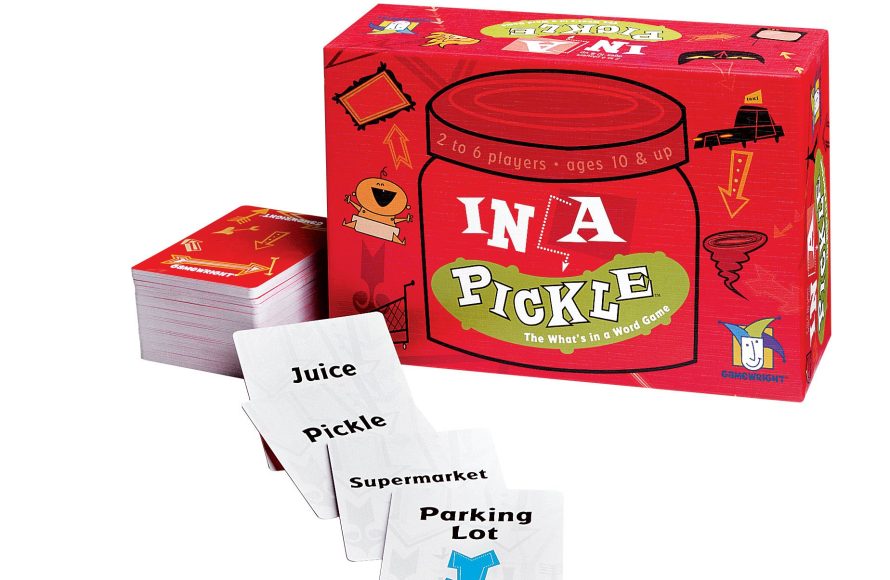
To play pickle card game, you deal cards, aim to make a pickle (four cards of the same rank), and collect points based on winning pickles.
Have you ever heard of a fast-paced, engaging card game that keeps everyone on their toes? That’s exactly what pickle is! Many people ask how to play pickle card game, and it’s simpler than you might think.
The game involves quick thinking and a bit of luck, so you need to make pickle combinations. It is a perfect option for family game nights and friendly gatherings, bringing laughter and excitement. You’ll soon be hooked on trying to make those perfect pickles!

How to Play Pickle Card Game
Alright, let’s dive into the fun world of the Pickle card game! It’s a simple but super exciting game, perfect for kids and families. You might also see it called “Oh Hell” or “Nomination Whist,” but no matter what name it goes by, it’s all about guessing how many tricks you’ll win. Don’t worry, it’s not as tricky as it sounds. We’re going to break it down step-by-step, so you’ll be a Pickle pro in no time.
The Basics: What You Need to Play Pickle
Before we start shuffling, let’s gather what we need. You won’t need fancy equipment, just a few simple things:
A standard deck of 52 playing cards: Remove the jokers; we won’t be needing them for this game.
Two or more players: Pickle is more fun with a group, but you can even play with just two people.
Paper and pencil (or something similar) to keep score: Make sure someone is ready to keep track of all the tricks and points.
That’s it! Once you have these few things, you’re all set to learn and start playing Pickle.
Setting Up the Game
Let’s get the game ready to play:
1. Choose a Dealer: Pick someone to be the dealer for the first round. Usually, the oldest person or the player who won the last game does the job. After each hand, the deal passes to the left.
2. Shuffle the Deck: The dealer will shuffle all the cards thoroughly to make sure they are all mixed up well.
3. Deal the Cards: This is where the round of Pickle begins! The number of cards dealt changes for each round, and we will talk more about that later. For the first round, each player will get one card.
Understanding the Gameplay: The Trick-Taking Element
Now that we’ve set up, let’s figure out how the game works. Pickle is a trick-taking game, meaning that players try to win “tricks” by playing the highest card in each round. Here’s how it works:
1. Trump Suit (First Round): For the very first round, there is no trump suit. Trump is special suit in which every card of this particular suit is considered higher than all other suits. Trump suits come later, when we have more cards to play with.
2. The Lead: The player to the left of the dealer starts the trick by playing any card they choose. This is called the lead.
3. Following Suit: The other players have to follow suit if they can. This means, if the first player played a heart, other players have to play a heart if they have it. If they don’t have the suit that was led, they can play any other suit.
4. Winning the Trick: The player who played the highest card in the suit that was led wins the trick. If a player plays the Trump suit, and nobody else played the trump, that player wins the trick. The player that wins the trick will take all of the cards that were played in that round and collect them.
5. Starting the Next Trick: The winner of the last trick leads the next trick, continuing until all cards for the round are played.
The Bidding: Predicting Your Success
Pickle has a unique twist – before each round, players predict how many tricks they think they’ll win. This is called bidding. Let’s see how it works:
1. Starting the Bidding: After the cards are dealt but before play starts, each player predicts or “bids” how many tricks they think they will win in that round. In this first round, where you only have one card, you can bid to win 0 or 1 tricks.
2. Writing Down the Bid: Each player’s bid needs to be written down, so we remember them. For this, we will need the paper and pencil we gathered earlier.
3. Important Note: The last player to bid is not allowed to bid in a way that would make the sum of all bids equal to the total number of tricks for the round. This makes sure there is at least one person whose bid is different than the tricks actually won, making the game challenging. For example, with 4 players and 1 card each, there will be 1 trick to win, so if 3 players all bid 1 trick, then the fourth player cannot bid 1. The last player is forced to either bid 0, this ensures someone will get less or more than expected.
Rounds and Dealing: Progressing Through the Game
Now, let’s talk about how the game progresses through multiple rounds, including the number of cards to deal. Each round has its own particular number of cards to deal. Here’s how it works:
1. Increasing Cards: After the first round, the number of cards dealt increases by one each round. So, in the second round, each player receives two cards. In the third round, each player receives three cards and so on.
2. The Peak of the Cards: The cards will keep increasing each round until we reach maximum cards for each player. This number depends on how many players are playing.
For 2 players, maximum of 13 cards is dealt to each player.
For 3 players, maximum of 17 cards is dealt to each player, in which case few cards are left out.
For 4 players, maximum of 13 cards is dealt to each player.
For 5 players, maximum of 10 cards is dealt to each player, in which case few cards are left out.
For 6 players, maximum of 8 cards is dealt to each player, in which case few cards are left out.
For 7 players, maximum of 7 cards is dealt to each player, in which case few cards are left out.
3. Decreasing Cards: After reaching peak number of cards, the number of cards dealt starts decreasing by one per round. This is opposite to what we did in increasing cards step.
4. Trump Suit: Once we have more than 1 card to deal to each player, a trump suit gets introduced each round. Trump suit is decided before the cards are dealt. For the first round when trump suit is introduced, the trump suit is decided by the top card of the remaining deck. For all the remaining rounds with trump suit, the trump suit is decided by the dealer.
5. Example Let’s take the example of 4 players. Round 1 has 1 card, round 2 has 2 cards and so on until 13 cards each. After 13 cards each, cards will decrease, 12, 11 and so on until 1 card each.
This is an important step, so to make things clear, let’s look at the example of rounds for 4 players:
| Round | Cards Dealt | Trump Suit? |
|—|—|—|
| 1 | 1 | No|
| 2 | 2 | Yes|
| 3 | 3 | Yes|
| 4 | 4 | Yes|
| 5 | 5 | Yes|
| 6 | 6 | Yes|
| 7 | 7 | Yes|
| 8 | 8 | Yes|
| 9 | 9 | Yes|
| 10 | 10 | Yes|
| 11 | 11 | Yes|
| 12 | 12 | Yes|
| 13 | 13 | Yes|
| 14 | 12 | Yes|
| 15 | 11 | Yes|
| 16 | 10 | Yes|
| 17 | 9 | Yes|
| 18 | 8 | Yes|
| 19 | 7 | Yes|
| 20 | 6 | Yes|
| 21 | 5 | Yes|
| 22 | 4 | Yes|
| 23 | 3 | Yes|
| 24 | 2 | Yes|
| 25 | 1 | Yes|
Scoring in Pickle: Tallying the Points
Scoring in Pickle is all about how well players predict and win tricks. Here’s how the points are calculated:
Correct Bid: If a player wins the exact number of tricks they bid, they score 10 points plus 1 point for each trick they won.
For example, if you bid that you will win 3 tricks and you win 3 tricks then you will receive 10 + 3 = 13 points.
Incorrect Bid: If a player wins more or less tricks than they bid, they score nothing for the round.
For example, if you bid that you will win 3 tricks, but you win 2 tricks, then you will receive 0 points.
Adding up points: At the end of the round add up all of the points that each player received.
After each round, add the new scores to the running total for each player. This will keep track of the leader of the game.
Winning the Game
To win, you must have the most points after all the rounds have been completed.
Strategies and Tips to Improve Your Pickle Game
Pickle, like many card games, has many strategies to improve your gameplay:
Pay Attention to Bids: Always be mindful of other players’ bids. It can give you some hints about the type of cards they are holding and how they might play.
Think Ahead: Don’t just focus on the current trick. Consider how your play will affect your ability to win tricks later in the round.
Remember What is Played: Try to keep track of which cards have been played, especially the high cards and trump suits. This knowledge can be very useful.
Smart Bidding: Don’t always bid exactly what you think you can win. It is often better to bid a little less and try to get more tricks than bid too much and lose out on all points.
Variations of the Pickle Card Game
Pickle is a game that has a lot of variation to it:
Different Names: The most important variation is the name. You will hear this game being called many names like “Oh Hell,” “Nomination Whist,” and “Up and Down the River”.
Scoring Variations: Some variations use different point structures for bidding correctly and incorrectly.
Number of Cards: The number of cards dealt per round can be adjusted based on the number of players or preference.
Jokers: Some variations include jokers as wild cards. In such scenarios, the jokers can win any suit.
Pickle is a fantastic card game for all ages. It’s easy to learn, but has lots of thinking involved. The bidding element adds excitement and tests your ability to predict and strategize. By understanding the basics, mastering the bidding, and keeping some strategy in mind, you’ll be a Pickle champion in no time! Whether you are playing with family or friends, the game is a sure way to have fun.
How to play In A Pickle: Card Games
Final Thoughts
To play pickle card game, deal out cards equally. Players take turns laying down cards of the same rank as the top card of the discard pile. The must, if unable, draw a card.
A special ‘pickle’ card reverses the play direction. The game continues until one player uses all their cards and wins. This is how to play pickle card game.

