
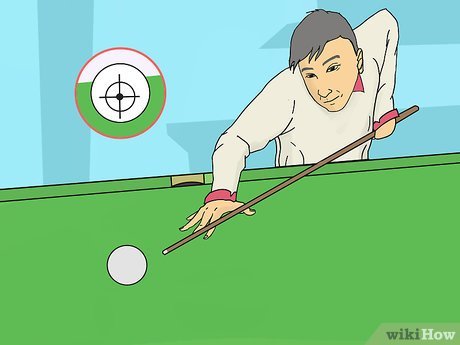
Playing pool table game involves using a cue stick to hit the cue ball, aiming to pocket object balls into the six pockets on the table, following specific rules like calling your shot.
Ever stood by a pool table, cue in hand, wondering how to play pool table game? It might look complex, with all those balls and angles, but it’s easier than you think. Getting started involves knowing just a few basic principles about aiming and striking the ball.
We will guide you on the fundamentals. This includes how to hold your cue stick correctly and how to approach making your shots with some planning before you strike. So let’s get you started to play pool table game.

How to Play Pool Table Game
Pool, also known as pocket billiards, is a super fun game that people of all ages enjoy. It might look tricky at first, but with a little practice and understanding of the rules, you’ll be sinking shots like a pro in no time! This guide will walk you through everything you need to know, from setting up the table to making some awesome shots.
Understanding the Pool Table and Equipment
Before you can play, it’s important to know about the different parts of the pool table and the equipment you’ll use.
The Pool Table
A pool table isn’t just a flat surface; it has several important features:
- The Playing Surface: This is the flat, usually green, felt-covered area where the balls roll. It’s very smooth so the balls move easily.
- The Rails: These are the padded edges around the table. They help bounce the balls back onto the playing surface.
- The Pockets: These are the holes located at the corners and in the middle of the longer sides of the table. This is where you aim to sink the balls.
- The Spots: You’ll see a few spots marked on the table. These are important for setting up the game, especially for placing the cue ball when you start.
The Pool Balls
There are a few types of balls you’ll need to know:
- The Cue Ball: This is the plain white ball that you hit with your cue stick. It’s the ball you use to make contact with other balls.
- Object Balls: These are the colored and numbered balls (1 through 15). They are what you are trying to sink into the pockets.
- Solids: These are balls numbered 1 through 7, and they are all solid colors.
- Stripes: These are balls numbered 9 through 15, and they have a stripe around them.
- The 8-ball: This is a black ball with the number 8 on it. It is crucial in many variations of pool.
The Cue Stick
The cue stick is the long wooden stick you use to hit the cue ball:
- The Tip: This is the small, leather piece at the end of the cue that hits the ball. It’s very important to keep the tip in good condition.
- The Shaft: This is the long, smooth part of the cue that you hold.
- The Butt: This is the heavier end of the cue, often with a grip.
There’s also chalk you need to make a better grip on the cue tip. You should apply chalk to the cue tip regularly.
Setting Up the Game
Now that you’re familiar with the table and equipment, let’s get the game ready to play.
Racking the Balls
The object balls are arranged in a triangle using a rack:
- Place the rack at the foot spot of the table.
- Put the 8-ball in the center of the triangle.
- Place a solid ball at one corner of the triangle.
- Place a striped ball at the other corner.
- Fill the remaining spots with the other object balls, making sure the front ball is on the foot spot.
Placing the Cue Ball
The cue ball is placed behind the head string, which is an imaginary line usually located near the head spot.
You are free to put the cue ball anywhere behind this line. Make sure not to place it on or in front of the head string.
Basic Rules and Gameplay
Pool has a few different versions, but the most common is “8-ball”. Let’s discuss that:
The Goal of the Game
The goal of 8-ball is simple: sink all of your assigned balls (either solids or stripes) and then sink the 8-ball in any pocket. The player who does this first wins the game.
Breaking
The game begins with the “break”. Here’s how:
- The player with the cue ball behind the head string must hit the racked object balls hard enough so that the object balls scatter in all direction.
- It’s important to hit a ball and make sure that at least four object balls touch a rail. Or else, it is considered as a foul and opponent will take the turn.
- If you sink one or more object balls on the break, you keep shooting.
Choosing Your Balls (Solids or Stripes)
After the break, the first player to sink an object ball legally (not on a foul) claims that set of balls. For instance, If the player who takes the break sinks a solid ball, that player will then have to try to sink solid balls for the rest of the game and vice-versa.
You must hit your own object balls first when attempting to sink an object ball. If you hit your opponents object ball first, it will be a foul and you will lose your turn.
Taking Turns
Players alternate turns. During your turn, you continue to shoot as long as you are legally sinking your set of balls. If you miss, your turn ends, and it becomes your opponent’s turn.
If you sink one of your object balls, you keep shooting. If you don’t sink any object balls or cause a foul, your turn is over.
Sinking the 8-Ball
Once you have sunk all of your object balls, you can attempt to sink the 8-ball. If you sink the 8-ball before you have sunk all of your own object balls, you immediately lose the game.
You must call the pocket where you will attempt to sink the 8-ball, before you shoot.
Fouls
A foul occurs when you do something against the rules. Here are some common fouls:
- Sinking the cue ball (scratch).
- Hitting an opponent’s ball first.
- Not hitting any ball.
- Jumping the cue ball off the table.
- Touching any object ball with the cue or your body
When a foul occurs, your opponent takes the cue ball and places it anywhere behind the head string and gets to take a shot.
Aiming and Hitting the Cue Ball
Aiming in pool is about understanding angles and how the balls react when they hit each other. Here are some things you should keep in mind.
The Contact Point
Imagine the object ball is a clock face. To sink the ball, you don’t always hit it straight on. The contact point between the cue ball and the object ball will determine where the object ball goes. You might hit the object ball on the right or left side of the clock depending on what you’re trying to do.
- Straight Shot: Hit the object ball straight on, at 6’o clock to send it directly forward.
- Angled Shot: Hit the object ball off center (for example, around 4 or 8’o clock), to send it at an angle.
Using English (Spin)
You can also put spin on the cue ball by hitting it off-center (left or right of the center). This is called “English.” This affects how the cue ball and object ball reacts after contact.
- Left English: Hit the cue ball on the left side. It will cause it to move left after hitting the object ball and to spin left.
- Right English: Hit the cue ball on the right side. It will cause it to move right after hitting the object ball and to spin right.
Stance and Grip
Your body position and how you hold the cue are important for a smooth shot. Make sure that you stand comfortably, with your dominant foot slightly behind and to the side. Hold the cue lightly, almost as if you are shaking hands with it.
When you address the ball, your body should be stable and your eyes should be focused on the object ball and the spot where you plan to hit it.
The Stroke
A smooth and consistent stroke is important for a good shot. Move your arm like a pendulum, back and forth, keeping your wrist firm. The cue should be straight at all times and your follow through should be smooth as well. The more you practice, the more consistent your stroke will become.
Advanced Pool Techniques
Once you have the basics down, you can start trying more advanced shots:
Bank Shots
A bank shot is when you hit the object ball into a rail to then go into a pocket. They can look fancy, but they are very useful in many situations.
Jump Shots
A jump shot is when you hit the cue ball in a way that causes it to jump over another ball. It is useful if an object ball is blocked by another ball. Be careful not to foul by hitting the cue ball improperly.
Combination Shots
A combination shot involves hitting the cue ball to make one object ball hit another to make the second object ball go in the pocket. They can be difficult, but very satisfying when done correctly.
Practicing and Improving Your Game
Like any skill, pool takes time and practice to become better. Here are some tips to help you improve:
- Practice Regularly: The more you play, the better you’ll get. Try to play at least once per week if you can.
- Focus on Fundamentals: Get the basic stance, grip, and stroke down. This will make your game much better.
- Watch Others: Observe how good players aim, shoot, and move. You can learn a lot by watching them.
- Be Patient: Don’t get discouraged by missed shots. Everyone misses shots. Practice and be patient with yourself.
- Have Fun: Pool is a game, so enjoy playing!
Different Versions of Pool
While 8-ball is the most popular version of pool, there are many other versions you can try.
9-Ball
In 9-ball, the object is to sink the balls in numerical order from 1 to 9. The player to sink the 9 ball wins. This game is generally faster paced.
Straight Pool
Straight pool is a call-shot game. Each ball is worth one point. The first player to reach a predetermined amount of points wins. It is a popular professional pool variant.
Other Variants
There are many more variants of pool that you can try like: One-Pocket, Killer, or even rotation. You can try them all and see which one you like best!
Playing pool can be a fun and challenging way to spend some time. It combines skill, strategy, and a bit of luck. The most important thing is to have fun, practice, and enjoy the game!
Learn to Play Pool in 3 Minutes | Pool Lesson
Final Thoughts
To play, position the cue ball, aim using your cue stick, and hit the cue ball. This moves the object balls. A pocketed ball of your assigned type scores you points. Continue playing till someone pockets all of their assigned balls and the 8-ball.
Remember to apply english when you aim. Use a smooth, consistent stroke. Practicing regularly improves your skill. This summary gives you the basic idea of how to play pool table game.

