
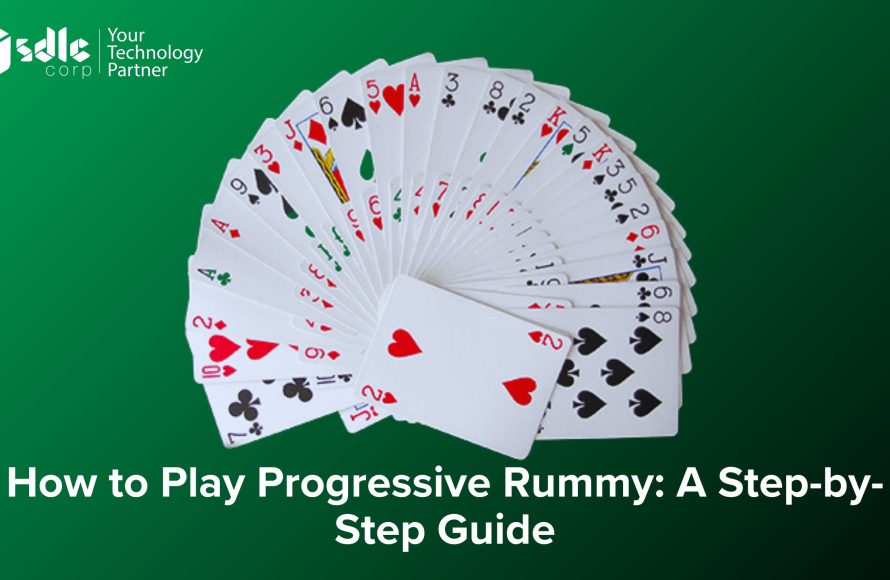
Progressive rummy involves making melds (sets or runs) and going out, but the specific card requirements to meld increase each round, adding complexity as the game progresses.
Ever found classic rummy a bit too predictable? Then you might enjoy progressive rummy which offers a fresh twist. It challenges players to build sets and runs while navigating increasing meld demands. Learning how to play progressive rummy card game is straightforward.
The game starts simply, often with needing just two sets to lay down. But with each round, you need to create more complex combinations. This increasing difficulty makes for exciting gameplay.
The specific card requirements keep players on their toes throughout the game.

How to Play Progressive Rummy Card Game
Progressive Rummy, also sometimes called Contract Rummy, is a super fun card game that’s a bit different from regular rummy. It adds a layer of strategy because each hand has a specific goal or “contract” you need to complete. Instead of just trying to make melds, you have to think ahead about what you need to collect. It’s like a series of mini-challenges in one big game, making each round exciting. This makes it a great option for family game nights or get-togethers with friends. Let’s dive into all the details so you can start playing and having fun.
Understanding the Basics of Progressive Rummy
Before you jump into playing, it’s important to know the building blocks of the game. Here’s what you should be familiar with:
The Deck of Cards
Progressive Rummy usually uses one or two standard 52-card decks, depending on the number of players. Add one deck for every one to three players after the initial deck.
Card Values
- Number cards (2-10): These are worth their face value. For example, a 7 is worth 7 points.
- Face cards (Jack, Queen, King): These are each worth 10 points.
- Aces: These can be worth 1 point, or 11 points, depending on where they are used in a meld, and what works best for your hand.
- Jokers: These are wild cards and can represent any other card in a meld.
Understanding these card values will help when calculating points at the end of each round.
Objective of the Game
The goal in Progressive Rummy is to be the first player to complete all the contracts over several rounds. Each round presents a new contract that you have to make to “go out”. The contracts become progressively more challenging as the game moves ahead.
Setting Up the Game
Let’s get the game ready to begin.
Dealing the Cards
The first thing you need to do is decide who the dealer will be, and you can do that anyway you want, such as by everyone drawing a card from the deck, the person with the highest value is the dealer for that round. The dealer gives each player a set number of cards. The number of cards dealt changes each round and depends on the contract for that round, we’ll discuss those later.
After dealing the cards, the dealer places the remaining cards face down in the center to create the draw pile. The top card of the draw pile is flipped over and placed next to it to start the discard pile.
Number of Players
Progressive Rummy is best played with 2 to 8 players. The number of players will determine how many decks of cards you need. It’s important to adjust the number of decks so there aren’t too many cards in the discard pile or too few cards to draw from, which can make the game awkward.
Understanding the “Contracts”
This is where the “progressive” part of Progressive Rummy comes in. Each round requires players to fulfill a specific contract. Here’s a look at a standard set of contracts you might use during the game. Remember, you need to go out each round by having all your cards in a meld and then discarding your last card.
Typical Contract Sequence
The contracts are the soul of the game. They change in each round making the game more challenging. Here’s the order of contracts usually played:
- Two Sets: A “set” means three or four cards of the same rank. For example, three 7s or four Queens.
- One Set and One Run: A “run” is three or more cards of the same suit in a sequence. For example, 7, 8, 9 of hearts.
- Two Runs
- Three Sets
- Two Sets and One Run
- One Set and Two Runs
- Three Runs
This list is a commonly used example, but there are many variations out there, so you should always check with the other players which contracts you’ll be using before the game starts. You can also change the order of contracts or add in different ones to make the game fresh. The important thing to remember is that you must complete the contract in the current round to “go out”.
What Are Sets?
A set is a group of three or four cards of the same rank. Here are some examples:
- Three 5s (5 of hearts, 5 of diamonds, 5 of spades)
- Four Kings (King of clubs, King of hearts, King of diamonds, King of spades)
- Three Queens (Queen of hearts, Queen of spades, and Queen of clubs)
What Are Runs?
A run is a sequence of three or more cards of the same suit in a consecutive order. Here are some examples:
- 3, 4, 5 of diamonds
- 8, 9, 10, Jack of hearts
- Queen, King, Ace of spades
Remember, in a run, the order matters, and they must all be of the same suit. Keep in mind, you can use an Ace as either a high or low card (such as 1,2,3 or Queen,King, Ace) in a run, but not as part of a run that goes both ways at the same time (such as Queen,King,Ace,2,3)..
How to Play a Round
Now that you understand the contracts and basic rules, let’s walk through a single round of Progressive Rummy.
Starting the Round
The player to the left of the dealer goes first, and then play continues clockwise. On their turn, a player must first either take a card from the face down draw pile, or take the top card from the face up discard pile. After that, if you have all the cards needed to fulfil the contract, you can then lay down your melds. Finally, you will end your turn by discarding one card from your hand face up on the discard pile, and the next player gets their turn.
Melding
Melding is when you place your completed sets and runs face up on the table. For a player to meld they must have met the contract requirement for that round (for example in round one they would need two sets). It’s important to know that once you start laying down melds you must meld all the sets and runs for the contract, you can’t keep some back. For instance, if you meld a run and you also have a set, and the contract was one set and one run, you must meld the set as well when you meld the run.
- Initial Meld: You can only lay down cards if you meet the specific contract for that round.
- Laying Off: Once you have melded, on subsequent turns you can “lay off” cards if you can add to other player’s melds. For example, if another player has a set of three 7s, and you have another 7, you can add your 7 to their set. If someone has a run of 7, 8, 9 of hearts, and you have a 6 of hearts or a 10 of hearts, you can add that card to their run. You can only lay off cards to a meld that is the proper card to add to it.
Discarding
After you draw a card and meld, you must end your turn by discarding a card face up on the discard pile. This is a crucial part of the game. You have to think about what card to throw away; do you want to help the next player?
Going Out
The first player to successfully complete the contract, and have no cards left in their hand after discarding, “goes out”. Going out ends the round and the player’s score is calculated. If no one goes out by the time the draw pile runs out, the cards in the discard pile are reshuffled, and the game continues. If no one goes out, and all the cards have been used from the draw and discard piles a second time, then the round ends without a winner.
It’s worth noting here, that for a player to “go out” they have to complete the contract by melding all the required sets and runs. They must also get rid of all their remaining cards by laying off to other players melds or by discarding the last card in their hand on the discard pile at the end of the turn.
Scoring
Once a player goes out, the other players must calculate the value of the cards left in their hand. This is a major part of the game as the person with the lowest score is the winner. Here’s how it works:
Calculating Points
Each card is worth a certain number of points:
- Numbered cards (2-10): Face value
- Face cards (Jack, Queen, King): 10 points
- Aces: 1 point or 11 points (whichever is lower for the player)
- Jokers: 20 points
Keeping Score
Each player keeps track of their scores after each round. At the end of all the rounds (when you’ve completed the last contract) the player with the lowest total score is the winner of the entire game. Keep a running total of your scores, and you’ll quickly see who is coming out ahead.
Strategies for Progressive Rummy
Progressive Rummy isn’t just about luck, you can also increase your chances of winning by using strategies. Here are a few pointers you can use:
Card Management
- Pay attention to discards: Keeping an eye on what others discard can give you hints about the melds they are trying to make, which can help you plan accordingly.
- Know what cards you need: Try to prioritize collecting the cards that will help you fulfil the current contract
- Keep your hand fluid: Don’t get locked into one plan. Be ready to adjust your hand if you need to.
Melding Strategies
- Think ahead: Try to collect cards for future contracts, not just the current one.
- Don’t be afraid to wait: Sometimes it is better to hold off on melding if you don’t have a secure set of cards, since other players may get to lay their cards on your melds.
When to Lay Off
Knowing when to lay off can be as important as creating your own melds. It can help you get rid of higher point cards so that you don’t get stuck with them. It can also stop your opponents from having the same chance to lay off.
Adapting to Opponents
Try to change your strategy as you see what the other players are doing. This can help you stay a step ahead.
Playing Progressive Rummy is a fun way to get together with friends and family. It has some strategy involved, as well as luck, so everyone can enjoy the game together. The rules are easy to learn, and once you get the hang of it, you’ll be hooked. So, gather some friends, pick up a deck of cards and start playing!
How to Play Five Crowns | progressive rummy with a five suited deck
Final Thoughts
Progressive rummy involves dealing increasing card amounts each round. Players aim to form sets or runs. The game progresses through multiple rounds.
Each round requires different combinations and sequences. The first player to meld all cards wins that round. Scores accumulate each hand.
Understanding how to play progressive rummy card game involves learning the unique sequence rules. Remember, adjust strategy as card amounts grow every time. Keep track of cards played.

