
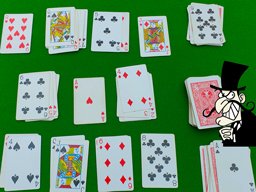
To play Spite and Malice, players aim to be the first to discard all cards from their pay pile onto the center foundations, using cards from their hand and stock pile.
Have you ever been curious about a card game that tests both strategy and a little bit of luck? Well, today I’m going to guide you on how to play Spite and Malice card game. It’s a game where you’ll be working both with and against your opponents in a race to deplete your own card pile.
It can seem complicated at first, with all the different piles and rules. However, once you get the hang of it, the game becomes surprisingly addictive and fun for everyone. So, let’s dive into the simple mechanics of how to play Spite and Malice card game!

How to Play Spite and Malice Card Game
Alright, let’s dive into the exciting world of Spite and Malice! It’s a card game that’s easy to learn but offers loads of fun and strategy. Think of it as a cousin to other stacking card games, but with its own unique twists that will keep you on your toes. This guide will walk you through everything you need to know, from the basic setup to some sneaky tactics to help you win.
Understanding the Goal of Spite and Malice
The main goal in Spite and Malice is simple: be the first player to get rid of all the cards in your personal “Payoff” pile. You do this by playing cards onto a shared set of “Foundation” piles. It sounds easy enough, right? But there’s a lot more to it than that! You’ll need to plan ahead, manage your hand, and sometimes be a little…well, spiteful!
The Setup: Getting Ready to Play
Before the fun begins, let’s make sure we have everything set up correctly. Here’s what you’ll need and how to arrange it:
What You’ll Need
- One or Two Standard Decks of Cards: For 2 players, one deck usually suffices. If you have more players, it’s best to use two decks to make sure there are enough cards.
- At Least Two Players: Spite and Malice is usually played with two to four people, but some variations allow for more.
- A Flat Playing Surface: A table or any flat surface where you can easily reach and move your cards around.
How to Set Up the Game
- Shuffle the Cards: If you’re using two decks, make sure they are thoroughly combined. Then shuffle all the cards well.
- Deal the Payoff Piles: Each player gets a stack of 20 cards dealt face down. This is their “Payoff” pile, and it’s crucial to winning. The top card of this pile is turned face up and will be the only one from the pile visible and usable at the start.
- Deal Player Hands: Deal each player a hand of 5 cards. These are your “hand” cards that you’ll be playing from, as well as drawing new ones from.
- Set Up the Shared Play Area: Leave a space in the middle of the table to create the “Foundation” piles. Initially, this area will be empty.
- Form the Draw Pile: Keep any remaining cards face down in a pile. This will be the common draw pile from which all players replenish their hands.
The Gameplay: How to Move Your Cards
Now that everything is set up, let’s get into the nitty-gritty of playing the game. Here’s what each turn involves:
Starting Your Turn
The game begins with the player to the left of the dealer, then continues clockwise.
Playing on the Foundation Piles
The aim is to build four foundation piles in the middle. These piles are built in ascending order starting with Aces and going up to Kings. The following rules apply:
- Starting a Foundation Pile: To start a foundation pile, you must play an Ace. The first player to lay down an Ace gets to claim this pile and continue building on it with numerical sequence.
- Building Onward: After an Ace is placed, you then continue to build the foundation pile by playing the card of the next sequential value. You are only allowed to build on a foundation pile with its corresponding suit. For example, a diamond pile must always be followed by another diamond.
- Multiple Foundation Piles: It’s possible to have several foundation piles of different suits going at the same time.
Playing from Your Hand
- Legal Plays: You can play cards from your hand to the Foundation piles if they follow the suit and numerical sequence of any existing foundation pile.
- Multiple Plays: You can play as many cards as you can on your turn as long as they follow the rules.
Playing from Your Payoff Pile
- Top Card Only: You can only play the top card of your “Payoff” pile. The top card must follow the rules of foundation piles.
- When the top card is used: Once the top card is used, you get to turn over and use the next card of the “Payoff” pile.
Discarding Cards
If you are unable to play on your current turn, or you chose to not play anymore cards, then you must discard any number of the cards from your hand. You can’t play discarded cards after you discard them.
Drawing Cards
- End of Turn: At the end of your turn, draw cards from the draw pile to bring your hand back up to 5 cards (unless the draw pile has been depleted).
- Draw pile depleted: If the draw pile has been exhausted and a player is required to draw cards to bring their hand back up to 5 cards, the player is not required to draw any cards.
End of Your Turn
Once you’ve played all the cards you can, or chosen to discard and draw, your turn is over and it goes to the next player in clockwise order.
Strategic Tips for Spite and Malice
Playing Spite and Malice isn’t just about luck; strategy plays a big part. Here are some pointers to help you improve your game:
Prioritize Your Payoff Pile
- Clear the top: Always try to play from your payoff pile as quickly as possible. Your hand is helpful, but that payoff pile is your ultimate goal.
- Think ahead: Try to figure out what’s in your Payoff pile based on the sequence of visible cards and any previous plays. This will help you anticipate what cards might be useful in the near future.
Managing Your Hand
- Don’t Hold On: Avoid hoarding cards that might not be helpful soon. Discarding at the right time can be just as important as playing the right card.
- Plan for the Future: Try to keep some cards in your hand that could potentially start or contribute to a foundation pile.
Foundation Pile Awareness
- Watch your opponents: Keep a close eye on the cards your opponents play, and what Foundation piles they are contributing to. That can help you predict what cards you might want to keep or what suit might be more valuable at the moment.
- Keep track of what’s been played: If you know what’s been played in the past, you can predict what is more likely to appear on the draw pile and keep that in mind.
Use Discards Wisely
- Strategic Discard: If you can’t play a card, then try to discard a card that might be useful to an opponent. If there are 4 or more of a specific card played on the foundation pile, it is good to discard a card of the same rank. This might cause your opponents to keep cards that they might not be able to use for long time.
- Avoid Giving Help: Be mindful of what cards you discard. Try not to discard cards that could help your opponents build foundation piles unless you have no other option.
Be Spiteful (Sometimes!)
- Block When Possible: Sometimes, the best play isn’t about helping yourself, but about stopping your opponents. If you see an opponent close to emptying their Payoff pile, try to stop them by strategically using or discarding cards.
- Don’t Be Predictable: If you’re always playing the obvious choice, your opponents can predict your moves. Try to switch it up and keep them guessing.
Variations on the Game
Spite and Malice has several popular variations you might want to try. They add some fun twists to the original game.
Number of Players
- Two Players: The standard way to play, with one or two decks.
- Three or Four Players: Use two decks of cards. The rules are the same, but things become more fast-paced.
- Teams: You can play in teams of two, where players on each team can help each other by playing cards on their team mates Foundation piles.
House Rules
It is common for players to introduce their own house rules to the game. This is encouraged, as it adds a unique touch to the game and enhances the overall experience for the players. However, make sure all players agree and are aware of the new house rules before playing.
- Number of cards in hand: Players might decide to change the amount of cards dealt in hand at the beginning of a player’s turn.
- Number of cards in Payoff Pile: Players might change the number of cards dealt at the Payoff pile.
- Special card rules: Some groups introduce special rules associated with special cards (like Jokers, if they are included in the deck).
Learning the Ropes
Like any game, Spite and Malice can take a little practice to get good at. Don’t be afraid to play a few practice rounds to get used to the flow. The more you play, the more you will get a feel for it.
And there you have it! You’re now equipped with the knowledge of how to play Spite and Malice. Remember the goal is to clear your Payoff pile first. Focus on managing your hand and Payoff pile effectively. And don’t be afraid to be a little spiteful!
How To Play Spite and Malice
Final Thoughts
To play spite and malice, each player creates a stockpile and builds foundation piles. Players draw cards and aim to move them from their hand or stockpile to these foundations. The first player to empty their stockpile wins the game.
Proper management of your hand and the use of your discard piles is key. The strategy in how to play spite and malice card game relies on planning ahead. This includes anticipating your opponent’s moves.
Winning requires both luck and tactical thinking. Knowing how to play spite and malice card game is essential. You must prioritize moving cards from your stockpile over all else.

