
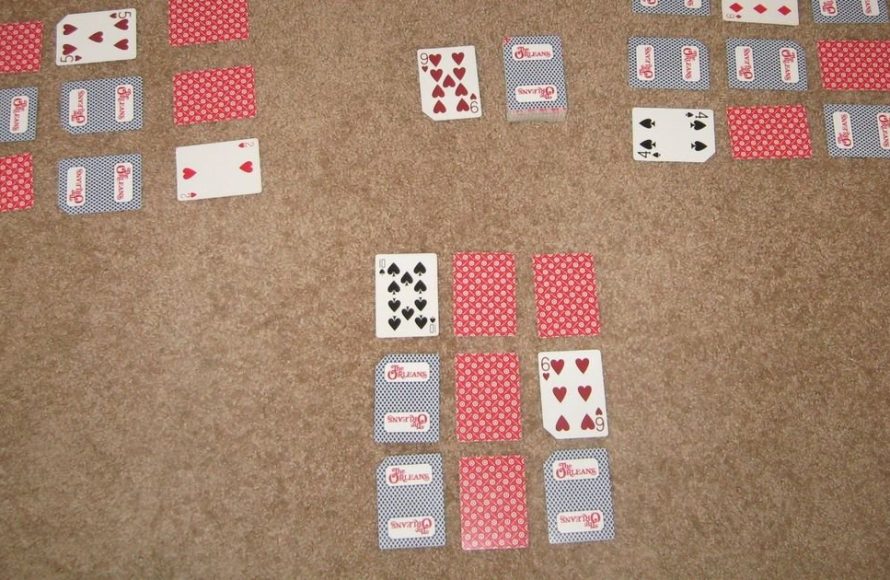
To play the card game nines, players aim to be the first to get rid of all their cards by matching the suit or the value of the top card on the discard pile.
Have you ever been searching for a quick, engaging card game that’s easy to learn but offers strategic depth? Knowing how to play the card game nines can provide hours of entertainment. It’s a simple concept, yet the gameplay can be quite competitive. The rules are straightforward, making it perfect for family gatherings.

How to Play the Card Game Nines
Alright, let’s dive into the fun world of Nines, a super easy and exciting card game that’s great for everyone, from kids to grown-ups! Nines is all about getting rid of your cards by matching the suit or number of the card played before you. It’s simple to learn, quick to play, and can get pretty competitive, making it perfect for family game night or a casual get-together with friends. Let’s explore how you can become a Nines pro!
Getting Started: What You Need to Play
Before we get to the gameplay, let’s make sure you have everything you need. Thankfully, Nines doesn’t require any fancy equipment, just a standard deck of cards and some players ready for some fun. Here’s the rundown:
What You’ll Need
- A Standard Deck of 52 Playing Cards: No Jokers needed for this game! Make sure all 52 cards are there.
- Two or More Players: Nines is best with 2-6 players, but you can adjust if needed.
- A Flat Surface: A table or any flat area where you can lay your cards down easily.
The Goal of the Game
The main goal in Nines is to be the first player to get rid of all the cards in their hand. It’s a race against your friends (or family!), and the player who empties their hand first wins the round. The game is usually played over multiple rounds, with points accumulated for each hand. We will talk about scoring later on.
Dealing the Cards
Now that you know what you need, let’s get into dealing. This part is simple and quick!
How to Deal
- Choose a Dealer: Pick someone to deal the cards. You can take turns being the dealer each round.
- Shuffle the Deck: The dealer should give the cards a good shuffle to make sure they’re mixed up well.
- Deal the Cards: The dealer deals out the cards face down, one at a time, to each player. Each player should get seven cards each to start with. This is the standard, but you can change this for shorter or longer games.
- Place the Rest: Put the remaining cards face down in the middle of the table to create the draw pile.
- Start the Discard Pile: Turn the top card of the draw pile face up and put it next to the draw pile. This will be the start of the discard pile.
Understanding the Gameplay
Now for the really fun part: playing the game! The gameplay of Nines is all about matching cards and being strategic with what you play. Here’s a breakdown of how a round works:
Taking Turns
- First Player: The player to the left of the dealer usually goes first, but you can decide on any starting order.
- Playing a Card: On your turn, you look at your hand and try to play a card that matches the top card of the discard pile. You can match either by suit (hearts, diamonds, clubs, or spades) or by the number on the card (like a 7 on a 7, no matter what the suit is).
- Draw a Card: If you don’t have a card that can be played, you must draw one card from the draw pile. After drawing, if that card can be played then you are free to play that card immediately. if not, then your turn ends.
- Discard: When you play a card, it goes on top of the discard pile.
- End of Turn: Once you’ve either played a card or drawn a card (if no card could be played) and couldn’t immediately play it, it’s the next player’s turn. Play continues clockwise around the table.
Important Card Plays
There are some important card rules to know about while playing nines:
- Playing Nines: Any time you play a nine, you get to play another card immediately. This can be a great way to quickly get rid of cards, especially if you have multiple nines! It allows the player who played a nine to keep the play and discard another card.
- Playing a Jack: When you play a Jack, you can change the suit to another suit. For example, if a diamond was played before a Jack was played, after a jack, the player can name the suit to be a heart, and the next player must play a heart, or any number on the heart suit.
Example Gameplay
Let’s walk through a quick example to make it all clear:
Example 1: Simple Matching
- The discard pile shows a 5 of hearts.
- Your hand has a 7 of hearts, 3 of diamonds, a 5 of clubs and a Jack of spades.
- You can play the 7 of hearts (matching suit) or the 5 of clubs (matching number).
Example 2: Using Nines
- The discard pile shows a 2 of spades.
- Your hand has a 9 of hearts, and an 8 of hearts, 3 of diamonds, and 6 of clubs.
- You play the 9 of hearts, and you get to play again. You can play 8 of hearts on the 9 of hearts.
Example 3: Using a Jack
- The discard pile shows a 6 of diamonds.
- Your hand has a 7 of clubs, a 9 of spades, and a Jack of hearts.
- You play the Jack of hearts and declare that the suit is now spades. The next player has to play a spade to play.
Scoring in Nines
So, someone got rid of all their cards! What happens next? This is where scoring comes into play. Usually, you keep track of scores over several rounds. Here’s how it works:
How to Keep Score
- Winning a Round: The first player to empty their hand wins the round.
- Penalty Points: All other players add up the face value of the cards left in their hands. Aces are worth 1 point, numbered cards are worth their face value (2 = 2 points, 3= 3 points, and so on) and face cards (Jack, Queen, King) are worth 10 points each. A nine is worth 9.
- Tallying Scores: Add up all the penalty points for each player at the end of each round. Write them down on a piece of paper or use a score tracker.
- Winning the Game: The player with the lowest score after a set number of rounds or after a pre-determined score is reached, wins the game. For example, whoever gets to 100 points first, loses. Or you can set a certain number of rounds before the game ends.
Scoring Example
Let’s say at the end of a round these are the cards that three players still had in hand:
- Player 1: Has a 4 of clubs and a king of hearts. That’s 4 + 10 = 14 points
- Player 2: Has a 7 of diamonds, a 2 of spades, a queen of clubs and an ace of hearts. That’s 7+2+10+1= 20 points
- Player 3: Has a 8 of clubs. That is 8 points
These players will add those penalty points to their overall score for the game, with player 3 being the luckiest for the round.
Tips and Strategies for Winning
Now that you know how to play, let’s talk about some helpful tips to make you a Nines master!
Hand Management
- Get Rid of High Cards First: Try to get rid of your high-value cards as soon as possible to avoid racking up penalty points. That king might look great but it is 10 points if you can’t get rid of it!
- Save Nines Wisely: Nines are great, but you have to strategically play them. if you don’t have an immediate card to get rid of after your nine, you may be better of saving it until later.
- Watch for Patterns: Pay attention to the cards that are being played. This can give you a hint about the cards others might be holding.
- Don’t Be Too Predictable: Try not to always play the obvious card if you don’t have to. A surprise match can sometimes throw other players off!
Using Special Cards
- Timing Your Jacks: Use jacks strategically to change the suit to something other players might not have. If someone has mostly clubs, and you have mostly spades, change it to spades to see if they have to draw a card.
- Get a Second Turn: Use Nines whenever you can. If you have two in your hand, it can get rid of two cards in a row!
Variations of the Game
While the classic rules are the foundation, many enjoy adding some fun variations to Nines. Here are a few you might want to try:
- Wild Eights: Instead of jacks, make the eights wild and that you can declare any suit change. This can make the game even more unpredictable!
- Accumulating Points: Instead of adding penalty points, you could use the number of cards left to keep score. For every card left, you get 1 point. This makes the goal to be the lowest score in a round, instead of having a high amount of points.
- The Passing Hand: Before the game starts each player can pass their hand to the player on their left to play their turn using the other players hands.
So, that’s pretty much everything you need to know to play Nines. It’s a fast-paced, fun, and easy game that everyone can enjoy. The next time you’re looking for a quick and engaging card game, try Nines. Gather your friends or family, grab a deck of cards, and have a good time!
Remember, the best way to learn is to play! Don’t worry too much about the rules when you first start; just jump in and have fun. You’ll get the hang of it in no time, and before you know it, you’ll be teaching your friends how to play Nines. Enjoy!
How to Play Nine
Final Thoughts
In summary, players aim to get the lowest score by discarding higher cards. Aces count as one, face cards ten, and numbered cards their face value. The game continues until one player has accumulated 100 or more points.
Players must strategically swap and discard cards. The goal of the game is to learn how to play the card game nines effectively and win, with the lowest point total.

