
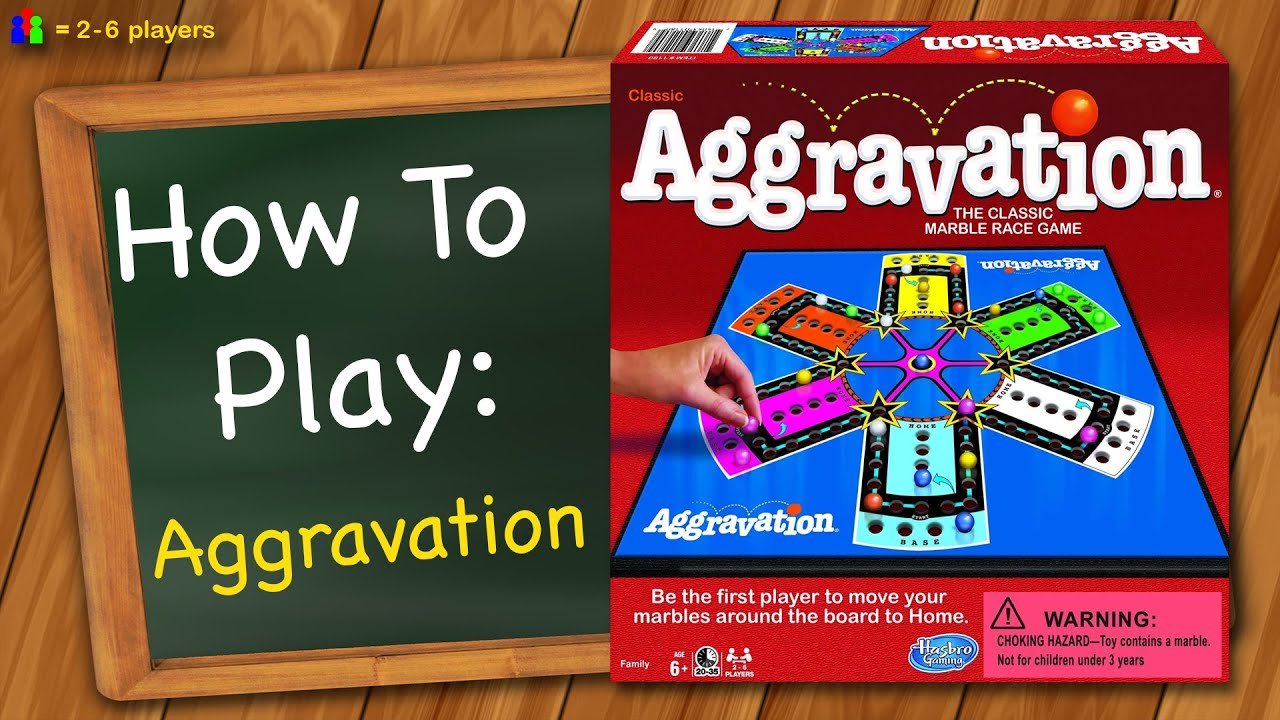
Aggravation is played by moving your four marbles around the board, following dice rolls, and getting them all safely into your home base before your opponents do.
Ever found yourself staring at a colorful game board, wondering how to play the game aggravation? It can appear a bit daunting at first, with all those spaces and marbles. The aim is simple: be the first to get all your marbles home.
It involves rolling dice to move your marbles around the board. You have to strategically get past your opponents’ pieces. You’ll be trying to be first to fill your home base.

How to Play the Game Aggravation
Aggravation, also known as Wahoo, is a fun board game that has been entertaining families for generations. It’s a race-around-the-board game where the goal is to be the first to get all your marbles into your home base. But watch out! Other players can “aggravate” you by bumping your marbles back to the start. If you are looking for a board game that mixes luck, strategy, and a little bit of friendly rivalry, then Aggravation is the perfect game for you! This guide will walk you through everything you need to know to start playing. We’ll break down the setup, the rules, and even some strategies to help you win.
The Aggravation Game Components
Before you can start playing Aggravation, you need to know what’s in the box. Here’s a breakdown of the typical components:
- The Game Board: This is your playing field. It’s usually a circular board with a track of spaces around the outside and a set of colored home bases in the center, typically one for each player.
- Marbles: Each player gets a set of four marbles of the same color. Common colors are red, blue, green, and yellow.
- Dice: Typically, one or two standard six-sided dice are used. Some versions may come with a special eight-sided die, too.
Setting Up the Game of Aggravation
Getting ready to play is simple and quick. Here’s how to get your game set up:
- Choose Your Color: Each player selects a set of marbles of one color and places them in their starting area (usually the four holes outside their home base).
- Place on the Board: Make sure the game board is in the center of the playing area so everyone can reach it easily.
- Determine the First Player: Players can decide who goes first by rolling the die, or by age, or by any other method that the group decides is fair.
Core Gameplay: Moving Your Marbles
The main objective of Aggravation is to move all four of your marbles around the board and into your home base. The core mechanic of this game is moving your marbles based on the numbers you roll on the dice. Here’s a detailed look at how that works:
Starting a Marble
You can’t simply move your marbles out to the board right away. You need a specific roll to do that. Typically, you need to roll either a one (1) or a six (6). Some versions of the game require you to roll a specific number like a six. When you roll this number, you can move one marble out of its starting position and onto the first space of the track. If you can’t get one of these rolls, then your turn is over.
Moving Marbles Around the Board
Once your marble is on the track, you can move it based on the number of spots that you roll on the die (or dice). If you have more than one marble on the board, you can decide which marble to move on each turn. You need to count spaces moving in a counter-clockwise direction on the outer track. You cannot skip any spaces, even if another player’s marble occupies it.
Double Dice Rules
Some versions of Aggravation use two dice. In this case, you have to move the sum of the two dice that you roll. For example, if you roll a 4 and a 2, you move a single marble six spaces. This can help to make the game faster. Some versions of the game also allow you to move two different marbles on the board. With this rule, if you rolled a 4 and a 2, you can move one marble 4 spaces, and one marble 2 spaces.
Aggravating Other Players
This is where the “aggravation” part of the game comes into play. If your marble lands on a space already occupied by another player’s marble, you get to bump that player’s marble back to its starting position. This rule can add a lot of fun and excitement, and can lead to some friendly rivalries.
Moving into Your Home Base
The ultimate goal is to get all your marbles to your home base. Once a marble goes all the way around the board and comes back to the home base area, you can start moving it into the four holes at the center of your space. Each number you roll moves you into one of the four spots. You must be able to move the exact number needed to move into a space in your home, any excess movement on the die would mean that the marble cannot move. For example, if your marble is one space outside the entry to your home, you must roll a one to move it in. You cannot land in the first space of your home with a higher roll, such as a 2 or a 3.
Rules on Dice Rolling and Turns
Dice rolling and turn order play a crucial part in Aggravation. Here’s a deeper look at the rules:
Taking Turns
Players take turns in a clockwise direction. On each turn, a player rolls the die or dice and moves their marbles according to the roll. Once a player has completed the actions for their turn, it moves to the next player to continue the gameplay.
Rolling a 6 or a 1
In most versions of Aggravation, rolling a 6 or a 1 (depending on your version) allows you to bring a marble out from your starting position. Usually, rolling this number gives you an extra roll of the dice. In other versions, you only get an extra roll if you move a marble out to the track.
Rolling Doubles
If using two dice, many variations of Aggravation have special rules for rolling doubles. Some versions of the game will allow you to have an additional turn. Others may allow you to move a marble out to the board even if you don’t have to roll a one or six. The specific effect of rolling doubles can vary depending on the rules that you choose, so make sure you know these rules before starting the game.
Strategies and Tips to Win Aggravation
While luck plays a role in Aggravation, there are some strategies you can use to improve your chances of winning. Here are some tips to keep in mind as you play:
Move Your Marbles Out Quickly
Focus on getting your marbles out of the starting area as soon as possible. The more marbles you have on the track, the more chances you have to move them around and avoid getting bumped back. Try to get all of your marbles out as fast as you can.
Strategic Marble Placement
Try to place your marbles on the board strategically. If you get ahead of your opponents, they may find themselves bumping your marbles back to their start when you move around the board. Sometimes it is beneficial to keep your marbles a safe distance away from each other so that multiple marbles don’t get bumped back to start if they land in the same space.
Aggravate Opponents
Do not hesitate to bump other players’ marbles back to their start, especially if they are about to move into their home area. Aggravating opponents can slow them down and give you an advantage.
Home Stretch Strategy
As your marbles approach your home base, pay close attention to the dice rolls you need. Don’t waste moves by overshooting your entry point. You need to roll the exact number to move your marbles into the spaces within your home area.
Be Adaptable
The dice roll can change the game drastically. Stay flexible and adjust your plans as needed. Don’t be afraid to change your strategy on the fly depending on the dice you roll. It is beneficial to have backup plans in mind, just in case.
Variations in Aggravation
Aggravation can have many different variations, and the rules are not the same across all versions of the game. Here are some common rule variations to be aware of:
Number Needed to Start
Some versions require a roll of a 6 to get a marble started, while others require a 1. Some may even let you get a marble started using either number. Make sure to know what number you need for your version of the game.
Extra Roll on Start
Some versions of Aggravation will let you have an extra roll when you start a marble out to the track. Other versions may allow you to have an extra roll if you roll a certain number such as a six, no matter what happened with your marbles.
Double Dice Movement
In versions that use two dice, there are different rules for movement. Sometimes you move the total sum of the two dice, but other versions of the game allow you to move two different marbles if you wish.
Doubles Rules
The rules for rolling doubles are often different from version to version. Make sure that you understand the rules for your specific game. Some will give you an extra roll, and some will let you bring a marble out of the start even if you did not roll a 1 or a 6.
Number of Players
The game can be played with 2, 3, 4, or even 6 players, depending on the game board that you are using. Some smaller boards are designed for fewer players, and others are designed for more players.
The Fun of Aggravation
Aggravation is more than just a board game; it’s an experience. It’s about the excitement of the dice roll, the strategic placement of your marbles, and the friendly competition with others. With a few simple rules and the right mindset, Aggravation is a great game that can bring fun and joy to gatherings for years to come.
So gather your family and friends, get your marbles ready, and start playing the game of Aggravation! It’s time to roll the dice and see who can get all their marbles home first. Remember, a little bit of luck and a good strategy can go a long way.
By keeping all these points in mind, you’ll not only understand the game better but also be able to play it with confidence and have a fantastic time. Have fun!
How to play Aggravation
Final Thoughts
To summarize, players must roll dice, move pegs around the board, and try to get all of their pegs home. You must bump opponents’ pegs back to their start position. Landing on the same space requires sending the previous occupant home. The goal is to be the first player with all of your pegs home. So that’s how to play the game aggravation.

