
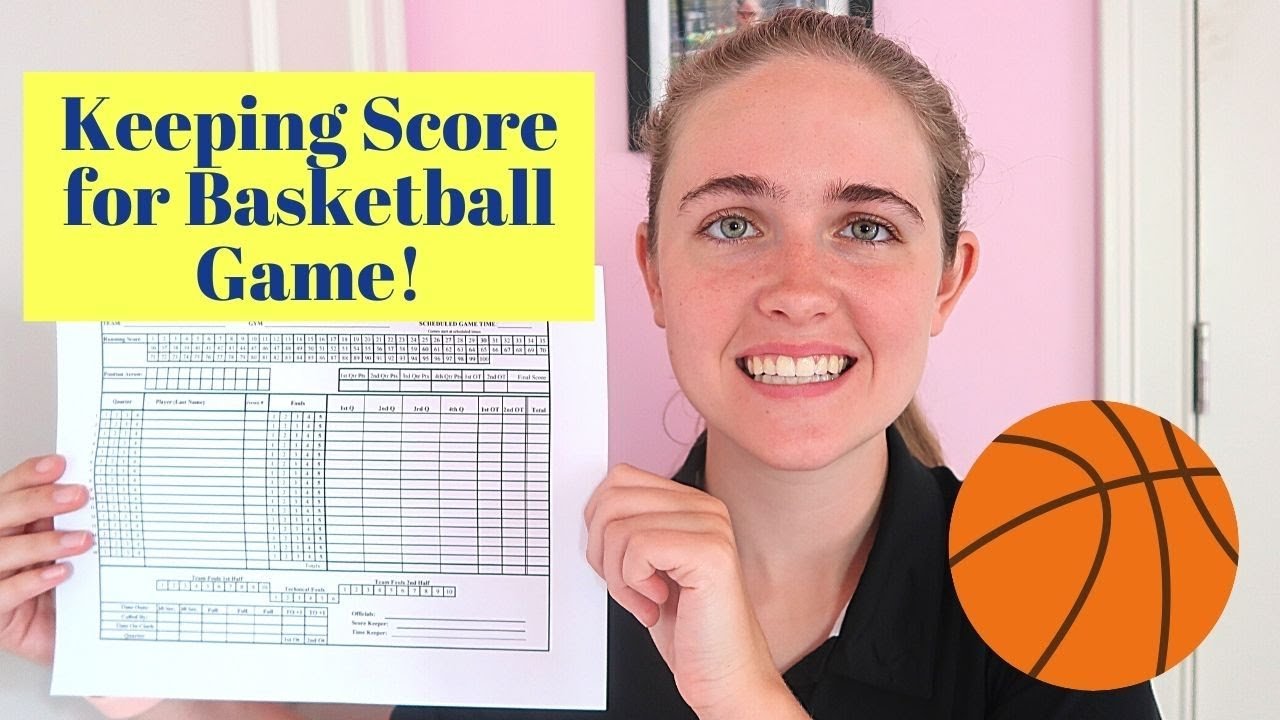
Scoring a basketball game involves assigning points for successful field goals (2 or 3 points) and free throws (1 point), while tracking fouls and other game events.
Have you ever watched a basketball game and felt a bit lost trying to follow the action? It can seem chaotic at first, with so much happening at once. Understanding the scoring system is the key. Knowing how to score a basketball game makes watching much more enjoyable and helps you appreciate the strategy.
This guide will clearly explain the point system and other elements that make up the official score. You will learn how each basket contributes to the total points. We will demystify the scorekeeping process.

How to Score a Basketball Game: A Comprehensive Guide
So, you’re ready to learn how to keep score for a basketball game? That’s awesome! It’s an important job, and with a little practice, you’ll be a pro in no time. Scoring a basketball game might seem complicated at first, but it’s really about keeping track of a few key things: points, fouls, and timeouts. This guide will break it all down step-by-step, using simple explanations and examples. We will explore everything from basic point scoring to more intricate rules, helping you understand the nuances of how to properly manage a basketball game’s official score. By the end of this, you’ll be confident in your ability to accurately record all the game’s action.
Understanding the Basics of Basketball Scoring
Before we dive into the nitty-gritty, let’s cover some fundamental rules of basketball scoring. The goal is simple: to get the ball through the hoop more times than the other team. But how are these “successful shots” turned into points? Let’s explore the different ways teams can score and how we keep track of it all.
Types of Baskets and Their Point Values
In basketball, there are two main ways to score points:
- Field Goals (2 points): Most shots made during regular play, inside the three-point line, are worth two points. This includes layups, jump shots, and dunks. Basically, if a player shoots the ball and it goes through the hoop from within a certain distance, that’s a two-pointer!
- Three-Point Field Goals (3 points): If a player shoots the ball successfully from behind the three-point line, the basket is worth three points. This line is typically a curved line painted on the court, farther away from the hoop than the regular shooting areas. If you see a player way out there making a shot, that’s a three-pointer.
Free Throws (1 point)
Sometimes, when a player is fouled, they get to take a free throw. This is an unguarded shot from the free-throw line. Every made free throw is worth one point. These shots are not taken during regular game flow, but they are very important parts of scoring. It is important to note that free throws often happen in pairs, and sometimes with 3 free throws!
Keeping Track of Points on the Scoreboard
Now that we understand how points are scored, let’s talk about how those points are shown on the scoreboard. The scoreboard is a very important thing in a basketball game, because it keeps the audience informed on the progress of the game. Scoreboards vary from place to place, but they typically display similar information.
Common Elements of a Scoreboard
Here’s what you’ll usually see on a scoreboard:
- Team Names: Each team has a designated place on the scoreboard. Often, the home team is at the bottom or right side, while the away team is at the top or left. Sometimes, abbreviations or logos of the teams are used.
- Scores: The numbers showing the current total points for each team. These are often updated after every score or free throw.
- Period/Quarter: The number or name of the current period or quarter of the game. A typical high school game has 4 quarters, but other leagues might have two halves.
- Time Remaining: The time left in the current period or quarter, counting down.
- Fouls: Often each team’s current number of fouls in the game is displayed. Sometimes individual player foul counts are available in more advanced systems.
- Timeouts: The remaining number of time-outs per team are often tracked and displayed on the scoreboard.
How to Keep Score on a Paper Scoresheet
Not all games have electronic scoreboards, especially at a more casual level. If you are manually keeping score, you’ll be using a scoresheet. A scoresheet usually has columns for the following:
- Team Name.
- Player names or numbers.
- Points by each player and/or total team points.
- Fouls by each player and/or total team fouls.
- Timeouts called by each team.
Here’s how to mark the points on your scoresheet:
- Two-Point Shots: When a player scores a 2-point field goal, make a mark next to their name or write down ‘2 points’. Keep a running total of each team’s points in their respective columns.
- Three-Point Shots: If a player scores a three-point basket, mark ‘3’ beside their name or indicate with a ‘3 points’. Make sure to add it to the team’s total points.
- Free Throws: When a player scores on a free throw, mark ‘1’ or add a ‘FT’ mark beside the player’s name. Add to the total team points. Remember some free throw attempts might be more than one so mark them separately.
Tracking Fouls and Their Consequences
Fouls are very important aspect of the game of basketball. A foul is a penalty called on a player for breaking the rules. Fouls are kept track of on the scoresheet and on the scoreboard. Keeping track of fouls is also an important role of the scorekeeper.
Personal Fouls
A personal foul is usually when a player makes physical contact with another player that is deemed illegal or unsafe by the referee. Common personal fouls include:
- Blocking: Making illegal contact with an opponent.
- Charging: Running into a defensive player who has established their position.
- Holding: Grabbing a player to slow them down or prevent them from moving.
- Hand-checking: Using your hands to impede the progress of an opponent.
- Reaching in: Making illegal contact by reaching in on a player with a ball.
Each personal foul is marked on the scoresheet and adds to the player’s personal foul count and the team foul count.
Team Fouls and Free Throws
Here’s where team fouls become important:
- Foul Limit: Each basketball game has rules, and often, there’s a limit to the number of team fouls a team can get in a period or quarter before penalties start being given out. Once this limit is reached, every foul afterward results in the other team getting to shoot free throws, even if the foul wasn’t related to a shooting attempt.
- Bonus/Penalty Situation: When a team exceeds the team foul limit, this triggers a “bonus” or “penalty” situation where the opposing team is awarded free throws. This is commonly known as being “in the bonus”. In most basketball rule sets, it means that the team who was fouled will get to shoot free throws on all subsequent personal fouls. Sometimes it may be two free throws, or it can be one free throw.
This means that scorekeepers must keep a close eye on both individual fouls and team fouls.
Technical Fouls
Technical fouls are different. These are given for unsportsmanlike behavior, like arguing with the referees, or using disrespectful language. Sometimes they can even be for too many players on the court or not following a rule of the game. Technical fouls might result in one or two free throws for the other team and/or a change in possession of the ball.
How to mark fouls on a Scoresheet
When a player commits a foul, mark it by making a ‘F’ or a slash (/) next to their name, or under the appropriate foul count column. In addition to marking down the foul, it’s helpful to circle the mark to indicate that it is a personal foul. You also need to keep track of the team fouls for each quarter.
When a technical foul occurs, make a note of it with ‘T’ or ‘Tech’ for clarity. A technical foul can be called on a player, coach, or even on the bench of the team. Some teams keep track of other fouls such as flagrant fouls. Make sure you follow the rules of the specific league you are keeping score for.
Tracking Timeouts
Timeouts are a key part of strategy in basketball. During a timeout, a coach can speak to the team and change plays, give players a short break, or even get injured players checked out. The scorekeeper is responsible for keeping track of all of the timeouts called by the teams.
How to mark timeouts on a Scoresheet
Each team gets a specific number of timeouts per game or per half. When a team calls a timeout, you should mark it down on your scoresheet in the timeout section. Common ways to track timeouts are to use a small square next to the team name or next to the period. As a timeout is used, mark through the box, or write down the current time when the timeout was called. You’ll need to know how many timeouts are allowed, which can vary by the league and the level of the game. Sometimes a team can use all the timeouts, but can’t get new ones until the next half.
Navigating Common Scoring Challenges
Keeping score can sometimes get a little tricky. Here are a few common situations you might encounter:
Correcting Errors
Mistakes happen! If you realize you’ve made an error in scoring, here’s what to do:
- Notify the Referees: If the error was made in real time, inform the referees of the mistake right away. They are usually the official scorekeepers and they will tell you the correct score.
- Adjust the Score: Once you receive confirmation from the referees, carefully correct the score, or ask the referees how they want you to fix the issue. Try to keep the original entry legible.
- Update the Paper Score Sheet: Write down that a correction was made, why it was made, and who told you to make the correction.
Dealing with Discrepancies
Sometimes, the scoreboard and the scoresheet can have different scores. When discrepancies happen, here’s how to handle them:
- Double Check: First, double-check your scoresheet carefully and compare it to the scoreboard. It is important to look at the recent plays in the game to see if a point, free throw, or foul was missed.
- Consult with the Referees: If you can’t find the error on your own, immediately speak to the referees. Usually the referees will keep a record of the score as well, and they can help you identify where the error happened.
- Follow Referees Instructions: If the referees correct the score on the scoreboard, also adjust your paper record. Usually the referees are the final arbiters of the game score.
The importance of Communication
The most important thing is to have open and clear communication with your fellow scorekeepers and with the referees. Make sure you let the other officials know if there is anything you need, or if you need assistance with something. Usually a team of scorekeepers or officials work well together to make sure everything is done accurately.
Tips for Being a Great Scorekeeper
Want to be the best scorekeeper around? Here are some tips to help you out:
- Pay Close Attention: Keep your eyes on the court and don’t get distracted by your surroundings. Concentrate on the ball and player actions.
- Be Prepared: Make sure you have all of the supplies ready like the paper score sheets, a pen or pencil, and possibly even a stopwatch.
- Write Clearly: Write neatly on the scoresheet, using clear marks and numbers. This will make it easier to refer to your record of the game.
- Stay Calm: Things can get a bit hectic during a game, so keep calm and don’t let the excitement make you forget to note something important.
- Ask Questions: If you’re unsure about something, ask the referees or other scorekeepers. It’s always better to ask than make a mistake.
Keeping score for a basketball game is an important job, but it’s also a fun way to get involved in the action. With practice and attention to detail, you’ll be a pro scorekeeper in no time! Just remember the key elements of scoring, fouls, and time-outs, and you’ll do great. By having a solid grasp of how to score a basketball game, you are contributing to the integrity of the game! You are making sure everything is fair for the players.
Basketball Scorebook 101
Final Thoughts
To accurately keep score, track points from field goals (2 or 3 points) and free throws (1 point). Record each player’s fouls, as accumulation leads to team fouls and bonus free throws. Note each team’s timeouts used. Keeping accurate records ensures fair play and a verifiable final score, and that’s how to score a basketball game.
Remember player substitutions and quarter changes. A well kept score sheet will clearly show the progression of the game. This also enables easy communication of the score with those watching. This makes the game enjoyable for everyone.

