
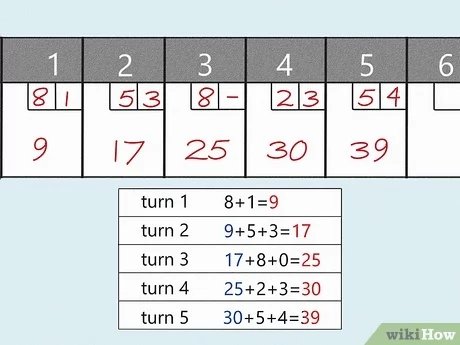
Scoring a bowling game involves adding the pin counts of each frame, with strikes earning 10 points plus the next two throws, and spares earning 10 points plus the next one throw.
Ever been at the lanes and felt completely lost trying to keep track of your score? It happens to everyone at some point. Figuring out how to score a bowling game can seem tricky, especially when strikes and spares enter the picture.
But don’t worry, the basic system is actually quite straightforward when you break it down. You’ll be calculating totals like a pro in no time.

How to Score a Bowling Game
Okay, let’s talk about scoring a bowling game! It might look like a bunch of numbers and boxes at first, but it’s actually pretty easy once you get the hang of it. Knowing how to keep score not only helps you track your own progress but also makes watching professional bowlers way more exciting. Think of it as a secret code, and we’re about to crack it together.
The Basics: Frames, Pins, and the Score Sheet
A bowling game is divided into ten sections, and each section is called a frame. In each frame, you usually get two chances to knock down all ten pins. You’ll see these frames laid out on your score sheet, usually as ten rectangles. Sometimes you will find score sheets with more than one game on them, in this case you should pick one column per game. Each frame is your chance to score points. The number of pins you knock down determines how many points you get. Let’s dive deeper into this.
Understanding the Score Sheet
The score sheet has spaces for your score in each frame and a small box (a square) in the upper right corner of each frame for marks for special events like strikes and spares, which we’ll talk about soon. There is a box below each game for keeping a running total or “cumulative” score. Think of it like a board game, where you move along the board, updating the score as you progress from frame to frame. Keeping a bowling score allows you to see how well you are performing in the game and helps you adjust strategies. The score sheet is a fundamental part of bowling. When you start keeping track, you will see that each game is a story written in numbers.
The Simple Stuff: Open Frames
An “open frame” means you don’t knock all ten pins down with both of your rolls in the frame. It’s the simplest case for scoring. Let’s say, you knocked down 3 pins on your first roll, and then knock down 4 pins on your second roll. To score that frame, you simply add those two scores together, and the sum is put in the box for that frame in your cumulative score. So, 3 + 4 = 7. You would write “7” in the score box for that frame. That’s it!
Let’s try another example. Suppose you knock down 6 pins on your first ball and 2 on the second. Then, the cumulative score in the square for that frame would be 8. These open frames are the most common type, and they are very straightforward to calculate. It is the foundation of bowling scoring, so it’s important to grasp this concept.
Here’s a little table to help:
| Roll 1 | Roll 2 | Frame Score |
|---|---|---|
| 2 | 5 | 7 |
| 7 | 1 | 8 |
| 0 | 9 | 9 |
| 4 | 4 | 8 |
See? Pretty easy. Now, let’s talk about the slightly more interesting parts: strikes and spares.
Strikes: Knocking Them All Down
A strike is when you knock down all ten pins with your very first roll in the frame. It’s the best possible shot in bowling and is marked with an “X” in that small box in the upper right corner of the frame. When you get a strike, your frame score isn’t complete yet! You don’t just get to add 10. Instead, a strike gives you 10 points plus the points from the next two rolls of your ball in any frame. It is a bonus. This is where it gets a little more complicated, but we’ll take it step by step.
Scoring a Strike
Let’s say you get a strike in the first frame (the box with a X), then on your next turn in the second frame you knocked down 4 pins with your first ball, and 3 pins on your second ball. So, for the first frame, you get 10 (for the strike) + 4 + 3 = 17. You would write “17” in the score box for frame one. In the second frame you would score 7 points (4 + 3). The second frame score is 7, so now the running total is 17 + 7 = 24.
Let’s try another example. Let’s say you get a strike in the first frame. In the second frame you get another strike. And in the third frame, your first roll knocks down 5 pins. For the first frame, you have 10 + 10 + 5 ( the score for next two balls) = 25. Then in the second frame, you have 10 (for the strike) + 5 + 0 (you only need the points for the first ball in the third frame) = 15. For the third frame, you currently have 5 points. So after three frames, your cumulative score will be 25 + 15 + 5 = 45.
The most important thing to remember is that a strike takes the next two rolls into account for that frame. A strike is definitely the highest potential score for a single frame.
Spares: Cleaning Up the Pins
A spare is when you knock down all ten pins with both of your rolls combined in a frame (no pins standing). It’s a good way to salvage a frame after missing pins with your first ball. It’s marked with a “/” in the small box in the upper right corner of the frame. Just like with a strike, a spare gives you bonus points. It’s worth 10 points plus the points from the next single ball you roll. Let’s see how it works.
Scoring a Spare
Okay, let’s say you knock down 3 pins on your first roll in the first frame, and then get a spare on the second roll by knocking down the remaining 7 pins. You have a spare. On the next frame, you knocked down 6 pins on your first roll. Then the score for first frame is 10 (for the spare) + 6 (the next ball’s roll) = 16. You would write “16” in the score box for frame one. Now in the second frame, we have 6 points. In this scenario, after the second frame, the total running score is 16 + 6 = 22
Here’s another example. In the first frame, your first ball gets 4 pins, and your second gets the remaining 6. Then in the second frame, your first ball is a 9 and your second is a 0. Your score for first frame will be 10 + 9 = 19. Then in the second frame, your score will be 9 points. In total, after the second frame, you have 19 + 9 = 28 points
Remember that spares only take the next one roll into account for that frame, unlike a strike.
The Tenth Frame: A Little Different
The tenth frame is a bit different from the other frames. In this last frame, if you get a strike, you get to bowl two more times. If you get a spare, you get to bowl one more time. These extra rolls are only for scoring the tenth frame and do not get rolled for the next frame. This gives you a chance to make the highest total possible.
Tenth Frame Scoring With Strike
Let’s say you get a strike on your first ball of the tenth frame, then your next roll is an 8 and then the last roll is a 1. Your total score for that frame is 10 + 8 + 1 = 19. This is added to the cumulative total.
Tenth Frame Scoring With Spare
Let’s say you get 7 pins on the first roll and 3 pins on the second. You have a spare! So you get one extra shot. Let’s say that extra shot is for 4 pins. You have a total of 10 + 4 = 14. This score will be written in the box for the tenth frame and is added to the cumulative total.
Tenth Frame Open
If you get an open frame in the tenth (meaning you didn’t knock down all 10 pins in both attempts), your score is only the number of pins you knocked down on those two balls. No bonus balls in this case and no bonus points in this case.
Example Game: Putting It All Together
Let’s walk through a whole game step-by-step. This should make everything really clear. Let’s imagine this game:
- Frame 1: 7 pins, then 2 pins. (7+2= 9)
- Frame 2: 6 pins, then 4 pins. (spare)
- Frame 3: 9 pins. then 0 pins. (open frame)
- Frame 4: Strike
- Frame 5: Strike
- Frame 6: 5 pins, then 3 pins. (open frame)
- Frame 7: 7 pins, then 1 pin. (open frame)
- Frame 8: 4 pins, then 6 pins. (spare)
- Frame 9: 8 pins, then 1 pins. (open frame)
- Frame 10: Strike, 7 pins then 1 pin
Here’s how we’d score it:
- Frame 1: 7 + 2 = 9 (Cumulative: 9)
- Frame 2: 10 + 9 = 19 (because of the spare in the 2nd frame, we add the 9 of the third frame in this score) (Cumulative: 28)
- Frame 3: 9+0= 9 (Cumulative: 37)
- Frame 4: 10 + 10+5 = 25 (because of the strike, we add the two rolls from the next two balls, where the second is also a strike. Therefore, we add the next roll after this strike, which is 5) (Cumulative: 62)
- Frame 5: 10+5+3 = 18 (because of the strike, we add the next two rolls from the next frame) (Cumulative: 80)
- Frame 6: 5 + 3= 8 (Cumulative: 88)
- Frame 7: 7 + 1 = 8 (Cumulative: 96)
- Frame 8: 10+8= 18 (because of the spare, we add the next roll from the next frame) (Cumulative: 114)
- Frame 9: 8 + 1= 9 (Cumulative: 123)
- Frame 10: 10+7+1=18 (Cumulative: 141)
Our final score for this example game is 141!
Here’s how a score sheet would look like for that game:

As you can see, the running total is calculated by adding the current frame’s score to the total of the previous frame.
Tips for Keeping Score
- Take your time: There’s no need to rush. Double-check your math!
- Ask for help: If you are not comfortable in calculating scores, ask a staff member or another bowler. They’ll be happy to help, especially if you are new to the game.
- Use a scoring app: If you find it hard to keep score manually, there are many bowling apps that can do it for you, allowing you to concentrate on the game.
- Practice: The more you do it, the easier it will become. After a few games, you’ll become a score-keeping master.
Understanding the score in bowling helps us appreciate the game better and make the experience much more fun. It’s a skill worth developing to improve the experience.
Now you have a solid understanding of the scoring system! Go out and practice, and you will have a great time at your local bowling alley.
Don’t worry if it seems complicated at first. With practice, it will become second nature. Just like learning any new skill, the first time is always the hardest. And don’t forget to have fun! Bowling is a great game for all ages and skill levels, and understanding the scoring system will only add to your enjoyment. See you on the lanes!
Now that you have gone through this article on scoring, you can see how complex yet simple bowling is when you take the time to learn it. Each aspect of the game adds up to the experience and knowing the rules, helps you enjoy it a lot more.
Scoring Bowling
Final Thoughts
To summarize, calculating your points involves adding pin counts per frame. Strikes earn ten points plus the next two throws, while spares get ten plus the next single throw. An open frame is simply the pins knocked down.
Understanding these basic rules makes scoring easy. Remember that a strike in the tenth frame allows two additional throws. Knowing how to score a bowling game is essential for enjoying the game fully.

