
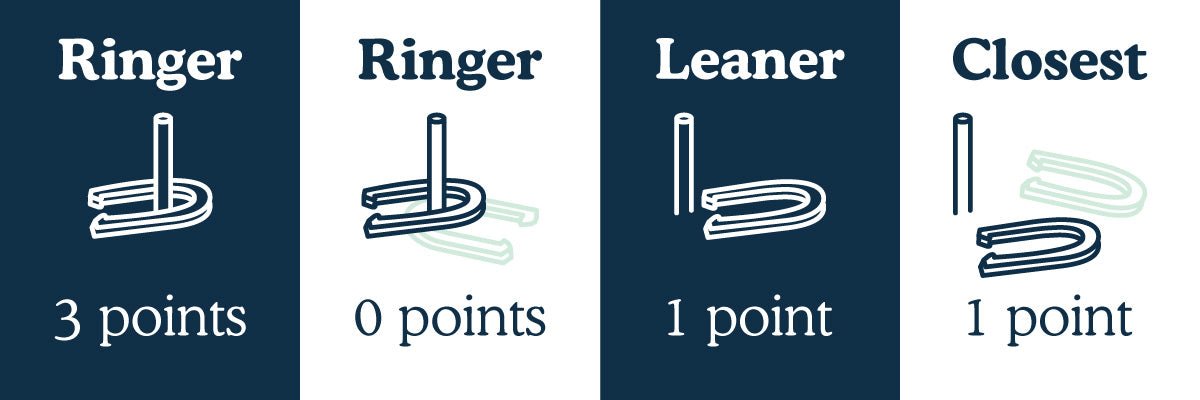
Scoring in horseshoes involves earning 3 points for a ringer, 1 point for a shoe within 6 inches of the stake, and canceling out opposing scores.
Ever wondered how to keep track of points during a friendly game of horseshoes? Knowing how to score horseshoes game is key to enjoying this classic outdoor activity. It’s really quite simple once you grasp the basic rules.
The system primarily focuses on ringers and close throws. Players earn points by landing the horseshoe around the stake and also close enough to the stake. It’s a fun game to play with friends.

How to Score Horseshoes Game
Okay, so you’re ready to toss some horseshoes and have a great time! But wait, how do you even keep track of who’s winning? Don’t worry, scoring in horseshoes is actually pretty simple once you get the hang of it. Let’s break down the ins and outs of how to score a horseshoes game so you can focus on having fun and maybe even bragging a little about your awesome throws.
The Basics: Points and Ringers
The main goal in horseshoes is to get your horseshoes as close to the stake as possible. There are two main ways you can score points:
- Point(s): These are awarded when your horseshoe is closer to the stake than your opponent’s.
- Ringer: This is the golden ticket! A ringer is when your horseshoe completely encircles the stake. It’s worth more points than just getting close.
A standard game of horseshoes involves two players or two teams. Players take turns throwing two horseshoes at a time toward the stake. After both players have thrown their shoes, you look to see who scored the most points in that round, and then you move on to the next round.
Understanding Point Values
Here’s how points are typically awarded:
One Point:
A horseshoe that is closer to the stake than any of your opponent’s horseshoes, but is not a ringer, gets you one point. Imagine a measuring tape that goes from the stake to your shoe. If your shoe’s tape length is shorter than any of your opponent’s shoes, then you get a point for that shoe. If two of your horseshoes are closer than any of your opponent’s, you will earn two points that round.
Three Points:
This is what everyone is aiming for – the RINGER! If a horseshoe completely encircles the stake, you score three big points. It’s a satisfying sound and a sight to behold! And if you throw two ringers in one round? Well then you’ve just gained six points for that single round!
A quick note: Only one player or team can score in a round. If one of your horseshoes is a ringer, and your opponent has no ringers and no shoes closer than yours, you will earn three points. No matter if one player has 2 shoes closest, only one player can score. You will only score based on your closest shoe.
Determining the Closest Horseshoe
Sometimes, deciding which shoe is closest can be tricky. Here are a few tips for figuring it out:
- Use Your Eyes: Get a good look at the distance from the stake to each shoe. Often, it’s clear which one is closer.
- Use a Measuring Tool: If it’s a close call or you’re playing seriously, use a ruler or a specialized horseshoes measuring tool. Measure from the stake to the closest point on each shoe. The shoe with the shortest distance gets the points.
- Be Fair: If there is a dispute, take an unbiased look from multiple angles or use a measuring tool if there is a dispute about who’s closest. Remember it’s all about having a good time!
The Foul Line Rule
Before you can even begin scoring, you’ve got to understand the foul line. It keeps things fair and prevents players from getting too close to the stake when throwing. Generally, the foul line is set about 20 to 30 feet away from the stake. Always take a look at the court before playing to know the rules.
- Don’t Cross It: If any part of your foot crosses the foul line while you’re throwing, it’s considered a foul.
- No Points for Foul Throws: A horseshoe that lands after a foul doesn’t count for any points. You simply remove it from the pit for that round.
How to Keep Score
Now that you know how to earn points, you need to know how to keep track of them. There are several ways you can do this:
Using a Scoreboard
A scoreboard is the easiest way to track points for many players. Some boards have pegs or sliding markers, and some are as simple as a chalkboard or whiteboard.
- Write it Down: Write each player’s or team’s name at the top of the board or column. After each round, write the number of points scored and total points accumulated to date.
- Keep it Clear: Try to be neat and easy to read. This will help avoid any confusion about who is in the lead.
Keeping Score on Paper
If you don’t have a scoreboard, a regular piece of paper and pen or pencil work just as well.
- Create Columns: Make columns with player or team names at the top of the sheet.
- Record Points: List points by round under each name/team. Keep a running total for each player or team.
Verbal Scorekeeping
In a more casual game, you can keep track verbally. This is especially good for games with younger players, or for games when score isn’t the primary focus. Each person, or one designated score keeper, will say the score after each round, and then update the score for the next round. This type of score keeping requires good communication.
Winning the Game
So, how do you actually win a game of horseshoes? Here’s the lowdown:
- Target Score: Generally, the game goes up to 21 points. The first player or team to reach 21 points wins!
- Going Over: You can choose to go over 21 points or not, depending on your group rules. For many traditionalists, going over 21 requires going back down to 15 points, and then you have to reach 21 again to win.
- Two Point Lead: Another option is you have to reach 21 or more AND you have to win by two points. So, if the score was tied 21-21, you would have to score 23 points to win.
- Official Games: Official games are often played to 40 points. Always check the specific rules of the game you are playing, or create house rules together with your group.
Different Scoring Variations
While the rules described above are the most common for horseshoes, there are some variations you might encounter. These changes often add an extra level of strategy, excitement, and challenge to the game!
Cancellation Scoring
In this version, if both players or teams have a ringer in a round, the ringers “cancel” each other out, and neither player or team scores points for ringers that round. This system really amps up the competition to try and get two ringers in a single round.
- Ringer Cancellation: If both players or teams throw one ringer, or two ringers, those ringers cancel each other out.
- Scoring: Points are then scored based on other closer horseshoes.
Pitcher Scoring
This is where one player (or team) has a lower-scoring round than the other, and the higher-scoring round earns a point differential. For example, Player A scores 1 point in round 1, and Player B scores 3 points in round 1. Player B gets 2 points this round based on the point difference. If round 2 is the same, Player B gets another 2 points that round, even though they did not necessarily get 3 points themselves.
- Point Difference: One round’s points are compared to the other round’s points.
- Scoring: The difference between the rounds is recorded as the number of points earned.
Count-All Scoring
This is a much less common rule, but when used, this method counts points for each horseshoe, which makes each round score higher than normal.
- All Horseshoes Count: All horseshoes count, for every player in the game.
- Calculate: For each player/team, take the total value of their horseshoes and that is the number of points earned in the round.
Tips for Improved Scoring
Alright, now that you understand how scoring works, let’s go over some tips that can help you score more points:
Practice Your Aim
The more you practice, the more consistently you will be able to throw close to the stake. Practice both a regular toss, and a more powerful toss to get different distances of throw down pat.
Perfect Your Stance
A stable and comfortable stance helps for more accurate throws. Plant your feet and get comfortable before you pitch.
Pay Attention to Your Grip
The grip can effect the way your horseshoe flies through the air. You want to have a grip that feels balanced and steady to you.
Learn Different Throwing Techniques
Try some different ways to throw the shoe: the flip, the turn, and the slide. See what works best for you.
Watch the Pros
Watch videos or observe experienced players. You might pick up some new techniques or strategies.
Be Consistent
Once you find what works, try to do it the same way every time. This helps make your throws more predictable and accurate.
Keeping it Fun
Remember, the main goal is to have fun. Whether you’re playing in a competitive league or just having a casual game with friends, keeping the game enjoyable is key. Be a good sport, encourage others, and celebrate good throws and ringers – no matter who makes them. Learning how to score in horseshoes is just the first step. Now go out there and enjoy some outdoor fun!
Scoring horseshoes might seem a bit tricky at first, but with a little practice and understanding of the rules, you’ll be keeping score like a pro in no time. Remember the importance of ringers, watch for the foul line, and choose the scoring method that works best for you and your friends. Most importantly, have fun!
How To Play Horseshoes
Final Thoughts
Scoring in horseshoes involves a simple point system. A shoe that lands within six inches of the stake earns one point. A ringer, where the shoe encircles the stake, awards three points.
First player to reach 21 points wins the game. That is essentially how to score horseshoes game. Keep track of your points after each throw to easily determine the winner. Remember accuracy is key to scoring more.

