
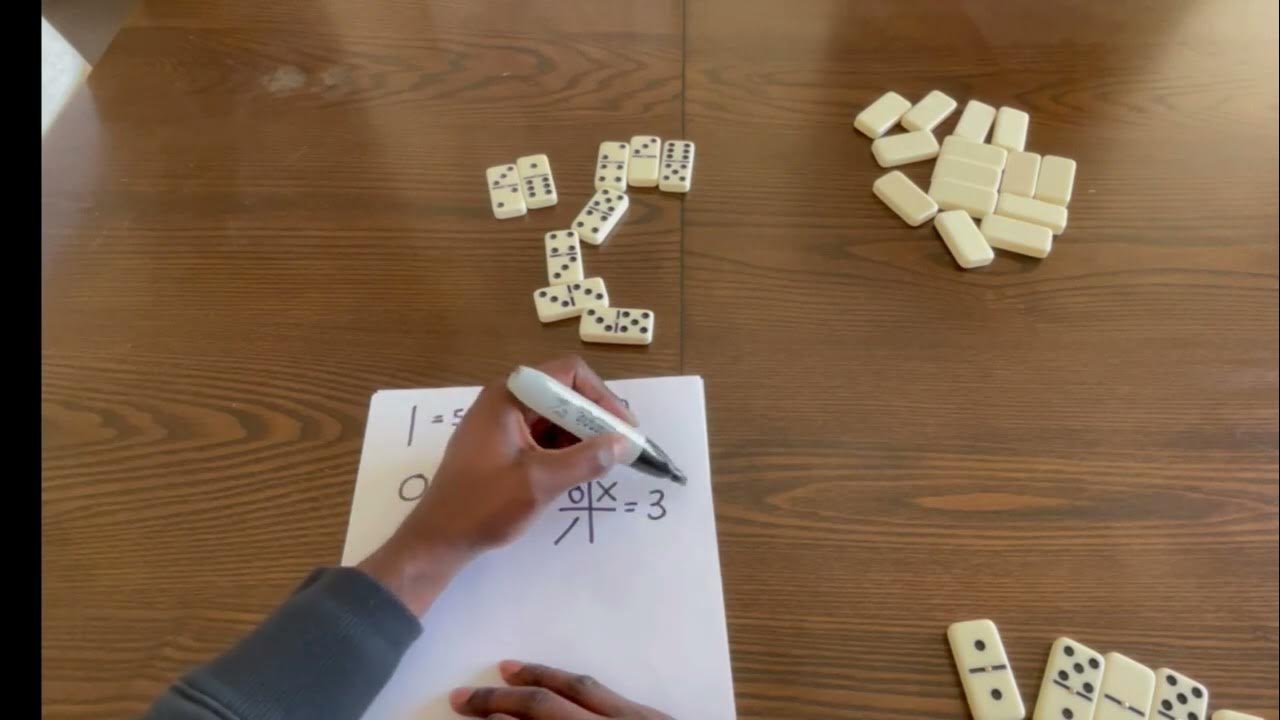
Scoring in dominoes typically involves adding up the pip values on the exposed ends of the domino chain, often requiring a multiple of five for points.
Ever wondered how to score in dominoes game? It’s a common question for newcomers and even some seasoned players. Scoring might seem tricky at first, but it’s actually quite simple once you grasp the basic rules. You’ll find it adds a nice layer of strategy.
The aim is usually to be the first player to reach a set number of points. Understanding how to score in dominoes game is vital for success. It allows you to plan your moves accordingly.

How to Score in Dominoes Game
Dominoes isn’t just about matching tiles; it’s also about racking up points! Knowing how to score is key to winning. Different domino games have different rules, but we’ll go over the most common ways to tally up those points. Let’s get started on this scoring adventure!
Basic Scoring Principles
Before we jump into specific games, let’s understand the basic idea behind domino scoring. In most domino games, you score points when you’re able to make the total number of pips on the open ends of the domino chain a multiple of a certain number, most commonly 5. Pip are the dots on the dominoes.
What are Pips?
Pips are the dots on each half of a domino. A domino tile can have from zero to six pips on each half. For instance, a domino with three dots on one half and five dots on the other is a “three-five” domino.
What is the Domino Chain?
The domino chain refers to the line of dominoes laid down during the game. Players take turns adding their dominoes to either end of this chain. The numbers at the ends of the chain are what you’ll be adding up to score.
Scoring in Block Dominoes
Block Dominoes is a classic version of the game. It’s straightforward to learn and lots of fun. The scoring in Block Dominoes usually happens at the end of the round, when someone “blocks.” This happens when no player can add a domino to either end of the chain.
How Scoring Happens in Block Dominoes
Here’s how it works:
- End of the Round: When no one can play a domino, the round ends. This is when scoring occurs.
- Count Your Pips: Each player counts the total number of pips on the dominoes they have remaining in their hand.
- The Winner Scores: The player with the lowest count of pips in their hand is the winner of the round.
- Score the Difference: The winner adds up the difference between the total number of pips in their hand and the pip count of each of the other players. That’s the winner’s score for the round. For example, if the winner has 5 pips, and a second player has 20 pips, the winner scores 15 points for that second player. if a third player has 10 pips, the winner gets another 5 points and in total winner scores 20 points for that round.
Let’s look at a simple example. Suppose three players are playing: Alice, Bob and Charlie. The round ends when nobody can play another domino. Alice has 2 pips left, Bob has 10, and Charlie has 15. Alice wins. She scores 8 points for Bob (10-2 = 8) and 13 points for Charlie (15-2 = 13) for a total score of 21.
Scoring in Draw Dominoes
Draw Dominoes is very similar to Block Dominoes, but with one important difference: a boneyard. This is a pile of dominoes that are not dealt to any player at the beginning of the game. If a player can’t make a move, they can draw dominoes from the boneyard until they find one they can play (or until the boneyard is empty). Because of this boneyard, it’s less common to have “blocked” games, making scoring slightly different.
How Scoring Works in Draw Dominoes
Here’s the breakdown:
- Someone “Goes Out”: Usually, the round ends when one player plays all their dominoes. That player is said to have “gone out”.
- Count Remaining Pips: The player who goes out wins the round. Other players count the total pips of their remaining dominoes.
- The Winner Scores the Total: The winning player gets the total pip counts from all the remaining dominoes of all the other players. For instance, if Bob went out, and Alice has 8 pips left and Charlie has 12 pips, Bob scores a total of 20 points.
Unlike Block Dominoes, you don’t score the difference. You simply add up the remaining pips of all your opponents and that’s how many points you get for that round.
Scoring in All Fives Dominoes
All Fives Dominoes is a bit more complicated but still fun to play. In this game, you score points during gameplay, not just at the end of the round. The key to scoring in All Fives is making the open ends of the chain add up to a multiple of five.
Scoring during Gameplay
Here’s a step by step breakdown of scoring in All Fives:
- The Open Ends: After a player lays a domino, add the numbers of pips on the open ends of the domino chain.
- Multiples of Five: If the sum of the open ends is a multiple of five (5, 10, 15, 20, etc.), the player scores that many points. For example, if the sum is 15, the player scores 15 points.
- Scoring with Doubles When a double domino is played perpendicular to the chain, both ends of the double count in the total sum. For example, if you have a 3 on one end, 2 on the other end, then a double 4 is added, your total would be 3+4+4+2 which sums to 13, not a multiple of 5 and doesn’t score.
- Continue Play: The game goes on, with players continuing to add dominoes and score whenever the total is a multiple of five.
- End of the Round: A round ends when one player has played all of their dominoes or when no one can make a play.
- End of Round Scoring: When a round finishes before a player goes out, players calculate the pip count of the dominoes in their hand. The player with the lowest amount scores the difference between the total of their pips and the pip count of each of the other players, rounded to the nearest multiple of 5. (If Alice has 2 pips, Bob has 10, and Charlie has 15, Alice would receive 8 from Bob. Since 13 is not a multiple of 5, this number would be rounded to the nearest multiple of 5. So Alice would get 10 points from Bob, and 15 from Charlie.)
It’s important to note that the rules for All Fives can have variations. Some versions require the sum to end in a 0 or 5, which is the same as being a multiple of 5. Always make sure to double-check with your group about which specific rules you’re using.
Example of Scoring in All Fives
Let’s walk through a simplified example. Imagine the open ends of the domino chain add up to 3. Player A plays a domino to make the new total of the open ends 8. Player B goes next and places a domino to make the total 13. Player C places a tile to make the sum 18. Player D places a tile to make the sum 23. Next, Player A adds a domino that makes the sum 25. Now, player A scores 25 points because the new total is a multiple of 5. So, if the player puts down a tile that makes a multiple of five, the player receives that many points.
Scoring Variations in Other Domino Games
While the games above are common, there are many other types of domino games. Here are some less common but very fun examples of other types of domino games and how scoring is often handled.
Muggins
Muggins is a variant of All Fives, where the scoring is often more complex. In some versions of Muggins, you can score for multiples of 5 and for multiples of 3.
Bergen
Bergen is a game that focuses on matching the ends of the domino chain, rather than counting pips. You typically score one point for each instance you can add to both ends of the chain, and there is bonus point if both ends of the chain are the same. Bergen can have many variants with scoring changes.
Mexican Train
Mexican Train uses a starting hub and multiple trains. Players score based on the pip counts in their hands if someone plays all their dominoes or the round is blocked. Mexican Train scoring can also vary depending on which version you play.
Tips for Better Domino Scoring
Here are a few simple tips that can help you improve your domino game and scoring:
- Pay attention to the open ends: Keep track of the open ends of the domino chain and try to play dominoes that help you score or prevent your opponents from scoring, especially in games like All Fives.
- Keep an eye on the other player’s dominoes: You should know if someone is almost out of dominoes. Sometimes it is better to have a blocked round and earn fewer points than let someone play out all their dominoes.
- Try to save your “high pip” dominoes for last: If you anticipate a blocked game, keeping the lower pip count dominoes for the end will make sure you are able to win the round.
- Practice makes perfect: The more you play, the more you’ll get a feel for domino strategy and scoring.
- Know your game: Make sure you’re clear on the exact scoring rules for the specific domino game that you’re playing with your friends.
Scoring in dominoes can feel a bit tricky at first, but once you understand the basic principles and practice a bit, you’ll be counting your points like a pro! Dominoes is a fantastic game that combines luck with strategic thinking, making every game unique. So grab your dominoes, gather your friends, and start having fun!
How to Score in Dominoes all Fives – Learn the Secret to Scoring Big in Dominoes! Part 1
Final Thoughts
To score in dominoes, you total the pips on the open ends of the line when someone goes out. The winner gets the sum of the losing player’s remaining dots. For block games, the player with the lowest count gets the points.
If no one can play, the player with the fewest dots scores. Knowing how to score in dominoes game is essential for winning. The scoring system varies slightly by game type.

