
You cannot directly share Game Pass on PC with multiple users simultaneously using a single account. Each user needs their own subscription. However, you can set a specific PC as a designated “home” PC to allow multiple accounts to play the purchased games.
Want to enjoy Game Pass on your PC with family or friends? It’s a common question many gamers have. Unfortunately, the way Microsoft designed the system means straightforward sharing isn’t quite possible. Figuring out how to share game pass on pc requires understanding the limits of the subscriptions.
There are a few methods to let others play from your library, but they aren’t sharing in the way you might initially think. Setting a specific PC as the designated “home” PC is the key here. This approach does have some limitations.

How to Share Game Pass on PC: A Simple Guide
Okay, so you’ve got Xbox Game Pass for PC, and you’re thinking, “Wouldn’t it be awesome if my family or friends could play too?” You’re not alone! Sharing your Game Pass on PC can feel like a bit of a puzzle, but it’s totally doable. Let’s break down the different ways you can let others enjoy the vast library of games without needing everyone to pay separately. It’s all about getting the most out of your subscription, and we’re here to make it easy to understand.
Understanding Microsoft Accounts and Family Settings
Before we dive into the nitty-gritty of sharing, it’s important to understand Microsoft accounts. Think of them as the keys to your gaming kingdom. Every person who wants to play needs their own Microsoft account. This is not just for Xbox Game Pass, but for using any Microsoft service, like Windows or email. It’s the bedrock of sharing, so make sure everyone involved has their own. When you set up different accounts, it makes things easy and safe for everyone.
Why Multiple Microsoft Accounts Matter
Why can’t you just share one account? Well, imagine everyone using the same toothbrush – yuck! Similarly, using the same Microsoft account across multiple devices means your game saves, settings, and even your billing info could get mixed up. It’s best for everyone to have their own space. This way, player one can have their game save separate from player two, and everyone can play what they like, when they like.
Setting up Family Groups
Microsoft also offers something called “Family Groups”. Think of this like a virtual family house for your Microsoft accounts. You can set up a Family Group with the adults as the organizers and any kids or teens in your family as members. This is a great option if you have kids who are using the console or pc, as it allows some parental controls, like managing what games and apps they use, and even how long they use them.
How to create a family group:
- Go to your Microsoft account online.
- Look for “Family.”
- Click “Create a family group.”
- Follow the steps, adding each family member’s Microsoft account.
Adding family members into this group allows you to manage some permissions, but this doesn’t directly share Game Pass on PC. It provides the foundation for it to be smoother later on.
The Main Method: Account Sharing
While there isn’t a straight up official “family sharing” method for PC Game Pass like some consoles have, there’s a way we can work around it, and it involves a bit of clever “account sharing” which we will understand below. This method relies on understanding how Microsoft licenses games. Game licenses are tied to the user accounts, which means if you login to the Microsoft store with your account, you get access to your library.
How it Works
Account sharing is quite straight forward. The primary account, the one that has the active Xbox Game Pass subscription, needs to be logged into the Microsoft Store app on the computers where others want to play. Now here’s the important part, the second user would also log into their profile on their computer, but still under the same windows session. This allows the second user to play the games while the Game Pass subscription is active on the primary user account.
Let’s go step by step on how to do this:
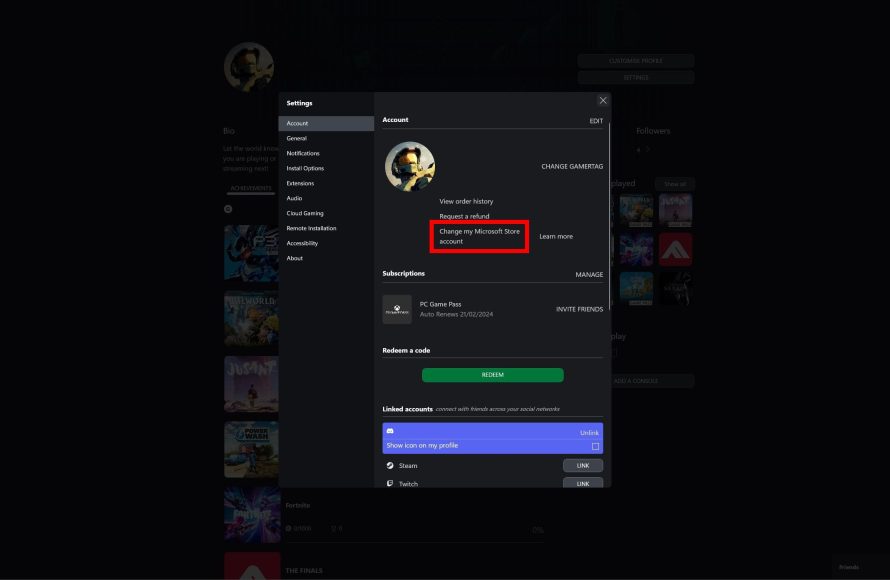
- Primary Account Login: On the PC you want to share from, sign in to the Microsoft Store app with the account that has the active Game Pass subscription. You can find the Microsoft store app in the search bar. You will have to open this from time to time to make sure the licensing is working.
- Second User Login: Now, log in to your own windows profile on the same PC where you want to play. This must be a different windows user from the primary account. You can do this by selecting your profile from the start menu. This is where the second user would play from.
- Launch the Xbox App: Both users should download and install the Xbox app from the store. Then on the account you want to play with, which would be the second account in this case, you would launch the Xbox app and login.
- Start Playing: The second user will be able to access the games under Game Pass in the Xbox App, even if they don’t have a subscription of their own.
Things to Keep in Mind
- Simultaneous Gaming: Using this method, only one person can play the same game at the same time. However, different games can be played at the same time. This is a limitation of this approach. The primary account that has Game Pass, has an active session which counts towards this limitation. This means both user one and user two cant be logged into the same game at the same time.
- Store App Logins: The primary account with the Game Pass needs to be signed into the Microsoft Store app on any PC you are trying to share with. If this isn’t the case, then games may not launch as expected.
- Account Switching: You may need to switch user accounts back and forth in the Microsoft Store App, to ensure licensing is being applied properly. This depends on whether games are launching with issues or not. This is a small price to pay in exchange for not needing multiple subscriptions.
- No Guarantees: While this method currently works, Microsoft can change things in the future. Keep an eye out for any updates or changes.
Understanding Different Game Pass Tiers and Their Limitations
It’s also crucial to know about the different kinds of Game Pass, because some might not work as expected. There are mainly two types of subscriptions: Xbox Game Pass for PC, and Xbox Game Pass Ultimate.
Game Pass for PC
This one is specifically designed for games on your PC. It lets you play a huge collection of PC games without having to buy them. So if you see this term, that means only the PC games are included. Remember that this Game Pass only gives you PC games.
Xbox Game Pass Ultimate
Now this one is the big kahuna. It not only gives you PC games, but it also lets you play games on Xbox consoles too! Plus, it comes with extras like Xbox Live Gold (for online multiplayer) and cloud gaming. So, this is the best one if you have both a PC and an Xbox. If you want to play online and on console, and not just on PC then this subscription is a must.
Why the Difference Matters
If your family members want to play on an Xbox console, then you’ll need Xbox Game Pass Ultimate, and not just the PC version. Keep this in mind when choosing your subscription to ensure all the members of your family get the most from the service.
Troubleshooting Common Sharing Issues
Sometimes, things don’t go as planned, and issues can arise when sharing Game Pass. Here are some common problems and how to tackle them.
Game Not Launching
If the game refuses to start, it might mean that the Microsoft Store is not recognizing the primary account. First, check to see if both accounts are logged in the way that was specified above. Then try switching accounts in the microsoft store app and back again. Sometimes, simply restarting the computer will also fix this.
Game Pass Games Not Showing Up
If the game isn’t showing up in your library, then there might be a licensing issue. Try signing in and out of the Xbox app, and the Microsoft Store app on both accounts. And also, check that the primary account with the game pass subscription, is still active in the Microsoft Store application. If all that fails, then restarting your PC is also worth a shot.
Error Messages
If you see an error message, try to note it down or take a picture. You can then search it online, or go to Microsoft’s support website to get specific help. Error messages are your friends; they often contain clues on how to resolve the issue.
Internet Connection
Make sure everyone has a stable internet connection. Game Pass games often require an internet connection to verify licenses and for multiplayer. If you have poor internet, that could be a reason why you’re having issues starting games.
Updates
Ensure your Windows system, the Xbox app, and the Microsoft store, are all updated. Outdated software can create conflicts and issues. Always make sure you update apps whenever you get the option, this usually stops a lot of issues before they even happen.
Alternative sharing methods
While the account sharing method is the most common, there are few other, though less effective ways of playing with others. However, they are worth mentioning in case you want to explore these options.
Cloud Gaming
Game Pass Ultimate provides cloud gaming which lets you stream games to your computer. While this sounds great, it doesn’t quite solve the problem we’re looking at for sharing, because only one account can stream a game at a time. Cloud gaming is mostly helpful if you want to play on a phone, tablet, or low powered device, where you don’t want to download the game.
Sharing Steam Games
If your family members have a large Steam library, then they can use Steam’s “Family Sharing” option. This is different from Game Pass sharing, and it does come with limitations, but it’s worth mentioning in case you play a lot of games on that service as well. For one, only one person can play a single Steam game at a time.
Sharing your Xbox Game Pass on PC might require a little bit of setup but, as you have seen, it’s a very manageable process. Remember, each person using Game Pass needs their own Microsoft account. Account sharing by logging the primary account on the Microsoft store, and your own on the PC, is the best way to allow family or friends to play games. You might face some common issues, but most of the time these are just small hurdles and can be overcome quite easily. If you have any trouble, Microsoft’s support is always ready to help. Remember, sharing is caring and this applies to the wide world of games as well.
How to Game Share Game Pass on Microsoft Store Windows 10 and 11
Final Thoughts
To share Game Pass on PC, you must use the same Microsoft account on both PCs. The account with the active subscription needs to be logged in on the Microsoft Store. Then, any other user on that PC can also access the Game Pass library.
Remember that only one user can play a game from the library at a time. This method allows for sharing, but simultaneous play from different accounts needs a separate subscription. Ultimately, this is how to share game pass on pc.

