
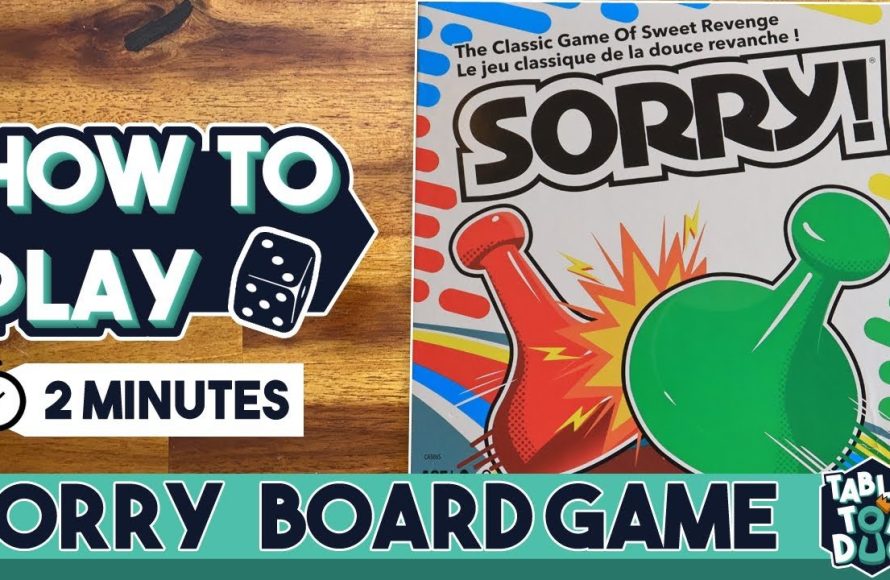
To start a Sorry! game, place the game board on a flat surface, then each player chooses a color and takes the corresponding four pawns and places them in their Start area. The player who goes first is determined, and then game begins.
Ever wondered how to start Sorry! game? It’s simpler than you might think, and a great way to enjoy some friendly competition. This classic board game brings people together with its simple yet engaging mechanics.
Getting set up is the first step. You’ll need the board, pawns, and deck of cards. So, are you ready to get started on your journey to victory, or maybe just a good time?

How to Start a Sorry! Game: A Step-by-Step Guide
Ready to dive into the fun and sometimes frustrating world of Sorry!? It’s a classic board game that’s been bringing families together (and sometimes causing a bit of playful rivalry!) for generations. But before you can start bumping your opponents’ pawns back to the beginning, it helps to know exactly how to get the game going. Don’t worry, it’s not hard at all! Let’s break down all the steps, so you can start playing Sorry! and have a great time.
Setting Up Your Sorry! Game Board
The first thing you’ll need to do is get your game board ready. It’s pretty simple, but it’s important to do it right to avoid confusion. Here’s how:
Unfolding the Game Board
Carefully take the game board out of the box and unfold it. Place it on a flat, stable surface like a table or a floor. This makes sure that all the pawns will stay in place. If the board is wobbly, it might be difficult to move the pawns correctly. You want everyone to be able to see the entire board easily too.
Understanding the Game Board
Look at the board. You’ll see a path of colored squares that goes around the outside of the board. Each color – typically red, blue, yellow, and green – has its own starting area, a ‘start’ space, and a ‘home’ area. Each player will control the pawns of a specific color. In the center, you’ll find the safety zone which is meant for the pawns of all players. Make sure everyone understands their color and the path their pawns need to travel. This helps to keep track of who is who and what to do.
Placing the Pawns in the Starting Area
Now it’s time to get your pawns in position. Each player takes the four pawns of their chosen color. Place all four of them in the “start” circle of that color. This is their safe spot, and they need to draw the number one or two to get them out to travel the path. For example, if you’re the red player, put all your red pawns in the red circle.
Shuffling the Cards
The Sorry! deck of cards is what drives the game. Before you start playing, give the cards a good shuffle. This mixes them up, and it makes the game much more interesting, and no one knows what number they will draw next. The person who is selected as the dealer will keep the stack of cards.
Choosing Players and Colors
Next, it is important to choose who will play the game. This will help you understand who will go first, who will be playing which color.
Deciding Who Will Play
You can play Sorry! with 2, 3 or 4 players. You can decide randomly who is going first or the youngest person can go first. Now decide who will be playing what color, make sure everyone agrees. Typically, you decide on colors clockwise around the board, starting with the red player, followed by blue, yellow, and then green. This makes it easy to keep track of the turn.
Assigning Colors
Each player should pick a color, either by preference or by the order you agreed upon. Make sure everyone has the correct four pawns of their color. It is important that each player knows their color and where their start and home spaces are located on the game board, and this will help them throughout the game play.
Understanding the Sorry! Cards
The deck of cards in Sorry! might seem simple, but each card has a specific meaning. Getting to know the cards is a big part of understanding how to play.
The Number Cards: 1 and 2
These are crucial for getting your pawns out of your start area and onto the main path. If you draw a 1 or a 2, you have to bring out one of your pawns. Then, move it forward the number of spaces on the card. You can only bring a pawn out on these cards, and you can’t use it to move another pawn.
Number Cards: 3 to 5
Cards with 3, 4, or 5 on them mean you get to move a pawn forward that many spaces. You are free to choose any pawn of yours that is on the board, and not in your home area.
Number Card: 7
A 7 lets you move one pawn forward a total of 7 spaces, or split the 7 spaces between two pawns, moving each of them some spaces. If you decide to split it between two pawns, you should move the first pawn first, finish and then move the second pawn, in the same turn.
Number Card: 8
An 8 means you get to move one pawn forward eight spaces. Use it wisely to try to get ahead of your opponents.
Number Card: 10
The 10 card allows you to move one pawn forward 10 spaces or backward 1 space. You can use the 1 space backward to strategically move your pawn backward when needed, but this is optional. The backward move is not mandatory if you don’t want to.
Number Card: 11
The 11 card lets you move one pawn forward 11 spaces, or you can trade places with one of your opponent’s pawns. You should choose another pawn from the game board and swap your pawn with it. You can use this when a player is ahead, and you need to move them back.
The 12 Card
A 12 lets you move one of your pawns forward twelve spaces. It can be good to use this one to jump ahead a lot.
The “Sorry!” Card
This is a tricky one! The “Sorry!” card means you can move any one of your pawns from the start space to a space on the board occupied by another player’s pawn. That player’s pawn goes all the way back to its own starting area, where they have to draw a one or two again to get it back out.
Starting the Game: Taking Turns
Now that the board and cards are ready, and you know what the cards mean, it’s time to actually start playing. Here is how:
Determining Who Goes First
Usually, the youngest player goes first. You can use other ways to decide too, like drawing a number or rock, paper, scissors. Once you decide, you start taking turns in a circle. The player next to you in the clockwise direction goes next.
Drawing and Following Card Instructions
On your turn, you draw a card from the top of the deck. Always draw the top card, and then follow the instructions. Remember the meaning of each card, and move your pawns appropriately. After you have completed your turn, it is the next player’s turn. Make sure to only take one card and follow the instructions on the card you draw.
Moving Pawns Around the Board
Move your pawns forward around the board in the direction indicated by the arrows on the board and according to the cards you draw. If you land on a space that is already occupied by another player’s pawn, that pawn is sent back to start and the player needs to draw a one or a two to start again. If you land on a space occupied by your own pawn, you can’t bump it back.
Using the Safety Zones
There are safety zones on the game board where your opponents cannot bump you out. Only you are allowed to move in the safety zones and not anyone else. You can use safety zones to prevent bumping and also move around the board.
Landing on a Slide
Pay attention to the slides on the board. If you land on a slide, you slide all the way to the end of the slide, and if another player’s pawn is on the slide, it is sent back to start. If you land on the start of your own slide you do not slide.
Winning the Sorry! Game
The goal of Sorry! is to get all four of your pawns to your “home” area. Here’s how you know you’ve won:
Getting All Four Pawns Home
You have to move all four pawns from the start area around the board and into your “home” area. This is a separate area located at the end of the path for each player. Each of your pawns has to enter your home before you can win. Remember to move only in the direction of the arrows on the game board.
Finishing the Game
The first player to move all four pawns to their “home” area wins the game! Celebrate your victory, and then be ready to play another round. If you have more than one player still playing, continue the game until there is a second-place winner and so on.
Important Tips to Remember
To have the best time playing Sorry!, keep these things in mind:
- Be mindful of bumping. Sorry! is a game of strategy, but also a bit of luck. Bumping opponents is part of the game, and you should try to bump others and keep yourself safe.
- Plan your moves. Try to think a few steps ahead, but it’s okay if things don’t always go according to plan.
- Be a good sport. Winning is fun, but so is playing fairly. If you have to bump someone, do it with grace, and accept when you have been bumped back.
- Have fun! The most important thing is to enjoy playing Sorry! with friends and family.
Modifications and House Rules
Sometimes families add their own rules to make the game more fun or interesting. You can try these as well:
Optional Rules
- Two pawns at start. Instead of only allowing one pawn out with the number one or two cards, you can use it to also move another pawn from the start space, so you have two pawns to start with, rather than just one.
- No-bumping rule. If you don’t like bumping, you can decide to have a no-bumping rule, but this might change the game drastically.
- Double the distance. When the card you draw is a 1 or a 2, you can choose to move one pawn forward twice the distance, rather than drawing another card.
Creating Your Own Rules
If you want, you can come up with your own house rules to make the game more fun. Just make sure everyone agrees on the rules before you start playing. You might come up with something cool that everyone loves and wants to play with.
A Final Thought
Sorry! is more than just a game; it’s a great way to spend quality time with loved ones, teaching strategy, patience, and good sportsmanship. By following these easy steps, you will be able to have a good time and play with your friends and family. So gather your pawns, shuffle your cards, and get ready to have a lot of fun!
How to Play Sorry
Final Thoughts
To begin, each player chooses a color and takes four pawns. Place these pawns in their designated start areas. Then, shuffle the deck of cards and place it face down. The first player draws a card to start the game.
The card drawn will guide your pawn’s movement on the game board. Follow the card instructions precisely to move forward. Understanding the card values is key to successful play. This is how to start sorry game.

