
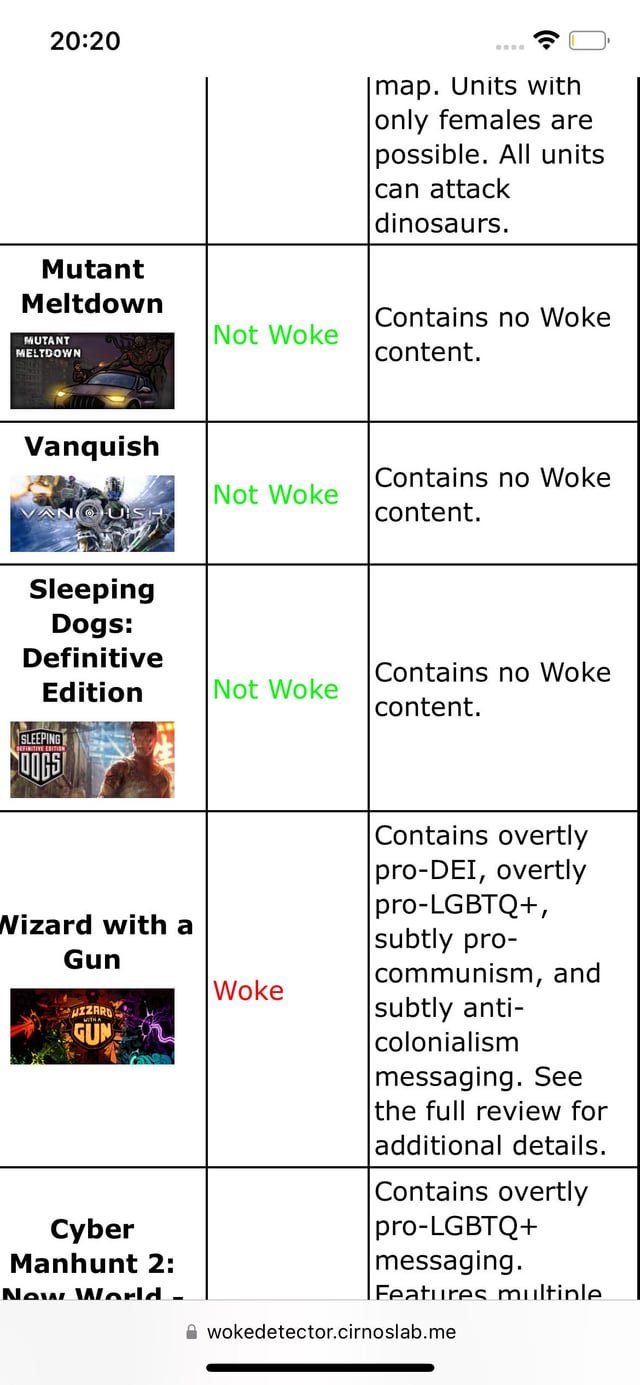
The degree to which your games are ‘woke’ depends on their representation of diverse characters, inclusion of varied perspectives, and avoidance of harmful stereotypes.
Are you playing games that reflect the world’s beautiful complexity? We often wonder about how woke are your games, don’t we? It’s a topic that sparks much discussion and reflection among gamers.
Do your digital adventures feature a broad range of characters? Or do they perpetuate tired tropes? Thinking about these things helps us become more thoughtful players and creators of games.

How Woke Are Your Games?
Video games, just like movies and books, can tell amazing stories. But lately, there’s been a lot of talk about how “woke” games are. What does that even mean? It’s like asking if a game is aware of the world around it, and if it’s trying to be fair and include all kinds of people. Let’s jump into what makes a game “woke” and why it’s something that gets everyone talking.
Understanding “Woke” in Gaming
The word “woke” is something people use a lot, but it can mean different things to different people. When we talk about “woke” games, we usually mean games that try to show different types of people – not just the same kinds of characters we always see. A woke game might have characters that are different races, genders, and even different abilities. It is about representation and showing players a broader world. It means making sure that everyone sees a bit of themselves in the games we play.
Think of it like this: if all your favorite superheroes were always the same color and from the same place, wouldn’t that be a bit boring? “Woke” games are trying to say, “Hey, the world is full of awesome people, let’s show them all!” Some people like this idea because it makes the game world more like the real world. Others feel that it can get forced and makes the game less fun, depending on how the game handles these themes.
Representation Matters
One of the biggest parts of a “woke” game is representation. This means having characters that are different in many ways. Let’s look at some key areas:
Racial Diversity
For a long time, many games only had characters that were white. Now, games are starting to include characters from all different racial backgrounds. This allows players of different ethnicities to see someone who looks like them in the games. That helps them feel included and makes the game feel more real and meaningful. It shows that video games are for everyone.
Examples of good racial diversity include games with characters from different parts of the world, with different skin colors and cultural backgrounds. We see more games with African American, Asian, Hispanic, and Native American main characters or important supporting characters. This helps move away from the usual stereotypes we see in other types of media.
Gender Diversity
Another area where games are becoming more “woke” is with gender. It was common to see almost all male characters in many games, especially as main heroes. Now, games are including a lot more female characters, and not just as the damsel in distress, but as the powerful hero, the brilliant scientist, or the smart leader. This means giving women more important roles in the story and creating strong female characters.
Furthermore, gender diversity also means including characters that are non-binary, or that do not identify with the male or female genders. This can be tricky, because it’s hard to represent gender without falling back on familiar ideas. But when games do it well, they can open up many possibilities.
LGBTQ+ Inclusion
“Woke” games are starting to represent LGBTQ+ people too. This means including characters that are gay, lesbian, bisexual, transgender, or queer. Representation can be subtle, like having characters that have same-sex partners, or it can be a bigger part of the story, with a transgender main character. The idea is to show that different kinds of love and different kinds of relationships are valid and exist in the world. Sometimes this kind of inclusion is done poorly, but many games do a good job representing LGBTQ+ characters in their stories.
For example, games might include characters who are openly in gay relationships, showing their relationships just like any other relationship in the game. Another example could be a character who is trans and dealing with the challenges and triumphs of that journey. These types of stories help spread awareness and show a wider range of human experiences.
Characters With Disabilities
Games are also starting to be more “woke” by including characters with disabilities. It’s not very often that we see a character who uses a wheelchair, or who has a visual or hearing impairment. But “woke” games are starting to include these characters, and they are usually not just characters with limitations. They can be just as powerful and skilled as any other character, showing that people with disabilities can be amazing too. These characters aren’t just there to be pitied or used as plot devices; they are fully realized people with their own skills, goals, and challenges.
An important part of this is to make sure the disability is not the entire focus of the character, but just one aspect of who they are. Games are finding cool ways to make disabilities a part of the character’s story, not the story itself. This way, people with disabilities can feel like the game world reflects their own experiences better.
Storytelling with a Purpose
Beyond just the characters, “woke” games can also tell stories with a purpose. These games might tackle important topics and challenge the player to think about the world in new ways.
Addressing Social Issues
Some games tackle big topics like racism, sexism, and poverty. These games try to make players think about these issues in a new way. This helps players understand that these are real problems, even in a fictional world. These stories can show players that there are complex problems in the world and that there are many different ways of dealing with those problems.
An example could be a game that explores the life of a refugee. These experiences may have never been something that players have thought about, but by playing the game, players get to experience it as if they were the refugee, allowing players to see things from a completely different perspective. This can lead to players having more empathy and awareness.
Challenging Stereotypes
Another thing “woke” games do is challenge stereotypes. Stereotypes are ideas that we have about certain groups of people, and they are not always true. Some games try to show us that people are much more complex than stereotypes show. They might have characters who go against the usual stereotypes that people think about. For instance, a game could show that a big muscular guy could also be kind and a great cook. This can help us question the stereotypes we have in our own minds.
By having characters that are more complex, games move past the typical boxes and show characters as individuals. Characters that are more real and relatable have personalities that don’t just fit into stereotypes. When games do this, they help the player see the world differently and look at people as individual beings with unique traits.
Why “Woke” Games Spark Debate
So, why do “woke” games cause so much talk and sometimes, disagreement? Well, it’s not a simple question and there are many sides to this discussion. Some of the reasons include:
Differing Viewpoints
Everyone has different ideas about what makes a good game. Some people don’t really care about the messages in games, and they just want a fun experience. Others prefer games with strong stories that match their own beliefs about life. When a game’s themes challenge a player’s ideas, some players might get upset, or not like that particular game as much. It can make some feel like they are being told how to think, and that’s a big turn-off for many.
The problem occurs when a game changes what people expect and becomes a reflection of social beliefs. This can make it feel like the game is trying to change the player, instead of just offering a good story or fun gameplay.
Perceived “Forced” Inclusion
Sometimes, people feel that a game is being “too woke” or “forcing” diversity into a game. This happens when the characters feel like they’re just there to check a box or represent a group and do not fit naturally into the story. A common complaint is when they see diversity as an easy way for game developers to get points and avoid more meaningful issues, instead of making it a part of a well-crafted story.
This idea is that if the diversity doesn’t have a real reason for being in the game, it can make a game feel fake or shallow. Game developers often struggle to find the balance between showing diversity and not making it seem like a political statement or trying too hard to be “woke.”
Focus on Gameplay vs. Social Commentary
Another reason for the debate is that some gamers feel that games should be all about gameplay and fun, and should not try to focus on social commentary or try to be “woke.” They just want a good game experience and don’t always care about the deeper messages or underlying social issues that a game may have. They believe the gaming experience should be about playing, not political statements.
These gamers feel that when games try to push a social agenda, it takes away from the fun of the game itself. They often say that forcing too much social awareness can make games less enjoyable and the game play can feel heavy or not as fun.
Concerns About Historical Accuracy
Some people have concerns about how games handle history. If a game is set in a certain time period, players often wonder if the game will correctly show the way things really were back then. If the game is “woke” and adds diversity that was not common for the time period, some might view this as inaccurate, causing them not to engage with the game. They want a game that they feel will be historically accurate and not “woke” for the sake of being “woke.”
The main concern is that by adding characters that are out of place, it could change or rewrite history. Players feel that this kind of change ruins the game because it’s making the game’s version of history not true to the way it happened in real life.
Finding a Balance
The best “woke” games usually find a good balance between good gameplay, a good story, and diversity. They are not “woke” just for the sake of being “woke.” The stories should feel real, and the diverse characters should feel like they belong in the game’s world. When these things are done well, the game can be very enjoyable for many kinds of players. It allows people to feel included and enjoy the game without feeling like the game is pushing a certain agenda.
It’s also important for players to be willing to listen to other viewpoints. Not everyone will feel the same about a game, and that’s okay. The video game world is a space for people to share their opinions and debate, as long as they remain respectful. By having these discussions, game developers can learn what players like and dislike, and use that feedback to create better and more inclusive games in the future. And for players, having these discussions helps them find out which games fit what they are looking for in a game.
The Future of “Woke” Gaming
As games continue to develop, “woke” games will likely be a bigger part of the gaming world. This means that games will probably keep telling diverse stories, and that players will be able to relate to a wide variety of characters, both diverse characters and characters from all walks of life. As society learns and grows, game development is likely to keep up and try to represent people in ways that are more thoughtful. It’s a world where people can get to see themselves and feel like they are represented well.
By understanding the ideas behind “woke” gaming, both players and game developers can work together to create better, more diverse, and more engaging experiences. Players can help by sharing what they are looking for in games, and game developers can use the player’s feedback to make games that people love to play.
In the end, whether a game is “woke” or not is up to each person’s opinion. What matters is that games can make us think, feel, and see the world in new ways. The goal is for games to continue to make the world a more inclusive place. “Woke” games are just one step in the progress of how video games are changing.
Yes, Woke Video Games are BAD Games
Final Thoughts
Ultimately, your game’s level of inclusiveness affects its appeal. Carefully consider representation and diverse narratives during development. Players appreciate authentic portrayals.
The degree to which a game embraces social awareness, or ‘how woke are your games,’ impacts its reception. Developers must be mindful of potential pitfalls. A thoughtful approach makes a crucial difference.

