
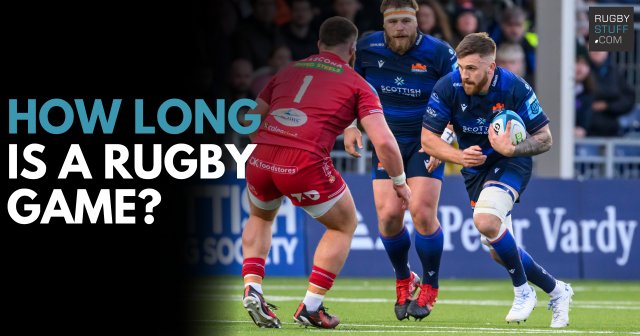
A standard rugby game lasts for 80 minutes, divided into two 40-minute halves, with a short break in between.
Ever wondered howlong is a rugby game? It’s a common question for newcomers to the sport. You might be used to other sports with different time structures, but rugby has its own pace.
The game’s duration is fairly consistent across most levels. This defined playtime provides a framework for all the action and strategy. So, understanding the time is key to enjoying the game fully.

How Long is a Rugby Game?
So, you’re curious about how long a rugby game lasts? It’s a great question, and the answer isn’t quite as simple as saying “exactly 90 minutes” or something similar. Rugby, unlike some other sports, has a few variations when it comes to game length. Let’s dive deep into the world of rugby timing and explore what makes each match tick.
The Standard Rugby Union Game
When people usually talk about rugby, they often think of Rugby Union, the 15-a-side game played at the professional and international level. This is the version you’re likely to see at big tournaments like the Rugby World Cup or the Six Nations. A standard Rugby Union match is typically 80 minutes long. But that’s not the whole story, there are other important elements to consider.
The Two Halves
A Rugby Union game is divided into two halves. Each half is 40 minutes long, separated by a half-time break. This break is usually about 10 to 15 minutes, giving the players a chance to rest, strategize, and, let’s be honest, catch their breath. So the core play time is 80 minutes, but the total time from start to finish will be longer because of that break.
Timekeeping in Rugby Union
Now, here’s where it gets a bit interesting. Rugby uses a unique system where the referee is the main timekeeper, not a clock on the wall or a scoreboard. When a player is injured, or when there’s a delay for something like a scrum or a lineout reset, the referee will stop the clock. It’s their responsibility to add that stopped time at the end of the half, in what we call stoppage time, or “injury time”. This means that halves can sometimes go for much longer than 40 minutes. A half could go for 43, 45 minutes, sometimes even longer, depending on the stoppages during that half.
This stoppage time element is important, because it maintains the fairness of the game and ensures that all playing time is correctly accounted for. Referees are trained to keep a very close eye on the time and will add on the exact amount of time the match was stopped.
Rugby League: A Different Timing Structure
Rugby League, another popular form of rugby, has slightly different rules, including game time. A standard Rugby League game is also 80 minutes, but the breakdown of play is a little different. Like Rugby Union, it’s split into two halves but the way in which the time is handled is different.
Two Halves of 40 Minutes, but a Clock System
A Rugby League match is also played in two halves of 40 minutes. However, unlike Rugby Union, Rugby League usually uses a running clock, and time only stops for injuries. When the referee blows for a scrum or a penalty, time doesn’t stop, this means you can sometimes get very fast halves where there aren’t many stoppages. You’ll find a clock either on the scoreboard or in the stadium which is counting down from 40 minutes to 0. This means it is a bit more straightforward to understand the remaining time in a Rugby League match. Although stoppage time is added for injuries, it is not generally added for other stoppages, as in Rugby Union.
Variations in Game Length
Beyond Rugby Union and Rugby League, there are other versions of rugby where game lengths may be shorter.
Rugby Sevens
Rugby Sevens is a fast-paced, seven-a-side version of the game. It’s popular at big events like the Olympics and the World Sevens Series. Because it’s faster and more intense, Rugby Sevens matches are much shorter. Here’s how it’s broken down:
- A regular Sevens game is 14 minutes long.
- It’s divided into two halves of 7 minutes each.
- There is a very short half time break, usually just 1-2 minutes.
You may also find games lasting 20 minutes (two 10-minute halves). These are sometimes used in the knockout stages of big tournaments. The pace of Sevens is so quick and exciting that a full 80-minute match would be incredibly tiring, which is why the shorter time is perfect for the sport.
Youth Rugby
When younger people are involved, the game time is shortened to suit their age. This is essential to ensure that they can get the most from the game. For example:
- Under 7’s and under 8’s might play matches of two 10 minutes halves.
- Under 10’s and under 11’s may play two halves of 15 minutes.
- By the time players reach Under 16’s the time is very close to a full senior match.
It is common for youth games to be shorter and to be played with slightly different laws to ensure the safety and enjoyment of young players.
Other Rugby Variations
There are many different forms of rugby played across the world, sometimes in local leagues or schools. These will likely have variations on the game length. For example:
- Some leagues use shortened times during their matches, perhaps two 30 minute halves.
- Some leagues use different timekeeping methods, such as stopping the clock more frequently.
If you are playing in a local or a specific rugby competition, it’s worth finding out the exact time-keeping rules that apply. It is important to note that generally, most rugby matches are in or around the 80-minute mark, with variations for different versions or youth versions of the game.
Understanding Injury Time in Detail
In rugby union, injury time is an essential part of the game. Because it ensures that teams aren’t punished for the necessary delays that take place during a match. This can be a point of confusion for new fans, so let’s explain it in some more detail.
What Counts as Stoppage Time?
Stoppage time covers a few different kinds of things that might cause a delay. These can include:
- Injuries: When a player is injured, the referee will stop the clock to allow them to receive medical attention and, if needed, to be carried off the pitch.
- Scrums and Lineouts: If the referee needs to reset a scrum or a lineout for any reason, the clock will be stopped while this is taking place.
- Time wasting: Sometimes a team might try to waste time, and the referee can stop the clock to add this on at the end of the half.
- Video referee checks: In many high-level rugby union matches, video replays are used to check important decisions. When this takes place, the referee will stop the match clock.
How does the referee keep track?
The referee is in charge of stopping the time and adding it on, they will do this in two ways:
- They have a watch which they use to measure the exact time lost for stoppages.
- They will also sometimes use assistants who are watching the game to assist them, for example the fourth official.
Why is Injury Time Important?
Injury time is really important to keep the game as fair as possible. Without it, teams might try to delay the game in order to keep a lead, or to slow down the pace. By adding on the time that is lost due to stoppages, it ensures that all the play time takes place. It also means that if a team has a large amount of time taken away due to stoppages, they still get a chance to play the full 40 minutes of a half.
Total Time of a Rugby Match
When we talk about the total time a game will take, we aren’t just talking about the time on the pitch. There are other timings to take into consideration too. For a Rugby Union game, the time will usually be around two hours in total. For Rugby League the game will probably be slightly shorter because there are generally fewer stoppages during the game.
Breakdown of a Full Rugby Union Match
Let’s break down what a full Rugby Union game might look like:
- First Half: 40 minutes of play + any stoppage time
- Half-Time Break: 10-15 minutes
- Second Half: 40 minutes of play + any stoppage time
So, a rugby match can take approximately an hour and a half to two hours from kick-off to the final whistle. Sometimes it can run over this time, if there have been a lot of stoppages during the match. It’s important to be aware of this, especially when planning to watch games.
Factors Affecting Total Match Time
There are many factors that can affect how long a game will run for, some of these may include:
- The number of injuries: If there are lots of injuries, this will add to the amount of time on the clock.
- The number of scrums: If there are many scrums in a match, there is likely to be more time lost to resetting them and the ball not being in play.
- The number of stoppages for penalties: The more that there is a stoppage in play, the more time will be added on at the end of the half.
Why Game Length Matters
Understanding game length is important for a few reasons. For players, it’s about managing their energy levels and fitness. Knowing how much time they need to perform at their best is crucial for their performance and fitness plans.
For Coaches and Strategists
Coaches and strategists use game time to make decisions about player changes and tactics. For example, if a team is behind in the final quarter of the match, they may make substitutions to try and change the game. Understanding time is crucial for their game planning.
For Spectators
For spectators, knowing the game length allows them to plan their day or evening around the match. It helps them to understand when the game is likely to finish so that they can make other arrangements. It also helps you to know how long you have left to get the hotdogs and snacks in before the final whistle.
For Broadcasting
Television broadcasters need to understand the game length to schedule programming. Because the game time can be unpredictable, they will usually schedule at least two hours of TV time to allow for the potential extra time. This means that they can have appropriate advertising and other content ready to broadcast when the game has finished.
In Conclusion: How Long is a Rugby Game?
The most common answer is that a Rugby game is 80 minutes long, made up of two 40-minute halves. But it’s important to remember that different versions of the game have different time lengths. A Rugby Union game with stoppage time is likely to take around 2 hours. A Rugby League match is also 80 minutes, and likely shorter overall. And Rugby Sevens is much faster, with 7- or 10-minute halves. Each version of the game offers a unique experience, with the different time formats being just one element that makes each one special. This comprehensive understanding of game length will allow you to enjoy and plan better for your next rugby match.
How long is the rugby game? [ rugby rules ]
Final Thoughts
A standard rugby game lasts 80 minutes, split into two 40-minute halves. There is typically a 10-15 minute halftime interval. This does not include stoppage time, which referees add.
The game clock stops for injuries or other significant delays. This extra time depends on the flow of play. So, “howlong is a rugby game” can be variable slightly depending on these factors.

