
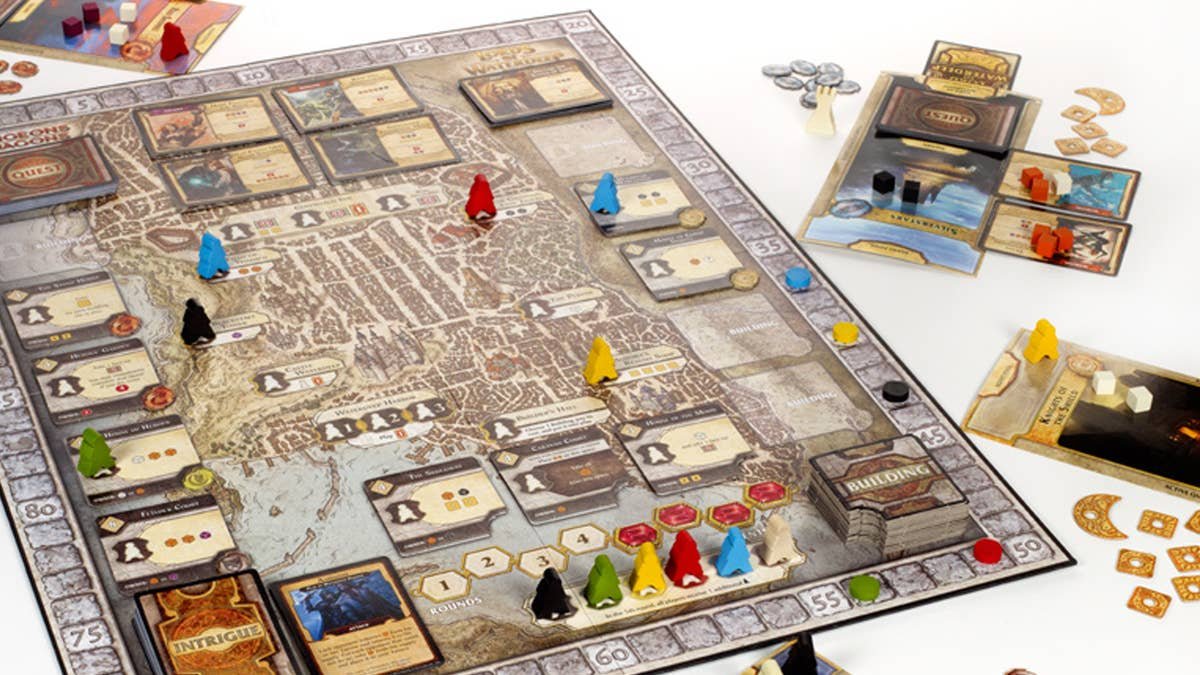
No, D&D is not a board game; it’s a tabletop role-playing game.
Many people wonder, is D&D a board game? It’s easy to see why. Both involve gathering around a table, often with dice, and following rules.
However, D&D differs significantly. Instead of moving pieces on a static board, players create their own characters and collaboratively tell a story through their actions.
The emphasis shifts from predefined pathways to imaginative problem solving.

Is D&D a Board Game? Exploring the World of Tabletop Role-Playing
The question of whether Dungeons & Dragons (D&D) qualifies as a board game is a common one, especially for those new to the world of tabletop games. While it shares some similarities with board games, D&D is actually a different type of game called a tabletop role-playing game, or TTRPG. To really understand the difference, let’s dive deep into what makes D&D unique and why it’s more than just moving pieces on a board.
The Core Components of D&D
At its heart, D&D is about storytelling and imagination. You and your friends get together, create characters, and embark on an adventure guided by a Dungeon Master (DM). Here are the key components that make up a D&D game:
- The Dungeon Master (DM): The DM is like the director of the game. They create the world, design the challenges, and play all the non-player characters (NPCs) that your characters meet along the way. Think of the DM as both storyteller and game referee.
- The Players: These are the folks who create and play the main characters in the game. Each player controls one hero, making decisions on what their character does and says.
- Character Sheets: These are detailed documents that outline each character’s abilities, skills, and backstory. They keep track of everything from how strong your character is to what languages they speak.
- Dice: D&D uses special dice with different numbers of sides (like a 20-sided die or a 6-sided die). These dice are rolled to see if your character succeeds in an action, like trying to jump over a pit or hitting an enemy with a sword.
- The Story: Unlike board games with pre-set rules and a clear winning condition, D&D is driven by a story that unfolds through your characters’ actions and the DM’s guidance. The narrative is often more important than winning or losing.
D&D vs. Traditional Board Games: Key Differences
While D&D might use dice, a shared play area (the table), and character tokens (sometimes), it diverges significantly from traditional board games in several ways.
Fixed Rules vs. Flexible Framework
Board games usually have very specific and unchanging rules. Players follow these rules to the letter. D&D, on the other hand, provides a framework of rules, but a lot of flexibility is left to the DM and the players. This flexibility allows for a more freeform and imaginative game. Think of it like this: a board game is like a coloring book with specific lines; D&D is like a blank canvas with a set of paints.
Player Agency and Storytelling
In most board games, your actions are limited to the choices the board and the rules allow. D&D places a much higher value on player agency—the ability of the players to make meaningful choices that impact the story. Your actions change the world around you. You can try almost anything you can think of (within the bounds of logic and the DM’s say). This creates a more personalized and engaging experience than a typical board game. For example, in a board game, you might be allowed to move 2 or 3 spaces and pick an action card, but in dnd you might get a choice of either picking a fight or running away, or even trying a persuasive approach with your skills.
Winning vs. Shared Story
Traditional board games are generally competitive, with a clear winner and loser at the end. In D&D, the focus is not on winning, but on working together as a group to overcome challenges and experience a story. There can be goals to complete, but generally, the group either succeeds together, or fails together. While there is character progression and goals, the journey and the shared experience are the main reward. The fun comes from the adventure and the collective story that unfolds rather than being the first to finish or have the highest point.
The Role of the Imagination
Board games primarily rely on the game pieces, board, and pre-written rules. D&D heavily relies on the players’ imaginations. The world around your character is not fully represented by a board, but is brought to life through the DM’s descriptions and the players’ shared imagination. Players must mentally construct the scenes, battles, and dialogues, which makes the whole game very immersive. This is very different from the set visuals present in most board games.
Is There Overlap Between Board Games and TTRPGs?
While D&D is not a board game, there are some similarities and areas of overlap:
Shared Physical Space
Both board games and TTRPGs, like D&D, are played in a shared physical space, usually around a table. This makes them both “tabletop” games. They often involve social interaction between players.
Use of Dice
Both board games and TTRPGs often use dice to add an element of randomness and uncertainty to the game. The use of dice in D&D helps determine if a character’s action succeeds or fails based on a probability system. However, many board games now utilize dice in unique and different ways.
Use of Tokens or Figures
While not always necessary, some D&D groups choose to use miniatures or tokens to represent their characters on a battle map. In this, they are similar to some board games that utilize similar tokens. However, in D&D, these are visual aids rather than core game components.
Strategy and Planning
Both board games and TTRPGs involve strategic thinking and planning, although the type of strategic thinking involved is different. In board games, players often use tactical moves on the board. In D&D, they use a mix of tactical moves in combat and strategic planning in terms of their character’s actions, dialogues, and overall direction in the narrative.
D&D’s Unique Elements: Why It’s More Than a Board Game
D&D transcends the definition of a traditional board game because of its emphasis on the following aspects:
Role-Playing and Character Development
The core of D&D lies in role-playing, which involves embodying your character and making choices as if you were them. Over the course of a campaign, your character grows, develops, and changes, just like characters in a novel or film. This aspect of player agency and freedom of choice is one of the key components that separates it from a standard board game.
Improvisation and Storytelling
D&D is about telling stories together. The DM and the players work collaboratively to craft a unique narrative. A lot of what occurs in a D&D session comes from improvisation and quick thinking. These elements of the experience would be missing from most traditional board games.
The Social Experience
D&D is a highly social game. Players sit at a table, laugh, strategize, and work together. This shared social experience is a large part of the appeal of playing D&D. The way the players interact with each other, the characters that they play, and the world in which their characters inhabit gives a unique sense of shared experience that is hard to replicate in other forms of entertainment.
Campaigns and Ongoing Stories
While some board games might have expansions, they are not usually designed for long-term storytelling. D&D adventures can stretch into entire campaigns that last months or even years, with characters and stories developing over time. This ongoing narrative is a big difference between the two types of games. In D&D, the story is often the primary element, while in a board game, it may or may not be a key element of the game.
The Spectrum of Tabletop Games
It’s helpful to think of board games and TTRPGs as existing on a spectrum rather than as two completely separate categories. Some games have elements of both. For example, some board games have a strong narrative element, while some TTRPGs may use more structured rules.
Hybrid Games
There are tabletop games that blend elements of board games and TTRPGs. These games might have a board, a defined winning condition, and characters with unique abilities, but also allow for player choice and narrative elements. This makes the spectrum between board games and TTRPGs a little blurry.
Games with a GM but with Board Game Elements
Some games have a game master (GM) but include many board game elements, such as a board, pre-set characters, and objective tokens. While they have a GM, and may include some narrative components, they still rely heavily on the board game elements.
TTRPGs with Structured Rules
Some TTRPGs may have more structured rules and a less flexible design than D&D. While they still promote player agency and storytelling, the set rule book might be more stringent, making the game more like a board game in some ways.
Examples to Clarify:
To further illustrate the differences, let’s look at some examples:
Board Game: Monopoly
- Fixed Rules: The rules are very specific and cannot be altered.
- Goal-Oriented: The goal is to bankrupt all other players.
- Limited Player Agency: Your choices are limited to buying properties, building houses, and rolling the dice.
- No Role-Playing: You are not embodying a character; you are a player trying to win.
D&D: A Typical Adventure
- Flexible Rules: The DM can adjust the rules and create new situations.
- Story-Driven: The focus is on the adventure, character development, and the story.
- High Player Agency: You decide what your character does and says, impacting the story.
- Role-Playing: You are embodying a character with their own motivations and choices.
Monopoly is a competitive game of property ownership, while a typical D&D adventure is a collaborative experience driven by an evolving narrative. While there may be objectives in D&D, and there may be a winner of Monopoly, they are entirely different experiences.
In closing, while D&D shares some surface-level similarities with board games, its focus on storytelling, role-playing, and flexible rules sets it apart as a unique and engaging form of entertainment called a tabletop role-playing game. The social element, the imaginative freedom, and the ongoing narrative make it a completely different experience than the structured and competitive nature of most board games. So, while you might play them both around a table, D&D exists in a category all its own.
Dungeons & Dragons: Adventure Begins – How-To-Play Trailer
Final Thoughts
Ultimately, D&D’s reliance on storytelling and role-playing sets it apart. It uses dice, maps, and miniatures. These elements are tools for cooperative narration, not rigid gameplay.
Therefore, the essential question, ‘is dnd a board game’ has a complex answer. It shares some traits of board games, but it emphasizes narrative and improvisation. D&D is more a role-playing experience than a typical board game.

