
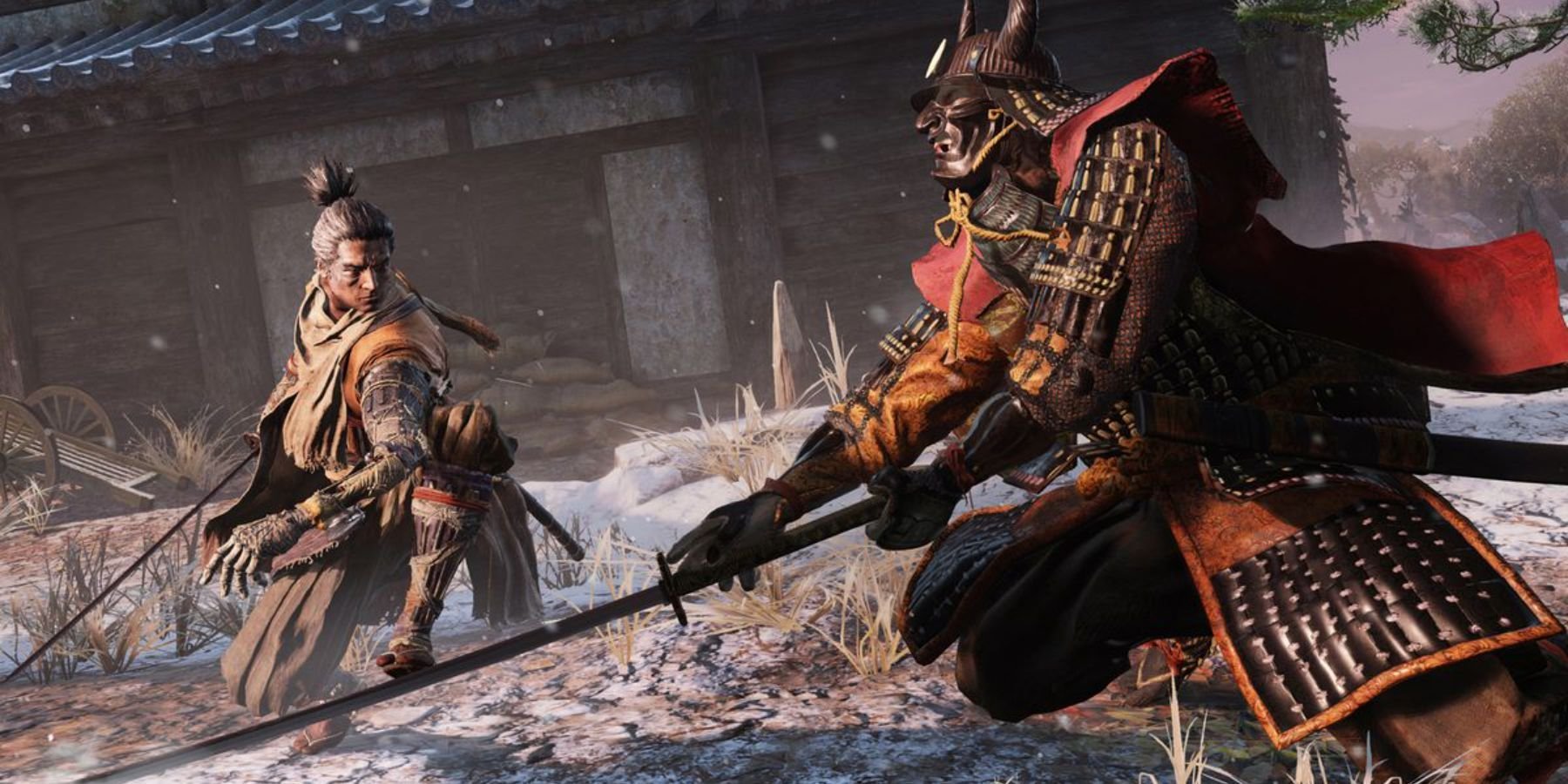
Sekiro is not a Souls game
, though it shares some mechanical similarities.
The debate rages on: is Sekiro a Souls game? Many argue yes, citing its punishing difficulty and deliberate combat. Others point to the significant departures in structure and mechanics, noting it’s a distinct experience. It’s a legitimate question that deserves a closer examination. We need to unpack the elements that often confuse the matter. The similarities can be deceiving, lets see why it is a different genre altogether.

Is Sekiro a Souls Game? Diving Deep into the Debate
The question of whether Sekiro: Shadows Die Twice fits into the “Souls-like” genre is a hot topic among gamers. It’s easy to see why. FromSoftware, the brilliant minds behind the Dark Souls series, also created Sekiro. Both share a dark fantasy setting, challenging gameplay, and a focus on precise combat. However, Sekiro also introduces many unique elements, making it a departure from the traditional Souls formula. Let’s explore these similarities and differences to truly determine if Sekiro earns its place among the Souls games.
The DNA of Souls: Shared Characteristics
At its core, Sekiro shares some fundamental traits with the Dark Souls series, Bloodborne, and Elden Ring. These shared characteristics often lead people to initially classify Sekiro as a Souls game. Let’s break down these commonalities:
High Difficulty and Punishment
Like all Souls games, Sekiro is known for its brutal difficulty. You’ll face tough enemies that can kill you with just a few hits. Mistakes are heavily punished, and you’ll likely die many, many times before you conquer a boss or even a particular area. This “die and retry” loop is a staple of the Souls experience. The satisfaction of finally beating a boss after struggling against it is a core appeal for both series. You must learn enemy patterns, perfect your timing, and use every tool at your disposal to survive. Both games challenge you to not just react, but to learn and adapt.
Exploration and World Design
FromSoftware is famous for crafting intricate, interconnected worlds. Sekiro continues this tradition with Ashina, a visually stunning feudal Japan setting. Just like in Dark Souls, you’ll find yourself exploring winding paths, hidden shortcuts, and interconnected areas. This world rewards curiosity, encouraging you to deviate from the main path and discover secrets, items, and hidden boss encounters. While the environments are vastly different (a medieval castle versus a gothic cathedral, for example) both deliver that same sense of discovery and wonder.
Intriguing Lore and Storytelling
While Sekiro tells its story more directly than Dark Souls, both games engage in a unique form of environmental storytelling. The world itself is a character, revealing its history and secrets through item descriptions, NPC interactions, and the very design of the environments. You need to piece together the narratives from various hints, allowing you to build a more detailed understanding of the world and characters. Both series leave a lot open to interpretation, encouraging discussion and speculation within the community. You have to work to uncover the lore and that makes it more rewarding when you finally do.
Limited Healing and Resources
Both Sekiro and the Souls games limit your healing resources. You often have a finite number of healing items or abilities you can use, creating a sense of tension and risk. You cannot simply heal through combat, so you are forced to improve your skills, perfect your timing, and master the mechanics of each fight. This limitation adds to the challenge and heightens the sense of accomplishment when you manage to succeed. In both games, you have to plan your approach to each encounter, making sure that you are taking the minimum amount of damage.
Sekiro’s Deviations: Where It Forges Its Own Path
Despite the shared DNA, Sekiro significantly deviates from the traditional Souls formula in several key areas. These differences are what fuel the debate about its classification and they make Sekiro a unique and distinct experience.
Focus on Posture and Deflection
The most significant change in Sekiro is the combat system. Instead of focusing on dodging and rolling, Sekiro prioritizes parrying and deflecting enemy attacks. By timing your blocks perfectly, you can break an enemy’s posture, opening them up for a powerful killing blow. This emphasis on rhythmic combat and deflections is a fundamental difference from the more reactionary combat of Souls games. It forces you to be aggressive and stay in the enemy’s face, while also carefully observing their moves and timing your deflects.
Here’s a simple comparison table illustrating this difference:
| Feature | Souls Games (General) | Sekiro |
|---|---|---|
| Primary Combat Focus | Dodging and Rolling | Deflecting and Posture |
| Stamina Management | Crucial for Attacking, Blocking and Dodging | No Stamina Meter; Focus on Posture |
| Healing | Estus Flasks/Multiple Healing Options | Limited Healing Gourds; Limited Ressurections |
The Absence of Character Customization and Builds
One of the core elements of the Souls series is its deep character customization and diverse build options. You can choose your stats, weapon, armor, and magic to create a character that fits your playstyle. Sekiro, however, features a fixed protagonist, the Wolf, with pre-determined stats. You cannot alter the core attributes of the Wolf. Your upgrades are limited to specific skills, prosthetic tools, and combat arts. While you can still adapt your gameplay, it’s within the boundaries of the Wolf’s set abilities. The freedom to experiment with different builds is a hallmark of Souls games that is not present in Sekiro.
A More Linear Narrative
Souls games are known for their cryptic storytelling and player-driven exploration. The narrative is often hidden behind layers of lore and scattered throughout the world. Sekiro, on the other hand, provides a more direct and focused narrative. You follow the story of the Wolf, his young lord, and their struggle against a powerful force. While environmental storytelling still plays a role, the overall narrative is more straightforward than what you find in Souls games. The game has a clear path, with less options and flexibility for the player to deviate from the overall storyline.
The Resurrect Mechanic
Sekiro introduces a unique resurrection mechanic, which allows you to come back to life after dying a certain amount of times. This mechanic adds another layer of strategy to the combat. It also makes mistakes less punishing, since you get a second chance to continue fighting. However, there are limitations on how often you can resurrect. It’s a safety net, but it also doesn’t necessarily make the game any easier, it changes how you approach encounters. Souls games rely on player’s skill rather than a second chance.
Verticality and Mobility
Sekiro greatly emphasizes verticality and mobility compared to Souls games. You are able to grapple hook onto rooftops, ledges and other objects in the environment. This allows you to traverse the game world with more freedom and speed. This element allows for more fluid combat encounters, letting you quickly move to a better position to strike. While Souls games provide some verticality, this freedom of movement is not as expansive and integral to their game play.
Genre Bending: Sekiro’s Unique Identity
So, is Sekiro a Souls game? The answer isn’t a simple yes or no. It’s more accurate to say that Sekiro borrows heavily from the Souls formula but also crafts its own unique identity. It’s a game that stands on its own, with its own mechanics, challenges, and narrative. Sekiro could be described as a “Souls-like” game or an “action-adventure” title, as it has elements of each, but it doesn’t neatly fit into a predefined box.
More than Just “Souls-like”
The term “Souls-like” has been used to describe a wide range of games that borrow elements from the Souls series, such as challenging combat and a dark fantasy setting. However, Sekiro transcends this label. The focus on posture, deflection, and vertical mobility creates a very different experience. It’s a game that demands you to unlearn some of the skills you’ve acquired from other Souls titles. Sekiro encourages aggressive, rhythmic play instead of relying on more cautious, defensive strategies.
A Genre of Its Own
Ultimately, Sekiro is a testament to FromSoftware’s ability to innovate. The game takes the core DNA of its previous games and blends it with new ideas, creating a truly unique experience. Instead of labeling Sekiro as a “Souls game” or a “Souls-like” game, it should be considered a brilliant piece of video game art that successfully carves out its own identity. It challenges you to master a specific fighting style rather than adapt to various builds. It is more story-focused and has a clear path. These changes put Sekiro into its own unique space, moving beyond the traditional “souls” formula.
Whether you’re a fan of Dark Souls or not, Sekiro is a game worth playing. It offers a challenging and rewarding experience that is both familiar and completely different from other FromSoftware titles. You might find you favor one over the other, but appreciating the differences is vital for understanding their unique design.
In summary, while Sekiro shares a certain lineage with the Souls series due to its high difficulty, intricate world design, and cryptic lore, it is not a “Souls game” in the traditional sense. The unique posture system, fixed protagonist, focus on verticality, and more linear storytelling set it apart as a unique experience. Sekiro is better described as a masterclass of action-adventure design with its own distinctive gameplay identity.
Is Sekiro a Good First Souls-Like Game?
Final Thoughts
Sekiro shares core elements with Souls games, like challenging combat and methodical exploration. However, its focus on posture breaking and deflection sets it apart, demanding a different playstyle. Sekiro’s narrative and its single protagonist also distinguish it.
The absence of traditional RPG elements like character builds and varied equipment further differentiates it from the Souls formula. Despite the shared DNA, its unique mechanics make it a distinct experience. Therefore, is Sekiro a Souls game? It’s more accurate to say it is Souls-like rather than a direct Souls game.

