
Main idea games
help students identify the central point of a text by engaging them in fun, interactive activities that encourage critical thinking and comprehension.
Want to make understanding the most important point of a story easier and more enjoyable? Then, explore the world of main idea games!
These games make learning to find the main idea fun. They move away from traditional, sometimes boring, lessons.
With various formats, main idea games encourage students to actively engage with the material. They develop crucial reading comprehension skills in an exciting way.

Main Idea Games: Unlocking Comprehension Through Play
Main idea games are fantastic tools for helping students grasp a fundamental reading skill. They make learning fun and engaging. They also move away from rote memorization.
Effective games can transform complex concepts. They change them into easily digestible pieces. This helps students of all ages improve their comprehension skills.
Why Use Main Idea Games?
Games tap into intrinsic motivation. This makes learning more enjoyable and effective. Students are more likely to remember information when they are actively involved.
Main idea games encourage active participation. They help students develop critical thinking skills. Games provide an engaging alternative to traditional worksheets.
Benefits of Playing Main Idea Games
Main idea games offer numerous benefits for students. They support reading comprehension. They also boost critical thinking skills.
Improved Reading Comprehension: Games force players to identify the central point of a text to succeed. This strengthens their ability to understand and retain information.
Enhanced Critical Thinking: Analyzing text and formulating a main idea requires critical thinking. Games promote this vital skill.
Increased Engagement: Games add an element of fun and competition. This keeps students engaged and motivated to learn.
Vocabulary Expansion: Many main idea games incorporate vocabulary building exercises. They help students understand new words in context.
Collaborative Learning: Some games encourage teamwork and communication. These skills are valuable in all areas of life.
Types of Main Idea Games
There are many variations of main idea games. These cater to different learning styles and age groups. From simple card games to interactive digital platforms.
Let’s look at some popular types. We will explore how they can be used in educational settings.
Card-Based Main Idea Games
Card games are a simple and accessible way to teach main idea. These games typically involve matching main idea statements to supporting details. These are great for group work.
Main Idea Match: Students match main idea cards with corresponding detail cards. This reinforces the relationship between the two.
Summary Challenge: Players receive a text and must write a concise summary on a card. They then compare their summaries and discuss the main idea.
Headlines Game: Students create headlines that accurately reflect the main idea of a given text. This exercises their ability to synthesize information.
Board Games Focused on Main Idea
Board games bring a structured, engaging element to learning. They often involve completing tasks related to identifying main ideas. These games foster strategy and teamwork.
Main Idea Maze: Players navigate a maze by answering questions about the main idea of different passages. Correct answers allow them to advance.
Summary Scramble: Students roll dice and move around the board, completing summary writing prompts at each space. The first to complete a summary wins.
Detective Deduction: Players become detectives who must solve a case by piecing together clues and identifying the main idea.
Digital Main Idea Games
Digital games offer interactive and adaptable learning experiences. They often provide immediate feedback and track progress. These are perfect for individual or classroom use.
Interactive Quizzes: Online quizzes that test comprehension of the main idea in various texts. These are easily accessible and provide instant results.
Drag-and-Drop Activities: Students drag and drop sentences to create a summary of the main idea. These interactive tasks are very engaging.
Video Games with Comprehension Challenges: Games incorporate reading comprehension challenges into the gameplay. This makes learning a fun adventure.
Creative Main Idea Activities
There are creative activities that turn the abstract into a fun exercise. These go beyond the traditional game format. These activities often engage multiple learning styles.
Main Idea Skits: Students act out scenes that represent the main idea of a text. This promotes understanding through creative expression.
News Report Creation: Learners create a news report summarizing the main points of a given article. They practice journalism skills and comprehension.
Drawing the Main Idea: Students create visual representations of the main idea through drawings or diagrams. This caters to visual learners.
Creating Your Own Main Idea Games
Designing your own main idea games can be a rewarding experience. You can customize the games to fit your students’ specific needs. This will help to reinforce learning.
Identify the Target Skill: Clearly define the main idea skill you want to teach. What should students be able to do after playing the game?
Choose a Theme: Select an engaging theme that appeals to your students. This can be anything from superheroes to historical events.
Develop Game Mechanics: Design game rules that reinforce the target skill. Ensure the rules are clear and easy to understand.
Incorporate Different Text Types: Use a variety of texts, such as stories, articles, and poems. This helps students apply the main idea skill across different genres.
Provide Feedback: Include mechanisms for providing feedback to students. This helps them learn from their mistakes and improve their understanding.
Adapting Games for Different Age Groups
Main idea games can be adapted for different age groups. Modify complexity and content. This will make them suitable for younger and older students.
Elementary School Students
For younger learners, focus on simple texts and visual aids. Games should be short and easy to understand. This helps keep them focused and engaged.
Simplified Texts: Use shorter, simpler passages with clear main ideas. This makes it easier for young students to grasp the central point.
Visual Aids: Incorporate pictures, diagrams, and graphic organizers. Visuals enhance understanding and make the game more appealing.
Hands-on Activities: Use hands-on activities, like matching games and picture sorts. These activities are more engaging and concrete.
Middle School Students
Middle school students can handle more complex texts. Introduce games that require critical thinking and analysis. This will challenge and engage this age group.
Complex Texts: Use longer, more challenging passages with less obvious main ideas. This encourages critical reading and analysis.
Group Discussions: Incorporate group discussions and debates. This allows students to share their perspectives and learn from each other.
Writing Activities: Include writing activities, such as summarizing and outlining. These activities reinforce comprehension and writing skills.
High School Students
High school students can engage with sophisticated literary works and analytical tasks. Focus on deeper understanding and critical evaluation. This prepares them for college-level work.
Advanced Texts: Use complex literary works, academic articles, and persuasive essays. These help students develop advanced comprehension skills.
Critical Analysis: Encourage critical analysis of the author’s purpose, tone, and style. This fosters deeper understanding and critical thinking.
Research-Based Activities: Include research-based activities, such as analyzing primary sources. This prepares students for college-level research.
Integrating Main Idea Games into the Classroom
Integrating main idea games into the classroom can be seamless. This requires planning and thoughtful implementation. This will enhance the learning experience.
Scheduled Game Time: Dedicate specific time slots for main idea games. This ensures games are a regular part of the curriculum.
Learning Centers: Set up learning centers with different main idea games. This allows students to choose games that interest them.
Classroom Competitions: Organize classroom competitions using main idea games. This adds an element of excitement and motivation.
Examples of Effective Main Idea Games
There are specific games that stand out for their effectiveness. These games have proven to enhance students’ comprehension of main ideas. They are also well-designed.
“I Have, Who Has” Main Idea Edition: This is a card game where students ask and answer questions about main ideas. It promotes active listening and quick thinking.
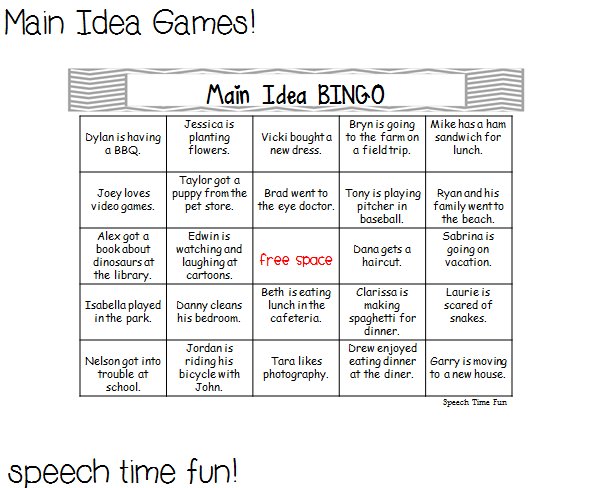
“Main Idea Bingo”: Students mark off squares on their bingo cards when they identify the main idea of a passage. It makes identifying main ideas fun and competitive.
“Summarization Station”: A learning center where students read passages and write summaries. It helps them practice summarizing skills.
Assessing Learning Through Main Idea Games
Assessments can be integrated into main idea games. This provides valuable insights into student learning. It also helps monitor progress.
Observation: Observe students as they play games. Note their strategies and challenges.
Game Scores: Track game scores and completion rates. These metrics provide objective data on student performance.
Student Reflections: Ask students to reflect on their learning experiences. This encourages metacognition and self-assessment.
Tools and Resources for Creating Main Idea Games
There are numerous tools and resources available for educators. These resources help with creating engaging main idea games. They also make the process more efficient.
Online Game Makers: Use online game makers to create interactive digital games. These platforms offer templates and customization options.
Printable Templates: Download printable templates for card games and board games. These templates save time and provide a starting point for game design.
Educational Websites: Explore educational websites for pre-made main idea games and activities. These resources offer ready-to-use materials for the classroom.
Troubleshooting Common Challenges
Sometimes, students face challenges with main idea games. Knowing how to address these issues is crucial. This will ensure effective learning.
Difficulty Identifying Main Ideas: Provide additional support and scaffolding for students struggling with main idea identification. Break down the text into smaller chunks.
Lack of Engagement: Modify the game or theme to better engage students who are losing interest. Offer choices and customization options.
Technical Issues: Provide technical support and alternative activities for students facing technical difficulties. Ensure all students have access to the necessary resources.
The Future of Main Idea Games
Main idea games will continue to evolve. They will become more interactive and personalized. They will embrace new technologies.
Personalized Learning Paths: Games will adapt to individual student needs and learning styles. AI-powered games offer customized challenges and feedback.
Augmented Reality Integration: AR technology will create immersive and engaging learning experiences. Students can interact with virtual texts and scenarios.
Gamification of Curriculum: The entire curriculum will be gamified. Learning becomes an adventure with points, badges, and leaderboards.
Main Idea | English For Kids | Mind Blooming
Final Thoughts
In conclusion, main idea games are a fantastic way to build critical reading comprehension. These engaging activities help students identify the central point of a text.
They encourage active participation and make learning fun. Students must practice identifying the main idea.
Therefore, incorporate main idea games into your teaching repertoire to foster stronger reading skills.

