
Mind games in Scholar’s Mate involve calculated sacrifices and aggressive pawn movements to rapidly checkmate the opponent’s king.
Ever felt like a chess game was more than just moving pieces? What if the opening itself contained hidden traps, subtle psychological battles? That’s where we delve into the fascinating, sometimes controversial world of mind games scholars mate.
This seemingly simple checkmate can become a powerful tool for both beginners and experienced players, not just for its quick win potential, but for its strategic implications and the psychological impact it has on your opponent.

Mind Games: Scholar’s Mate
Scholar’s Mate is a well-known checkmating pattern in chess. It’s infamous for ending games very quickly.
It’s often used (or attempted) by beginners. It showcases an early, direct attack on the weakest point in Black’s initial position: the f7-square.
Understanding the Scholar’s Mate Pattern
The Scholar’s Mate involves four moves. White aims to checkmate the Black king.
The checkmate is delivered on f7. It uses the Queen and Bishop in tandem.
The Four Moves
The basic moves are always the same. Deviations are possible, but rare among novices.
- White’s Initial Move: e4 (King’s Pawn opening)
- Black’s Response: Usually e5 (mirroring White’s move).
- White’s Development: Qh5 (Queen moves to h5, attacking f7)
- Black’s Defense (Often Weak): Many possible defenses, often ineffective.
- White’s Final Move: Bc4 (Bishop to c4, further targeting f7 and creating the checkmate threat)
- The Checkmate: Qxf7# (Queen captures on f7, checkmating the Black King).
Why f7 is Vulnerable
The f7 square is only defended by the King. This makes it the weakest point early in the game.
Other pawns are usually defended by at least one other piece. f7 relies solely on the King’s protection.
Psychological Warfare and the Scholar’s Mate
The Scholar’s Mate, beyond its chess mechanics, can be considered a form of psychological warfare. It relies on the opponent’s lack of experience or knowledge.
It aims to exploit a perceived weakness. This creates a sense of urgency and potential panic.
Successfully executing it, especially against a slightly stronger opponent, can be a major confidence boost. Failing to defend against it can be demoralizing.
Defending Against Scholar’s Mate
There are numerous ways to defend. These involve developing pieces and controlling the center.
Prevention is always better than cure. Develop your pieces early!
Common Defenses
Several defenses are popular. Each aims to neutralize the threat to f7.
- G6: Blocks the Queen’s attack.
- Nf6: Develops the Knight and defends f7.
- Qe7: Defends f7 and develops the Queen.
- d6: Supports the e5 pawn and opens lines for development.
The Importance of Piece Development
Good chess play emphasizes rapid development. Control the center of the board.
The Scholar’s Mate often fails because the attacker neglects this principle. Focusing solely on the attack leaves them vulnerable.
Counter-Attacking After Defending
Once the attack is defended, counter-attack. Punish White’s premature aggression.
White has often weakened their position. Exploit this weakness!
Common Counter-Attacks
A good counter-attack can turn the tables. White will be put on the defensive.
- Exploit White’s Weaknesses: White’s early Queen move can leave the Kingside undeveloped.
- Central Control: Seize control of the center of the board. This limits White’s options.
- Develop Pieces Quickly: Outpace White in development to create a stronger position.
Scholar’s Mate in Different Chess Variants
The core idea can be adapted. It appears in various chess forms.
The principles of targeting undefended squares remain constant. However, the specific moves differ.
Chess960 (Fischer Random Chess)
The starting position is randomized in Chess960. The Scholar’s Mate is less common.
The altered board layout means f7 might be defended. Or White’s Queen might not have access to h5.
Bughouse Chess
Bughouse is a fast-paced variant with two boards. The Scholar’s Mate is seen, but less often.
The quick pace and piece drops encourage more immediate attacks. Other tactics become more prevalent.
Why Scholar’s Mate Isn’t a Good Long-Term Strategy
While tempting for beginners, it has drawbacks. It’s not a reliable way to win.
Stronger players can easily defend against it. The attack can leave White’s position weakened.
Development Disadvantages
Moving the Queen early is generally discouraged. It can hinder development.
The Queen becomes a target. Opponents gain tempi by attacking it.
Positional Weaknesses
The attack can leave holes in White’s pawn structure. These weaknesses can be exploited later.
A solid defense can leave White with a strategically inferior position. Black gains an advantage.
The Educational Value of Scholar’s Mate
Despite its limitations, it has value. It can teach basic chess concepts.
It highlights the importance of piece development. It also shows the vulnerability of undefended squares.
Understanding Checkmate
It’s a simple example of a checkmating pattern. This is a fundamental concept in chess.
New players learn about attacking the King. They also learn about defending against threats.
Tactical Awareness
It helps develop tactical vision. Players learn to spot weaknesses and create attacking opportunities.
They also become more aware of potential dangers to their own King. This builds pattern recognition.
The Psychology of Winning with Scholar’s Mate
For beginners, it can be exhilarating. It’s a quick, decisive victory.
It boosts confidence. However, relying on it can hinder improvement.
Building Confidence
A successful Scholar’s Mate can be a significant confidence booster. It teaches a basic win strategy.
It’s a starting point. Players can then learn more complex strategies.
Avoiding Over-Reliance
It’s essential to move beyond this tactic. Over-reliance limits chess development.
Players need to learn more sophisticated openings and strategies. They must develop their tactical and strategic understanding.
Famous Games and Scholar’s Mate
Top-level games rarely see this mate. Grandmasters are too skilled to fall for it.
However, it occasionally appears in blitz games. It’s a result of time pressure.
Examples in Blitz Chess
Blitz games are fast-paced. Mistakes can happen quickly.
A momentary lapse in concentration can lead to a quick checkmate. Even strong players are not immune.
Variations and Traps in Scholar’s Mate
There are many variations. These involve slight changes to the initial moves.
These can lead to traps for the unwary. Knowledge of these traps is beneficial.
The Blackburne Shilling Gambit
This is a related opening. It aims for a quick attack.
It is similar to the Scholar’s Mate. However, it involves sacrificing a pawn.
Avoiding Traps
Be aware of common traps. This will prevent falling victim to them.
Develop pieces soundly. Control the center.
The Role of Online Chess Platforms
Online platforms make learning easier. Practice against other players.
These platforms provide analysis tools. These help identify mistakes and improve.
Learning Resources
Numerous resources are available online. These include videos, articles, and interactive lessons.
Use these resources to improve. Expand your chess knowledge!
Practicing Online
Play games against other players. This helps refine skills.
Analyze your games. Learn from your mistakes.
Beyond Scholar’s Mate: Developing a Stronger Game
Chess is more than just quick checkmates. It requires strategic and tactical understanding.
Develop your skills in all areas of the game. This is key to becoming a stronger player.
Opening Principles
Learn basic opening principles. Control the center, develop pieces, and castle.
Avoid moving the Queen too early. Don’t block your own pieces.
Middlegame Strategy
Understand middlegame strategy. Create plans and execute them.
Develop positional awareness. Learn to identify weaknesses and exploit them.
Endgame Technique
Study endgame technique. Learn how to convert advantages into wins.
Master basic checkmates. Understand pawn endgames.
Common Mistakes Players Make Attempting Scholar’s Mate
Many players make mistakes when attempting this. These mistakes are exploitable.
Recognize these mistakes. Turn the tables on your opponent.
Overextending the Queen
The Queen becomes vulnerable. Defend her.
Develop other pieces to support the attack. Don’t rely solely on the Queen.
Neglecting Development
The attack falters. White is left with an undeveloped position.
Develop pieces rapidly. Gain control of the center.
Adapting to Opponent’s Playstyle After Attempting Scholar’s Mate
Sometimes, the attack fails. Adapt to the opponent’s playstyle.
Adjust your strategy. Play solid chess.
Maintaining a Solid Position
Consolidate your position. Avoid unnecessary risks.
Develop pieces to support each other. Create a strong pawn structure.
Transitioning to a Middlegame Strategy
Develop a middlegame plan. Focus on controlling key squares.
Exploit weaknesses in your opponent’s position. Don’t force the attack if it’s not there.
The Significance of Tempo in Scholar’s Mate
Tempo is crucial. It’s the speed of development.
Losing tempi can be detrimental. It allows the opponent to seize the initiative.
Gaining Tempo
Forcing the opponent to move their pieces. This gives White an advantage.
Exploiting weaknesses. Create threats that force a response.
Losing Tempo
Moving the same piece multiple times. Wastes valuable time.
Allowing the opponent to develop freely. This gives Black an advantage.
Refining Opening Repertoire Beyond Scholar’s Mate
Expand your opening repertoire. Learn different openings.
This allows for more flexible and strategic play. Avoid becoming predictable.
Studying Different Openings
Learn the King’s Gambit. Explore the Italian Game.
Master the Ruy Lopez. These openings are strategically rich.
Understanding Opening Principles
Develop pieces quickly. Control the center.
Castle early. These are the foundations of sound opening play.
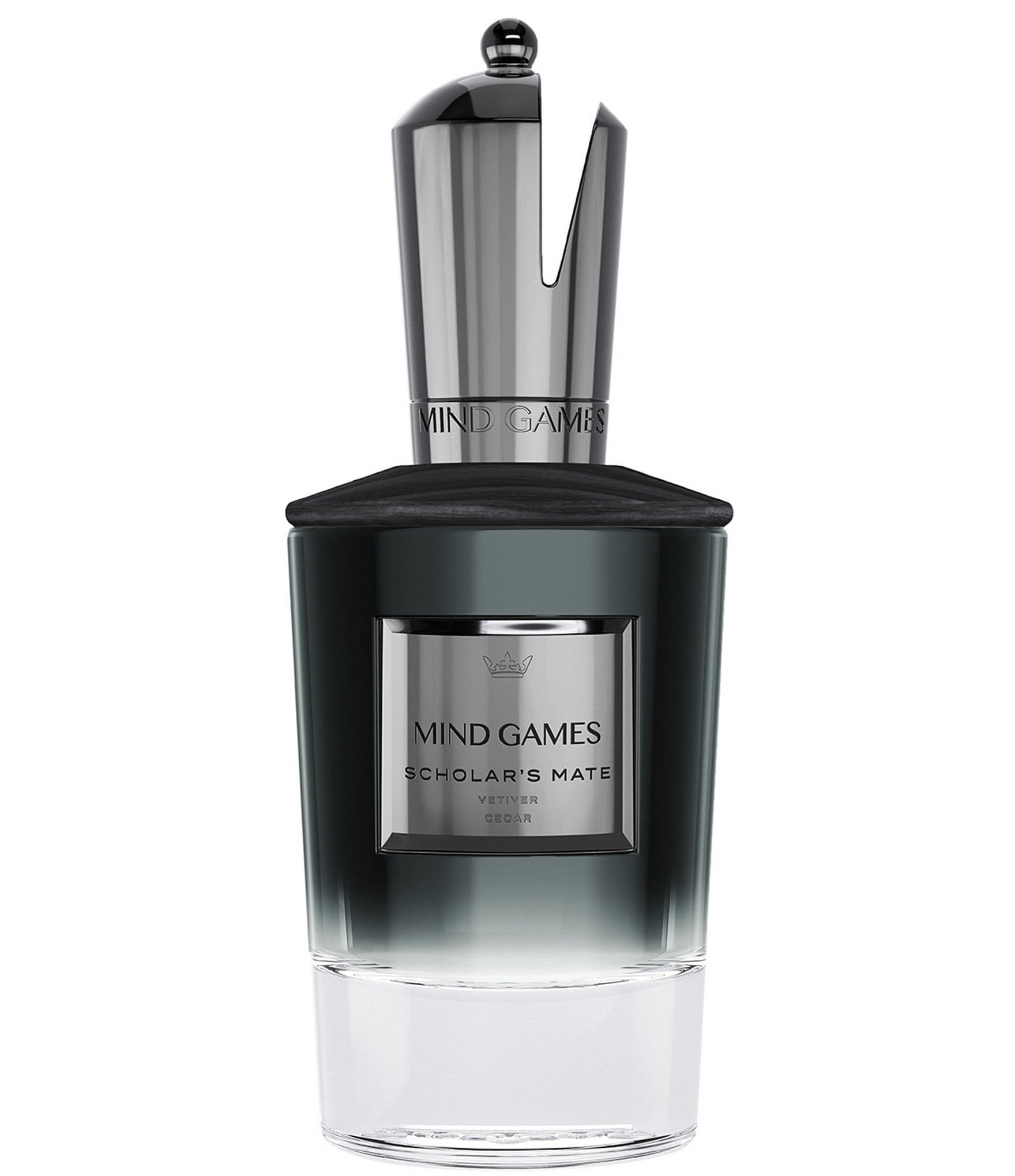
MIND GAMES Fragrance: Scholar's Mate Deep Dive
Final Thoughts
Essentially, chess hinges on strategic thinking. Players must anticipate moves and counter-moves. Success relies on deception and calculated risks.
Chess demands analytical skill. It is a battle of wits and foresight. Practice is a must for improvement.
In conclusion, chess is more than a game. It’s about strategy, calculation, and psychological play. These are the mind games scholars mate exemplify.

