
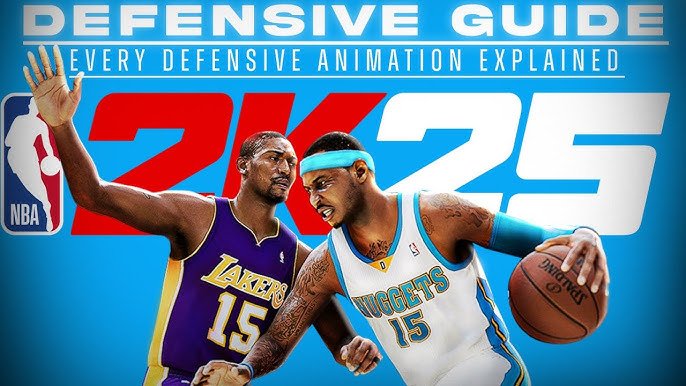
‘Effective NBA 2K25 defensive strategy involves understanding player tendencies, utilizing the right defensive settings, and consistently switching between on-ball and off-ball defense.’
Frustrated by opponents scoring at will in NBA 2K25? Many players struggle with defense, often feeling like they are chasing shadows. Improving your NBA 2K25 defensive strategy requires more than just pressing buttons, and needs good understanding of the game mechanics.
This guide provides crucial tips for locking down your opponents, whether they are AI or actual players. This article explains core concepts that will help you improve your defensive game, by focusing on both individual player control and the system settings in-game.

NBA 2K25 Defensive Strategy: Your Guide to Locking Down Opponents
Okay, so you’re ready to take your NBA 2K25 game to the next level? Offense is fun, sure, but a truly great team, a truly dominant player, builds a fortress on defense. It’s not just about stealing the ball; it’s about shutting down plays, forcing bad shots, and making your opponent feel like they’re playing uphill. This isn’t just about button-mashing; it’s about understanding the game, reading your opponent, and setting up smart defensive strategies. This guide will break down everything you need to know to become a defensive force in NBA 2K25. We’ll talk about everything from individual defensive skills to complex team strategies. Ready to get started? Let’s dive in.
Understanding Defensive Fundamentals
Before we get into the fancy stuff, let’s make sure we’ve got the basics down. Think of these as the building blocks of your defense. If you don’t have these solid, everything else will be harder.
Stance is Key
First, the stance. It’s not about standing straight up like a soldier. You need to get low, with your feet shoulder-width apart. This athletic stance allows you to move quickly in any direction. Think of a basketball player guarding someone – their knees are bent, and they are ready to pounce. This low stance helps you change directions easily, react to your opponent’s moves, and stay in front of them. If you stand straight, you’re an easy target to blow right past, and it makes you slow to react.
Staying in Front
Keeping your body between the ball handler and the basket is very important. This is called “staying in front.” You want to force them to go where you want them to go, usually towards the sidelines or help defenders, not down the middle of the lane for an easy layup. Avoid reaching – it’s often a foul and just gives the offensive player an easy opening. Instead, move your feet. Use the left stick to mirror your opponent’s movements. The better you move your feet, the harder it will be for the offensive player to find an opening to drive or shoot. It’s like dancing, but in a defensive way!
Hands Up
Always keep one or both of your hands up. This simple thing can make a big difference. A hand in the face can disturb a shot, even if you don’t block it. It can force a slightly altered shot, or force a pass. Having your hands active is another layer of defense. Don’t just stand there, use your arms! Don’t reach though, just keep your hands active and in front of the offensive player. You can quickly move them to stop a pass or block a shot, but you need them up to be ready for anything.
Controlling the Paint
The paint is the area under the basket – where most layups and dunks happen. Protecting this area is critical. You need to have a strong presence in the paint, making it hard for the other team to score easy points. If a player does get into the paint, it’s your job as a help defender to show yourself. This will make the offensive player change direction, and will also allow your teammate to recover and regain position. Always know where your teammates are so you can offer help.
Individual Defense: Your Personal Arsenal
Now, let’s look at some of the things you can do on an individual level to improve your defense. These are your personal tools, so use them wisely.
Stealing the Ball
Stealing the ball can be risky, but also very rewarding. If you time it right, you can get an easy breakaway. But if you time it wrong, it’s an easy path to the basket for your opponent. Use the steal button (usually square on PlayStation or X on Xbox) when you think you can get a clean poke at the ball, but be careful not to overuse it. You should focus on reading the offense and anticipating moves. A good steal is about timing and understanding where the offensive player will be moving the ball, not randomly hitting a button.
Don’t spam: Mashing the steal button is a recipe for disaster.
Time it right: Try to steal when the ball is loose or when the player is dribbling.
Target weak dribblers: Some players have a weak handle. Watch for these guys.
Blocking Shots
Blocking shots is a crowd-pleaser, and it can change the momentum of a game. Jumping at the right time to block a shot can get in the mind of your opponent, making them more hesitant the next time they try to score. Like stealing though, it is important to use the block button at the right time and not overuse it. Use the block button (usually triangle on PlayStation or Y on Xbox) when the player is going up for a shot. Timing is key!
Don’t jump too early: You’ll just be out of position, and they’ll score easily.
Jump straight up: Try to go straight up to avoid fouling.
Learn player tendencies: Some players have predictable shooting motions. Use it to your advantage.
Contesting Shots
Even if you don’t block the shot, making it harder for them to shoot is important. This is called contesting a shot. Use the right stick to put your hands up when they shoot. If you’re close enough, it will show that the shot is contested. It might make them miss or pass the ball instead. Getting a good contest on every shot is an important part of defense.
Use the right stick: Move the stick towards the shooter to contest.
Stay in front: Remember, your low stance helps you contest quicker.
Don’t foul: Avoid jumping into the shooter, or you’ll give them free throws.
Using Defensive Badges
NBA 2K25 has badges, and they can help you improve your defensive game. Badges are like special powers that make you better at certain things. When you put them together, they can dramatically improve a specific skill. Think about what kind of defense you want to play, and pick the right badges for your game. Here are a few examples of good defensive badges:
Clamps: This badge helps you stay in front of your man.
Intimidator: This makes shooters miss more often.
Interceptor: Makes it easier to steal passes.
Rebound Chaser: Helps you get rebounds.
Rim Protector: Helps you block shots and defend the paint.
Team Defense: Working Together
Defense is not just about what you do as an individual; it’s about playing together as a team. Think of it as a dance – you and your teammates move together to stop the other team.
Help Defense
Help defense is when you leave your man to help a teammate. If someone is about to score, you might switch to defend their man so your teammate can recover, or when you see an opponent beat their defender, you can leave your man to take a defensive stance in front of the player attacking. This works really well if you understand where your teammate is, and that they have your back.
Communicate: Know when and where to help.
Don’t over-help: You don’t want to leave your own man wide open.
Rotate: When you help, the others need to rotate to cover the open man.
Double Teaming
Double teaming is when two players defend one offensive player. This can force turnovers, but also leaves one player open. It should be used sparingly and strategically. Double teaming should only occur when it is advantageous to do so. If the player is a great scorer, you can double team them to prevent them from scoring. The key to double teaming is to ensure that you make it as hard as possible for the offensive player, and force them to turn the ball over, or throw up a tough shot. When they pass the ball, it is important to get back into your original defensive position quickly.
Use it sparingly: Don’t double team every possession.
Target key players: Use it on the opposing team’s best scorer.
Be ready to rotate: When the double team is done, make sure you’re ready to rotate to the open player.
Defensive Settings
NBA 2K25 gives you options to adjust your team’s defense. You can change things like how aggressive you want your team to be, how often they switch, and if you want to double team or not. Understanding these settings and knowing how to use them can greatly improve your team defense. Here are a few important settings:
On-Ball Pressure: How close you guard the ball handler.
Off-Ball Pressure: How close you guard players without the ball.
Help Defense: How often your teammates help on defense.
Switching: Whether to switch players when a screen occurs.
Double Teams: How often to double team the ball handler.
Advanced Defensive Strategies
Ready to go even further? Here are a few advanced defensive strategies that can really make a difference when used effectively:
Pick and Roll Defense
The pick and roll is a common offensive tactic, where one player sets a screen for a teammate, usually leading to an open shot or layup. Learning how to defend it is a must. It requires teamwork, communication, and understanding how to switch properly to stop the attack. Some common pick-and-roll strategies are:
Switching: This is when you swap assignments after a screen occurs.
Going Under: The defender goes under the screen, giving more room to the player.
Going Over: The defender goes over the screen, forcing the player to go away from the middle.
Hedging: This is when you show your presence to make the player move away from the basket, before recovering to your assignment.
Let’s take an example: Imagine the offensive player #1 has the ball. The offensive player #2 sets a screen for player #1.
Switching: If switching, the player defending #2 now defends player #1, and the player defending #1 defends player #2.
Going Under: Player #1 has the ball, but #2 sets a screen. Instead of moving around the screen, the defender of #1 ducks under the screen, forcing the player away from the basket.
Going Over: Player #1 has the ball, but #2 sets a screen. The defender of #1 does not go under the screen, but moves over the screen. This cuts off the offensive player from the middle of the lane.
Hedging: The player guarding the player who sets the screen will move to be in front of player #1 to make them move in the opposite direction. After this, they can return to their original assignment.
Zone Defense
Zone defense is when players guard an area of the court, instead of guarding a specific player. It can be effective if your team struggles with one-on-one defense, or if you want to slow down the pace of the game. The most common zone defenses are the 2-3, 3-2, 1-3-1, and the Box and 1. Each has its own strengths and weaknesses.
2-3 Zone: Two players at the top, three at the free-throw line. This can help protect the paint, but is weak to three point shooters.
3-2 Zone: Three players at the top, two at the free-throw line. This can help guard the three point line, but is weak to the post.
1-3-1 Zone: One player at the top, three at the free throw line, and one at the baseline. This can help with defending the passing lanes, and can force turnovers.
Box and 1: Four players in a box zone, and one defender guards the best offensive player. This strategy is good for making a great scorer work harder.
Transition Defense
Transition is when play switches from offense to defense quickly. The other team gets a chance to get an easy basket in this transition, so you have to be aware and ready to defend. Transition defense is all about getting back quickly and protecting the basket.
Sprint Back: Immediately start running back when your team loses the ball.
Stop the ball: The first priority is to stop the fast break and make them play a half-court offense.
Find your man: Once the ball slows down, get back to your defensive assignment.
Reading Your Opponent
The final key to great defense is to read your opponent. Study their tendencies, see how they move, see where they like to shoot, and see what they do when pressured. The more you observe, the more you can anticipate their moves, and that can make you a much more complete defensive player.
Watch for tendencies: Do they always drive left? Do they always shoot from the same spot?
Adapt your defense: Change your strategy based on what your opponent is doing.
Think ahead: Try to predict their moves before they happen.
To play great defense, you should understand the fundamentals, and you should be great at controlling your player and reading the offensive players. A great defender understands the game and is able to anticipate their opponent. If you continue to improve, your defense will become impenetrable.
Your understanding of defense in NBA 2K25 will change the way you play the game, and how much success you have. Remember that defense takes time to master. You will have to learn and grow as you play. Keep practicing, and keep trying new strategies, and soon you’ll be a defensive master.
The Ultimate NBA 2K25 Defense Guide
Final Thoughts
Effective NBA 2K25 defensive strategy hinges on understanding opponent tendencies and adjusting your approach. Practice anticipating passes and utilize help defense properly. Good on-ball pressure and active hands make crucial impact.
You must focus on controlling the paint and forcing difficult shots. Consistently switching and communicating on defense is also key.
Ultimately, success in NBA 2K25 defensive strategy demands player control and adaptability.

