
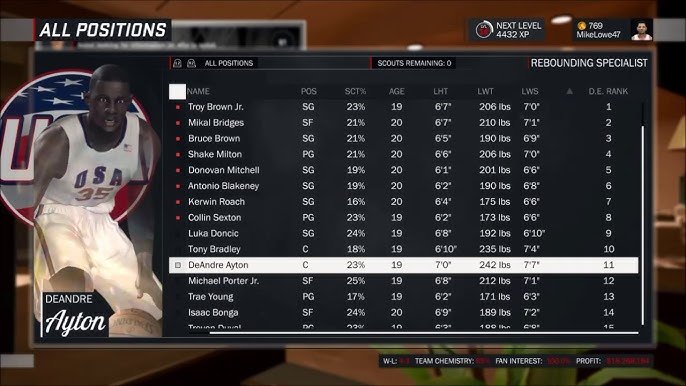
Efficient NBA 2K25 draft scouting techniques involve analyzing player attributes, tendencies, and potential through in-game scouting reports, and utilizing online community resources for informed decisions.
The thrill of building a dynasty in NBA 2K25 often hinges on your ability to identify and acquire future stars. This process, known as NBA 2K25 draft scouting techniques, requires a strategic approach. It’s more than just picking the highest-rated player.
You need to delve into player stats, scouting reports, and combine performances. Consider each prospect’s potential and how they fit into your team’s specific needs and play style. Community insights can also help refine your scouting process.

NBA 2K25 Draft Scouting Techniques
Okay, so you’re ready to dominate MyLeague or MyGM in NBA 2K25? A big part of that is nailing the draft. It’s not just about luck; it’s about smart scouting. Think of it like being a real NBA general manager. You’ve got to find the next superstar, the hidden gem, the guy who can help your team win championships. Let’s dive into how you can become a draft expert in NBA 2K25.
Understanding the Scouting Process
Before we get into the nitty-gritty, let’s get the basics down. NBA 2K25 gives you a pretty detailed scouting system. You’re not just randomly picking names. You need to actually scout players to learn about their potential and how they’ll fit into your team. The more you scout, the more information you get. This includes their skills, weaknesses, potential, personality, and even their tendencies on the court.
The Importance of Scouting Reports
Scouting reports are your best friends. They contain the details you need to make informed choices. You will get information from your scouts which are going to help you out in drafting. The scouting reports will show you different things like:
- Player Grades: How good a player is right now (A, B, C, etc.).
- Potential: How much better a player can become.
- Strengths: What a player is good at (shooting, passing, defense).
- Weaknesses: What a player needs to improve (dribbling, rebounding, etc.)
- Player Comparison: A current or former NBA player that the prospect’s game resembles.
- Player Tendencies: How they usually play on the court, their styles.
Pay close attention to these reports. They will provide data, that can help you to get player to fill up the positions your team requires and needs. Remember, these reports aren’t always perfect, but they are a great place to begin your draft preparations.
Key Scouting Attributes to Watch
When scouting, you need to know what to look for. Here are some key player attributes you need to pay close attention to:
Core Physical Attributes
These are the basics, how athletic and big the players are. These are things that can’t be easily developed, they are usually inherent.
- Height: Obvious, but crucial for certain positions.
- Weight: Important for strength and battling in the paint.
- Wingspan: How long their arms are, great for rebounding and defense.
- Speed: How quickly they move around the court.
- Vertical: How high they can jump, very valuable for dunks and rebounds.
- Agility: How quickly and smoothly they change direction
- Strength: how physically powerful and tough they are.
Basketball Skill Attributes
These define how well the player can play in specific aspects. These are the things that players can improve overtime through practice, but some players also have a natural knack for some of the skills from the begining.
- Shooting (Close, Mid-Range, 3-Point): How accurate they are at making shots.
- Ball Handling: How good they are at dribbling the ball.
- Passing: How well they can pass to their teammates.
- Rebounding: How well they can grab missed shots.
- Defense (Perimeter, Interior): How well they defend against opponents.
- Steals and Blocks: Their ability to take the ball away and block shots.
- Layups and Dunks: How well they finish near the basket.
- Free Throw: How accurate they are from the free throw line.
Mental Attributes
These attributes are about the player’s composure, focus and reaction. These can play a vital role in the outcome of a game, they might not be obvious, but they do have some importance.
- Basketball IQ: How smart a player is about the game.
- Consistency: How reliable a player is in different game situations.
- Potential: How much a player can improve over time.
- Hustle: How much they try and put effort in every play.
- Work ethic: How often they work to improve, and their habits.
Effective Scouting Strategies
Now that you know what to look for, let’s discuss how to do it. Here are some effective scouting techniques:
Scout Early and Often
Don’t wait until the last minute! Start scouting prospects as soon as the season begins. The earlier you start, the more time you have to scout everyone. Make sure to send your scouts to games of players who have the highest potential, this way you can get all the information you need. You need to make sure to scout the players at least 2-3 times.
By doing this, you can:
- Track player development over the course of the season.
- Identify players who might be rising up the draft boards.
- Get a complete overview of the draft class.
Utilize Your Scouting Staff
Your scouting staff is there to help you. Assign them to scout specific regions or positions. You should also pay attention to the scout’s specific attributes, like player evaluation and potential evaluation. A higher-rated scout will give you more reliable reports. You should try to hire scouts who have 85+ rating on the evaluation of player attributes. Also keep in mind that sometimes the scouts will have a higher rating on potential evaluation, while others may have higher rating in player’s attributes. So you will need to manage accordingly.
Focus on Fit
It’s not just about drafting the best player available. It’s about drafting the right player for your team. Consider the following:
- Team Needs: Do you need a point guard? A center? A sharpshooter?
- Playing Style: Do you run a fast-paced offense or a slower, more methodical one?
- Chemistry: Will this player fit with your existing team’s personalities and play styles?
Drafting a player who perfectly fits your system can be more valuable than drafting a player who has higher potential, but doesn’t fit in the system.
Watch Prospect Workouts
Don’t just rely on scouting reports. Watch the prospect workouts and combine drills. This gives you a more personal look at their abilities. You can see:
- How they perform in drills.
- How they move and handle the ball.
- Their athletic skills in person.
Workouts are also the place where you might find some hidden gems, who are performing unexpectedly good in workout drills and tests.
Look at Analytics
NBA 2K25 also includes some advanced stats. Look for these to see how productive a player is. Look at metrics such as:
- Player Efficiency Rating (PER)
- True Shooting Percentage (TS%)
- Win Shares
You can see these metrics in the prospect’s individual profile or the combine drills. This will help you identify players who are performing well and who might have an impact in your team.
Mock Drafts and Draft Boards
Pay attention to mock drafts and draft boards. They can give you an idea of where players are expected to be drafted. This information is useful for determining the value and availability of players you are targeting. Don’t solely rely on the mock drafts, but they can help you to know what your competition is planning, they provide you data and information.
Identifying Different Types of Prospects
Prospects are all different and you have to understand what type of player is your priority for your team. Here are some of the types of players you’ll come across in the draft:
Franchise Players
These are the players with the highest potential to become superstars. They usually have high grades across the board and have the potential to be top players in the league. They have high potential ratings, so these should be your first priority.
- High potential (A+ or A)
- Excellent in multiple skills
- Potential to be the face of your franchise.
Role Players
These are players who will contribute well to a team, but might not be the main players. They have specific skills they are very good at, and they will be very good in their defined roles. They will do all the necessary work to get the win. Examples are 3 and D wing players, rim-running centers.
- Solid skills in specific areas.
- Good for filling specific team needs.
- Usually have a lower ceiling than franchise players.
Project Players
These are players with a lot of potential but need a lot of development. They are raw and need time to reach their full potential. They usually have a low current grade, but high potential, so you need to invest time to develop them.
- May have poor skills but great physical attributes.
- Need time to develop and improve their game.
- Could become a steal if developed correctly.
Busts
These are players who have high potential or hype, but don’t deliver as expected. They may under perform or have hidden weaknesses that prevent them from reaching their potential. These are the players you should avoid. For this reason you need to do multiple scouting on the players before drafting, so you can make sure you are not making bad picks.
- High expectations, but fails to perform well
- Have weaknesses that were not revealed during scouting.
- Should be avoided
Handling Trades and Draft Day
Drafting is not just picking players. It involves trades and also making decisions during the draft day. Lets discuss some of the important things to keep in mind:
Trading Draft Picks
Don’t be afraid to trade up or down in the draft. If there’s a player you really want, trade up to get him. If you don’t like the players available, trade down for more picks. Trading picks can be a smart way to acquire players that you value. Sometimes teams value high draft picks and are willing to give up a lot to get those picks, make sure to take advantage of such situations.
Making Draft Day Decisions
Draft day is where all your planning comes together. Be prepared to make some tough calls. Keep these points in mind:
- Stick to Your Board: Don’t deviate too much from your draft plan.
- Be Flexible: Things can change quickly on draft day, be prepared to adjust.
- Don’t Panic: Don’t reach for a player if you are getting desperate for a certain position.
Also, keep an eye on the timer for each pick. You might be thinking too much about the pick, and suddenly you will lose your pick and another team will get the player you were targeting.
Post-Draft Development
Your work doesn’t stop after the draft. You need to develop your young players. This includes:
- Giving them playing time.
- Working on their weaknesses.
- Improving their skills.
- Mentoring them with veteran players.
Also make sure to assign the right coach that fits the need of the young player. Some coaches will be better at developing certain attributes of players. So manage your coaching staff accordingly.
Advanced Scouting Tips
Let’s get into some more advanced scouting tips for those who want to truly become master scouts:
Hidden Gems
Sometimes, the best players are not obvious. Look for players that scouts overlook. They are usually very late picks, and maybe they are also projected to go undrafted. They might have some unique physical traits or skill sets that are not easily visible on the surface.
International Scouting
Don’t forget to scout players from other leagues. NBA 2K25 has an array of international players. These players can be hidden gems, with high upside.
Personality and Work Ethic
These things matter. A player with a bad personality or a low work ethic may not fit well with your team, even if they are skilled. You need to pay attention to these factors as well.
The Combination of Attributes
Sometimes the combination of different skills is very crucial for a specific player. Look for players who are not good at many things, but have a special combination of attributes, that make them elite at specific areas. For example, a player with high speed and high steal rating can be an elite defender, even if they don’t have high rating on other defensive attributes.
By paying attention to all of these details and being strategic with your scouting, you can greatly improve your draft success in NBA 2K25. Remember, it’s a process that requires patience and persistence. Take your time, learn about the players, and you’ll soon be building championship teams through the draft.
Mastering the NBA 2K25 draft is not easy. It takes time, practice, and the willingness to learn from mistakes. But by following these strategies, you’ll significantly improve your chances of finding those franchise-altering talents. You will be able to make better team by using smart draft picks, which will make your team a great contender. Now it’s time for you to use all of the knowledge, go out there and become a scouting master in NBA 2K25.
NBA 2K 23 how to scout in mynba
Final Thoughts
Effective scouting in NBA 2K25 requires you to pay close attention to combine stats and in-game performance. Prioritize players that align with your team’s specific needs and play style. This allows for better development and on court success.
Don’t just rely on overall ratings. Dive deep into the player attributes, like potential and hot zones. This focused approach gives you advantages. Understanding the subtle aspects of player evaluation is key for the best results.
Ultimately, using these NBA 2K25 draft scouting techniques will improve your chances of finding a star. Focus on player potential and skill set fits, this method should guide you for the drafts.

