
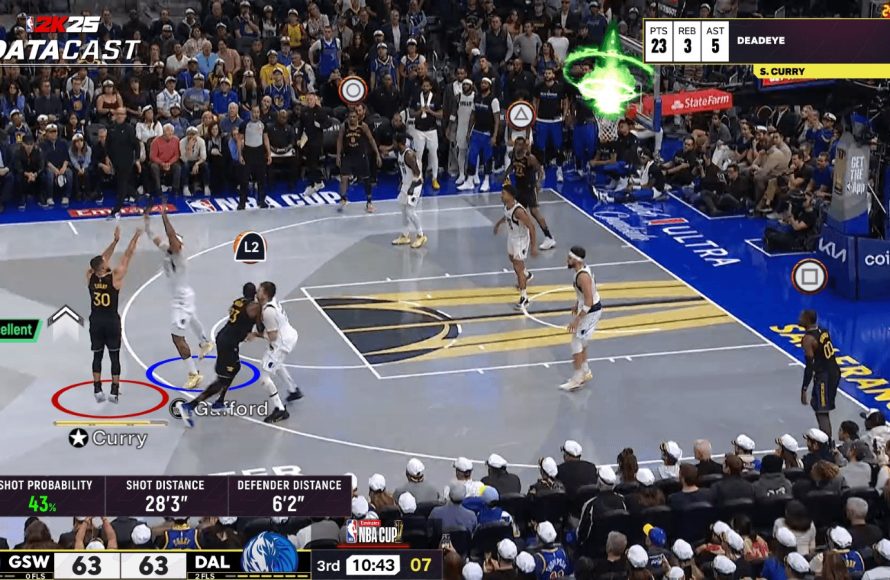
NBA 2K25 in game analytics provide data on player performance, including scoring, rebounding, and assists, allowing for strategic gameplay adjustments.
Have you ever wondered how the pros pinpoint their weaknesses and capitalize on their strengths in NBA 2K? The secret lies in the powerful tool that is NBA 2K25 in game analytics. These insights go beyond just the surface-level stats, offering a deep dive into the mechanics of the game.
Players use these analytics to understand shot selection, defensive positioning and overall team performance. They make informed choices based on this detailed information. Ultimately, using game analytics wisely helps enhance your overall gameplay.

NBA 2K25 In-Game Analytics: Diving Deep
Okay, so you’re playing NBA 2K25 and you’re wondering, “How can I actually get better?” It’s not just about fancy dribbling moves or throwing down huge dunks. Knowing what’s going on under the hood can make a massive difference. That’s where in-game analytics come in. They’re like the secret sauce that helps you see what you’re doing well and what you need to improve. Let’s break down what this means and how you can use it to become an NBA 2K25 superstar.
Understanding the Basics of In-Game Analytics
Imagine you have a coach who can see everything you do in the game, every pass, every shot, every move. That’s kind of what in-game analytics do. They collect all sorts of data while you play. But what kind of data are we talking about? Let’s look at some key areas:
- Shooting Stats: This includes things like shot percentages from different areas of the court, like three-pointers, mid-range shots, and shots close to the basket. You’ll see how often you make or miss shots from each spot. It also records how open you are when you shoot and if the defender is close.
- Passing Stats: Here, you get information about how well you pass the ball. Are you throwing accurate passes? How often do your passes get stolen? Do you turn the ball over? The game keeps track of all this. It also shows who you pass to most often.
- Rebounding Stats: This section keeps track of your offensive and defensive rebounds. It shows if you’re good at grabbing boards after missed shots and how many second-chance points your rebounds lead to.
- Playmaking Stats: This includes assists, turnovers, and how well you’re creating opportunities for your teammates. It’s about more than just passing, it shows if you’re good at setting picks to help others score.
- Defensive Stats: Here you’ll find data about steals, blocks, and how many times you foul. It also considers how many times the opponent is able to score against you.
Why In-Game Analytics Matter
Why should you even care about all these numbers? Well, it’s simple: they help you understand your game better. Let’s think about it like this. Imagine you think you’re great at shooting threes, but the analytics show that you are only making 20% of them. That tells you that you need to practice or adjust your strategy. In-game analytics allow you to do the following:
- Identify Weaknesses: Analytics point out the areas of your game that need work. Maybe you’re turning the ball over too much, or maybe you’re not great at getting rebounds.
- Improve Strengths: You can also use analytics to know what you are good at. If you are making a high percentage of shots in the mid-range you can use that to your advantage more often.
- Adjust Strategy: The information lets you tailor how you play the game. Maybe you realize you’re much more effective driving to the basket or setting up your teammates for scores.
- Track Progress: As you practice and learn, you can see how your stats improve over time. This can be very motivating.
Accessing Your In-Game Analytics in NBA 2K25
Okay, so you’re sold on the importance of analytics. But how do you actually find them? While the exact menus may slightly vary, here’s the basic idea:
- Pause the Game: When playing a game, hit the pause button.
- Look for the Stats or Analytics Menu: In the pause menu, you’ll usually see an option labeled “Stats,” “Analytics,” or something similar. Select that.
- Explore the Data: Here, you’ll see various screens displaying all of the different types of information we discussed.
The layout will be user-friendly, often presenting data in easy-to-understand charts, graphs, and tables. Take your time to explore all of the different stats.
Using Analytics to Improve Your Shooting
Shooting is a huge part of NBA 2K25, and the data here can make a major difference. Let’s break this down even more:
Shot Charts: Your Shooting Map
Shot charts show you where you’re taking your shots and how well you’re making them. They use different colors or shapes to indicate the success rate in different areas. For example, you might see that you’re a beast from the top of the key, but struggling in the corner three. This visual tells you where you need more work. Check the shot charts often to see how your success rate changes.
Shot Percentage Analysis
Beyond the visual chart, examine the actual percentages. Are you making 40% of your open three-pointers but only 25% of contested ones? This kind of detail tells you when you should be taking shots and when you might want to try something else. Focus on increasing the percentage of the shots you take most often.
Release Timing Feedback
NBA 2K25 can also give you feedback on your release timing. It can tell you if you are releasing the ball too early, too late, or at the perfect moment. This feedback can help you improve your shooting rhythm, which is important for making consistent shots. Pay attention to the visual cues that appear when you shoot.
Using Analytics to Enhance Your Passing Game
Great basketball isn’t just about scoring; it’s about setting up your teammates, too. Here’s how analytics help in passing:
Pass Accuracy
The game keeps track of the percentage of passes that get to their intended target. If you have a low pass accuracy, you may need to slow down your game and focus on making sure your passes are more accurate. Try not to throw risky passes into crowded areas.
Assist Analysis
Look at who you’re passing to. Are you passing to a certain teammate more than others? Do those passes result in successful scores? If you notice that you have high assist rates with specific teammates, you should try to pass to them often. You may also want to consider passing to players that you don’t pass to very often.
Turnover Tracking
One of the biggest killers in basketball is turnovers. If you have a lot of turnover passes, you need to be careful. Look at the analytics to see if you’re throwing too many risky passes, or making passes into the paint when there are too many defenders. Think about slowing down your game a bit so that you can throw more safe and accurate passes.
Using Analytics to Improve Your Rebounding and Defense
Rebounding and defense are important skills that can help you win basketball games. Let’s examine some things:
Rebounding Data
Rebounding is critical for gaining possession of the ball. Check to see how many offensive and defensive rebounds you grab during the game. Check to see if you’re grabbing more rebounds when you are closer to the basket or farther from the basket. Pay attention to how you position your player to grab rebounds. You might need to change the way you are doing things.
Steal and Block Analysis
The game tells you how many steals and blocks you get. A high number of steals and blocks indicates that you are good on the defensive end. But remember, you don’t want to go for steals too often because it can lead to fouls or your opponent driving to the basket. The game also tells you how often the other team scores against you so that you can make adjustments to your defense. Look to see which players on the opposing team are scoring the most points so that you can defend against them better.
Foul Tracking
Fouls are important to keep track of. When you commit too many fouls, you can be removed from the game. Try to avoid fouling the other team. The analytics can show you what type of fouls you get most often so that you can change your game. You should try to avoid unnecessary reaching fouls.
Advanced Analytics for the Dedicated Player
If you’re really serious about improving, you might want to dig into some advanced stats. While NBA 2K25 may not give you the same level of detail that real-life NBA teams use, you’ll still find some very useful information. These stats can provide a very comprehensive view of your game:
- Plus/Minus: This stat shows how your team performs when you are on the court compared to when you are on the bench. It can show how much of a positive or negative impact you are making on the game.
- Usage Rate: This shows you how much you handle the ball when you’re on the court. A high usage rate means you’re the primary ball handler, while a low rate means you’re not getting the ball very often. This can help you assess how much influence you have in the game.
- Player Efficiency Rating (PER): A stat that attempts to sum up the impact that the player has on the overall game. These stats can help you understand how valuable you are to the game.
These kinds of stats can give you an even deeper view of your performance and help you make even more informed decisions about your game.
Putting It All Together: Using Analytics to Level Up
So, you’ve got all this data. What’s the best way to use it to make you a better player?
- Start Simple: Don’t feel pressured to look at every single stat at first. Start with areas that you know need work, like your shooting or passing accuracy.
- Set Specific Goals: Instead of saying “I want to be better,” say “I want to increase my 3-point percentage by 5% this week.” Having specific goals will help you track progress.
- Regular Review: Don’t just look at your stats once. Make a habit of checking them regularly. After each game or every couple of games, analyze your performance and make adjustments.
- Practice Purposefully: When you practice, keep your weak points in mind. If your shot chart is low in the corners, do some corner shot practice. Use the data to direct your training efforts.
- Experiment and Adapt: Don’t be afraid to change up your strategies based on the data. If you realize that one style of play is not working, switch to something else and see how that works out for you.
- Be Patient: It takes time to get better. Don’t be frustrated if you don’t see huge improvements overnight. Keep working and you will see improvement over time.
By consistently using the game’s analytics to inform your play, you’ll not only see your numbers improve, but you’ll also develop a deeper understanding of the game of basketball itself. It’s about playing smarter, not just harder.
The Future of In-Game Analytics in NBA 2K
The great thing is that game developers are always working to improve and add more to sports games. We can expect even more comprehensive and user-friendly analytics to be added to future versions of the game. They will probably continue to add more visual representations of statistics so that it’s even easier to look at and see areas that need improvement. We might even see features that give you direct recommendations on which types of practice to do, and in which area you need to improve. It’s great that video games are working to make sports more accessible and more interesting for everyone.
In-game analytics are a fantastic tool that every NBA 2K25 player can use to make improvements. With a little bit of time and study you will see great improvements in your game. It’s really all about understanding the data and using it to your advantage.
NBA 2K25 Review
Final Thoughts
Analyzing player tendencies and team performance is crucial in NBA 2K25. In-game data provides real-time insights to adjust strategies. Players can use shot charts and heatmaps to refine their gameplay.
Utilizing this information gives a competitive advantage. This includes understanding opponent’s play style and strengths. NBA 2K25 in game analytics offers clear benefits for serious gamers. Players need to actively use this feature to maximize wins.

