
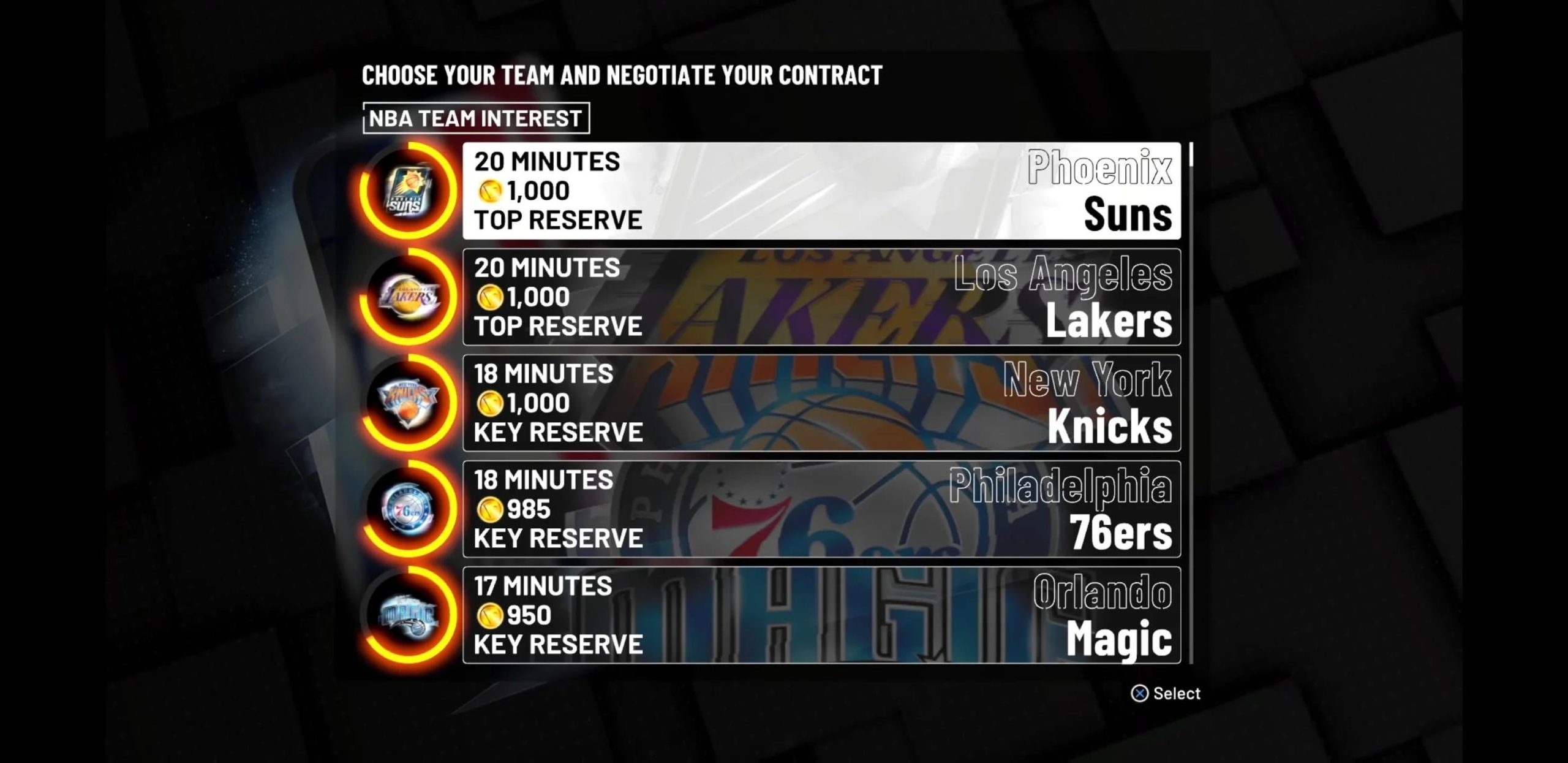
NBA 2K25 player contracts will likely function similarly to previous iterations, featuring salary caps, contract lengths, and potential for trades or renegotiations based on player performance and team needs.
Navigating the world of digital basketball can be tricky, especially when it comes to managing your team. Understanding NBA 2K25 player contracts is crucial for building a winning franchise. These virtual agreements dictate player salaries, contract duration, and the possibility of trades.
Securing the best talent requires a deep dive into the contract system. You have to balance player desires with your team’s financial limits, making for a challenging but rewarding experience.

NBA 2K25 Player Contracts: A Deep Dive
Okay, let’s talk about something super important in NBA 2K25: player contracts! Just like in the real NBA, these contracts decide how much money your players make and how long they stay on your team. It’s not just about picking the best players; you also have to be smart about managing their paychecks. Think of it like running a real team, where every dollar counts! Understanding contracts is key to building a championship-winning squad in NBA 2K25. So, let’s break down all the details, like different contract types, how to negotiate, and what impacts player value.
Types of Contracts in NBA 2K25
In NBA 2K25, you’ll find various types of contracts. Each one comes with its own set of rules and implications. Let’s take a look at some of the main ones:
Standard Contracts
These are your run-of-the-mill, everyday contracts. Most players on your team will have standard contracts. They have a set salary for a specific number of years. Think of it like a regular job with a fixed pay and term. There are a couple of different ways these can work:
- Guaranteed Contracts: These contracts mean the player gets paid even if they get injured or aren’t playing much. It’s like a safety net for them.
- Non-Guaranteed Contracts: With these, a player’s salary can be cut if they are no longer needed on the team. It is more of a risk for the player, but can help teams manage budgets.
Rookie Contracts
When new players fresh out of the draft come into the league, they often get rookie contracts. These are standard deals but with pay scales set based on where the player was picked in the draft. The higher they are drafted, the more money they generally make in this contract. These deals are usually for a set number of years too.
Veteran Contracts
These are the contracts given to the established, more experienced players. These veteran players may command higher salaries due to their skills and experience. There can be various nuances in these contracts, such as player options, or early termination options.
Two-Way Contracts
These contracts are a bit unique. They allow a player to be on both the main NBA roster and a G-League affiliate team. Players on these contracts earn a different salary amount based on whether they’re with the NBA team or the G-League team. This is a way to keep promising young players within an organization while they develop.
Contract Lengths
The length of a player’s contract is very important. Here’s why:
- Short-Term Contracts: These are great if you want to keep your options open. You can renegotiate with the player sooner if they play great or let them go if they don’t. But it can also mean you lose good players quickly.
- Long-Term Contracts: These give you stability, meaning you know your team makeup for several years. But you are also stuck with the player’s contract even if they get worse or become a bad fit.
Negotiating Player Contracts
Now, let’s talk about negotiation! This is where you try to get the best deal for your team. Here’s a step-by-step way that helps in contract negotiation.
Understanding Player Value
Before starting any talks, knowing how much the player is worth is key. A few things help decide value:
- Overall Rating: How good is the player overall?
- Stats: What kind of numbers does the player put up in games?
- Age: Young players have more potential, while older players have experience.
- Potential: How much better can a player become?
- Role on the team: Is the player a starter, a key role player, or a backup?
The Negotiation Process
When you go into a negotiation, here’s a typical plan:
- Initial Offer: Start with an offer that makes sense based on what you think they are worth. Don’t offer too high, because you could waste money.
- Counteroffers: The player’s agent will likely respond with their own demands. This is when the back-and-forth begins.
- Find Middle Ground: You must find a deal that works for both you and the player. It might mean making concessions to make it work.
- Agree on Terms: Finally, you agree on the contract length, salary, and any extra bonuses.
Tips for Successful Negotiations:
- Know your budget: Don’t overspend. Keep track of the money you have available to spend on salaries.
- Be realistic: Don’t lowball players too much, or they might walk away.
- Be patient: Negotiation can take time. Don’t rush into any agreement.
- Use your scouting staff: Their reports can give you extra insight into player value.
The Salary Cap and Luxury Tax
Like the real NBA, 2K25 also has a salary cap and a luxury tax.
Salary Cap
The salary cap is a limit on how much you can spend on player salaries. It is there to keep teams from just spending unlimited money and help create a more fair and even competition.
Luxury Tax
If you spend more than the salary cap limit, you have to pay the luxury tax. The tax money often goes to other teams in the game to support the league. It is also designed to encourage teams to manage their budget and salary spend wisely.
- Avoiding the Luxury Tax: Managing your salary spending within the salary cap helps save money and allows you to spend in other areas.
- Using the Tax Strategically: Sometimes, teams will go over the limit if they think the players they get will help them win a championship. It is a gamble, but it is often worth it to win big.
Impact of Player Contracts on Team Building
Player contracts have a huge impact on team building, they help shape the team over the long and short term.
Building a Balanced Team
If you spend all your money on a few superstars, you won’t have money left for other role players and bench players. You must find a balance between stars, solid players, and role players to build a successful team.
- Overpaying for Underperforming Players: If you give too much money to players who aren’t playing very well, it will hurt your team in the long term.
- Finding Value Players: Sometimes, you can find really good players that don’t have high salary demands, which allows your team more spending options.
Future Flexibility
Think about future options when signing contracts. Long-term contracts will lock you into a salary, which limits your flexibility to make trades or acquire free agents.
- Short-Term Deals: These provide flexibility to change and upgrade the team quickly, however, it comes with a higher risk of losing good players that you may want to keep.
- Long-Term Deals: This can ensure you have the players you want on your team, but will also reduce your roster and spending flexibility.
Trading Contracts
Trading players that have contracts can get a bit tricky. You often need to trade matching salary amounts to make it work. Here’s the basic outline:
Matching Salaries
When making a trade, you need to send out similar value salaries to the ones you are taking in. This keeps the game balanced for all the teams.
Trade Exceptions
Sometimes if your team trades a player that has a big salary, you can create a trade exception. This means that your team can take on more salary during a future trade, without giving up as much salary.
- Using Trade Exceptions: This allows teams to find more options when making trades.
Contract Extensions
Sometimes, you want to keep a great player on your team longer. This is where contract extensions come into play.
Offering Extensions
You can start talking about an extension before a player’s contract is up. This is a good way to ensure that player stays with your team for a long period of time.
Benefits of Extensions
It helps you avoid letting players go into free agency where they can sign with any team and they do not have to stay with your team. It also gives the player some security and guarantees future pay. This also shows the player you value them which is good for team chemistry.
Free Agency
When a player’s contract expires, they go into free agency. This is when any team can sign the player. The highest bidder can usually get their pick of players when they become free agents.
Signing Free Agents
- Salary Cap Limitations: Your salary spending limit can affect the amount of and type of players you can sign.
- Negotiating With Free Agents: Free agents can leverage offers from multiple teams, driving up prices.
- Using Team Needs: You must fill important positions when signing free agents.
Player Options and Team Options
Some contracts will include player or team options, these options can affect how and when a player can leave a team, or when they can be dropped from the team.
Player Options
These options allow the player to choose if they want to stay with the team for another year or go into free agency. This is a powerful tool that a player can use.
Team Options
With team options, the team gets to decide if they want to keep a player for an additional season. These can sometimes be found in a young player’s contract.
Drafting and Contract Implications
When you select new players in the draft, they automatically get rookie contracts. Where a player is drafted decides the level of their first salary.
Managing Rookie Contracts
After drafting, deciding what to do with the rookie players is important, will you keep the player on your team, will you trade them, will you send them to your G League affiliate?
Developing Young Talent
Often the goal is to develop your young players to become strong players in the future. This is especially true when developing your drafted players.
In conclusion, understanding NBA 2K25 player contracts is vital for building a successful team. From knowing different contract types, to making trades, the best team managers will find ways to navigate these complicated issues to secure their team a winning roster that they can use in championship games. The complexities add a layer of strategic depth to the game, forcing players to consider more than just individual player skills, but to think strategically about building for the present and future of their franchise.
Playing My Heart Out For an NBA Contract 💀 #2k #nba2k25 #2k25 #Botupnext
Final Thoughts
In short, anticipating the complexities of NBA 2K25 player contracts is essential for franchise success. Players need to consider salary cap implications and player valuations carefully. Effective contract management will heavily influence your in-game team building.
Planning for the future is key, as shrewd negotiations can provide competitive edge. Make sure to grasp the nuances within NBA 2K25 player contracts to build a championship roster. This will ultimately lead you to victory.

