
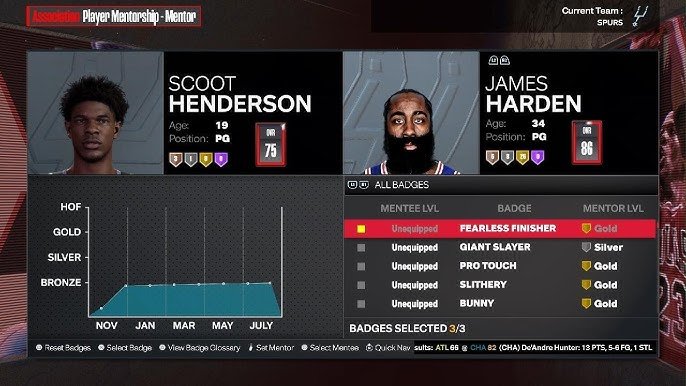
NBA 2K25 player development programs offer ways to improve your created player’s skills, badges, and overall rating through various activities and training methods.
Ever wondered how to make your MyPLAYER the best he can be in the upcoming game? Many are curious about how to maximize their player’s potential in NBA 2K25. The game introduces multiple paths.
These paths focus on specific skill sets allowing you to sculpt your virtual athlete. Think improved shooting, better defense, and many other attributes. Understanding these NBA 2K25 player development programs is key.

NBA 2K25 Player Development Programs
Alright, hoop heads! Let’s dive deep into the world of NBA 2K25 and talk about something super important: player development. In this game, it’s not just about picking the best team; it’s about growing your own players into superstars. It’s like being a coach, guiding your athletes to reach their full potential. So, what exactly does player development look like in NBA 2K25? Let’s find out!
Understanding the Basics of Player Development
Player development in NBA 2K25 is all about making your players better. It’s not a one-size-fits-all process. Different players have different starting points and different areas where they can improve. Think of it like this: a tall center might need to work on their speed and ball-handling, while a speedy point guard might need to improve their shooting. The game gives you tools to help your players grow in specific ways.
Attribute Categories
First, let’s understand the different areas where players can get better. These are called attributes. Think of them as the building blocks of a player’s abilities. Here are some important ones:
- Finishing: How well a player can score near the basket, like with layups and dunks.
- Shooting: How good a player is at making shots from different distances.
- Playmaking: How well a player can handle the ball, pass, and make plays for their teammates.
- Defense: How good a player is at defending, like stealing, blocking, and staying in front of their opponent.
- Athleticism: How fast, strong, and agile a player is.
- Rebounding: How well a player can grab the ball after a missed shot.
Potential and Badges
Each player also has something called “potential”. Potential is like a limit to how good a player can become. Some players have a higher potential than others, which means they can reach a higher overall rating. Another important part is earning badges. Badges represent special skills that players can have. For example, a good shooter might earn the “Dead Eye” badge, which makes them even better at hitting tough shots. We’ll talk more about badges later.
Key Components of Player Development
So, how do you actually make your players improve? It involves several key areas:
Training Sessions
Training is one of the main ways to improve your players. You can take part in practices that are designed to focus on specific skills. These practices have drills and challenges that you need to complete to earn training points. The better you do in practice, the more training points you earn. You can use these training points to improve a specific category like shooting, finishing, playmaking, defense, athletics, and rebounding. You can chose what to focus on for each player.
- Choosing the Right Drills: Pick drills that match the areas where you want your player to get better. If you want to become a good shooter you can focus on shooting drills.
- Consistency is Key: Make sure you train your players often. Regular practice sessions are more effective than long sessions once in a while.
Gameplay Performance
How well your players perform in games actually affects their improvement. The better they play, the faster they will develop. If your player scores a lot, make assists or make lots of rebounds, they will get rating boosts on corresponding categories. Game performance is important to the player development process. So try to put your players in position to succeed in the games.
MyCAREER Mode and Player Growth
If you’re playing in MyCAREER mode, you have a lot of control over how your player grows. Your performance in games directly affects how your player’s attributes increase, and you can also do other things to boost your player’s improvement.
- Choosing the Right Archetype: When you start MyCAREER, you pick an archetype for your player. This archetype affects what kinds of abilities your player will have and also what the player can reach to the potential. Choose an archetype that matches your play style and interests.
- Earning Badges: In MyCAREER, you can earn badges as you play games and improve your skills. You need to complete objectives on your journey. Each badge gives your player a specific bonus that makes them even better.
- Making the Right Decisions: There are also story parts in MyCAREER. The decisions you make will influence your player’s growth in different directions. You can influence your player based on your decision.
The Importance of Team Chemistry and Playing Time
Team chemistry and playing time also play a big role. Players who are part of a team that works well together will develop faster. Players also need enough playing time to get better. If they are always on the bench, they will not improve as quickly.
- Building Team Chemistry: Try to make sure you are making right plays with your team mates, which will help improve your team chemistry.
- Managing Playing Time: Make sure your players are getting enough playing time, but at the same time you also need to manage their playing time in games.
Diving Deeper into Attributes and Badges
Now, let’s dig into more detail on attributes and badges, since they are important aspects of player development.
Understanding Attribute Caps and Growth
Each attribute has a cap, or maximum value, that it can reach. When a player reaches the cap for an attribute, it can’t be increased any further. Players can increase their attributes until they hit the cap, after that they cannot improve further. This is one of the main limitations in the game.
- Potential Matters: Remember that players with higher potential have higher caps on their attributes, which makes them capable of becoming better overall.
- Investing Wisely: Pay attention to your player’s attribute caps when you are using training points. Try to make it balanced for all the categories.
Badges: The Game Changers
Badges are special abilities that can drastically improve how a player performs. They provide bonuses that make players better at certain skills, and some even add new abilities. There are different types of badges, including:
- Finishing Badges: Improve a player’s ability to finish at the rim, like “Slithery Finisher” or “Giant Slayer”.
- Shooting Badges: Help a player shoot better from different ranges, like “Dead Eye”, “Green Machine” or “Sniper”.
- Playmaking Badges: Improve a player’s ball-handling and passing skills, like “Ankle Breaker” or “Quick First Step”.
- Defensive Badges: Improve a player’s defense, like “Interceptor”, “Clamps”, “Rim Protector”, or “Pick Pocket”.
- Rebounding Badges: Increase a player’s ability to grab boards, like “Boxout Beast” and “Rebound Chaser”.
How to Earn and Upgrade Badges
Players earn badges by doing certain things during games or practice. Each badge has different tiers or levels (bronze, silver, gold, and sometimes Hall of Fame). Upgrading badges makes them even more powerful. Some badges are more important than others, and some suit to the different style of players. Pay attention to your player’s attributes, and try to pick right badges.
- Complete Objectives: When you play, make sure you are completing different objectives to earn badges.
- Focus on Your Strengths: Try to earn badges that are matching the strengths of your player.
- Experiment with Badges: Don’t be afraid to experiment with different badges to see what works best for you.
Advanced Strategies for Player Development
Now, let’s discuss some more advanced strategies that you can use to get the most out of your player development programs.
Understanding Player Roles and Development
Each player on your team has a specific role to play. It’s important to develop your players in ways that fit their roles on the team. For example, a starting center on a team needs a completely different training than a third string point guard.
- Match Development to Role: Develop players in areas that make them better at the jobs that they are meant to do.
- Don’t Neglect Weaknesses: While you should focus on player’s strengths, you also need to address their weaknesses.
Utilizing Training Facilities and Staff
In some modes, you can get better training facilities and staff. These facilities can help players develop faster and also get better results in the practice. This makes the training even more effective, and can give a great boost to player’s progression.
- Upgrade Facilities: When available, make sure you upgrade your training facilities.
- Hire the Right Staff: Get the staff members that specialize in the kind of improvement you are seeking for the players.
Analyzing Performance and Adjusting Training Plans
It’s important to constantly analyze how your players are doing and adjust your training plans accordingly. You should also check if their training is effective or if something needs to change.
- Track Progress: Keep an eye on your player’s attribute improvements.
- Be Flexible: If a training plan is not working, then you need to change it.
The Impact of Player Development on Winning
Finally, remember that good player development can win games for you. The better your players get, the more success you will have. It’s not just about collecting top players. It’s about creating them.
Tips and Tricks for Effective Development
Here are some quick tips and tricks that you can use to help you become a better player development coach in NBA 2K25.
- Start Early: Start developing your players as soon as possible. The sooner you start, the more they will improve.
- Be Patient: Player development takes time. Don’t expect instant results. You need to give time to your players and trust the process.
- Customize Training: Make training plans for different players, based on the player roles, strengths, weaknesses, and position.
- Watch Videos and Guides: Learn from others. Watch videos and read guides about player development to learn new tricks.
- Always Practice: Practice is the most important part of player development. Make sure you are not forgetting to do it.
By following these tips and understanding all the aspects of NBA 2K25 player development, you’ll be well on your way to building a winning team of superstar players. Remember, it’s a marathon, not a sprint. Enjoy the journey of creating your own basketball legacy in NBA 2K25.
In this detailed exploration of NBA 2K25’s player development systems, we’ve covered everything from the basic attribute categories to advanced training techniques. We have emphasized how consistent practice, smart badge selections, strategic team building, and even simple tips like patience are essential to succeeding in the game. It’s not just about individual talent; it’s about nurturing that talent through proper training, in-game performance, and focused strategy. Player development is an ongoing process, it requires you to constantly assess, adapt, and refine your approach. The more time you invest in your players, the more rewarded you will feel as you watch your players grow and take over the court.
NBA 2K25 MyNBA Tutorial: How To Effectively Train/Develop/Mentor Your Team
Final Thoughts
Ultimately, focused effort within NBA 2K25 player development programs proves essential for virtual success. Players who carefully utilize available resources will see quicker attribute gains. These programs directly influence how a player grows within the game.
Careful planning and consistent training offer a clear path for improving skills. Dedication to these programs impacts overall player effectiveness. The NBA 2K25 player development programs are the key to achieving top-tier performance.

