
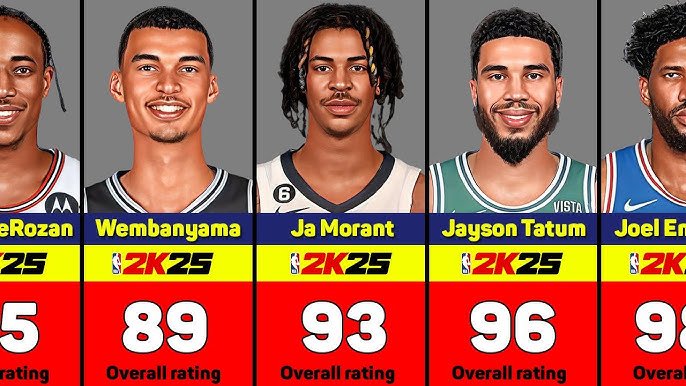
The game uses a detailed system to assess player abilities, considering attributes, badges, and tendencies for NBA 2K25 player evaluations.
Anticipation buzzes as we approach the release of the next NBA 2K installment. Everyone wants to know: How will our favorite players perform? The excitement centers around NBA 2K25 player evaluations, which will ultimately shape how we play the game.
These ratings are crucial, dictating a player’s effectiveness on the virtual court. We all eagerly await to see which stars will rise and whose scores might have dropped.

NBA 2K25 Player Evaluations: What to Expect
Alright, basketball fans! We’re diving deep into what makes a player good (or not so good) in NBA 2K25. Forget just looking at the overall number. We’re going way past that. It’s about understanding what goes into creating these digital ballers and how those ratings impact your game. Think of it like scouting reports, but for your video game team! We’re not just going to talk about the big names; we will explore the hidden gems and what makes a player valuable in different modes. This is your guide to picking the best team, crafting killer strategies, and dominating the virtual court. Get ready for a breakdown on everything from athleticism to playmaking, shooting to defending. We’ll also look at how player badges and potential can shape the future of your franchise.
The Core Attributes: Building Blocks of a Virtual Star
Let’s start with the basics. NBA 2K25, like its predecessors, bases a player’s rating on several core attributes. These are the building blocks that define how a player performs on the court. Imagine you’re building a Lego castle – each piece (or attribute) is crucial to the finished product. Here’s a look at some of the key attributes:
Finishing at the Rim
This isn’t just about dunking. Finishing includes layups, floaters, and everything else a player does close to the basket.
Driving Layup: How well a player can get to the hoop and make a layup, especially when moving fast.
Standing Layup: How consistent a player is with layups without a running start.
Driving Dunk: This shows a player’s ability to throw down powerful dunks while moving.
Standing Dunk: How well a player can dunk while stationary.
Close Shot: This refers to short jumpers near the basket, which may include hooks and push shots.
Higher ratings mean a player is more likely to make these shots and less likely to get blocked or miss.
Shooting from Deep and Mid-Range
The ability to score from different spots on the court is super important. The game differentiates shooting based on range:
Mid-Range Shot: This rates how good a player is at making shots in the area around the free-throw line.
Three-Point Shot: A player’s ability to make shots from beyond the three-point line.
Free Throw: How well a player can make free throws consistently.
Shot IQ: It tells how smart a player is when taking shots. Players with high shot IQ will choose better shots, reducing turnovers and missed shots.
A good shooter is not just about the ratings, they also need to have good shot selection, which is connected to the shot IQ attribute.
Playmaking and Ball Handling
It’s not always about scoring. Playmaking and handling the ball are vital for running an offense:
Ball Handle: How well a player can control the ball and move it around without losing it to the other team.
Speed with Ball: How quickly a player can move around while controlling the basketball.
Passing Accuracy: A measure of how well a player can make passes to teammates without being intercepted or throwing a bad pass.
Passing IQ: It rates how smart and strategic a player is when making passes. It determines the type of pass, the timing of the pass, and which teammate a player is passing to.
A high playmaking rating means better passes, less turnovers, and more opportunities for teammates to score.
Defense: Stopping the Other Team
Defense is half the game. A good defender can lock down opponents and get stops:
Interior Defense: This is about how well a player can guard players close to the basket.
Perimeter Defense: This rates how well a player can guard players far away from the hoop.
Steal: The chance of a player stealing the ball from an opponent.
Block: A measure of how well a player can block opponent shots.
Defensive Consistency: This rating shows how consistently a player can make stops on defense.
Lateral Quickness: This measures how quickly a player can move side to side, making it easier to keep up with opponents on the court.
Good defensive players are invaluable, creating steals, blocks, and forcing turnovers to get the ball back for your team.
Physical Attributes: Speed, Strength, and Stamina
These physical ratings affect how a player moves and reacts:
Speed: How fast a player can move without the ball.
Acceleration: How quickly a player can get to their maximum speed.
Strength: A player’s ability to push and overpower opponents.
Vertical: How high a player can jump. This is useful for rebounding and finishing at the rim.
Stamina: How long a player can play without getting tired.
Physical attributes are important as they impact every aspect of a player’s game from offense to defense.
Understanding Player Archetypes: Finding Your Perfect Fit
Now that you know the core attributes, let’s talk about player archetypes. These are like pre-set roles that players fit into, based on their strengths and weaknesses. Think of them as job descriptions for your team:
Playmaking Sharpshooter: This type of player is great at passing and shooting, making them a threat from any spot.
Slashing Playmaker: This is a player who is good at driving to the hoop and setting up teammates.
Lockdown Defender: These players are amazing at defending and stopping opponents from scoring.
Rebounding Paint Beast: Players who dominate in the paint, getting rebounds and protecting the basket.
Two-Way Finisher: This player can score around the basket and play great defense.
3-Level Scorer: These players can score from anywhere on the court – inside, mid-range, and from deep.
Choosing the right mix of archetypes is crucial for building a well-balanced team. You need a combination of offensive firepower and defensive grit to win games consistently.
The Impact of Badges: Adding Special Skills
Badges are like special abilities that give a player an edge. They can make good players great, and great players unstoppable. Here’s a peek at how they work:
Finishing Badges: These badges help players finish better at the rim. Examples include “Giant Slayer” for going against taller players and “Posterizer” for amazing dunks.
Shooting Badges: These improve a player’s shooting abilities. “Deadeye” helps with contested shots and “Green Machine” makes consecutive shots easier to make.
Playmaking Badges: These badges improve a player’s passing and ball-handling skills. “Ankle Breaker” is great for creating separation from defenders, and “Dimer” helps with accurate passes to teammates.
Defensive Badges: These badges improve a player’s defense. “Interceptor” is great for stealing passes, and “Clamps” helps keep opponents in front of you.
Rebounding Badges: This type of badge improves a player’s rebounding skills. “Boxout Beast” helps get better positioning on rebounds, while “Rebound Chaser” helps a player to get the rebound.
Each badge has a different effect and can significantly affect how a player performs on the court. You should find players with badges that fit your playing style.
Potential and Development: Growing Your Player
Players are not static. They can improve over time with the right training and playing time. This is where potential comes in:
Growth Rate: How quickly a player’s attributes improve over time. A player with high potential can become a superstar given the right time.
Training Drills: The player development system lets you focus on improving specific attributes. This lets you develop players for specific roles on the team.
Playing Time: Giving younger players consistent playing time increases their growth potential.
Coach Impact: A coach’s style and specialty can affect how your players grow.
It’s important to have a strategy for player development so that you can turn young players with potential into stars.
Evaluating Players in Different Game Modes
How you evaluate players can depend on the mode you’re playing:
MyCAREER Mode
In MyCAREER, you’re creating your player, so your focus should be on creating a well-rounded build with appropriate badges and abilities.
Build Creation: Experiment with different archetypes. Select the one that fits your game style.
Badge Selection: Pick badges that enhance your playing style and complement your weaknesses.
Attribute Customization: Prioritize attributes based on your preferred style.
MyTEAM Mode
In MyTEAM, you’re building a team of cards, so you need to evaluate how each card fits into your overall strategy.
Card Ratings: Evaluate based on base attributes and badges. Pay special attention to combinations of attributes that fit your game.
Chemistry: Look at players with chemistry potential. A good chemistry will improve the player’s attributes.
Card Rarity: Some cards are rare and have higher attributes, and badges. This helps in creating a better team.
MyLEAGUE/MyGM Mode
In MyLEAGUE and MyGM, your focus is on evaluating players for long-term team building.
Draft Prospects: Check their potential and ability to improve over time. Look for a mix of talent, potential and also check their work ethic.
Player Trades: Trade for players who fit your team’s needs and your playing style. You can build the team around the players that suits your coach.
Free Agents: Sign players who can fill gaps in your team with a focus on long term team building.
Each game mode requires a different focus, so it’s important to adjust your evaluation strategy accordingly.
Advanced Stats: Going Deeper
Beyond the basic ratings, look at some advanced stats for a deeper insight into a player’s performance.
Plus/Minus: A player’s impact on the game when they are on the court.
PER (Player Efficiency Rating): An overall rating of a player’s contribution.
True Shooting Percentage: A more accurate measure of shooting than simple field goal percentage. It looks at 2-point and 3-point field goals, as well as free throws.
Assist to Turnover Ratio: Evaluates a player’s ability to make assists while also limiting turnovers.
These stats provide a more complete picture of a player’s performance than the basic ratings alone. Using these in combination with the core attributes can really refine your player evaluation skills.
How to Stay Updated on Player Evaluations
The beauty of NBA 2K is that player evaluations are not static. They change over time. So how do you keep up? Here are a few ways:
Game Updates: 2K updates player ratings throughout the season. Check for new updates to understand the latest ratings.
Community Feedback: Connect with other players on forums and social media to get different opinions on player evaluations.
Content Creators: Many content creators provide insights and analysis on player ratings and how to build the best team.
In-Game Analytics: Use the in-game data to see how well your players are performing and make changes accordingly.
Staying informed can keep you ahead of the curve and help you make smarter choices in the game.
Evaluating players in NBA 2K25 is more than just looking at the overall number. It’s about understanding the individual attributes, badges, archetypes, and how they all work together. Remember to check for updates and engage with the community. With this knowledge, you are now armed to dominate the virtual court! Now go and build that dream team, make those perfect trades, and guide your squad to championship glory! This isn’t just a game, it is an opportunity to be the best GM, best coach, and best player in the world, all from the comfort of your couch. Good luck, and I hope to see you on the virtual court!
Can you guess these 2K25 ratings? 👀 #nba #nbabasketball
Final Thoughts
NBA 2K25 player evaluations are crucial for understanding in-game performance. Careful review of attributes and badges will guide your team building.
These assessments help you identify the strengths and weaknesses of each player. This allows for strategic decisions when drafting and trading.
Ultimately, accurate NBA 2K25 player evaluations will directly influence success. Building a competitive roster requires thoughtful analysis of every option.

