
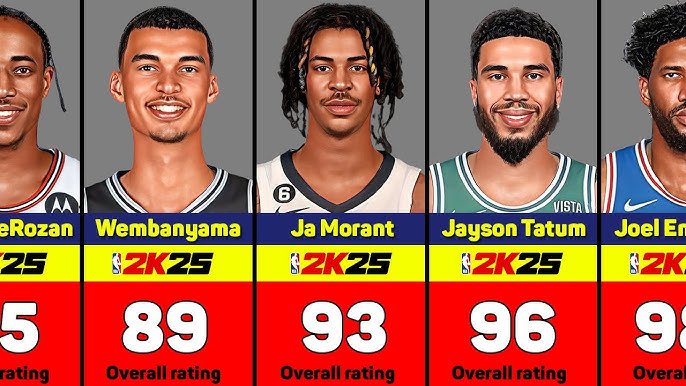
NBA 2K25 player roles will include traditional positions like Point Guard, Shooting Guard, Small Forward, Power Forward, and Center, each with specialized skills and playstyles influencing gameplay.
Diving into the virtual hardwood, understanding NBA 2K25 player roles is crucial for building a winning team. These roles dictate how your players perform and interact on the court. Each position comes with its own set of attributes and abilities.
Knowing your players’ strengths lets you implement effective strategies. Thinking about the different player archetypes also allows for varied gameplay approaches. This ensures a more enjoyable experience within the game.

NBA 2K25 Player Roles: Finding Your Perfect Fit
Okay, so you’re ready to hit the court in NBA 2K25, right? But before you start chucking up wild shots, it’s important to understand the different player roles. Think of it like putting together a puzzle; each piece needs to fit just right to create a winning picture. These roles aren’t just fancy names – they determine how your player moves, scores, and defends. Choosing the right role for your play style is super important, and we’re here to help you figure it all out.
Understanding the Core Player Archetypes
NBA 2K25, like previous versions, centers its player builds around core archetypes. These are the basic templates that influence your character’s strengths and weaknesses. They’re like the foundations of your house – they dictate what kind of building you can create. Let’s dive into the most common ones:
The Point Guard: The Floor General
The point guard is like the quarterback of the basketball team. They are the ones who usually bring the ball up the court and make decisions. They should be excellent at passing, dribbling, and seeing open teammates. Think of players like Steph Curry, Chris Paul, or Ja Morant. In NBA 2K25, the point guard archetype is all about creating scoring opportunities for others, keeping the offense flowing smoothly, and also having the skill to score some points themselves, especially from 3-point range.
- Key Skills: Passing, ball handling, playmaking, 3-point shooting, mid-range shooting (depending on build), court vision.
- Gameplay Focus: Setting up teammates, running the offense, controlling the pace of the game, and scoring when needed.
- Potential Downsides: May not be the strongest or best defender, might need help guarding bigger players.
The Shooting Guard: The Scoring Machine
The shooting guard is usually the team’s main scorer. They need to be good at shooting from different spots on the court, especially from beyond the 3-point line. They also need to be able to create their own shot and attack the basket. Think of players like Kobe Bryant, Michael Jordan, or Devin Booker. In NBA 2K25, the shooting guard is a great option for players who love putting the ball in the basket.
- Key Skills: 3-point shooting, mid-range shooting, scoring ability, off-ball movement, creating shots, driving to the basket.
- Gameplay Focus: Finding scoring opportunities, making shots, playing smart off-ball, and creating their own scoring opportunities.
- Potential Downsides: Might not be the best playmaker or defender, may rely heavily on their scoring ability.
The Small Forward: The Versatile Player
The small forward is the “do-it-all” player on the court. They have to be good at a little bit of everything: shooting, passing, dribbling, rebounding, and defending. They are often asked to do whatever the team needs. Think of players like LeBron James, Kawhi Leonard, or Jayson Tatum. In NBA 2K25, small forwards offer great flexibility, making them fun to play with.
- Key Skills: Versatility in offense and defense, ability to shoot, pass, and handle the ball, rebounding, defending different player types.
- Gameplay Focus: Contributing in many different ways, making plays, being reliable on both ends of the court, and adapting to game situations.
- Potential Downsides: Might not be the best at one specific thing compared to specialists, may need help in rebounding against bigger players.
The Power Forward: The Tough Guy
The power forward usually plays closer to the basket. They need to be strong and good at rebounding and scoring in the paint. They may also have a mid-range shot. They are usually great defenders and can guard bigger opponents. Think of players like Giannis Antetokounmpo, Draymond Green, or Zion Williamson. In NBA 2K25, power forwards are powerful, physical, and tough players.
- Key Skills: Rebounding, scoring in the paint, post play, inside defense, mid-range shooting (some builds), setting screens.
- Gameplay Focus: Getting rebounds, scoring near the basket, defending the paint, being a physical presence, and setting screens for teammates.
- Potential Downsides: Might not be the best at shooting from deep, often plays within the paint.
The Center: The Rim Protector
The center is the big man in the middle of the court. They are typically the tallest player on the team and must be good at rebounding, scoring in the paint, and blocking shots. They’re like the last line of defense. Think of players like Nikola Jokic, Joel Embiid, or Rudy Gobert. In NBA 2K25, the center is all about dominating the paint.
- Key Skills: Rebounding, post scoring, blocking shots, inside defense, setting screens, outlet passing, and dominating the paint.
- Gameplay Focus: Protecting the basket, getting rebounds, scoring near the rim, setting screens, and dominating inside the paint.
- Potential Downsides: Usually not the best at shooting 3-pointers, not very agile on the court, often slow compared to guards.
Exploring the Sub-Archetypes Within Each Role
The main archetypes are a great start, but within each of these, there are even more specific sub-archetypes. These let you fine-tune your player and make them truly unique. These sub-archetypes change how your player develops, and they also influence their strengths and weaknesses. They are important for players who want a more specific build.
Point Guard Sub-Archetypes
Point guards in 2K25 have a lot of room for customization. You can focus on scoring, playmaking, or a mix of both. Some of the popular sub-archetypes for the point guard role include:
- Playmaking Point Guard: This build is all about setting up teammates with pinpoint passes. Think of a player who makes everyone around them better, like a Rajon Rondo type. These players have high passing and ball handling attributes.
- Scoring Point Guard: Focuses on scoring the ball themselves using quick dribbles, 3-point shooting and mid-range skills. Think of a player like Kyrie Irving, a guard who can score easily.
- Two-Way Point Guard: A balance between playmaking and defense. These players can make plays and defend at a high level. They are also good for running the floor.
- Slashing Point Guard: They are good at driving to the basket and finishing in the paint. They’re usually fast and athletic.
Shooting Guard Sub-Archetypes
Shooting guards can also be created in many different ways. They can either be a specialist shooter, a driver to the basket, or a mix of both. Here are some key shooting guard sub-archetypes:
- Sharp Shooter: This build focuses on shooting 3-pointers from anywhere on the court with great accuracy. These players should have excellent shooting attributes, especially from beyond the arc.
- Slasher: These builds focus on scoring at the rim with speed, athleticism, and finishing in the paint. Think of players like Zach Lavine, players with high dunk and layup stats.
- Two-Way Guard: They can score the ball and play tough defense. They also have strong lateral quickness, making them effective at guarding quick opponents.
- Playmaking Guard: This build mixes scoring with playmaking, allowing you to create for others and score yourself. They may not be the best playmaker, but can make the right pass at times.
Small Forward Sub-Archetypes
Small forwards often have the most versatility in 2K25. This means you can play them in many different roles. Here are some sub-archetypes for the small forward:
- Two-Way Forward: This is a balanced build, which means they are good at offense and defense. They can score, rebound, and defend different player positions. Think of players like Kawhi Leonard, good at almost everything.
- Slasher: These builds focus on attacking the basket, with athleticism and dunking abilities. They’re good at finishing near the rim.
- Playmaker Forward: This build is all about making plays. They can dribble, pass, and score at a decent level.
- Offensive Threat Forward: This build is all about scoring the ball in different ways. They have a mix of shooting and finishing skills. They usually have a high scoring ability, and good offensive attributes.
Power Forward Sub-Archetypes
Power forwards, in general, are physical players who dominate the paint. Here are some popular sub-archetypes you can select when creating your power forward:
- Rebounding and Defense: These builds focus on collecting rebounds and playing tough defense. They’re usually physical players who like to dominate the paint.
- Inside Scoring: These builds are designed to score near the rim with their post moves. They have high post scoring attributes, with strength.
- Stretch Forward: This build focuses on shooting 3-pointers as a power forward. This player would have high 3-point shooting ratings. They stretch the floor on the offensive side of the ball.
- All-Around Forward: A well-rounded power forward who has a mix of scoring, rebounding, and defense. These players can do a little bit of everything.
Center Sub-Archetypes
Centers are all about inside play, rebounding and defense. Below are some sub-archetypes for the center role:
- Rim Protector: The main focus for this player is blocking shots and grabbing rebounds. They excel at protecting the basket and limiting opponent’s scoring.
- Post Scorer: This build focuses on scoring near the basket using post moves. They have high post-scoring attributes, and they play with strength.
- Rebounder: This build is good at grabbing rebounds, especially offensive rebounds. They provide extra chances for scoring to the team.
- Playmaking Center: These builds can pass the ball and get assists from the post. They usually have good passing attributes for a center.
How to Choose the Right Role For You
Choosing the perfect role for you in NBA 2K25 isn’t just about picking what sounds cool. It’s about looking at how you like to play basketball and choosing something that fits your gameplay. It also depends on the team that you are playing with. Here are some helpful tips:
- Know Your Strengths: What are you good at? Are you a great shooter, a talented passer, or a tough defender? Choose a role that highlights your skills.
- Consider Your Playstyle: Do you like to score all the time, or do you prefer making the passes that create scoring chances? If you like running the offense, then point guard will be a good option. If you like shooting, choose a shooting guard.
- Think About Your Team’s Needs: Sometimes, the best role isn’t the one you want, but the one your team needs. If you don’t have a good passer, you might want to choose a point guard role.
- Don’t Be Afraid to Experiment: You can always try different roles until you find one that feels right. Experimenting helps you figure out which one is the best for you.
- Look at Player Attributes: When creating your character, look at how the attribute ratings change with each archetype. This can help you choose the perfect build for your player.
Impact of Badges on Player Roles
Badges in NBA 2K25 play a large role in boosting your players skills and make them more effective. Some of the badges focus on shooting, ball handling, defense, or even physical attributes. You need to choose the correct badges that suit your chosen role. Here’s a brief look at how badges tie into the player roles:
- Playmakers: They often use badges that increase their passing, ball handling, and playmaking ability. Some examples are dimer, quick first step, or handles for days.
- Shooters: They will rely on shooting badges like, catch and shoot, green machine, or blinders, to improve their shooting and scoring ability.
- Defenders: They utilize badges like intimidator, clamps, or rebound chaser to be better at guarding and rebounding the ball.
- Inside Scorers: Players who like to score in the paint benefit from badges like, rise up, fearless finisher or backdown punisher, which improve scoring near the rim.
- All-Around Players: They would use a mix of different badges, to improve all aspects of their game. They may have some shooting, passing and defensive badges.
The Importance of Team Balance
It is very important to keep team balance in mind when creating your player. You don’t want a team with only point guards, as it may cause problems when playing the game. A team should consist of different types of players, with different skill sets. This will help you in winning games. A team should consist of at least one point guard, a shooter, a big man, a forward, and a two-way player. If you have this balance, it will allow you to win a lot more games. Team balance in NBA 2K25 is essential for success.
Evolving Player Roles Over Time
As you keep playing NBA 2K25, you will discover that your player role will keep evolving over time. You will keep getting better and learn more new moves and also develop your skills. You will be able to customize your player more efficiently over time. Your attributes will increase as you keep getting better, and you will also unlock new badges that can be used to make you a better player.
Choosing your player role in NBA 2K25 is a big decision, and it impacts how you will play the game. By knowing your strengths, knowing how you like to play, and considering what your team needs, you can choose the perfect role for you. This way, you will become a star in the game and will be able to dominate your competition. Take some time to experiment, and have fun in NBA 2K25!
Which Risk-Reward Setting Should You Use in NBA 2K25?
Final Thoughts
NBA 2K25 player roles will likely emphasize specialization. Expect more distinct archetypes like scoring guards, defensive anchors, and playmaking forwards. This will make team composition strategically important.
Players must select a role that complements their skills. Focusing on a specific area will be beneficial within the game. The updated roles should provide more depth.
Ultimately, understanding NBA 2K25 player roles is key. This knowledge enables you to make smart choices and be successful. Adapt your play style to thrive within the game.

