
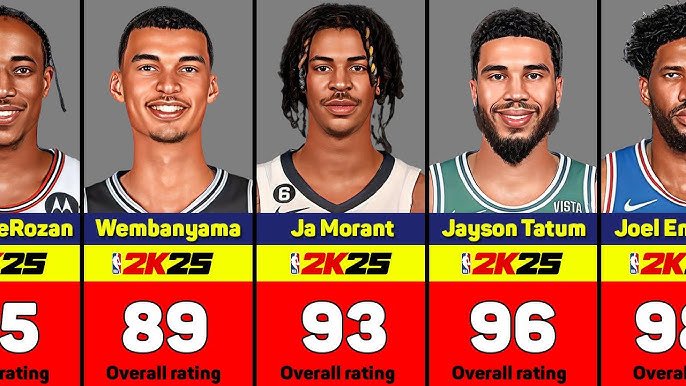
The NBA 2K25 player stats determine a player’s abilities and performance in the game, influencing their effectiveness on the virtual court.
Anticipation builds as we approach the release of NBA 2K25. Gamers are eager to delve into the updated rosters and assess the crucial data points that make each player unique. Understanding the impact of NBA 2K25 player stats is key to building a successful team and winning games.
These attributes, such as shooting, dribbling, and defense, directly affect how players perform. Players analyze these figures to make informed decisions when drafting their team. Knowing this information gives a competitive edge.

NBA 2K25 Player Stats: A Deep Dive
Alright, basketball fans! Let’s talk about something super important in the world of NBA 2K25 – player stats! These numbers aren’t just random figures; they’re the heart and soul of how players perform in the game. Understanding these stats is key to building a winning team and becoming a true 2K champion. So, let’s jump in and see what makes a player shine on the virtual court.
Understanding the Core Attributes
Every player in NBA 2K25 has a set of core attributes that define their strengths and weaknesses. Think of them as the building blocks of a player’s skills. These attributes are rated on a scale, usually from around 25 to 99, with 99 being the absolute best. Let’s break down some of the most important ones:
Offensive Attributes
- Close Shot: This tells you how good a player is at scoring near the basket, like with layups and short hooks.
- Mid-Range Shot: How accurate is a player when shooting from the free-throw line area and the paint? A higher rating means more buckets from this distance.
- Three-Point Shot: This is all about long-range accuracy. A high three-point rating means a player is a threat from beyond the arc.
- Driving Layup: This measures how good a player is at making layups while moving towards the basket.
- Driving Dunk: How likely is a player to throw down a powerful dunk while driving to the hoop? A high rating means more highlight-reel jams.
- Ball Handle: This is a player’s ability to control the ball while dribbling. A high rating means fewer turnovers and slicker moves.
- Passing Accuracy: How good is a player at making accurate passes to teammates?
- Post Control: This attribute tells us how skilled a player is at scoring while backing down opponents in the low post.
Defensive Attributes
- Interior Defense: How good is a player at defending shots near the basket?
- Perimeter Defense: How effective is a player at guarding opponents on the outside?
- Steal: This stat shows how likely a player is to grab the ball from an opponent.
- Block: How good a player is at swatting shots away?
- Rebounding (Offensive/Defensive): These stats show how good a player is at grabbing rebounds at both ends of the court.
Athleticism Attributes
- Speed: How fast is a player when running up and down the court?
- Acceleration: How quickly can a player get up to their top speed?
- Vertical: This stat shows how high a player can jump.
- Strength: How much power does a player have? This is important for banging in the post and battling for rebounds.
- Stamina: How long can a player play before getting tired?
Mental Attributes
- Basketball IQ: How good is a player’s understanding of the game? This impacts their decision-making.
- Offensive Consistency: How consistent is a player at scoring and making offensive plays?
- Defensive Consistency: How consistent is a player at defending and making defensive plays?
- Intangibles: This rating is a catch-all for qualities like leadership and clutch performance.
Understanding Badges
Besides the core attributes, NBA 2K25 also has a system of badges. These are special abilities that can enhance a player’s performance in certain areas. There are different types of badges, including:
Finishing Badges
- Giant Slayer: This badge helps players score around taller defenders.
- Slithery Finisher: It makes it easier for players to navigate through traffic and finish at the rim.
- Posterizer: Increases a player’s ability to dunk on defenders.
Shooting Badges
- Green Machine: Helps players get more “perfect” shots.
- Sniper: Increases the accuracy of heavily contested shots.
- Dead Eye: It makes a player a more dangerous shooter while they’re moving.
Playmaking Badges
- Ankle Breaker: This badge makes it easier for players to break down their defender with dribble moves.
- Quick First Step: Improves a player’s ability to get past defenders with a quick burst of speed.
- Dimer: It boosts the success rate of players who receive a pass from you.
Defensive/Rebounding Badges
- Intimidator: Makes opponents miss shots more often due to your defensive presence.
- Interceptor: Increases your chance of getting steals from the passing lanes.
- Rebound Chaser: Helps players grab more rebounds.
Badges can make a big difference in how a player performs. A player with high stats and great badges can be a force to reckon with on the court.
How Stats Affect Gameplay
Now that we know about the different stats and badges, let’s talk about how they actually affect gameplay. The numbers aren’t just for show; they directly impact how a player performs on the court. For example:
- A player with a high three-point shot stat and the ‘Green Machine’ badge is more likely to sink deep shots consistently.
- A player with a high driving layup stat and ‘Slithery Finisher’ badge will be better at getting to the hoop and finishing.
- A player with good interior defense and ‘Intimidator’ badge will make it harder for opponents to score near the basket.
- A player with high ball handle and ‘Ankle Breaker’ badge can dribble past defenders easily.
Basically, every stat has a direct impact on what a player can do. So when you’re building a team, it’s crucial to understand how these stats work together. Don’t just focus on the overall rating; look at the specific skills of each player to see if they fit your playing style.
Analyzing Player Types Using Stats
Stats help us understand the type of player we’re dealing with. Here are a few examples of how different stats combine to create different player archetypes:
The Sharpshooter
- High Three-Point Shot
- Good Mid-Range Shot
- Can have ‘Sniper,’ ‘Green Machine’ shooting badges
- May have low athleticism
The Slasher
- High Driving Layup/Dunk
- Good Speed and Acceleration
- Can have ‘Slithery Finisher,’ Posterizer’ finishing badges
- Might not be a great shooter.
The Playmaker
- High Ball Handle and Passing Accuracy
- Good Speed and Agility
- Often uses the ‘Ankle Breaker’ and ‘Dimer’ playmaking badges
- Scoring is not their primary role.
The Lockdown Defender
- High Interior and Perimeter Defense
- Good Steal and Block
- Can have the ‘Intimidator’ and ‘Interceptor’ defensive badges.
- May not be great on offense.
The Rebounding Specialist
- High Offensive and Defensive Rebounding
- Good Strength and Vertical
- Use the ‘Rebound Chaser’ badges.
- Often plays near the basket.
Understanding these archetypes helps you create a balanced team. You need a mix of players who can score in different ways, defend well, and rebound. Don’t just try to make a team of all-stars; create a well-rounded team with complementary skills.
How to Use Stats to Build a Winning Team
Now, the big question: how do you use all this stat knowledge to actually win games? Here are a few tips:
Identify Your Play Style
Do you like to run a fast-paced offense, shooting lots of threes? Or do you prefer a slower, more physical game with lots of post play? Your play style should guide your team-building choices. If you love shooting from deep, focus on getting players with high three-point ratings and shooting badges. If you love fast breaks, focus on athleticism and players who can handle the ball and pass it quickly.
Find Complementary Skills
Don’t just pick the players with the highest overall rating. Look for players who complement each other. If you have a star scorer, you also need players who can set screens, pass the ball accurately, and grab rebounds. A balanced team is way better than a team full of solo scorers.
Look at Specific Attributes, Not Just Overall Rating
The overall rating is just one number; it doesn’t tell the whole story. Focus on the specific skills you need in certain positions. A point guard needs great ball handling and passing; a center needs strong rebounding and defense; a wing player needs to be able to shoot and defend. Don’t just look at the overall rating; look at the player’s specific attributes and how they match your needs.
Pay Attention to Badges
Badges are important! They can significantly improve a player’s ability in key areas. Always consider a player’s badges when deciding if they fit into your strategy. Sometimes a player with a slightly lower overall rating but great badges can be more useful than a higher-rated player without key badges. For example, someone might have an excellent three-point stat, but without the ‘Sniper’ or ‘Green Machine’ badge, their shots might not be as reliable.
Experiment With Different Lineups
Don’t be afraid to try out different lineups. You never know which combinations will work best until you experiment. Try different players together, see how they play off each other, and make changes as needed. Sometimes the best lineups aren’t the ones that look best on paper; they’re the ones where players complement each other the best.
Don’t Forget the Bench
You need strong players to come off the bench. Games can be long and tiring, so having backups who can do a good job is crucial. Make sure you have reliable players that can step in when your starters need a break or if you are facing a specific challenge in the game.
Advanced Stats and What They Mean
Beyond the basic attributes and badges, NBA 2K25 also includes some more advanced stats. These can give you an even more in-depth look at player performance. Here’s a few to consider:
Effective Field Goal Percentage (eFG%)
This stat is like field goal percentage but it takes into account that three-pointers are worth more than two-pointers. This gives you a better picture of a player’s true shooting efficiency.
True Shooting Percentage (TS%)
TS% goes even further, factoring in free throws along with field goals. It provides the most comprehensive look at a player’s scoring efficiency. Players with a high TS% are efficient scorers because they can score from various ways, like from behind the arc or with free throws.
Player Efficiency Rating (PER)
PER attempts to give a rating of each player’s overall production by taking into account all of a player’s stats, not just points, but also rebounds, assists, blocks, steals etc. A high PER means the player is producing a lot of value. This is a good way to look at which players are contributing the most to their team, but might not be perfect as it doesn’t count things like drawing fouls or off ball screens.
Usage Rate
This tells you how often a player is using possessions when they are on the court. A player with a high usage rate is more often the focal point of their team’s offense. A high usage player usually takes more shots, has the ball more and also commits more turnovers. It’s good to know the usage rate to better understand the team’s style and each player’s role.
Plus/Minus
Plus/Minus is the net point difference when a player is on the court, compared to when they are on the bench. A player with a good plus/minus is making a difference on the court when they are playing. This stat is good for showing the net impact of a player, meaning you might not only look at individual stats, but if the player is contributing to winning the game.
Using these advanced stats, you can really fine-tune your team-building strategy and see exactly where your players are excelling or struggling.
Understanding player stats in NBA 2K25 is not just about knowing the numbers. It’s about using that information to build a winning team, understand different player styles, and improve your overall game. Take the time to analyze player attributes, badges, and advanced stats and use them to your advantage and to understand how players affect the game. Whether you’re playing MyCareer, MyTeam, or just quick games, this knowledge will make you a better player.
I FOUND THE FASTEST BUILD POSSIBLE IN NBA 2K25 🔥 ALL 99 SPEED STATS BUILD!
Final Thoughts
NBA 2K25 player stats will significantly impact gameplay, determining which players dominate. Expect ratings to shift based on real-world performances and player archetypes. Accurate representation of skills is key for an authentic simulation.
These changes will dictate team strategies and player choices in the game. Gamers will need to adapt their play styles to make the most of their chosen players. The updated NBA 2K25 player stats add a new layer of challenge.

