
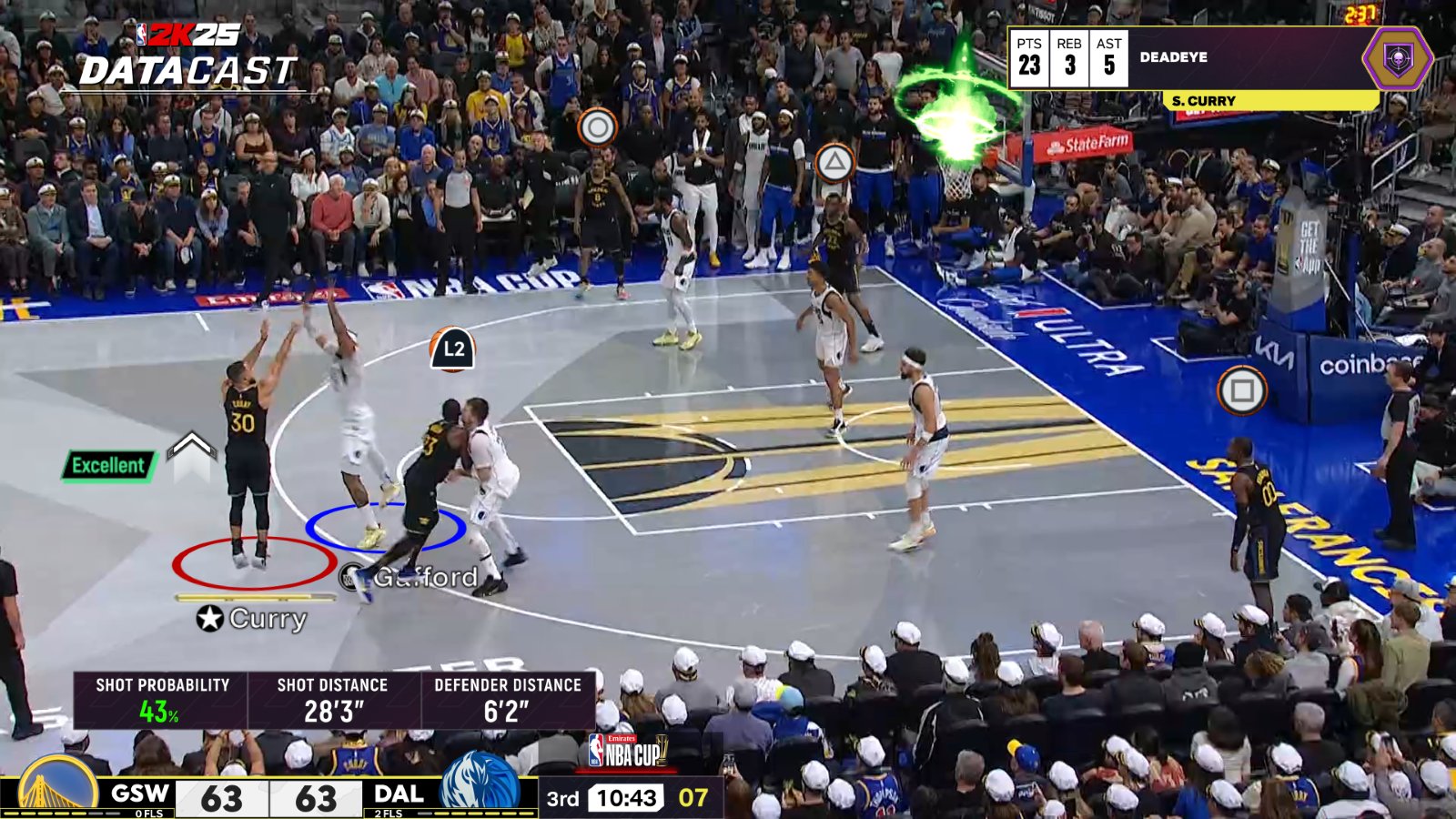
The NBA 2K25 statistical analysis will likely center around player ratings, performance data, and team efficiency, impacting gameplay strategy and virtual basketball outcomes.
Gamers eagerly anticipate the arrival of NBA 2K25 and the new strategic possibilities. This year’s iteration promises fresh data for in-depth NBA 2K25 statistical analysis. We’ll examine how the game interprets player performance on the virtual court.
The analysis delves into the core mechanics, exploring how player attributes and team dynamics translate into game results. Expect a breakdown of metrics impacting win probabilities and optimal playstyles. We anticipate lots of discussion around the best statistical advantages players can achieve.

NBA 2K25 Statistical Analysis: Digging Deep into the Numbers
Okay, hoop fans, let’s talk about the real meat and potatoes of NBA 2K25 – the stats! It’s not just about how cool a player looks doing a dunk; it’s about the numbers that tell the real story. We’re going to dive deep into how the game crunches data, what those numbers mean, and how you can use them to become a better virtual baller. Get ready to become a stat wizard!
Understanding Player Attributes in NBA 2K25
Every player in NBA 2K25 has a bunch of different ratings that make them who they are on the virtual court. These aren’t just random numbers; they’re how the game decides how good a player is at different things. Think of them as the superpowers of each athlete, except instead of flying, it’s about shooting, passing, and defense.
Core Attributes
These are the most basic stats that determine a player’s overall ability. Let’s break them down:
- Inside Scoring: This is how good a player is at scoring close to the basket, like layups and dunks. A high rating here means they’re a beast in the paint.
- Mid-Range Scoring: How well a player can hit shots from just outside the paint. Think of those classic jump shots.
- Three-Point Scoring: This is all about how many three-pointers a player can make. The higher the rating, the more likely they are to drain shots from deep.
- Playmaking: This stat covers everything from passing to ball-handling. A good playmaker can set up teammates for easy scores.
- Defense: This isn’t just about stealing the ball; it’s also about contesting shots and playing tough defense.
- Rebounding: How good a player is at grabbing the ball after a missed shot. This one is crucial for getting second chances.
- Athleticism: This covers speed, jumping ability, and how quickly a player moves on the court. It’s like the engine of a player.
Each of these attributes is graded on a scale, usually from the low 20s all the way to 99. Players with high ratings in key areas are usually the stars.
How Attributes Affect Gameplay
It’s one thing to see numbers on a screen, but it’s another thing to understand what they do on the court. Let’s look at some real-world examples:
- A player with a high three-point rating will be more likely to make long shots and will have an easier time getting the timing right.
- A player with high playmaking can do some fancy moves with the ball and make those highlight reel passes.
- If a player has a low rebounding rating, they’ll struggle to grab boards against taller or stronger players, meaning they’ll get less second chance opportunities.
- A player with low defense will find it hard to stop opponents from scoring, and that could lead to the other team gaining a big lead.
Advanced Statistical Tracking
NBA 2K25 doesn’t stop at the basics. The game keeps track of a ton of stats you can use to really get into the details of a game.
Game-by-Game Statistics
After each game, you get access to a ton of statistics, like:
- Points Scored: How many points each player scored in the game.
- Assists: How many times a player passed the ball leading to a basket.
- Rebounds: How many rebounds a player grabbed.
- Steals: How many times a player stole the ball from an opponent.
- Blocks: How many shots a player blocked.
- Turnovers: How many times a player lost the ball to the other team.
- Field Goal Percentage: How many of the player’s total shot attempts resulted in a made basket.
- Three-Point Percentage: How many of the player’s three-point shot attempts resulted in a made basket.
- Plus/Minus: The points difference while the player is on the court. This helps see how much they contributed to the team’s success.
These stats can help you see who’s really performing well in a game and which players you can rely on.
Season-Long Statistics
The fun doesn’t stop with single games. The game also records stats over an entire season. This allows you to see trends in player performance.
- Total Points, Assists, Rebounds, etc: Like the game stats, but tracked across an entire season
- Average Points Per Game (PPG): This shows the average number of points a player scores in each game.
- Average Assists Per Game (APG): The average number of assists a player gets per game.
- Average Rebounds Per Game (RPG): The average number of rebounds a player grabs per game.
- Average Steals/Blocks Per Game (SPG/BPG): Shows average defensive stats per game.
- Shooting Percentages: Season-long field goal, three-point, and free throw percentages can help identify the most consistent shooters.
These seasonal stats help you figure out who the best players are over a long period, not just in one game. You can see who’s hot and who’s not, and adjust your gameplan accordingly.
Efficiency Statistics
Beyond the basic counts, NBA 2K25 also provides efficiency statistics that can give you an even better look at player performance:
- Effective Field Goal Percentage (eFG%): This adjusts for the fact that three-pointers are worth more than two-pointers, which gives a more complete picture of a player’s shooting effectiveness.
- True Shooting Percentage (TS%): This accounts for free throws, 2-point shots and 3-point shots made, showing the actual shooting effectiveness of a player.
- Assist Ratio: How many assists a player provides compared to their possessions.
- Turnover Ratio: How many turnovers a player commits compared to their possessions.
- Player Efficiency Rating (PER): A stat that combines many statistics into one number, meant to show overall impact of a player on the game.
These efficiency stats let you see who is playing smart and getting the most out of their time on the court. A player with a high PER, for example, is usually someone you want to keep around.
Team Statistics and Analysis
It’s not just about individual players; team stats are also incredibly valuable in NBA 2K25. These help you understand how your team is performing as a unit.
Offensive Team Stats
These statistics can help you understand how well your team is scoring:
- Team Points Per Game: How many points your team scores on average per game.
- Team Field Goal Percentage: How well your team shoots as a whole.
- Team Three-Point Percentage: How well your team shoots from beyond the arc.
- Team Assists Per Game: How often your team assists on baskets.
- Team Offensive Rating: How many points your team scores per 100 possessions.
A high offensive rating and team shooting percentage can point to a strong scoring team. If your assist number is high it could mean that the team is making the right passes and finding open shots.
Defensive Team Stats
Just like offense, it is important to know how well your team is performing on the defensive end:
- Team Opponent Points Per Game: How many points your team lets the opposing team score per game.
- Team Opponent Field Goal Percentage: How well the opposing team shoots against your defense.
- Team Opponent Three-Point Percentage: How well the opposing team shoots three-pointers against your team.
- Team Rebounds Per Game: Total number of rebounds your team grabs.
- Team Steals Per Game: Total number of steals your team grabs
- Team Blocks Per Game: Total number of blocks your team grabs.
- Team Defensive Rating: How many points your team allows per 100 possessions.
A low defensive rating and opponent shooting percentage suggest a strong defensive team. A high number of blocks and steals also indicates a team that plays aggressive, and tough defense.
Pace and Style of Play
The team stats also include information about the pace of the game:
- Team Pace: The number of possessions a team has per 48 minutes.
- Possession Statistics: Detailed information about how your team’s possession end, whether it is through a shot, a foul, or a turnover
A fast pace with many possessions might work well for teams that are offensively minded. A team that is more defensive minded may prefer a slower pace. Analyzing this can help you determine what type of strategy to use.
Using Stats to Improve Your Game
Okay, now that we’ve gone over all these different stats, it’s time to talk about how you can use them to become a better player. It’s one thing to know that a player has good stats; it’s another to use those numbers to your advantage. Here’s how you can do that.
Identifying Strengths and Weaknesses
The very first thing that you should do is to take a look at each of your players and understand what they’re good at and what they’re not good at.
- If you have a player with high three-point shooting, you’ll want to make sure that you’re giving that player good looks from outside the three point line.
- If a player is good at scoring inside, then make sure that you are running plays that get them the ball in the paint.
- If a player is bad at defense, you should know who to keep them from guarding your star player or a specific strong offensive player on the opposing team.
- If you have a player who is bad at shooting, you should know to get them open on the floor, and not let them have the ball at the top of the key
Knowing where your strengths and weaknesses are will help you make better choices during gameplay.
Adjusting Your Strategies
Once you know the strengths and weaknesses of your players and your team, it is time to adjust your game strategies.
- If you have a team with multiple great shooters you should focus on plays that will get them open looks from outside the three point line.
- If you have a team of strong defenders, then make sure that you have them guarding their best offensive players.
By using data you can adapt your style to match the strength of your squad, which will make you much more difficult to beat.
Evaluating Player Performance
You can also use stats to evaluate how your players are doing during games and throughout the season.
- If you have a player that is underperforming then you can consider substituting them out or using them in a different role.
- If you have a player that is performing well, then you can reward them with more game time or more shots.
Using stats will make your team much more flexible, and allows for better game planning.
Improving Your MyCareer Player
Stats are also super important for your MyCareer player. You can use the data to know where to allocate your skill points.
- If you’re playing a point guard that has good shooting but lacks passing, then you should allocate more skill points to playmaking and passing.
- If your power forward is not good at rebounding, then you should make sure you put in skill points into rebounding.
Using player statistics will help you figure out where you should improve your player to be the best you can be. You can also use these insights to determine the type of plays you run, what the best shot selections are, etc.
Using Stats in MyTEAM
In MyTEAM mode, you can use statistics to know what cards to buy, and what players to put on the floor.
- You can pick players that have the best ratings for the position you need, and make sure you put them into positions that align to their ratings.
- You can track the stats of cards you have used and make decisions to keep them, or sell them and buy other cards.
- You can look at the different cards, and evaluate the strengths and weaknesses of each card, and find a lineup that works best for you.
By using data in MyTeam you can make informed decisions on building the best team that you can.
By becoming a student of the game and paying attention to these numbers, you’ll be taking your game to new heights. Good luck on the court!
Fr wemby’s average stats on 2k😭 #2k25 #nba
Final Thoughts
In short, examining player tendencies and game data becomes crucial for success within NBA 2K25. Careful tracking of shooting percentages and assist rates allows gamers to refine strategies. This improves win percentages and overall in-game performance significantly.
Analyzing NBA 2K25 statistical analysis provides actionable insights. Players can identify weaknesses and strength to guide team building and individual player development. This data empowers informed decisions and tactical adjustments.
Therefore, a focus on statistical analysis gives a vital edge in competitive play.

