
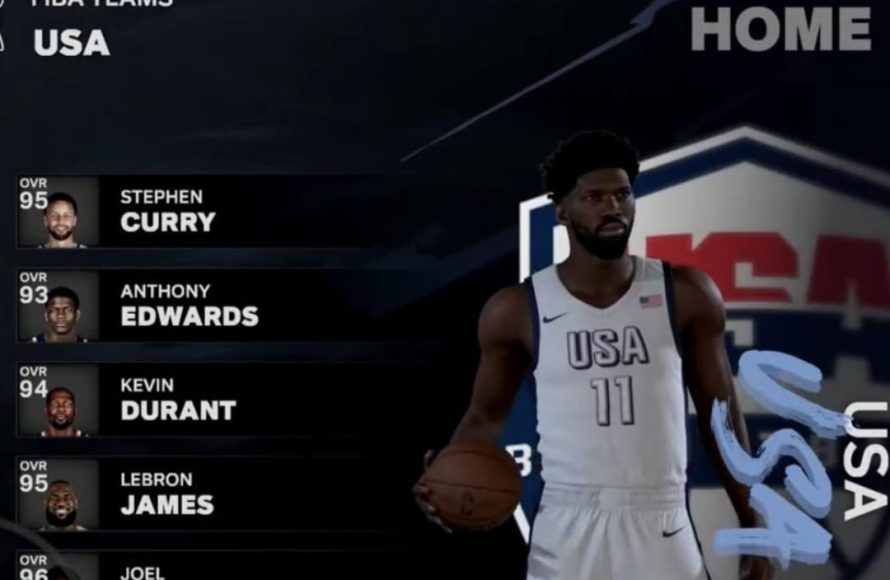
NBA 2K25 team play emphasizes coordinated strategies, communication, and utilizing each player’s unique abilities to achieve victory as a unified squad.
The thrill of basketball isn’t just about individual highlights; it’s about the beautiful dance of a team working together. Many of you are eagerly anticipating how the next installment handles in-game coordination, and we’re here to talk about NBA 2K25 team play.
It’s more than just passing the ball; it’s about reading your teammates’ movements, setting effective screens, and executing plays with precision. A true team effort is crucial to succeed in this mode.
Understanding how to synergize your skills is paramount, allowing for amazing displays of basketball that are even better than playing solo. Let’s delve into how to make the most of your squad on the virtual court.

NBA 2K25 Team Play: Working Together to Win
Okay, let’s talk about the best part of basketball – team play! In NBA 2K25, it’s not just about showing off your amazing skills as a single player; it’s also about how well you work with your teammates. Think of it like a real basketball team: everyone has a job, and when everyone does their part well, you can accomplish something truly amazing – a big, fat win! NBA 2K25 team play is about passing, moving without the ball, setting screens, and playing defense together. It’s about understanding your teammates and creating chances to score as a unit, not just as a solo star. Let’s dive into how you can get really good at team play.
Understanding Team Roles
Just like in real basketball, every player on the court has a role to play. You wouldn’t have five point guards, right? In NBA 2K25, you can choose different types of players and it’s good to understand how they should act on the court.
The Point Guard: The Floor General
The point guard is like the coach on the court. They handle the ball a lot and are responsible for starting the offense. They need to be good at passing, seeing open teammates, and making smart decisions. Think of players like Steph Curry or Chris Paul. They control the pace of the game and set up their teammates for easy baskets. A great point guard can distribute the ball well to make sure everyone gets involved, and they are not afraid to shoot either if they are open.
- Key skills: Passing, ball handling, court vision, decision-making.
- Focus: Running the offense, finding open teammates, creating scoring opportunities.
The Shooting Guard: The Scoring Threat
Shooting guards are usually the primary scorers on a team. They need to be great at shooting the ball, especially from three-point range. They are also good at driving to the basket. Think of someone like Klay Thompson or Zach Lavine. They need to move well without the ball to get open for shots. A good shooting guard can stretch the defense and make it hard for the opponent to guard the inside.
- Key skills: Shooting (three-pointers and mid-range), driving, scoring, moving without the ball.
- Focus: Scoring points, creating space, being ready for the ball.
The Small Forward: The Versatile Player
Small forwards need to be good at a little bit of everything. They need to be able to shoot, dribble, pass, and play defense. They often are the most versatile players on the team. Think of LeBron James or Kawhi Leonard. They can score, rebound, and defend multiple positions. They need to be able to do what the team needs and can fill any hole. A good small forward can do many things well and is valuable to any team.
- Key skills: All-around ability (shooting, dribbling, passing, defense, rebounding).
- Focus: Contributing in multiple areas, being adaptable, doing what is needed.
The Power Forward: The Rebounder and Inside Scorer
Power forwards are usually the strongest players on the team. They need to be good at rebounding and scoring close to the basket. Think of players like Giannis Antetokounmpo or Zion Williamson. They also need to be good at setting screens. They might not be as skilled with the ball as the guards, but they can have a huge impact down low and from the middle of the paint. A good power forward can get offensive rebounds, score close to the basket, and be a tough defender.
- Key skills: Rebounding, inside scoring, setting screens, physical strength.
- Focus: Controlling the boards, scoring in the paint, setting good screens.
The Center: The Rim Protector
Centers are the biggest players on the team. They are the main rim protectors. They have the job of blocking shots and grabbing rebounds. Think of Joel Embiid or Nikola Jokic. They need to be good at scoring near the basket and setting screens for their teammates. They are the anchors of the defense. A good center can change the entire course of a game on both ends of the court.
- Key skills: Rebounding, shot blocking, inside scoring, setting screens, post defense.
- Focus: Protecting the rim, rebounding the ball, scoring inside, setting screens.
The Importance of Passing
Passing the ball in NBA 2K25 is crucial for success. It’s not about just throwing the ball to someone. It’s about making smart passes that lead to easy scoring opportunities. A team that moves the ball well is much harder to defend. Think about watching a team like the Golden State Warriors. They pass the ball constantly until they find an open shot. Here’s a more in-depth look.
Types of Passes
There are a lot of different kinds of passes in NBA 2K25. Let’s take a look at some of the most helpful ones:
- Chest Pass: This is your basic pass, where you hold the ball with both hands at chest level, and throw it straight to a teammate. This works well in the open court or in situations where you’re not under intense pressure.
- Bounce Pass: You bounce the ball off the floor toward your teammate. A bounce pass is good when a defender is between you and your teammate, or when you want to throw the pass around a defender.
- Overhead Pass: This pass is thrown over your head. It is good for long passes down the court or passing over a defender.
- Lob Pass: This is a high arc pass to a teammate who is cutting toward the basket, good for alley-oops.
- Fake Pass: Sometimes the best pass is not a pass at all! If you pretend to pass, you could fool the defense and find a new open teammate.
Passing Lanes
A good passer is always looking at the court for open lanes and finding where they should pass the ball. Here’s the basics of passing lanes
- Looking Ahead: Before you get the ball, try to look at where your teammates are going. Seeing where they plan on cutting and running can be helpful in a fast moving game.
- Anticipate Movement: Even before your teammate gets open, try and anticipate their movement. With anticipation, you can sometimes throw the pass before they are open, making an opening for a potential scoring opportunity.
- Keep Defenses Busy: Try passing the ball often to move the defense and wear them down. When you move the ball, you create movement. When defenses have to move a lot, they make more mistakes.
Moving Without the Ball
Moving without the ball is just as important as passing the ball. This means not standing around when you don’t have the ball. Think about how much space you could create and how much the defense is forced to move if you don’t just stand still. Let’s look at some good ways to move without the ball.
Cutting to the Basket
When you cut to the basket, you run toward the hoop without the ball. This can be really effective because it draws a defender to you, opening up a new passing lane. It also gives you the chance for an easy layup if your teammate sees you open.
Setting Screens
Setting screens means standing still to block a defender so your teammate can get free. The best screeners are smart about their positioning and create an opening that lets their teammate get a clean shot. Once you set the screen you can roll to the basket for an easy pass and scoring opportunity.
Spacing the Floor
Spacing the floor means standing in spots that make it difficult for the defense to defend. Don’t just stand around next to your teammates, spread out on the court. When the floor is spaced well, it gives you more space to pass and shoot. The more spacing you have on offense, the more space the ball-handler has to operate in.
Defending as a Team
Defense is just as important as offense, if not more so. In NBA 2K25, defense is not just about individual moves, but about working together. A good defensive team is like a pack of wolves, working together to stop their prey. It’s about helping each other out and closing off any openings on the court.
Help Defense
Help defense means that when your teammate is beaten by an offensive player, you come over to help stop them from scoring. You rotate from your position to stop the basket, and this forces another defender to take your space on the court, forcing a team to work in sync. If you don’t help your teammates, they will get easy scoring opportunities.
Communication
Communication is vital on defense. You must talk to your teammates. Tell them when there’s a screen, or if an offensive player is about to cut to the basket. Talking makes sure everyone is working together as a team. Communication on the court is just as important as a good game plan, so you should not ignore talking to your teammates.
Switching
Switching means that when you and your teammate are in a screen situation, you switch the players you are guarding. This stops the opposing team from getting an easy shot. It forces them to change their strategies or find another player to attack on defense. The better your switching is, the better your defense will be as a whole.
Advanced Team Play Strategies
Once you’ve got the basics of team play down, you can start using some advanced strategies that can help you get an extra edge.
Pick and Roll/Pop
The pick and roll is a play where one player sets a screen for the ball handler and then rolls to the basket while the ball handler drives to the basket. The pick and pop is the same as the pick and roll, except after the screen is set, instead of rolling to the basket, the screener pops back for a jump shot. Both of these plays are very effective if done properly with a good screener and good ball handler.
Motion Offense
Motion offense is an offensive system where everyone on the team moves without the ball. No one is standing still and the ball and players are constantly moving. This type of offense is really difficult for defenses to guard and it is effective when each player knows their part.
Zone Defense
Zone defense is a defensive formation where each defender guards a particular area of the court instead of guarding a particular player. This can be effective because it forces the opposing team to move the ball around and find open shots. It is also good at stopping drives to the basket.
Tips for Improving Your Team Play
Want to become a team play pro in NBA 2K25? Here are a few tips to make that happen:
- Practice with Friends: The best way to get good at team play is to play with the same group of people. You will begin to understand how they move and play the game.
- Watch Professional Games: Look at how the pros pass, move, and play defense. You can learn a lot from watching the best players in the world.
- Use Playcalling: Don’t be afraid to use the in game play calling system. The system has different plays you can call with your team.
- Be Patient: Good team play takes time to learn. Do not expect to be an amazing team the first day you play. With patience and practice you will get better.
Team play in NBA 2K25 is about working together, knowing your role, and communicating with your teammates. It’s about more than just individual skill. If you start to focus more on team play and less on how good you are at the game, you might be surprised at how much fun you will have, and how many games you will start winning. Remember to pass, move, defend, and communicate, and you will be on your way to becoming an amazing team player!
In conclusion, NBA 2K25’s team play element offers a rich and rewarding experience that goes far beyond individual heroics. It emphasizes the beauty of coordinated effort, strategic thinking, and the satisfaction of collective success. By embracing the concepts of team roles, mastering passing, moving effectively without the ball, and working together on defense, players can unlock a whole new level of gameplay and enjoyment. With practice and patience, you can take your game from a solo show to a symphony of teamwork. So, grab some friends, find your roles, and hit the court – the joy of team play is waiting for you.
Best Teams You NEED To Play For NBA 2K25 EACH POSITION
Final Thoughts
In summary, NBA 2K25 team play appears promising with improved cooperative options and strategic depth. Players can expect better communication tools and refined in-game roles. Coordinating with your squad will be more vital than ever for success. Therefore, the game encourages a strong team-oriented approach.
NBA 2K25 team play emphasizes collaborative basketball. It provides updated play styles that promote a sense of unity and on-court synergy. Consequently, every member’s contribution holds great value in matches.

